


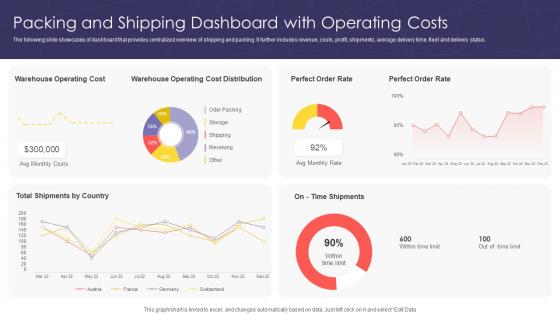
Packing And Shipping Dashboard With Operating Costs




Try Before you Buy Download Free Sample Product
 Impress Your
 Audience
 100%
100% Editable
 Save Hours
 of Time


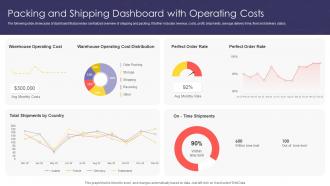
The following slide showcases of dashboard that provides centralized overview of shipping and packing. It further includes revenue, costs, profit, shipments, average delivery time, fleet and delivery status.
People who downloaded this PowerPoint presentation also viewed the following :
Packing And Shipping Dashboard With Operating Costs with all 7 slides:
Use our Packing And Shipping Dashboard With Operating Costs to effectively help you save your valuable time. They are readymade to fit into any presentation structure.





FAQs for Packing And Shipping Dashboard
A packing and shipping dashboard should display order fulfillment rates, shipping costs per unit, delivery timeframes, inventory turnover, carrier performance scores, and customer satisfaction ratings. These metrics enable logistics managers to identify bottlenecks, optimize carrier selection, and reduce operational costs, with many distribution centers finding that real-time visibility ultimately delivers faster deliveries and enhanced customer experiences.
Data visualization enhances packing and shipping decision-making by transforming complex logistics data into clear, actionable insights through real-time dashboards, trend analysis, and performance metrics. Through interactive charts and heat maps, shipping managers can quickly identify bottlenecks, optimize route efficiency, and reduce packaging costs, while monitoring delivery performance across multiple carriers, ultimately enabling faster responses to operational challenges and improving customer satisfaction rates.
Real-time tracking and updates serve as the operational backbone of packing and shipping dashboards, enabling instant visibility into package locations, delivery statuses, estimated arrival times, and potential delays throughout the entire supply chain. These capabilities streamline logistics management by reducing customer inquiries, minimizing shipping errors, and enhancing delivery accuracy, with many e-commerce and retail organizations finding that real-time visibility ultimately delivers improved customer satisfaction and operational efficiency.
Predictive analytics improves packing and shipping efficiency by forecasting demand patterns, optimizing inventory placement, and predicting delivery bottlenecks before they occur. Through machine learning algorithms, logistics companies streamline route planning, reduce packaging waste, and minimize shipping delays, with many retailers finding that predictive insights ultimately deliver faster customer service and significant cost reductions.
Common packing and shipping challenges include inventory mismatches, delayed shipments, packaging errors, cost overruns, and poor tracking visibility. A comprehensive dashboard addresses these by providing real-time inventory monitoring, automated shipping alerts, and performance analytics, enabling logistics teams to identify bottlenecks quickly, optimize packaging processes, and enhance delivery transparency, ultimately delivering improved customer satisfaction and reduced operational costs.
Businesses integrate existing systems with packing and shipping dashboards through APIs, EDI connections, and middleware platforms that connect ERPs, inventory management systems, and carrier networks. These integrations streamline order processing, automate tracking updates, and synchronize inventory data across platforms, with many logistics companies finding that unified dashboards reduce manual errors while delivering faster fulfillment and enhanced customer visibility.
Essential performance indicators for packing methods include packing speed per unit, material utilization rates, damage rates during transit, cost per package, and space optimization ratios. These metrics enable logistics managers to streamline operations by identifying bottlenecks, reducing material waste, and minimizing shipping costs, with many distribution centers finding that optimized packing ultimately delivers faster throughput and enhanced customer satisfaction.
Packing and shipping dashboards improve customer satisfaction by providing real-time visibility into order status, automated delivery notifications, and proactive exception management throughout the shipping process. These systems enable retailers and logistics companies to offer transparent tracking experiences, reduce customer inquiries by up to 40%, and address delivery issues before they impact customers, ultimately building trust and loyalty while streamlining operations.
Mobile-accessible packing and shipping dashboards should prioritize real-time shipment tracking, barcode scanning capabilities, order status updates, inventory level monitoring, and simplified data entry forms. These features enable warehouse staff, delivery personnel, and logistics managers to streamline operations while mobile, ultimately delivering faster order processing and enhanced customer service experiences.
Packing and shipping dashboards facilitate compliance by automating regulatory checks, tracking documentation requirements, and monitoring adherence to safety standards across all shipments. These systems streamline compliance workflows by integrating with customs databases, generating required certifications, and flagging potential violations in real-time, ultimately reducing regulatory risks and ensuring consistent standards adherence.
Best practices for packing and shipping dashboard UI design include clear visual hierarchy, real-time tracking displays, customizable widgets, simplified navigation menus, and responsive mobile layouts. These design elements streamline operations by reducing click-through paths, providing instant status updates, and enabling quick decision-making, with many logistics companies finding that intuitive dashboards significantly enhance operational efficiency and reduce shipping errors.
Historical data analysis enables forecasting future packing and shipping trends by identifying seasonal patterns, demand fluctuations, cost variations, and operational bottlenecks across previous periods. Through predictive analytics, companies streamline inventory planning, optimize warehouse capacity, and enhance delivery scheduling, with many logistics organizations finding that data-driven forecasting reduces costs and improves customer satisfaction.
Eco-friendly packing and shipping practices monitored through dashboards include recyclable material usage, carbon footprint tracking, packaging waste reduction, sustainable carrier selection, and energy-efficient warehouse operations. These sustainability metrics enable companies to streamline environmental compliance, reduce operational costs, and enhance brand reputation, with many logistics organizations finding that real-time eco-monitoring delivers competitive advantage while meeting increasingly stringent environmental standards.
User feedback drives dashboard improvements through surveys, usage analytics, support tickets, and direct stakeholder interviews that reveal pain points and workflow gaps. Organizations typically implement feedback loops where logistics teams, warehouse staff, and customer service representatives suggest enhancements like automated alerts or streamlined tracking views, ultimately delivering more intuitive interfaces and operational efficiency.
Essential security measures include data encryption, role-based access controls, secure authentication protocols, regular security audits, and compliance with industry standards like PCI DSS. These safeguards streamline operations by protecting customer information, shipment details, and financial transactions, while enabling logistics companies to maintain regulatory compliance and build customer trust, ultimately delivering competitive advantage in an increasingly security-conscious marketplace.
-
“There is so much choice. At first, it seems like there isn't but you have to just keep looking, there are endless amounts to explore.”
-
The designs by SlideTeam are honestly the best I have seen so far. Will be definitely coming back for more.