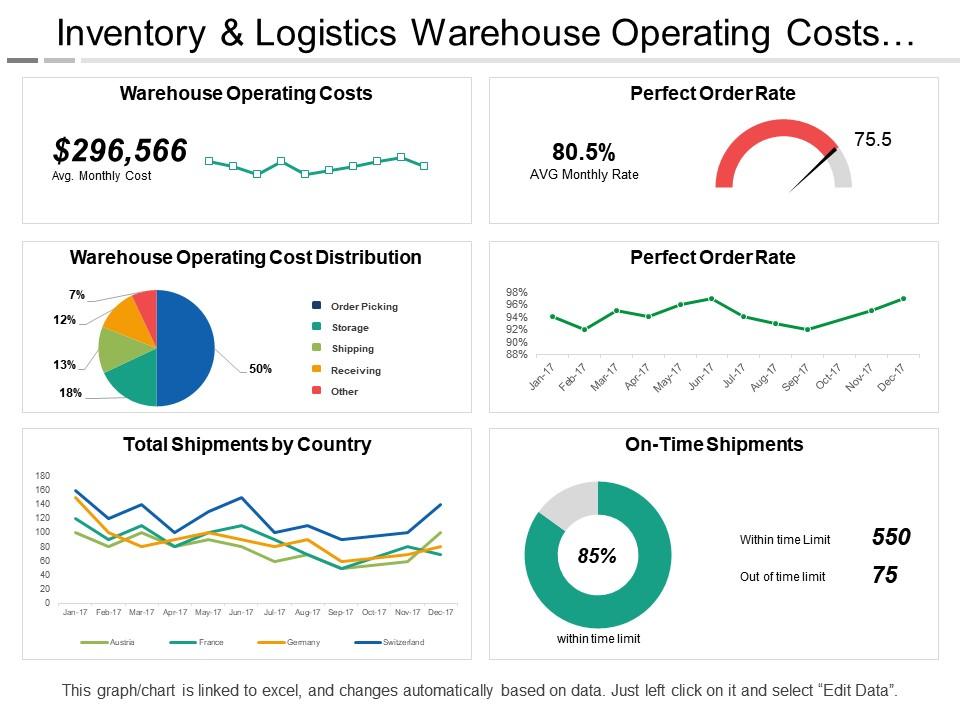
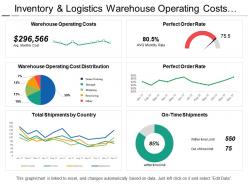
Inventory and logistics warehouse operating costs dashboard
Try Before you Buy Download Free Sample Product
Audience
Editable
of Time
Attract the attention of your audience with our inventory and logistics warehouse operating costs dashboard presentation design. The amazingly created inventory and logistics warehouse operating costs dashboard PPT visual has been designed with utmost care by the team of our innovative designers. Our PPT diagram highlights the various aspects of business process such as inventory and logistics warehouse operating costs which are very important for any business organization in order to maintain a good supply chain management process. Use this PowerPoint slide for business and sales related presentations. Our inventory management PPT slide has data driven charts and graphs which can be used to showcase various business concepts such as inventory management, logistics, supply chain, etc. Your logistics managers can use this inventory and logistics warehouse operating costs dashboard PowerPoint template to track, visualize and optimize all relevant logistic processes in an efficient and transparent way. So, download and use now. Boost the chances of consensus with our Inventory And Logistics Warehouse Operating Costs Dashboard. Focus on factors that foster agreement.
People who downloaded this PowerPoint presentation also viewed the following :
Inventory and logistics warehouse operating costs dashboard with all 6 slides:
Institute appropriate course corrections with our Inventory And Logistics Warehouse Operating Costs Dashboard. Carry out an intermediate assessment.
FAQs for Inventory and logistics warehouse
Look, you need demand forecasting and automated reorder points as your foundation. Real-time inventory tracking across locations is crucial too. ABC analysis helps prioritize high-value stuff, plus safety stock calculations prevent those nightmare stockouts. But here's the thing - most people totally bomb the tracking part. Your data has to be spot-on or everything else is useless. Oh, and don't forget supplier management tools with good performance metrics. Start with nailing your tracking system first. Then add forecasting and automation on top. Trust me on this order.
Honestly, AI for inventory is a game-changer. These systems predict demand way better than old-school forecasting - they actually learn from your sales history, seasons, even weird stuff like weather patterns. Pretty wild how accurate they get. You'll know exactly when to reorder before running out, plus they handle the boring stuff like purchase orders automatically. Real-time data shows what's flying off shelves vs what's collecting dust. My advice? Test it on just one product line first - don't go crazy trying to do everything at once. Once you see those results though, you'll want to expand it everywhere.
Think of inventory turnover as a pulse check on your business - it tells you how many times you're cycling through your entire stock. Good turnover means you're not sitting on dead inventory forever, which honestly makes such a difference for cash flow. But here's the thing: what's "good" totally depends on your industry. Low turnover? You're probably overstocked. Too high and you might be running out of stuff to sell. I'd check it monthly and see how you stack up against similar businesses. That way you'll catch problems before they get ugly.
Honestly, start with demand forecasting - dig into your historical data and see what patterns emerge. Set up automatic reorder points so you're not scrambling when stuff runs out. ABC analysis is clutch for prioritizing your high-value inventory. Don't forget safety stock, but keep it reasonable or you'll have cash sitting on shelves forever. Real-time inventory software makes a huge difference, especially if you've got multiple locations. Oh, and audit everything first - you might be surprised what's actually there. Pick one thing to tackle this quarter and go from there.
Honestly, it's a cash flow nightmare. Small businesses can't drop tons of money on extra inventory, but running out of stock loses customers fast. Most places I know are still doing everything on spreadsheets - which is insane in 2024, but here we are. The real kicker? You don't have the buying power to get decent deals from suppliers like big companies do. Forecasting demand becomes pure guesswork without proper data. My advice: get some basic inventory software running, even something cheap. Real-time stock visibility will save your sanity and probably your business too.
Honestly, JIT is pretty sweet for cutting storage costs - you're only buying what you actually need. Cash flow gets way better too since money isn't just sitting there in inventory. But man, it makes you crazy vulnerable. One supplier screws up a delivery and boom, your whole production stops. You also kiss those bulk discounts goodbye, which kinda sucks. Your suppliers basically need to be perfect, which... good luck with that. I'd definitely test it out with stuff that won't kill you if it's late before committing to anything major.
So honestly, start with inventory turnover ratio - it's super easy to calculate and shows you right away if you're sitting on too much stock. Track your carrying costs and how often you run out of stuff too. Lead time variability will mess you up badly (learned that one the hard way), especially when suppliers go rogue. Fill rate and safety stock levels matter, but don't tie up all your cash trying to have everything. Days sales outstanding is worth watching. Every business finds their own sweet spot, but turnover ratio gives you the quickest reality check on whether you're actually moving product or just hoarding it.
Oh man, seasonal demand is such a pain but you gotta get ahead of it. Build up inventory before your busy seasons hit, then cut back fast so you're not drowning in leftover stock. Timing's everything though - order too early and your cash is just sitting there, too late and you're panicked ordering express shipping (been there). Look at what sold when over the past few years to spot patterns. Then bump up your reorder points and safety stock for those crazy months. Honestly, start tracking this stuff now if you haven't - that historical data becomes super valuable later.
Look at your past sales but don't just copy last year's numbers - that's how you get screwed when trends shift. Factor in promotions, new launches, seasonal stuff. ABC analysis helps prioritize which items need closer attention (your high-value A products vs the slow movers). Lead times are huge for setting reorder points. Review forecasts monthly or quarterly depending on your cycle. Keep buffer stock for A-items but stay lean on everything else. Honestly, most teams I've worked with mess this up by either hoarding inventory or running out of their best sellers.
So basically, set up systems where your main suppliers can actually see your inventory and forecasts in real-time. Game changer honestly - they'll start managing their own schedules instead of you constantly bugging them for updates. Get some collaborative planning tools going and make sure everyone knows the protocol when stuff goes sideways with stockouts or whatever. Oh, and create shared performance metrics so you're both working toward the same goals. Makes them feel like actual partners instead of just... vendors you tolerate? Start with your top 3 suppliers first. Way easier than trying to do everyone at once.
Cycle counting is your friend here - way better than those brutal annual inventory days that nobody wants to deal with. Get some barcode scanners or RFID if you can swing it, cuts down on so many stupid mistakes during picks and receiving. Your bin locations need to make sense too, with labels that actually help instead of confusing everyone. ABC analysis is pretty solid for figuring out which products deserve the most attention. Honestly, I'd just pick whatever's driving you the most crazy right now and start there. You don't have to fix everything at once.
So basically, whichever method you pick changes your profit margins big time. FIFO makes you look more profitable when prices are going up since you're using those older, cheaper costs first. LIFO does the reverse - less profit on paper but way better for taxes. Weighted average just kinda splits the difference, which sounds boring but at least you know what to expect. Here's the thing though - all three methods give you totally different numbers even if your actual inventory is identical. Pick one that fits what you're trying to accomplish and stick with it. Trust me, constantly switching will just piss off your auditors.
Dude, automated inventory is a game changer. Real-time stock levels, automatic reorder alerts, better forecasting - all that good stuff. Manual tracking gets messy so fast, trust me on this one. Yeah the upfront cost stings a bit, but you'll save on labor and avoid those annoying stockouts. The best part? Everything syncs with your POS and accounting software automatically. No more miscounts or forgetting to update stuff. I'd look at what's eating up most of your time right now and start there.
Honestly, you gotta nail down your returns process first - keep that stuff separate so it doesn't mess up your regular inventory. Then dive into your sales data to catch patterns early. Remember those winter coats we way over-ordered last March? Yeah, don't do that again lol. Try ABC analysis to figure out what needs to go first. Bundle slow sellers with your hot items, or set up employee sales. Oh and liquidation channels work too if you're really stuck. The trick is spotting overstock before it becomes a nightmare and having backup plans ready.
Dude, training your team on inventory stuff will save you so much stress later. When people actually know how to receive shipments properly and do cycle counts, you won't be dealing with constant stock mix-ups. Honestly, the number of companies I've seen waste money because nobody taught their staff basic rotation methods is crazy. Your employees can catch problems early too - way before they cost you serious cash. Don't just do it once though, that's where most places mess up. Figure out where you're bleeding money first and train around those specific issues.
No Reviews