


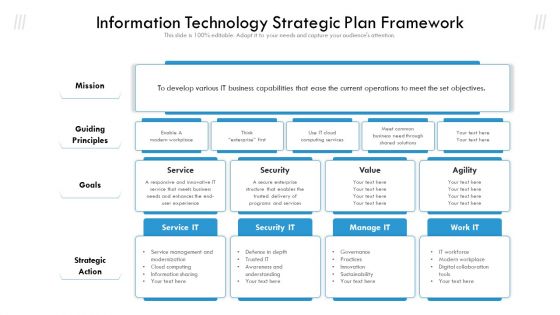
Information technology strategic plan framework




Try Before you Buy Download Free Sample Product
 Impress Your
 Audience
 100%
100% Editable
 Save Hours
 of Time


Our Information Technology Strategic Plan Framework are topically designed to provide an attractive backdrop to any subject. Use them to look like a presentation pro.
People who downloaded this PowerPoint presentation also viewed the following :
Information technology strategic plan framework with all 2 slides:
Use our Information Technology Strategic Plan Framework to effectively help you save your valuable time. They are readymade to fit into any presentation structure.
FAQs for Information technology
So first off, figure out where your IT currently sits, then map out where you want it to go. Gap analysis comes next - basically what's missing between point A and B. Build a roadmap with priorities, but here's the thing - getting leadership aligned is honestly the worst part but you can't skip it. Also need governance structure, resource planning, and ways to measure if you're actually succeeding. Risk assessment too, obviously. My advice? Get everyone important in one room first to nail down business objectives. Then work backwards from there to build your IT strategy around those goals. Way easier than trying to retrofit later.
Honestly, most IT teams just build stuff in a vacuum without talking to anyone else - it's wild. Start hanging out with department heads and execs regularly to figure out what they're actually trying to accomplish. Then work backwards from there. I make this simple chart that shows how each tech project connects to real business goals. Sounds nerdy but it works great for getting budget approved and figuring out what matters most. The whole point is showing you're not just the "computer people" who fix printers. You're actually moving the needle on stuff that makes money.
Dude, stakeholder engagement literally makes or breaks everything. Get leadership, users, and department heads involved early - not when you're already done planning. They're funding this stuff and actually using it, so their input matters way more than you'd think. Build something nobody wants? Good luck with that rollout. When they're engaged from the start, they become your biggest advocates during implementation (and trust me, you'll desperately need allies when chaos hits). Map out who has real influence versus who just gets impacted. Then loop them into planning sessions before you've locked anything down.
Start with mapping out what you've got vs what you actually need - your systems, infrastructure, and team skills. Most people totally skip the skills part which is dumb because tech means nothing if your team can't handle it. Survey everyone about their capabilities and where stuff's breaking down daily. Include end users too - they'll give you the real dirt on what's not working. Then do a simple gap analysis, current vs desired state. Oh and definitely prioritize the gaps that are actually blocking business stuff vs the shiny nice-to-haves everyone gets distracted by.
Honestly, start with the business stuff that actually matters - cost savings, revenue from new features, customer happiness scores. Then add some IT basics like uptime and how fast you're shipping projects. But here's the thing - don't go crazy tracking like 20 different metrics. I've seen teams do this and they just drown in spreadsheets. Pick maybe 5-6 things your boss actually cares about and check them every quarter. The real trick? Make sure whatever you're measuring connects to money or customer value somehow. Otherwise you're just celebrating technical wins that nobody upstairs really gives a damn about.
Honestly, new tech makes you question everything about your IT plans and where you're spending money. First thing - figure out what actually helps your business vs what's just trendy nonsense. Remember when everyone lost their minds over blockchain? Yeah, don't be that guy. Balance is key here. Invest in innovation but keep your current stuff running smoothly. I'd suggest doing quarterly check-ins on emerging trends like AI or automation tools. Match them against what you're actually trying to achieve. Don't chase every shiny new thing, but also don't sleep on real game-changers.
Honestly, the worst part is when IT and business teams aren't on the same page - happens way too often. You'll also struggle with getting executives to actually care and those impossible deadlines they love throwing around. Scope creep is basically guaranteed, so brace yourself. Get business people involved from day one, but skip the technical speak - they'll tune out immediately. Your objectives need to connect to real business wins, not just tech improvements. Build in checkpoints so you can pivot when things go sideways (and they will). But here's the thing - if you don't have a C-suite champion backing your plan, you're basically shouting into the void.
Honestly? Ditch those crazy long 5-year plans. They're basically useless when tech moves this fast. I'd do 18-24 month cycles instead, then check in every quarter to see what's actually working. Build everything modular if you can - cloud stuff that scales makes your life so much easier later. And seriously, don't get married to one vendor. I've watched teams get completely screwed when their "perfect" solution became obsolete overnight. Look at what's currently locked down in your setup first. That's where you'll get the biggest wins. Oh, and always have a backup plan ready.
Look, security can't be something you tack on later - learned that the hard way at my last job. Every time you migrate to cloud or roll out new software, you're basically opening doors for hackers. They're constantly looking for ways in. Your IT roadmap needs security baked right into the planning phase, which means budgeting for the right tools and actually understanding where you're vulnerable now. Honestly, the biggest game-changer is getting your security person involved from the start. Don't just hand them finished plans to review - that's backwards and expensive to fix.
Look, first thing - make sure each tech investment actually ties to your business goals. Revenue, cost savings, or reducing risk. If not, ditch it. Build a simple scoring system for ROI, urgency, and strategic impact. Most companies way overthink this step and never get anywhere. Quick wins are your friend - they free up cash for the bigger stuff later. Dependencies matter too, since some projects unlock others. Honestly? I'd stick to maybe 3-5 major initiatives per year and actually finish them properly. Way better than juggling tons of half-finished projects that drain your budget.
TOGAF's pretty solid for enterprise architecture stuff. COBIT works well if you need governance focus. Most places I've seen just mix and match though - nobody really follows one framework to the letter anymore. SWOT analysis is basic but useful for getting your bearings first. ITIL's still big for service management. Design Thinking and Lean IT are the newer hotness, more focused on being agile and user-centric. Honestly? Start simple with a SWOT to figure out where you stand, then decide if you need TOGAF for architecture planning or COBIT for governance. Don't overthink it initially.
Honestly, just start measuring stuff instead of winging it. Check your server performance, see which apps people actually use, track where money's going. Most companies I know throw cash at "solutions" without knowing what's broken. Data shows you the real bottlenecks killing productivity. Plus you can spot trends - like if you're gonna need more storage in 6 months based on current usage. Don't overthink it though. Pick something simple first, maybe help desk tickets or server utilization. Dig into that data and let it guide your next tech purchase.
Think of IT governance like bumpers at a bowling alley - keeps your tech strategy from ending up in the gutter. Map your compliance stuff first, then plan around those limits. Don't wait until later to think about frameworks (learned that one the hard way). Compliance isn't just paperwork - it actually controls what tech you can use and how quickly you can roll things out. My old boss used to say auditors have terrible timing, so you want this stuff sorted early. Build your roadmap knowing these boundaries exist from the start.
Look, good IT planning basically gives you permission to try new stuff instead of just fixing broken things all day. You'll actually have budget set aside for cool pilot projects when you align tech spending with what the business actually needs. No more constant firefighting - seriously, that gets old fast. The trick is spotting where you're missing capabilities and testing innovations there first. Don't expect breakthrough ideas to magically happen while everyone's stuck doing updates and patches. Set aside real time and money for experimentation, or you'll never get anywhere new.
Honestly, you've gotta speak different languages to different people. Executives just want the business impact stuff, but your tech teams need the nitty-gritty details. Get leadership on board first - they'll help you cascade it down through department heads. Town halls are solid for the big picture, but the real conversations happen in those smaller follow-ups where people actually ask questions. Visual roadmaps showing how IT connects to business goals? Game changer - way better than boring bullet points. Oh, and don't ghost everyone after launch. Regular check-ins keep things on track.
-
Graphics are very appealing to eyes.
-
Awesome presentation, really professional and easy to edit.
-
Wonderful templates design to use in business meetings.
-
Informative design.
-
Appreciate the research and its presentable format.