


Information Technology Strategy Business Alignment Process Management






Try Before you Buy Download Free Sample Product
 Impress Your
 Audience
 100%
100% Editable
 Save Hours
 of Time


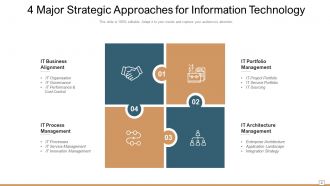
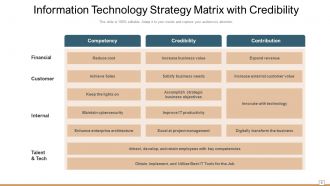
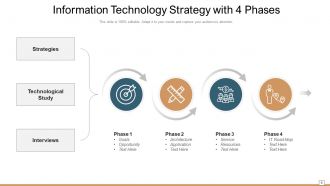
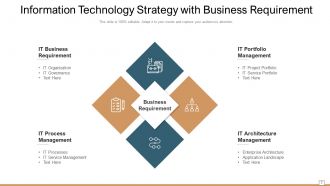
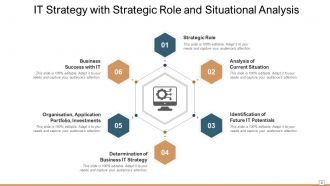
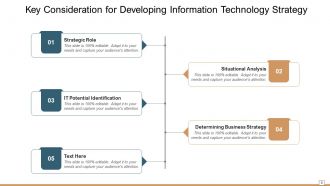
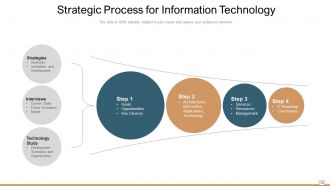
Information technology (IT) strategy business alignment is the process of developing and implementing an IT strategy that is aligned with the overall business strategy. This process ensures that the IT infrastructure supports the business goals and objectives, and that IT projects are aligned with the business priorities. It is also important to manage the process of aligning IT with business. This includes regular communication between the business and IT departments, and setting up a process for monitoring and tracking progress. As you can see, SlideTeam’s project management PowerPoint presentations offer a wealth of information on the subject of business alignment process management. By downloading our templates, you will have access to all the slides and graphics that we used in creating these presentations. You can also customize them to fit your own needs. So get started today.
People who downloaded this PowerPoint presentation also viewed the following :
Information Technology Strategy Business Alignment Process Management with all 12 slides:
Translate intention into reality with our Information Technology Strategy Business Alignment Process Management. Your ideas will then sustain it.



FAQs for Information Technology Strategy Business
Honestly, most companies totally bomb the metrics part - that's where I'd start. You want numbers that actually connect to your big-picture goals, not just vanity metrics. Communication is obvious but harder than it sounds - people need to know what's happening AND why it matters to them specifically. Cross-functional stuff breaks down fast when teams get territorial. Leadership has to actually do what they're preaching, otherwise forget it. Oh and audit where your people are spending time versus what your strategy says matters. That gap is usually pretty eye-opening. Regular check-ins help catch things before they go sideways.
Track both the numbers and the softer stuff - engagement scores, project timelines, whether teams actually hit shared goals. Revenue per employee matters too since aligned teams work way more efficiently. Honestly, I've watched companies go survey-crazy while ignoring real business results. Set your baselines first before changing anything, then check quarterly progress. My old boss used to say "data without context is just expensive guessing" and he wasn't wrong. Don't just measure activity - measure if things are genuinely improving.
Honestly, communication is like the backbone of getting everyone on the same page at work. Teams need clear messaging from the top so they actually understand what they're supposed to be doing. Regular check-ins are huge too - otherwise people just start doing their own thing and suddenly you've got five different priorities happening. I've watched this trainwreck so many times! Oh, and make sure leadership gets feedback when things aren't working. My take? Set up those alignment meetings and don't just go through the motions - actually fix stuff when it's broken.
Here's what I've seen work really well - get everyone using the same dashboards so you're all looking at identical data. No more "wait, which numbers are we using?" confusion. Slack or Teams help tons for quick cross-team chats. Oh, and project management tools are seriously underrated for showing how Marketing's campaign actually connects to Sales' goals. The biggest mistake? Adding random apps that don't talk to each other. You'll just create new problems. Pick stuff that actually integrates together and watch departments start collaborating instead of working in their own little bubbles.
Honestly, it usually comes down to departments not talking to each other and everyone chasing different goals. Leadership says one thing but teams interpret it completely differently - happens all the time. Resource fights make it worse since everyone's protecting their own metrics. Cross-functional meetings help, but only if people actually show up ready to collaborate instead of just defending their turf. You need shared KPIs that force teams to work together. Oh, and make sure your strategy isn't some vague corporate speak nobody understands. Be brutally clear about what matters most.
Honestly, aligned businesses just work better. People stop wasting energy on random stuff that doesn't matter. Short sentences here work well. When everyone knows what they're supposed to do and why it matters, performance naturally goes up. Morale too - which makes sense because nobody likes feeling lost at work. The tricky part is actually maintaining it though. You can't just announce your priorities once and call it done. Regular check-ins help, plus making sure people can actually see how their daily tasks connect to the big picture. It's kinda like... when everyone's rowing in the same direction, the boat moves faster.
Clear communication is everything - people need to understand the "why" behind decisions or they'll just be confused. I'd do regular all-hands meetings and make sure managers are actually passing info down properly. Transparency matters because honestly, employees can tell when you're being fake about stuff. Set up ways for teams to give feedback when they're lost or frustrated with direction. Oh, and this part's crucial - connect individual goals directly to business objectives. That way alignment happens naturally instead of just being meeting talk. Makes the whole thing way less forced, you know?
Dude, alignment totally changes everything for customers. No more awkward handoffs where marketing promises the moon, then sales backtracks, and support's like "what are you even talking about?" Been there - it's the worst. Your messaging stays consistent everywhere, stuff gets fixed faster, response times actually improve. Teams stop working in their own little bubbles. You'll anticipate what customers need before they even ask. Honestly feels like magic when it clicks. I'd start by just writing down every place customers interact with you, then figure out where things usually go sideways between departments.
So basically vertical alignment is your CEO's vision trickling down through each level - from executives to managers to individual people. Horizontal alignment? That's getting all your departments on the same page at once. Picture a grid - up and down versus side to side. Most companies do okay with the top-down stuff but totally bomb at getting departments to talk to each other. Sales and marketing are probably feuding right now, honestly. I'd just map out where your biggest communication breakdowns are happening first. The problem areas usually jump out pretty fast once you start looking.
Honestly, quarterly reviews are the bare minimum - I'd aim for monthly check-ins if you can swing it. The companies that actually stay on track do those quick pulse checks way more often than you'd think. Don't wait for your scheduled review though. Big changes like new leadership or market shifts? That's when you drop everything and reassess immediately. Monthly keeps everyone from bullshitting themselves about execution, while quarterly deep dives catch the drift before it gets ugly. Block out 2 hours next month and just... see where the gaps are. Compare what you're doing against your actual priorities. It's pretty eye-opening.
Honestly, most companies go with SAM (Strategic Alignment Model) - it checks how your IT stuff lines up with business goals. Balanced Scorecard's solid for tracking performance from different angles. COBIT's everywhere in regulated industries, but man, it can be way too much sometimes. There's also maturity models like CMMI if you're into that, or just use OKRs for simpler goal tracking. But here's the thing - don't pick something just because it sounds fancy in boardroom presentations. Find what actually works for your team size and company vibe. Start basic, then add complexity later when you need it.
Build alignment checks into every step of your planning process. Map out what each stakeholder actually cares about first - this shapes everything else. Cross-functional review points are where the magic happens, but honestly most teams skip this part then act surprised when nothing works. Don't wait until the end for pulse checks. Do them throughout implementation. Document your decisions so people aren't constantly asking "wait, why did we choose this again?" Quarterly reviews help you catch conflicts early. Way easier to fix things before they blow up into major problems.
Look, business alignment and change management go hand in hand - you really can't pull off one without the other. Most projects fail when changes aren't aligned properly, which is honestly frustrating to watch happen over and over. Change management gives you that structured way to get people bought in. But alignment makes sure your changes actually support what the business is trying to accomplish. My advice? Map out how any big change connects to your priorities first. Then get your key stakeholders on the same page about why you're doing it. Trust me, that upfront work saves so much headache later.
You've gotta beat the messaging to death - seriously, way more than feels normal. All-hands meetings, clear goals flowing down from the top, constant reminders about what actually matters right now. Don't assume people get it during crazy times because they absolutely don't. Companies that nail this? Their leaders literally say the same stuff every single week across different meetings. Your middle managers are everything here since they're the ones turning strategy into actual daily tasks. Oh, and set up ways to catch when things go sideways early so you can fix it fast.
Look, your team's feedback is basically like having a smoke detector for when things go sideways. When people feel heard and actually share what's going on, you'll catch problems before they explode. Nothing tanks alignment faster than employees who think their input doesn't matter - trust me on this one. Try pulse surveys, regular one-on-ones, that kind of stuff. It helps you see where your strategy isn't actually making sense to people doing the work. Honestly? Just ask them straight up: "Do you get how your job connects to what we're trying to accomplish here?"
No Reviews