


Insurtech industry pitch presentation complete deck





Try Before you Buy Download Free Sample Product
 Impress Your
 Audience
 100%
100% Editable
 Save Hours
 of Time


Technological advances in the insurance industry make life easy, fast, and smart, enabling improved performance both for personnel and third-party contractors. Insurtech today is ready to raise funds from investors so that they can reduce their administrative costs and at the same time try to market themselves effectively. Here is an efficiently designed pitch deck on Insurtech Industry that will make you learn how to make the current insurance model more efficient and optimize schedules. The proposal aims to showcase industry trends of the global health insurance market, also the region-wise market size with their summary and concentration. One can present critical drivers in the pitch deck covering points related to the growing demand for fitness apps, savvy patients, etc. Investors are looking for your good practical experience in the field for which we have mentioned slide on SWOT and market opportunity that you can take a chance on. There are many problems with the health insurance industry today that need to be addressed during the presentation with their proposed solutions. Also, exhibit how technology is integrated into the industry and how it will work for the ordinary public. Book a free demo and customize this 100 percent editable template based on needs. Get access now.
People who downloaded this PowerPoint presentation also viewed the following :
Content of this Powerpoint Presentation
Slide 1: This slide introduces Insurtech Industry Pitch Presentation. State Your Company Name and begin.
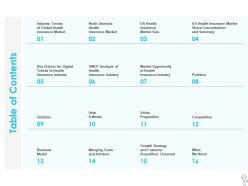
Slide 2: This slide shows Table of Content for the presentation.
Slide 3: This slide presents Industry Trends of Global Health Insurance Market.
Slide 4: This slide displays informational statistics about the health insurance market in North America.
Slide 5: This slide presents the key information about the US health insurance market size. It includes stats about market size and its growth.
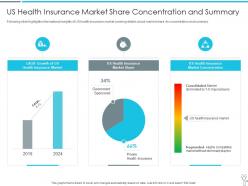
Slide 6: This slide displays US Health Insurance Market Share Concentration and Summary.
Slide 7: This slide shows Key Drivers for Digital Trends in Health Insurance Industry.
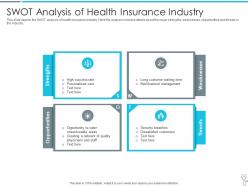
Slide 8: This slide depicts the SWOT analysis of health insurance industry. Here the analysis includes details about the major strengths, weaknesses, opportunities and threats in the industry.
Slide 9: This slide presents Market Opportunity in Health Insurance Industry.
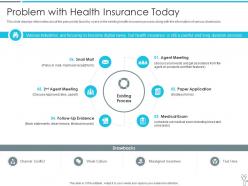
Slide 10: This slide displays information about the pain points faced by users in the existing health insurance process along with the information of various drawbacks.
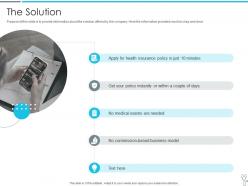
Slide 11: This slide provide information about the solution offered by the company.
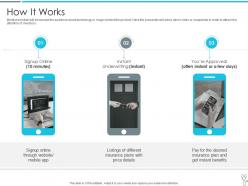
Slide 12: This slide shows showcase the audience about technology or magic behind the product.
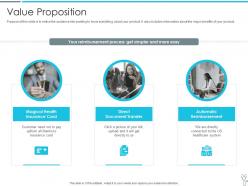
Slide 13: This slide entice the audience into wanting to know everything about your product. It also includes information about the major benefits of your product.
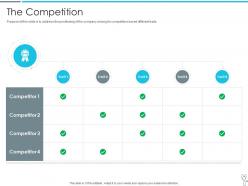
Slide 14: This slide address the positioning of the company among its competitors based different traits.
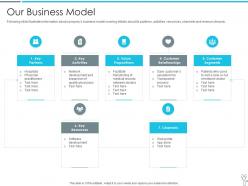
Slide 15: This slide shows information about company’s business model covering details about its partners, activities, resources, channels and revenue streams.
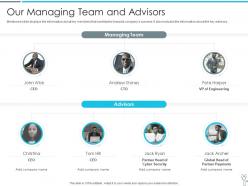
Slide 16: This slide presents displays the information about key members that contributes towards company’s success. It also includes the information about the key advisors.
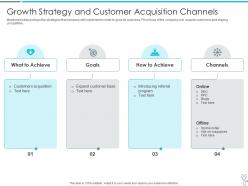
Slide 17: This slide portrays the strategies that company will implement in order to grow its business. Prior focus of the company is to acquire customers and staying competitive.
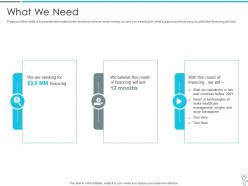
Slide 18: This slide provides information to the investors on how much money you are you seeking for, what purpose and how long you think the financing will last.
Slide 19: This slide displays address, contact numbers and email address.
Slide 20: This slide shows Icons for Insurtech Industry Pitch Presentation.
Slide 21: This slide is titled as Additional Slides for moving forward.
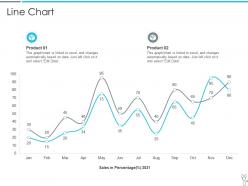
Slide 22: This slide displays Line chart with two products comparison.
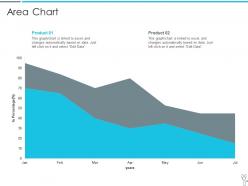
Slide 23: This slide displays Area chart with two products comparison.
Slide 24: This is Our Mission slide with related imagery and text.
Slide 25: This is Our Target slide. State your targets here.
Slide 26: This is Our Team slide with names and designation.
Slide 27: This slide shows Post It Notes. Post your important notes here.
Slide 28: This slide shows Puzzle diagram with text boxes.
Slide 29: This slide shows Venn diagram with text boxes.
Slide 30: This slide shows Roadmap with related icons and text.
Slide 31: This slide shows 30 60 90 Days Plan with text boxes.
Slide 32: This is a Thank You slide with address, contact numbers and email address.
Insurtech industry pitch presentation complete deck with all 32 slides:
Use our Insurtech Industry Pitch Presentation Complete Deck to effectively help you save your valuable time. They are readymade to fit into any presentation structure.








FAQs for Insurtech industry pitch
Key technologies driving the insurtech revolution include artificial intelligence, machine learning, blockchain, IoT sensors, and cloud computing platforms. These technologies streamline underwriting processes, automate claims processing, and enhance risk assessment capabilities, with many insurance companies finding that strategic implementation delivers faster customer services, reduced operational costs, and significantly improved competitive advantage.
Insurtech startups effectively compete by leveraging digital-first approaches, AI-driven underwriting, streamlined customer experiences, and data analytics capabilities that traditional insurers often lack. These technologies enable faster claims processing, personalized pricing models, and seamless mobile interfaces, with many startups finding competitive advantage through operational efficiency and significantly reduced overhead costs compared to established carriers.
Data analytics transforms insurtech underwriting by enabling real-time risk assessment, predictive modeling, automated decision-making, and personalized premium pricing through advanced algorithms and machine learning. Through these technologies, insurance companies streamline application processing, reduce manual reviews, and enhance accuracy in risk evaluation, while delivering faster policy approvals and more competitive rates, ultimately improving both operational efficiency and customer experiences.
Artificial intelligence transforms insurance customer experiences by enabling personalized policy recommendations, automating claims processing, and providing 24/7 chatbot support for instant query resolution. Through predictive analytics and machine learning, insurers streamline underwriting processes, accelerate claim settlements, and deliver proactive risk management insights, with many companies finding that AI-powered solutions significantly enhance customer satisfaction while reducing operational costs.
Insurtech firms face varying regulatory frameworks across markets, complex licensing requirements, data protection compliance, capital adequacy standards, and evolving digital insurance regulations. While these challenges require significant legal and operational resources, many companies find that strategic regulatory partnerships and adaptive compliance technologies ultimately deliver competitive advantages, enabling faster market entry and enhanced customer trust across multiple jurisdictions.
Blockchain technology improves insurance transparency by creating immutable transaction records, enabling real-time claim tracking, automating settlements through smart contracts, and providing distributed verification systems. Through blockchain platforms, insurers streamline fraud detection, accelerate claim processing, and enhance customer trust, with many financial services companies finding that decentralized ledgers ultimately deliver faster settlements and reduced operational costs.
Emerging insurtech products include usage-based auto insurance, parametric weather coverage, cyber liability protection, on-demand rental insurance, and AI-powered health policies. These innovative offerings streamline risk assessment through real-time data, IoT sensors, and machine learning algorithms, with many insurers finding that personalized, flexible products significantly enhance customer engagement while reducing operational costs and improving claim accuracy.
Customer expectations drive insurtech innovation strategies by demanding faster claims processing, personalized coverage options, seamless digital experiences, and transparent pricing models. These evolving demands compel companies to prioritize AI-driven underwriting, mobile-first platforms, and real-time customer service solutions, with many insurtech firms finding that meeting these expectations directly translates to improved customer retention and competitive market positioning.
Mobile technology revolutionizes insurance distribution by enabling direct-to-consumer sales, streamlined application processes, and real-time policy management through apps and digital platforms. Insurance companies leverage mobile channels to reduce distribution costs, accelerate underwriting decisions, and enhance customer experiences, with many insurers finding that mobile-first strategies significantly expand market reach while delivering faster, more personalized services.
Insurtech firms leverage telematics by collecting real-time data from connected devices, vehicles, and wearables to assess individual risk profiles, driving behaviors, and lifestyle patterns. Through IoT sensors and mobile applications, insurers can offer usage-based policies, dynamic pricing adjustments, and customized coverage options, ultimately delivering more accurate risk assessment and competitive premiums for safer customers.
Ethical considerations include data privacy protection, algorithmic bias prevention, transparency in decision-making processes, consent management, and fair pricing practices. While big data enables insurers to assess risks more accurately and streamline underwriting, it also raises concerns about discriminatory practices and customer data security, with many insurance companies finding that establishing clear ethical frameworks ultimately enhances customer trust and regulatory compliance.
The gig economy is driving unprecedented demand for flexible, usage-based insurance products that align with workers' variable income and project-based schedules. Rideshare drivers, freelance consultants, and delivery workers increasingly require coverage that activates only when working, while platforms like Uber and TaskRabbit integrate seamless insurance solutions, ultimately delivering cost-effective protection and competitive marketplace advantages.
Insurtech startups find partnerships with established insurance carriers, technology infrastructure providers, regulatory compliance specialists, and distribution channel partners most beneficial for scaling operations. These strategic alliances enable startups to leverage existing customer bases, navigate complex regulatory requirements, and access proven technology platforms, while traditional insurers gain innovative solutions and digital capabilities, ultimately accelerating market entry and operational efficiency.
Insurtech innovations combat insurance fraud through AI-powered claims analysis, predictive analytics, blockchain verification, real-time data monitoring, and automated risk assessment tools. These technologies streamline fraud detection by identifying suspicious patterns, cross-referencing multiple data sources, and flagging anomalies instantly, with many insurance companies finding significantly reduced investigation costs and faster, more accurate claim processing.
Insurtech will increasingly emphasize AI-driven personalized policies, blockchain-based claims verification, IoT integration for real-time risk assessment, parametric insurance models, and embedded insurance within digital platforms. These technologies will streamline underwriting processes, enhance fraud detection, and deliver instant claim settlements, with many insurers finding that data-driven approaches ultimately reduce operational costs while improving customer experiences.
-
Appreciate the research and its presentable format.