


Integrated Marketing Activity Plan To Establish Positive Brand Equity Optimization Through Strategic Brand




Try Before you Buy Download Free Sample Product
 Impress Your
 Audience
 100%
100% Editable
 Save Hours
 of Time


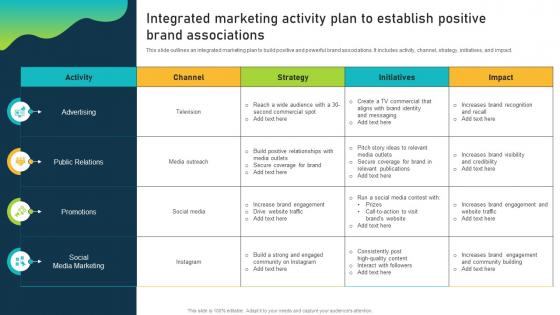
This slide outlines an integrated marketing plan to build positive and powerful brand associations. It includes activity, channel, strategy, initiatives, and impact.
People who downloaded this PowerPoint presentation also viewed the following :
Integrated Marketing Activity Plan To Establish Positive Brand Equity Optimization Through Strategic Brand with all 6 slides:
Use our Integrated Marketing Activity Plan To Establish Positive Brand Equity Optimization Through Strategic Brand to effectively help you save your valuable time. They are readymade to fit into any presentation structure.





FAQs for Integrated Marketing Activity Plan To Establish Positive Brand Equity Optimization
So basically you want your messaging, channels, timing and audience targeting all talking to each other instead of doing their own thing. Keep your brand voice consistent everywhere - social, email, PR, paid ads, whatever. Most people totally bomb the timing part though, which is honestly the most important bit. When your campaigns actually support each other instead of competing? That's when things click. Oh and make sure your data flows between everything so you can actually see how customers move through your funnel. I'd start by looking at what each team's doing right now and spotting where the messaging gets weird or contradictory.
Honestly, start with a brand guidelines doc that covers your visuals, messaging, and tone. Everyone on your team needs access to it - I can't tell you how many campaigns I've seen go sideways because someone didn't bother checking first. Templates are your friend here. Make them for social posts, emails, ads, whatever you use most. That way consistency just happens without thinking about it. Oh, and do regular audits where you look at all your channels together - it's wild how inconsistent things can look when you see them side-by-side. Do a brand audit this week to see where you're at right now.
Analytics shows you what's actually working across your channels and what isn't. You can see the whole customer journey - where they start, how they move between touchpoints, and where they bail out. Honestly, proper attribution tracking is a game changer once you set it up right. The numbers get pretty addictive to dig through! Focus on optimizing your channel mix so everything works together instead of fighting each other. Short version: track everything, then use that data to make your messaging and channels play nice. That's where you'll find the real insights.
Honestly, personas are like your secret weapon for figuring out where to spend your marketing energy. They tell you which channels actually matter and what messaging won't make people roll their eyes. Take a busy mom - she's definitely not scrolling LinkedIn at 2pm, right? You'd focus on Instagram, email her during school hours, maybe Pinterest for those weekend project ideas. The cool thing is personas keep your messaging consistent whether people find you through Google, social, or their friend's recommendation. Oh, and definitely map out each persona's journey across your channels first - saves you so much headache later.
Honestly, HubSpot or Marketo are total lifesavers for keeping everything coordinated - I wish I'd started with those earlier. For social stuff, Buffer's my go-to (though Hootsuite works too) since you can schedule everything at once. Your team will probably thank you for using Asana or Monday.com to track campaigns. Oh, and don't sleep on Google Analytics plus some social listening tools to see what's actually working. My advice? Pick one automation platform first. Then add other tools based on whatever's driving you crazy. Trust me, trying to do everything at once is a nightmare.
Look, SEO isn't something you just bolt onto your marketing - it works way better when it's baked into everything from the start. Do your keyword research, but match it with how you actually talk about your brand and who your customers are. Then use those same topics everywhere. Social posts, emails, even your PR team should know what keywords matter so they can naturally build links when they pitch stories. I know it sounds like more work, but honestly? It's so much easier than trying to coordinate separate campaigns that don't talk to each other. Just make one content calendar that hits multiple channels.
Look at metrics across your whole customer journey instead of just individual channels. Brand awareness stuff first - reach and share of voice. Then check engagement rates everywhere people interact with you. Attribution modeling is honestly where it gets interesting because you can see how channels actually work together (I always go down rabbit holes with this data). Track conversion rates and customer lifetime value too. Integrated strategies should make relationships stronger, so retention matters. Oh, and don't skip consistency metrics - like how aligned your messaging is. Build one dashboard so you're not jumping between a million different reports. Way easier to spot connections that way.
Social media is basically where your messaging gets amplified and people actually engage with you. Most of your audience will interact with your brand there first, so it can't just be doing its own thing. Your email campaigns, content, PR stuff - it all needs to connect back to social somehow. That's where conversations happen and you get instant feedback. Honestly, I think of it as the glue holding everything together. Just make sure your social content matches your brand voice across platforms. Map out how each one supports your main goals and you'll be good.
Think of storytelling as the thread connecting all your marketing stuff. Your brand needs one main story, then you just tell different pieces of it everywhere - emails, social posts, ads, whatever. Honestly, people's brains just work better with stories than boring feature lists. Pick your core narrative first (like who you're helping and why you exist), then figure out how each platform gets its own "chapter." The trick is keeping the same emotional vibe throughout. It's way more effective than random content that doesn't connect to anything.
Honestly, the worst part is when marketing, sales, and customer service are all doing their own thing with zero communication. Budget tracking becomes a nightmare too - you're throwing money at different channels and can't figure out what's actually working. Then there's the messaging mess where your social posts sound nothing like your emails or ads. Getting all your tech platforms to sync up? Good luck with that headache. I'd start with getting everyone on the same KPIs and maybe weekly check-ins so people actually talk to each other for once.
Ok so first thing - get everyone in the same room weekly. Content, social, PR, sales, even customer service people. I know it sounds like overkill but trust me on this. Once they start comparing notes, you'll be shocked how much they're accidentally duplicating work. Everyone needs the full picture of what you're trying to accomplish, not just their tiny slice. Map out the whole customer journey so people can actually see where their stuff fits in. Oh and definitely assign someone to wrangle all the timelines - otherwise it's chaos. The messaging coordination part is huge too.
Honestly, mobile is what ties everything together these days. People jump from their phone to laptop to TV constantly, so your messaging has to flow between all those screens. What's cool is mobile catches those quick moments - like someone spots your billboard then googles you right away. You'll want your mobile stuff connecting smoothly with emails, social ads, your website... instead of treating it as this totally separate channel. Which sounds obvious but you'd be surprised how many brands still mess this up. The whole point is making those transitions feel natural when people are bouncing around.
Honestly, you've gotta be watching trends like a hawk and ready to pivot fast. When Gen Z ditched Instagram for BeReal overnight, brands that moved quick won. Don't get stuck in those rigid yearly plans - they're basically useless now. I'd do strategy check-ins every quarter instead, maybe even monthly if things are really shifting. Your messaging and even brand voice might need tweaks based on what's happening culturally or economically. The teams that can reallocate budget and jump on new platforms fast? Those are the ones crushing it right now.
Think of content marketing as the backbone of everything else you're doing. You create one good piece, then spread it everywhere - social posts, emails, PR pitches, ads. Saves you from constantly starting from scratch, which honestly is a lifesaver. Plus it keeps your message consistent across channels instead of sounding like five different companies. Your SEO gets better too since you're actually publishing stuff worth reading. The trick is timing your content drops with your bigger campaigns so they're all working together. Otherwise you're just shouting into the void and hoping something sticks.
Honestly, customer feedback is like your sanity check for integrated marketing - without it you're just throwing stuff at the wall. I've watched teams burn through months on messaging that totally missed the mark. You need those voices to see if your brand actually flows from Instagram to email to wherever else you're showing up. Does it feel connected? Set up feedback loops however works - surveys, social listening, or just talking to people directly. Then actually use what you hear to tweak your messaging and timing. Your plan shouldn't be set in stone anyway.
-
Best way of representation of the topic.
-
I want to express my gratitude to SlideTeam’s presentation design services team for helping me create the best presentation of my life!