

Islam powerpoint presentation slides




Try Before you Buy Download Free Sample Product
 Impress Your
 Audience
 100%
100% Editable
 Save Hours
 of Time


Take your ideas to commanding heights. Get them aboard our Islam Powerpoint Presentation Slides.
People who downloaded this PowerPoint presentation also viewed the following :
Islam powerpoint presentation slides with all 19 slides:
Deck out your thoughts with our Islam Powerpoint Presentation Slides. They will come out looking good.


FAQs for Islam
So Islam has these five main things called the Five Pillars. There's believing Allah is the only God and Muhammad is his prophet, praying five times daily, giving to charity, fasting during Ramadan, and going to Mecca if you can afford it. Honestly, it's pretty organized compared to some religions. But they're not just beliefs sitting there - they actually shape how Muslims live day to day. The whole thing is about submitting to Allah and looking out for your community. You'll notice how it creates this rhythm in someone's life throughout the year.
So basically the Five Pillars give your whole life this structure. Prayer happens five times a day, which naturally breaks up your schedule. Ramadan completely flips how you eat and socialize for an entire month - dawn to sunset fasting. Then there's zakat, where you calculate and give away part of your wealth every year (not just random donations). The Mecca pilgrimage is honestly this massive life goal people save up for forever. Oh, and if you want to see how this actually works, just look up local prayer times sometime. You'll notice they line up perfectly with when the day naturally shifts anyway.
So Islam looks super different depending on where you are! Indonesian Muslims mix in Javanese stuff, West Africans use drumming in ceremonies - it's actually pretty cool. Mosque architecture? Totally varies. Middle Eastern ones are nothing like Malaysian or Moroccan styles. Prayer clothing, how people celebrate Ramadan, even what languages get used during worship - all depends on local culture. The basic beliefs stay the same though. Your Muslim coworkers from different countries might have completely different practices, but they're all coming from that same core faith. Just something to keep in mind when you're working internationally.
So the Quran is where Islamic scholars always start - it's the main source for all legal stuff. Got a legal question? They'll check if there's a verse about it first. If the Quran spells it out clearly, boom, that's your answer. But obviously it doesn't cover every single scenario (I mean, it's not like a massive legal textbook). When it's quiet on something, that's when they look at the Prophet's traditions and use reasoning. Honestly, if you're diving into Islamic law, just remember to check what the Quran says before anything else.
So basically the four main Sunni schools all approach things differently - Hanafi, Maliki, Shafi'i, and Hanbali. Some lean hard into reasoning and what works locally, others stick super close to the Quran and hadith. Shia Islam does their own thing entirely, focusing on what the Imams taught. You'll see these differences play out in real stuff like how people position themselves during prayer or specific legal decisions. Honestly the whole thing's way more complex than I thought when I first learned about it. My advice? Pick a few concrete examples to dive into rather than trying to wrap your head around all the theory at once.
So Hadith are recorded sayings and actions of Prophet Muhammad - they're the second most important Islamic source after the Quran. The Quran gives you big picture stuff and core beliefs. Hadith get into the nitty-gritty details of daily life - prayer methods, business practices, family relationships, that kind of thing. Honestly, they work together pretty seamlessly. Without Hadith, you'd have the foundational text but miss a lot of practical guidance. Muslims use both to understand how Islamic principles actually play out in real situations. If you're diving into Islamic studies, you'll definitely want to look at them as a pair rather than separately.
Actually, Islam doesn't pit faith against reason at all. The Quran literally tells people to think and reflect - it's encouraging intellectual curiosity. You've got this massive tradition of Islamic scholars who were basically the OG philosophers and scientists. Al-Ghazali, Averroes... these guys were brilliant and saw no conflict between using your brain and having faith. Their whole thing was that God gave you both revelation AND intellect, so obviously they're meant to work together. It's pretty cool when you think about it. If you want to dig deeper, those two scholars I mentioned are good starting points.
Dude, Islamic civilization basically saved so much knowledge when Europe was having its Dark Ages moment. The Golden Age scholars (8th-13th centuries) took Greek, Persian, and Indian texts and ran with them - gave us algebra, revolutionized medicine and astronomy. Their art is insane too. Those geometric patterns and calligraphy? Pure mathematical genius. Plus they invented pointed arches that later showed up in Gothic cathedrals. You should definitely check out the Alhambra if you get the chance - or even just hit up a museum with Islamic collections. Trust me, seeing those patterns in person hits different.
Actually, Islam has some really solid environmental stuff built in. Muslims are supposed to be stewards (*khalifa*) of the earth, not just take whatever they want. There's even a word for environmental destruction - *fasad* - which is basically corruption. Wastefulness (*israf*) is straight up forbidden too. A lot of scholars now say fighting climate change is literally a religious duty because of this whole balance (*mizan*) concept in creation. Pretty cool framework honestly - way more comprehensive than I realized before. So yeah, if you're doing climate work with Muslim communities, you can totally tie it back to these core beliefs instead of making it seem like some separate Western thing.
Dude, Islamic philosophers were huge for Western thought. During Europe's Dark Ages, guys like Averroes, Avicenna, and Al-Ghazali weren't just translating Greek texts - they were building on Aristotle and Plato with crazy new ideas in logic, medicine, and math. Their work directly shaped Christian thinkers like Aquinas later on. Honestly? The Renaissance probably wouldn't have happened without them. They kept intellectual culture alive when Europe basically went offline for a few centuries. If you're trying to understand medieval philosophy or even how modern science developed, you've gotta start with these Islamic scholars first.
So basically, fasting and prayer build connections in two ways - with God and with other Muslims. During Ramadan, millions of people are doing the exact same thing you are, which honestly creates this weird but cool sense of unity. Everyone's hungry and reflecting together, you know? The five daily prayers work similarly since Muslims worldwide are all facing Mecca at set times. But the community part really hits during iftar dinners - that's when families and neighborhoods come together to break the fast. It's actually pretty amazing how these practices shape both personal faith and group identity. You should check it out during Ramadan if you get the chance.
Honestly, there's so much misinformation out there. Like everyone thinks Islam oppresses women, but it actually gave them property rights and divorce way before Western countries did. Jihad doesn't mean "holy war" either - it's mostly about personal spiritual struggle. Oh and here's something that always surprises people: most Muslims aren't even Arab. Indonesia, Pakistan, and India have the biggest populations. The whole violence stereotype is pretty unfair too since the Quran literally forbids killing innocent people. I'd skip the news headlines if you really want to learn about it - actual Islamic scholars will give you way better info.
Honestly, there's way more interfaith stuff happening than people realize. Muslims are working with Christian and Jewish leaders in formal councils, plus tons of mosques do open house events now. Academic programs are huge too - universities love these partnerships. Social media's been a game changer for direct conversations between communities. Most groups start with things everyone cares about: social justice, helping the environment, community service. That kind of thing. If you want to see it yourself, look up local interfaith councils or when mosques near you have open houses.
Yeah, the media really messes with how people see Islam. News outlets are obsessed with terrorism and conflict - which makes sense from a "if it bleeds it leads" perspective I guess. But think about it: there's like 1.8 billion Muslims worldwide just going about their regular lives. Most people who don't actually know Muslims personally end up getting their info from these skewed news stories. It creates this whole warped view of what Islam actually is. Try following some normal Muslim voices on social media or whatever - you'll get way more realistic stories than just watching the evening news.
So Hajj is one of Islam's five pillars - Muslims are supposed to go to Mecca at least once if they can afford it and are healthy enough. It's wild seeing millions of people from everywhere gather like that. The whole thing is about spiritual cleansing and connecting with other Muslims worldwide. Plus you're literally walking where Prophet Muhammad walked, which has to feel pretty incredible. Most people I know who've done it say it completely changed their perspective on life. Oh, and if you ever want to have a really deep conversation with a Muslim friend who's been - asking about their Hajj experience usually opens up some amazing stories.
-
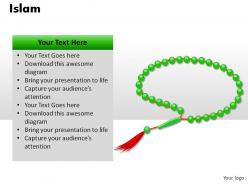
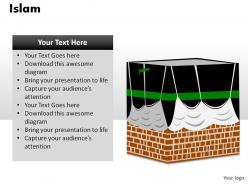
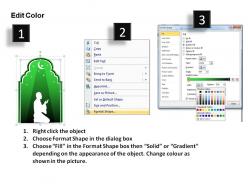
image and color in this template is suit for islamic topic presentation
-
Wonderful templates design to use in business meetings.
-
Much better than the original! Thanks for the quick turnaround.