


Diapositivas de presentación de Powerpoint de propuesta de empresa conjunta






Try Before you Buy Download Free Sample Product
 Impress Your
 Audience
 100%
100% Editable
 Save Hours
 of Time


Unir los recursos comerciales y adquirir experiencia para lograr el negocio de una empresa en particular es un movimiento corporativo importante. Utilice estas diapositivas de presentación de PowerPoint de propuesta de empresa conjunta para proyectar la decisión principal de la empresa de una manera impresionante. Nuestro tema de PowerPoint de propuesta de acuerdo de empresa conjunta listo para presentar consta de contenidos a saber, introducción, formación, compra y venta, contactos principales, roles y responsabilidades de los socios, revisión de diligencia debida, acuerdo de compra y de empleado, anuncios públicos, etc. Además, las diapositivas aquí puede explicar temas importantes como derechos de negociación, resolución de disputas, etc. de una manera detallada para que quede claro para el futuro socio. Los emprendedores y otros profesionales de negocios pueden hacer uso de este gráfico PPT de emprendimiento empresarial para tener una gran impresión sobre la organización objetivo. Expanda su empresa y haga que sus clientes comprendan todo el proceso de adquisición empleando este tema de PowerPoint de licitación de empresa conjunta. Resalte el talento, las habilidades y el personal para que se complementen en una empresa conjunta para formar una alianza comercial prometedora. Los contactos principales para la organización individual, incluida la designación y la dirección, se muestran en este diseño PPT de contrato de fusión de empresa diseñado profesionalmente. Los roles y responsabilidades de los socios se pueden enumerar para un proceso de adquisición de negocios sin problemas. Las condiciones en caso de una disputa entre los socios se establecen en esta plantilla de PowerPoint de propuesta de empresa de organización personalizable. Además, puede anunciar el historial corporativo de los servicios que ofrece y demostrar su experiencia en nuestros diversos nichos. Descargue estos elementos visuales PPT de propuesta de acuerdo empresarial conjunto para resolver todas sus preocupaciones de acercarse y adquirir empresas objetivo.
People who downloaded this PowerPoint presentation also viewed the following :
Contenido de esta presentación de Powerpoint
Diapositiva 1 : Esta diapositiva presenta la propuesta de empresa conjunta. Indique el nombre del partido y el nombre de la empresa.
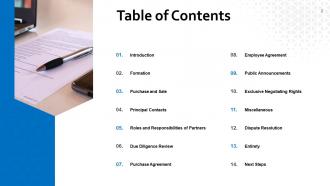
Diapositiva 2 : esta diapositiva muestra el índice de la presentación.
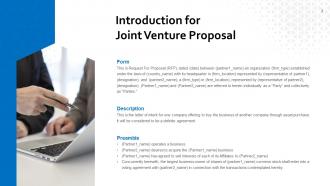
Diapositiva 3 : Esta diapositiva muestra la Introducción para la propuesta de empresa conjunta.
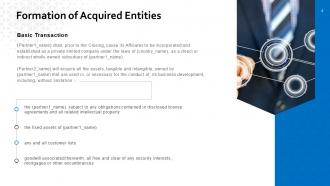
Diapositiva 4 : Esta diapositiva muestra la formación de entidades adquiridas.
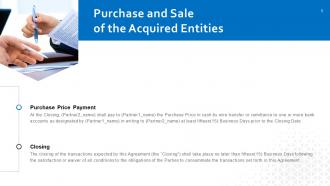
Diapositiva 5 : Esta diapositiva muestra Compra y Venta de las Entidades Adquiridas con Pago del Precio de Compra y cierre.
Diapositiva 6 : Esta diapositiva muestra los contactos principales para la propuesta de empresa conjunta.
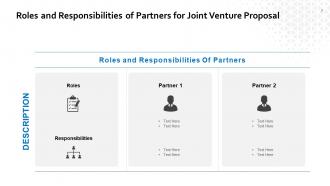
Diapositiva 7 : Esta diapositiva muestra las funciones y responsabilidades de los socios para la propuesta de empresa conjunta.
Diapositiva 8 : Esta diapositiva muestra la revisión de diligencia debida de la propuesta de empresa conjunta.
Diapositiva 9 : Esta diapositiva muestra el acuerdo de compra en la propuesta de empresa conjunta.
Diapositiva 10 : Esta diapositiva representa el acuerdo del empleado en la propuesta de empresa conjunta.
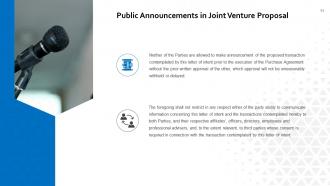
Diapositiva 11 : Esta diapositiva muestra los anuncios públicos en la propuesta de empresa conjunta.
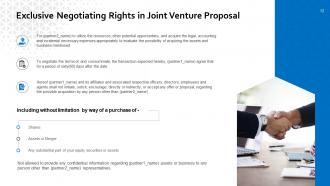
Diapositiva 12 : Esta diapositiva muestra los derechos exclusivos de negociación en la propuesta de empresa conjunta.
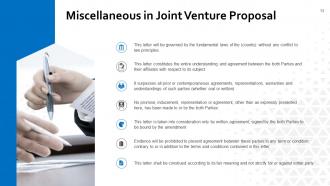
Diapositiva 13 : Esta diapositiva muestra la propuesta Varios en empresa conjunta.
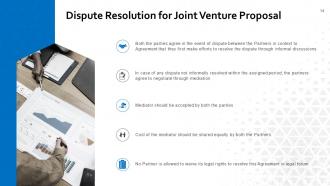
Diapositiva 14 : Esta diapositiva muestra la resolución de disputas para la propuesta de empresa conjunta.
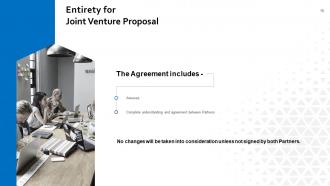
Diapositiva 15 : Esta diapositiva muestra la totalidad de la propuesta de empresa conjunta.
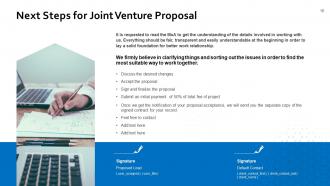
Diapositiva 16 : Esta diapositiva describe los siguientes pasos para la propuesta de empresa conjunta.
Diapositiva 17 : Esta es la diapositiva Contáctenos con dirección, número de contacto y dirección de correo electrónico.
Diapositiva 18 : esta diapositiva se titula Diapositivas adicionales para avanzar.
Diapositiva 19 : Esta es la diapositiva Acerca de nosotros para mostrar las especificaciones de la empresa.
Diapositiva 20 : Esta es la diapositiva Nuestra misión con Visión, Misión y Objetivo.
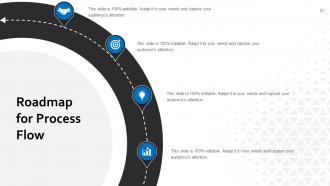
Diapositiva 21 : Esta diapositiva muestra la hoja de ruta para el flujo de procesos.
Diapositiva 22 : Esta es la diapositiva del plan 30 60 90 días.
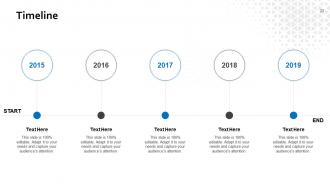
Diapositiva 23 : Esta es la diapositiva del cronograma de cinco años.
Diapositivas de presentación de PowerPoint de propuesta de empresa conjunta con las 23 diapositivas:
Ilumine a la gente sobre los diferentes intentos de hacer trampa con nuestras diapositivas de presentación de Powerpoint de propuesta de empresa conjunta. Profundice en ejemplos de fraude.




FAQs for Joint venture proposal
Start with the obvious stuff - who's doing what, what everyone brings, and how money works. Decision-making authority is huge too. Set your timeline and deliverables upfront. I know it sounds boring, but map out exit strategies now while everyone's still friends. IP ownership matters more than people think. Toss in confidentiality clauses and whatever compliance stuff applies to your industry. Get it all down on paper first, then definitely run it past a lawyer. Way easier to hash this out now than when someone's pissed off later.
Okay so you definitely want to hit them with solid market data - like actual numbers on market size and growth projections. Partners need to see you've done the research, not just thrown together some vague pitch. Look for gaps your competitors aren't filling that you two could tackle together. Honestly, I'd probably focus on finding 2-3 really strong data points that prove why your combined companies make sense right now. The key thing is connecting those market opportunities directly to what each of you brings to the table. Numbers beat fancy partnership talk every single time.
Honestly, the biggest landmines are usually control battles and IP mess-ups. You'll want super clear rules about who decides what, plus solid dispute processes. Cultural clashes kill partnerships faster than you'd think - I've watched companies implode just because their work styles were totally incompatible. Don't forget exit clauses either. Performance metrics help too so everyone knows what winning looks like. Oh, and definitely nail down how you're protecting each other's intellectual property. Write everything down now or you'll regret it later when things get messy.
Show investors how your partners actually complement each other - like one brings the tech chops, the other has distribution locked down. Map out specific stuff: patents, customer lists, manufacturing capacity. The magic happens when you prove 1+1=3, not just list what each company does separately. Connect Partner A's strengths to how they boost Partner B's game. Honestly, concrete examples work way better than vague promises. Pull out past wins from similar partnerships both sides have done. Investors eat up those "we've done this before and crushed it" stories.
Look, financial projections are what make or break your joint venture pitch. Partners want to see realistic revenue and cost forecasts - basically proof this thing can actually make money. Without decent numbers, you're asking people to invest based on wishful thinking, which never goes well. The projections also help figure out who contributes what and gets what back. Plus you'll need them if you want outside funding down the road. Just don't go crazy optimistic with the numbers - I've seen that backfire when partners start digging into the details.
Dude, you absolutely have to nail down the decision-making structure in that proposal. Create an org chart showing reporting lines, spell out voting rights, and be crystal clear about which partner controls what areas. Seriously, "we'll work it out as we go" is partnership suicide. Map out board composition, management roles, meeting schedules - the whole thing. Oh, and don't forget deadlock procedures because that'll definitely come up at some point. Different decision types need different approval thresholds too. Trust me, being super specific now saves you from endless fights later when money's actually on the line.
Honestly, get super specific about what you're both doing and when. Map out exactly what "success" looks like - actual numbers, not fluffy stuff like "expand market presence." Say "hit 15% market share in Region X by March 2026" instead. Break down who's responsible for what, including who gets to make the final calls when things get messy. And they will get messy, lol. Set clear boundaries around what's included so you don't end up doing way more work than planned (scope creep is real). Draft this together with your partner - don't just send them something you wrote alone.
Dude, cultural fit can totally make or break these joint ventures. I've literally watched partnerships implode over stupid stuff like meeting styles - wild, right? Your proposal needs to spell out how both companies' values actually work together. Risk tolerance, communication habits, hierarchy stuff - if you clash on the basics, even brilliant strategy won't save you. Decision-making gets messy fast when cultures don't mesh. Throw in some real examples of where you've collaborated successfully before, and maybe suggest integration activities upfront. Sounds cheesy but it works.
Honestly, the biggest mistake is being vague about who does what and how you'll measure success. Don't rush due diligence either - I know it's boring as hell, but I've watched deals completely implode because people got excited and skipped the legal groundwork. Get crystal clear on profit splits, who makes final calls, and exit plans before anyone touches a pen. Also, never assume your partner wants the same timeline you do. Really dig into what drives them and what roadblocks they're facing. Write everything down assuming you might hate each other later (dark but true).
You've gotta map out exactly when and how partners can bail - whether that's hitting certain milestones, wrapping up the project, or just after a set timeframe like 3 years. The messy part (and trust me, this is where things get ugly) is figuring out who gets what assets, IP rights, and how you'll value everything. Don't forget notice periods and non-compete stuff too. Each partner should have their own exit strategy based on what they're bringing to the table. Honestly, most joint ventures fall apart because people skip this step thinking they'll figure it out later.
So you'll want to track the usual suspects - revenue growth, cost savings from shared resources, market share in your target areas. Timeline stuff for launches too. Customer acquisition rates and operational efficiency gains are big ones. Honestly, skip the boring financial metrics everyone obsesses over. The operational ones? That's where you actually see if this thing's working or just looks good on paper. Set your baselines before you launch - otherwise you're just guessing at progress. I'd check in monthly the first year. Catch problems early before they snowball into disasters.
Yeah definitely include that timeline - it's what separates real proposals from pipe dreams. Partners want to know when stuff happens, when they'll see money back, and how you're tracking progress. Major phases, decision points, realistic deadlines with some wiggle room for when things inevitably go sideways. Oh and build in those checkpoint meetings where you can actually sit down and figure out if you're on track or need to pivot. I've watched deals completely implode because nobody agreed on timing upfront. Makes everything messy later.
First thing - figure out who owns what percentage and how you'll make decisions together. Liability protection is huge (seriously learned this the hard way with my last venture). Also nail down IP rights and profit splits upfront. What happens if someone wants to bail? Plan that exit strategy now, not when things get messy. Throw in some confidentiality stuff and how you'll handle disputes - mediation's usually cheaper than court battles. Oh, and whatever industry you're in probably has compliance rules you can't ignore. Get a lawyer to look it over before signing anything. Costs way less than cleanup later.
Look, case studies are like showing receipts - they prove you're not just winging it. Include 2-3 solid examples of JVs that actually worked in similar situations. It's way more convincing than just promising stuff will go great. Pick ones that match your industry or goals though, don't just grab random success stories. Honestly, the boring details matter here - show specific results, how long things took, what made it click. Partners want proof this model works, not just theory. It's basically like having good references when you're job hunting. Makes your whole proposal feel legit instead of just hopeful thinking.
Dude, you absolutely need everyone on board before you even present anything. Figure out who's gonna be impacted - leadership, department heads, the actual users, maybe even outside partners who might get weird about it. I totally screwed this up once by forgetting to include legal early on, and my "amazing" proposal got shot down instantly. Map out what each person cares about and what they'd consider a win. Then build your proposal around those concerns. Honestly, the more people feel like you actually listened to them upfront, the less pushback you'll get later. It's way easier than trying to convince skeptics after the fact.
-
Great
-
Great product with highly impressive and engaging designs.
-
Thanks for all your great templates they have saved me lots of time and accelerate my presentations. Great product, keep them up!
-
Wonderful templates design to use in business meetings.