

Key assumptions of a business plan




Try Before you Buy Download Free Sample Product
 Impress Your
 Audience
 100%
100% Editable
 Save Hours
 of Time


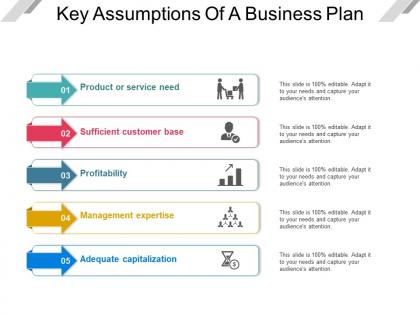
Incorporate Key Assumptions Of A Business Plan PowerPoint presentation for discussing the important assumptions with your teammates. The list of assumptions for developing a strategy, making a decision and planning can be explained to colleagues by employing this corporate plan PPT theme. The presumptions such as product or service need, sufficient customer base, profitability, management expertise, and adequate capitalization can be discussed with your teammates. This market research PowerPoint template can be of great benefit to understand the sales projection and pricing strategy. The significance of the estimation of the capital required can be showcased using this market analysis PPT layout. The methodologies to attract new business opportunities can be depicted by incorporating this enterprise sales PowerPoint template. By utilizing this business assumption PowerPoint layout, you can estimate the profits of your institution. Hence download this company plan assumption PPT slideshow for a better understanding of the marketplace.
People who downloaded this PowerPoint presentation also viewed the following :
Key assumptions of a business plan with all 5 slides:
Our Key Assumptions Of A Business Plan don't allow distractions to intrude. It ensures intensity of focus.


FAQs for Key assumptions of
Start with your financial stuff - revenue growth, customer acquisition costs, pricing models. Market size and competition matter tons too. Then there's the operational side like staffing and overhead costs. Real talk though, I've watched so many entrepreneurs get burned by wildly optimistic projections. Growth rates especially - people think they'll capture 10% market share in year one when realistically it's more like 0.5%. Document everything with actual data backing it up, not just gut feelings. And honestly? Update your assumptions constantly once you start getting real feedback from customers. The market will humble you pretty quick if your numbers are off.
Honestly, market conditions mess with pretty much every assumption you'll make. Hot market? You can probably get away with higher prices and faster growth projections. But when things get rough, you've gotta be way more realistic about how long sales will take and what people will actually pay. I learned this the hard way - got way too optimistic during a good stretch and had to scramble later. Look at current trends and industry data to keep your assumptions grounded. Build in a few different scenarios too. That way you won't be totally blindsided if conditions shift.
Honestly, your target demographics are like the backbone of your whole business plan. They shape everything - pricing, marketing budget, revenue forecasts, you name it. Say you're targeting millennials instead of boomers, or urban folks vs rural ones. That completely changes how you predict buying patterns and which channels they'll actually use. Like, you wouldn't pitch luxury skincare the same way to broke college kids as you would to working professionals with disposable income, right? Once you nail down exactly who your ideal customer is, all your other assumptions start making way more sense. The specifics matter way more than people think.
Dude, you've gotta build wiggle room into your business plan from day one because the world loves throwing curveballs. COVID taught me that lesson brutally - every single assumption I had just evaporated overnight. Economic shifts mess with everything: customer spending, what suppliers charge you, whether banks want to lend money. Your revenue forecasts and market calculations? They're only as good as the conditions they're based on. Honestly, anyone who doesn't do scenario planning is asking for trouble. Create best-case, worst-case, and realistic versions, then revisit them every quarter when things inevitably change.
Dude, your financial projections are only as solid as the assumptions underneath them. Market size, customer acquisition, pricing - all that stuff feeds into your revenue numbers. Same goes for expenses and your growth timeline assumptions. I swear, half the business plans I see just have random numbers thrown together. But think about it - mess up your assumptions about customer behavior or market conditions and boom, your whole model's trash. Oh, and definitely write down what assumptions are driving each number so you can actually test them later when reality hits.
Test your assumptions before you blow your whole budget on them. Pick your biggest ones first - customer demand, pricing, whatever keeps you up at night. Then find cheap ways to prove or disprove them. Customer interviews are honestly the best thing you can do for demand validation. I learned this the hard way after assuming people wanted my product (they didn't lol). A/B test your pricing. Run tiny pilots. Look at what competitors are doing. Be ready to change direction when the data tells you you're wrong. Oh, and review these assumptions every few months so you don't get stuck.
Honestly, you'll want to check your customer acquisition costs and revenue projections monthly - those change fast once real data comes in. Pricing assumptions are massive too, especially when you see how people actually buy your stuff. Team growth projections always get me though - hiring takes forever and costs way more than anyone expects. Your competitive landscape shifts constantly (new players pop up out of nowhere), so I'd review that quarterly at least. Pick your top 5 assumptions and just stay on top of them rather than clinging to old numbers that don't make sense anymore.
Dude, seasonal swings will absolutely wreck your forecasting if you ignore them. Map out when you're busy vs dead - toy stores kill it in December but February is rough for most retail. I learned this the hard way honestly. Build your cash flow around these ups and downs, not some boring 12-month average. You'll need inventory ordered way before peak hits. Monthly forecasts work way better than annual ones. Otherwise you'll be scrambling when everyone wants your stuff and you've got nothing to sell them.
Set up monthly or quarterly reviews to check your assumptions - depends how fast things move in your space. I always create dashboard alerts when metrics drift 15-20% from what I projected, otherwise you'll drive yourself crazy checking everything constantly. Track the big stuff that actually matters: customer acquisition costs, conversion rates, market demand. Rolling forecasts work way better than those rigid annual plans honestly. That way you can tweak things gradually instead of doing some massive pivot later. Build flexibility into your process from the start so adjusting assumptions doesn't feel like you screwed up.
Your assumptions depend totally on what industry you're in. Tech companies burn cash fast but scale quickly. Manufacturing? You're looking at massive upfront costs and way longer development timelines. Retail has all these seasonal swings and inventory headaches that would stress out any SaaS founder. Service businesses obsess over how busy their teams are and what it costs to land clients. Then there's healthcare and finance - they've got regulatory stuff that other industries don't even think about. Honestly, your best bet is finding people already doing what you want to do and picking their brains about the real numbers.
Start by just talking to potential customers - way easier and cheaper than most people think. Surveys and interviews give you direct feedback, while industry reports and competitor research fill in the gaps. Honestly, customer conversations beat fancy data every time in my experience. Run small tests too - maybe an MVP or pilot launch to see what people actually do versus what they say they'll do. Those are totally different things. If you've got users already, try A/B testing different approaches. Don't rely on just one method though since they all miss something. Pick 2-3 that won't break your budget.
Look, competitive analysis saves you from making stuff up out of thin air. Check what others are charging, how they're doing, what customers complain about - suddenly your revenue projections aren't just wishful thinking. If competitors can't keep customers around, you'll probably face that headache too. But here's the good part: you'll spot where everyone else is screwing up and find actual gaps worth targeting. Use all this to reality-check yourself. Your numbers look crazy different from established companies? Better have solid reasons why you're the exception, not just hoping you're special.
Dude, bad assumptions will totally sink your business plan. Like, you'll think way more people want your product than actually do, or you'll budget way too low for costs. Investors aren't stupid - they'll catch these mistakes pretty fast and then you're screwed credibility-wise. Plus you might blow through all your money because your projections were garbage. I've seen it happen so many times. Do some actual market research first. Maybe run a few different scenarios so you're not just guessing and hoping for the best.
Dude, tech changes absolutely wreck startups compared to big companies. You've probably bet everything on how things work right now - so when tech shifts, suddenly your revenue model is toast and you're frantically rethinking user costs or even your whole business idea. Big corps just shrug it off since they've got money coming from everywhere. Honestly, some are so slow they barely notice change happening. I'd say check your assumptions every few months against whatever new tech is popping up. Also build some "what if" scenarios into your plan - both for disruptions that'll hurt and opportunities that might boost you.
Track your key metrics monthly - customer acquisition cost, conversion rates, churn, revenue per customer. Don't ignore what competitors are doing with pricing either (I've watched too many startups crash because they had blinders on). Market share data matters too. Keep an eye on bigger picture stuff that could mess with your assumptions - industry growth, regulatory changes, economic shifts. When your actual numbers consistently miss projections by 20% or more, that's your signal to revisit the whole plan. Oh, and set up those monthly reviews religiously - it's easy to let them slide.
-
Presentation Design is very nice, good work with the content as well.
-
Easily Editable.