


Avantages et inconvénients du leadership démocratique




Try Before you Buy Download Free Sample Product
 Impress Your
 Audience
 100%
100% Editable
 Save Hours
 of Time


Nos avantages et inconvénients de la direction démocratique présentent un arrière-plan attrayant pour n'importe quel sujet. Utilisez-les pour avoir l'air d'un professionnel de la présentation.
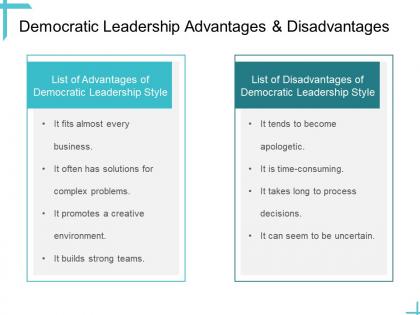
Avantages et inconvénients du leadership démocratique
Avantages du leadership démocratique :
- Participation et engagement accrus des employés
- Meilleure prise de décision grâce à la diversité des perspectives
- Amélioration de la motivation et de la satisfaction des employés
- Développement des compétences de leadership chez les employés
Inconvénients du leadership démocratique :
- Processus de prise de décision plus long
- Risque de conflits et de désaccords entre les employés
- Difficulté à maintenir l'unité et la cohésion de l'équipe
- Nécessité d'un leader compétent pour guider le processus
People who downloaded this PowerPoint presentation also viewed the following :
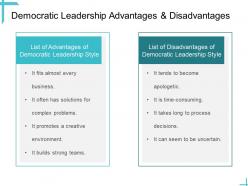
Avantages et inconvénients du leadership démocratique Avantages : - Participation et engagement accrus des employés - Meilleure prise de décision grâce à la diversité des perspectives - Amélioration de la communication et de la collaboration - Développement des compétences de leadership chez les employés Inconvénients : - Processus décisionnel plus lent - Risque de conflits et de désaccords - Nécessité d'un leader fort pour guider le groupe - Difficulté à atteindre un consensus dans certains cas
Nos avantages et inconvénients du leadership démocratique Ppt Show Guide vous permettront d'économiser un temps précieux. Ils sont prêts à s'intégrer dans n'importe quelle structure de présentation.
FAQs for Leadership democratic leadership advantages and disadvantages
So democratic leadership is basically getting your team involved in decisions instead of just dictating everything. I always ask for different perspectives before making the final call - honestly makes people way more invested in the outcome. Yeah, it takes longer than just deciding solo, but the engagement boost is worth it. Plus you get better ideas when everyone's contributing. My advice? Start asking for input on smaller projects first and see how it goes. Just don't get stuck in analysis paralysis - you still gotta make decisions eventually, even if not everyone agrees.
So basically, democratic leaders actually ask their team what they think before deciding stuff. Everyone gets to weigh in, you know? Autocratic leaders just make calls and expect people to follow - no questions asked. Here's the thing though - getting everyone's input takes forever sometimes. But people are way more on board when they helped decide. Autocratic is super quick, which is great for emergencies, but you'll miss good ideas and probably annoy people. I'd go democratic for complicated stuff where you need different viewpoints. Save the "just do it" approach for when things are actually urgent.
So here's the thing about democratic leadership - it gets people way more invested because they actually have a say in decisions. People become ridiculously creative when they know you'll listen to their ideas (seriously, it's wild). Instead of just following orders, your team helps build the plan, so they're naturally more bought in. You get better solutions too since everyone brings different expertise to the table. Oh, and here's a quick trick - next meeting, ask for their input first before you share your thoughts. Makes a huge difference in how engaged they get.
Honestly, feedback is what makes democratic leadership actually work. Your team has tons of expertise you're missing if you don't ask for their input on decisions and processes. But - and this is where most people mess up - you can't just collect feedback and disappear with it. Show them how their ideas shaped your thinking, even when you go a different direction. I've seen leaders skip this step and wonder why people stopped contributing. Short version: ask for input, then prove you heard it. Otherwise you're just pretending to be democratic while making unilateral calls.
Okay so first thing - be upfront about what's actually open for discussion. Don't pretend the budget isn't tight if it is, that's just annoying. Mix up how people can give input too. Some are talkers in meetings, others will write detailed emails or prefer quick surveys. Set actual deadlines though or you'll be "gathering feedback" until the heat death of the universe. Here's the big one: follow through matters more than anything. Publicly credit ideas you use. If you can't use something, explain why instead of letting it disappear into the void. People stick around when they see their input creating real change.
Honestly, the hardest part is that your company still wants one person to blame when things go sideways, even if you're trying to be all democratic about decisions. Time becomes a nightmare too - getting everyone's input on everything takes forever compared to just deciding yourself. Some people on your team might actually hate being asked their opinion constantly and just want clear direction. I learned this the hard way at my last job. You've got to pick your battles. Save the group discussions for stuff that really matters and just own the smaller calls yourself.
Dude, tech has made democratic leadership so much easier. Digital polls and shared docs let you get input from everyone, even when people are working remotely. The shy team members? They actually participate more through anonymous feedback tools - it's pretty cool. Real-time collaboration platforms like Miro help you catch ideas you'd totally miss in regular meetings. Virtual brainstorming sessions work surprisingly well too. Honestly, I was skeptical at first, but the whole thing just makes decision-making way more inclusive. Start with something simple like Google docs for your next team choice and see how it goes.
Yeah, democratic leadership can totally work in a crisis - you just can't stick to your usual slow-burn approach. Compress that consultation timeline like crazy. Grab quick input from your key people, make the decision, then explain your thinking to everyone right after. I've watched leaders completely paralyzed trying to build consensus while everything's falling apart around them. Don't do that to yourself. Set super tight deadlines for feedback and be crystal clear about what input you actually need. You're still involving the team, just at warp speed instead of regular pace.
Honestly, you've gotta make people feel safe to speak up without getting shut down or blamed later. Ask open questions and actually listen - don't just wait for your turn to talk. One-on-ones work great since some people need that private space first before they'll say anything in groups. Stop hogging all the airtime too (we all do this). Give your quiet folks direct chances to jump in. Here's the key part though - when someone finally shares something controversial or calls out a problem, thank them publicly for it. Maybe try a "no dumb questions" segment next meeting?
Honestly, trust is everything with democratic leadership. Your team won't care about decisions or speak up if they don't trust you. Be transparent about how you make choices. Admit when you're clueless - happens more than we'd like, right? Follow through on promises. Actually listen to people's ideas, even the ones you think are terrible. Don't hoard information like some corporate weirdo. Maybe start with something small? Let them weigh in on a decision that won't tank the company if it goes sideways.
Set up some structure - maybe rotate who talks first or do anonymous suggestion boxes. Small breakout groups work great before the main discussion too. The quiet people honestly have the best insights, I swear. Ask directly for input from whoever hasn't spoken yet. Some folks prefer writing things down or need time to think, so give them options beyond just talking. Ground rules help - like time limits so the chatty ones don't take over. Oh, and try one-on-one follow-ups afterward. People open up way more when it's not a group thing.
Dude, democratic leadership is a game changer for keeping people happy and sticking around. People perform way better when they actually have a say in decisions - it's wild how much of a difference it makes. Your team starts caring more about results because they helped create them, you know? Plus nobody wants to feel micromanaged all the time. I'd say start small though - maybe ask for their input on how to tackle a project before you just decide everything yourself. Honestly, once you see how much people light up when they feel heard, you'll never go back to the old way.
Honestly, democratic leadership is a game-changer for getting people invested. When your team has actual input on decisions, they care way more about the results. I've watched it completely flip toxic workplaces - suddenly people aren't just going through the motions anymore. You get better ideas too since everyone's bringing their expertise to the table. Trust builds naturally when people know you actually listen. Oh, and the engagement levels? Night and day difference. My advice would be start small - ask for their thoughts on an upcoming project and then actually use their suggestions. You'll be shocked how much it matters to them.
Oh totally, democratic leadership works great remotely! Honestly sometimes it's easier than in-person. You're already being more deliberate about communication anyway when everyone's distributed. I'd set up async brainstorming docs and do regular video calls where people actually get to talk (not just sit through someone's monologue). Definitely reach out to your quieter teammates directly since you can't read the room anymore. Oh and give clear deadlines for feedback - otherwise it drags on forever. Use tools where everyone can jump in equally too.
Oh man, this stuff is tricky! Like in Asian cultures with strong hierarchies, people won't challenge you even when you're begging for feedback. It's honestly super frustrating. Western teams usually jump right into the collaborative thing though. You've gotta adapt - maybe try anonymous surveys for the hierarchical cultures? Some people need way more processing time too, which I learned the hard way. Short answer: figure out your team's cultural vibe first, then tweak how you ask for input. Makes such a difference once you get it right.
-
Presentation Design is very nice, good work with the content as well.