


Leadership Vs Management Powerpoint Presentation Slides




Try Before you Buy Download Free Sample Product
 Impress Your
 Audience
 100%
100% Editable
 Save Hours
 of Time


Our Leadership Vs Management Powerpoint Presentation Slides are topically designed to provide an attractive backdrop to any subject. Use them to look like a presentation pro.
People who downloaded this PowerPoint presentation also viewed the following :
Content of this Powerpoint Presentation
Leaders and managers are two higher-level decision-making roles that undertake essential responsibilities to transform businesses into thriving and successful enterprises. Leaders bring innovation to the company, whereas managers devise strategies and approaches to transform these visions into reality. Both are at the top of the hierarchy and perform similar jobs, but they still differ. Leaders focus on creating ideas, and managers are responsible for executing those ideas and attaining desired outcomes.
Read our blog on “Leadership and Management Development Model” to uncover strategies to take performance levels to a higher level.
Leaders and managers, when they work in harmony, can turn teamwork into dream work. Each role has its unique set of positive traits, which, when honed, can bring a new dimension to the job. Both leaders and managers must recognize and develop these traits to excel in their respective roles.
The blog encompasses powerful slides to clarify the difference between leaders and managers, illuminate the different leadership styles and skills, and give a few crucial tips to polish leadership skills to vision and access another stake of their role. Use these 100% customizable PowerPoint Slides to set a vision to guide change in business.
Get a precise overview of a robust sales management competency framework that can transform you into a proficient sales leader.
Without further ado, let's get started.
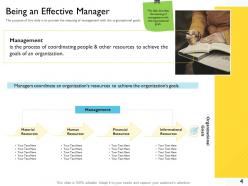
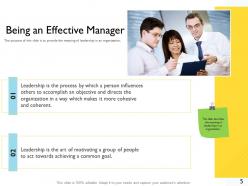
Template 1: Being an Effective Manager
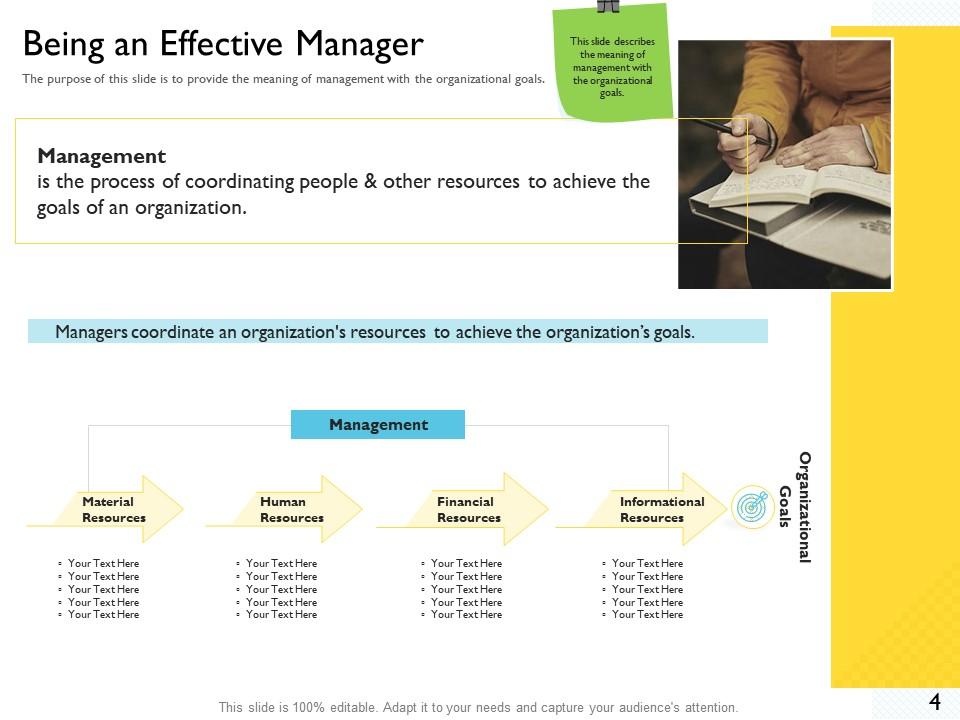
Use this PPT Template to illuminate an effective manager's qualities, duties, and responsibilities. In addition, you can highlight some tips on how to carry out Managerial jobs effectively to drive organizational growth. From the stunning theme to the unique color scheme and professional typography, this slide gives a 100% professional look.
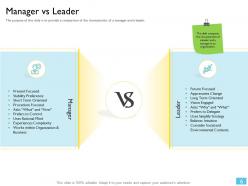
Template 2: Manager Vs. Leader
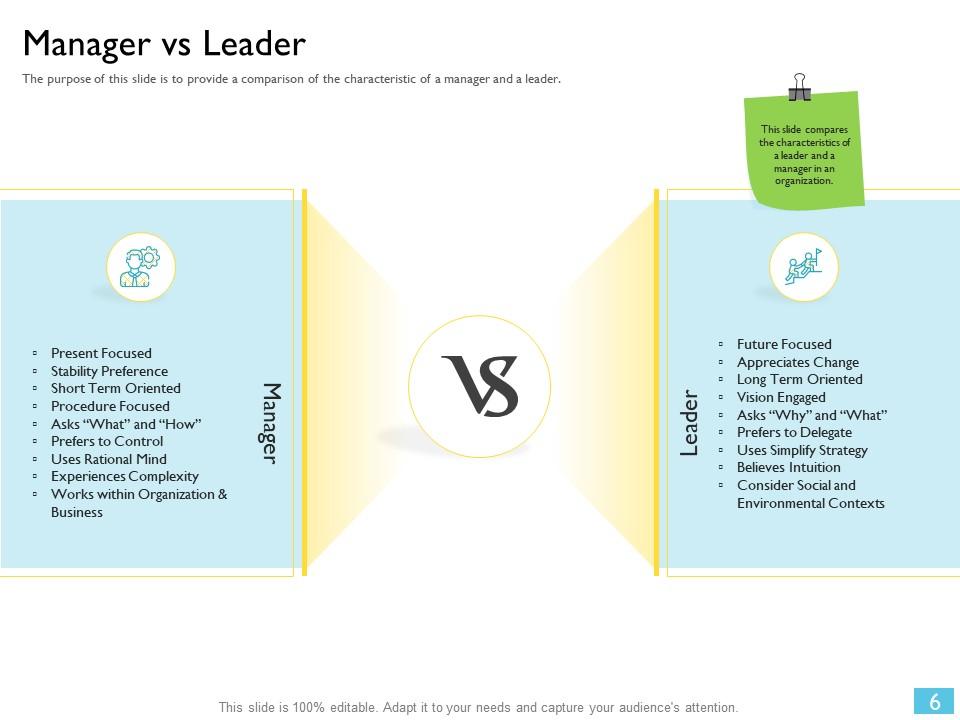
Successful business management requires both managerial and leadership skills. However, only some individuals understand that there is a key difference between them. The leader brings innovation and takes the business to advancement, whereas the manager monitors performance and organization and vouches for productivity. Leaders are born to take risks to achieve something groundbreaking. On the other hand, managers make cautious plans and take strategic actions to prevent any risks and uncertainties. Use this slide to unpack the critical differences between manager and leader. Compare things based on skills, duties, responsibilities, etc.
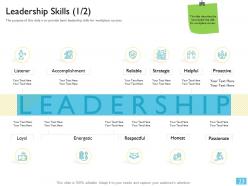
Template 3: Leadership Traits and Skills

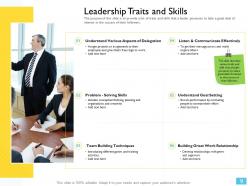
Business success often hinges on the qualities of leadership. Few bad leadership qualities can derail even the fail-proof techniques. Thus, understanding the traits and skills of good leadership is paramount. Besides this, there are so many reasons why you need to give a presentation on leadership skills. Whatever your reason, we've got the engaging slide to get you started. Use this slide to visualize leaders' traits, skills, and behaviors. Capitalize on this template and help professionals become successful leaders.
Template 4: Management Styles
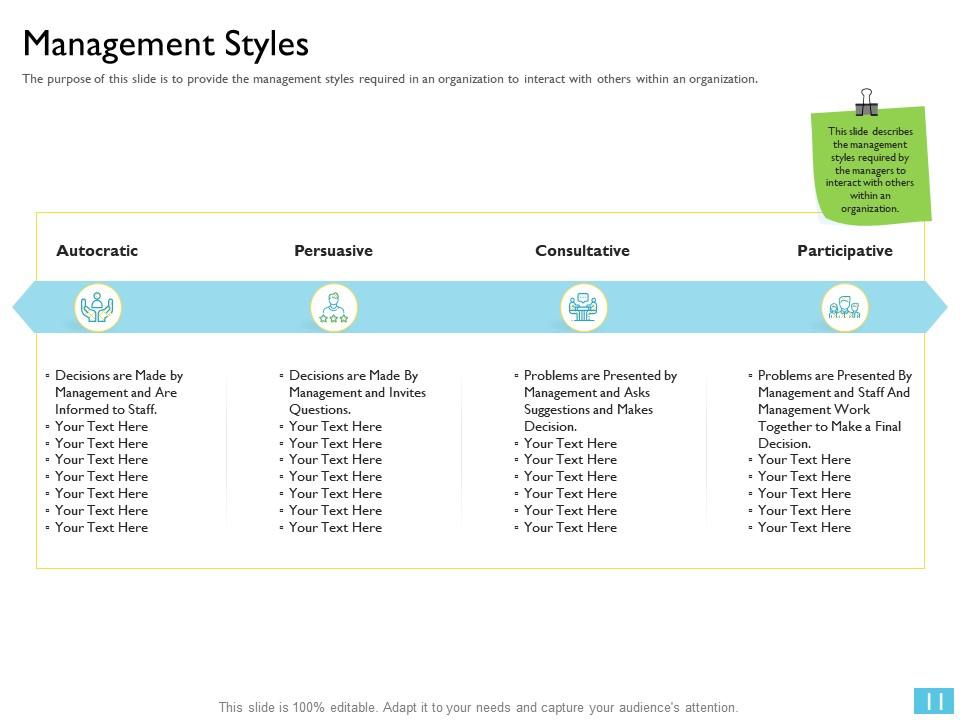
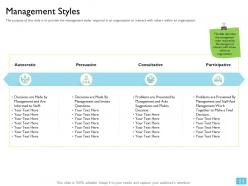
This PowerPoint Slide covers different management styles for collaborating with the team to achieve organizational goals. This slide has perfectly structured different management styles, including autocratic, persuasive, and participative. In the Autocratic management style, central control exists for speedy decisions. Persuasive management style is an extension of autocracy, whereas managers convince employees that they do the best. The consultative management style keeps the team at the center and improves relationships. Two-way communication motivates employees and ultimately assists in achieving planned objectives. In participative management, managers share the responsibility for decision-making with the team. Use this presentation to highlight the pros and cons of each style and define how these styles can impact the decision-making process and business growth.
Download this 100% editable slide and witness the impact of an effective management style firsthand.
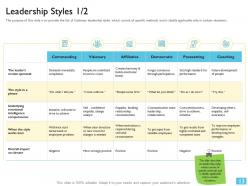
Template 5: Leadership Styles 1/2
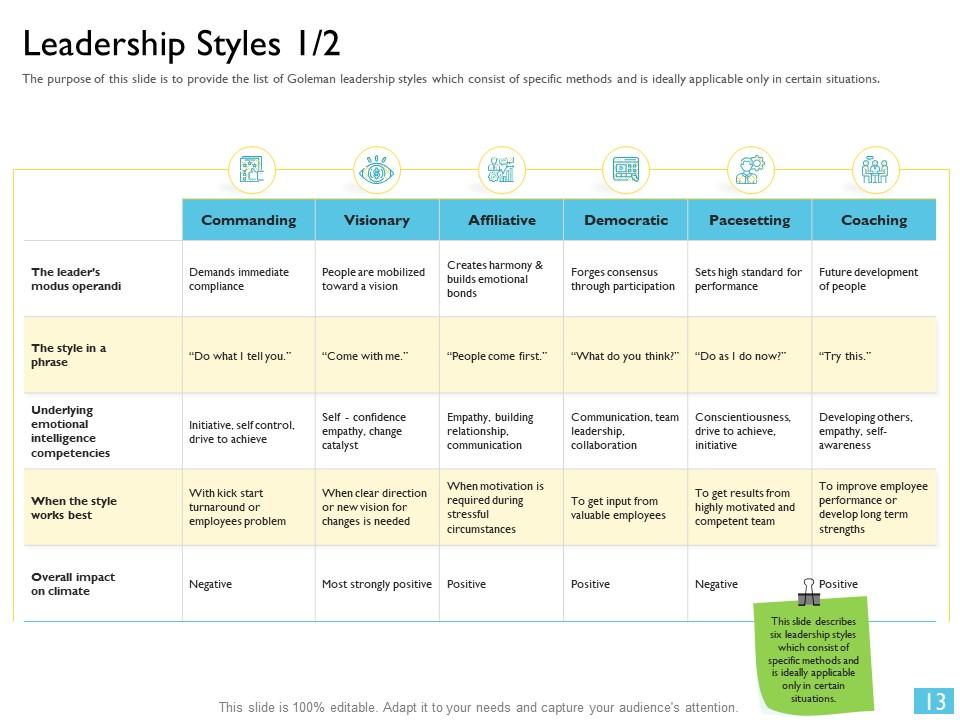
What makes good leaders? Their styles make them valid and successful leaders. These leadership styles and business resources and support help direct, guide, and manage teams. Use this PowerPoint slide to define the main characteristics of exemplary leadership and shed light on which style will be compatible with which business setting.
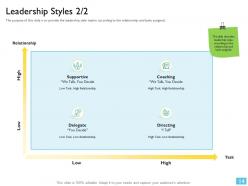
Template 6: Leadership Styles 2/2
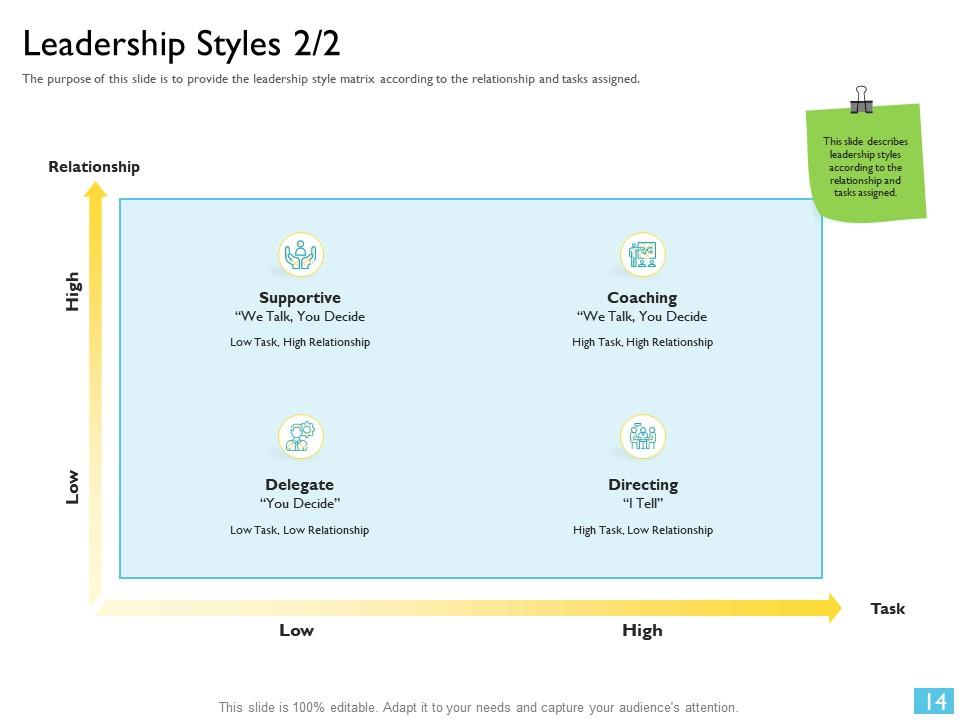
Leadership styles are pivotal in guiding and animating teams and attaining goals for business advancement. Use this PPT Layout to discuss leadership styles further. This slide can help you become a confident and capable leader. This slide is the perfect amalgamation of high-resolution images, fonts, etc., to awaken your audience.
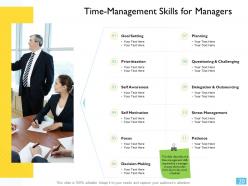
Template 7: Time Management Skills for Managers

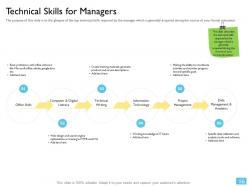
Good management relies mainly on time management skills. However, an efficient manager must also have skills to control the utilization of the most valued and undervalued business sources, take charge of critical situations, boost team motivation, and much more. However, making better use of time to attain goals is not a walk in the park, and that’s where this PPT Slide sheds light on crucial components that can help managers achieve more in less. Grab this slide to have everything in your control.
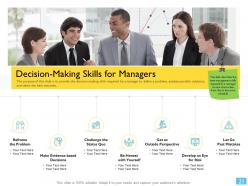
Template 8: Decision-Making Skills for Managers
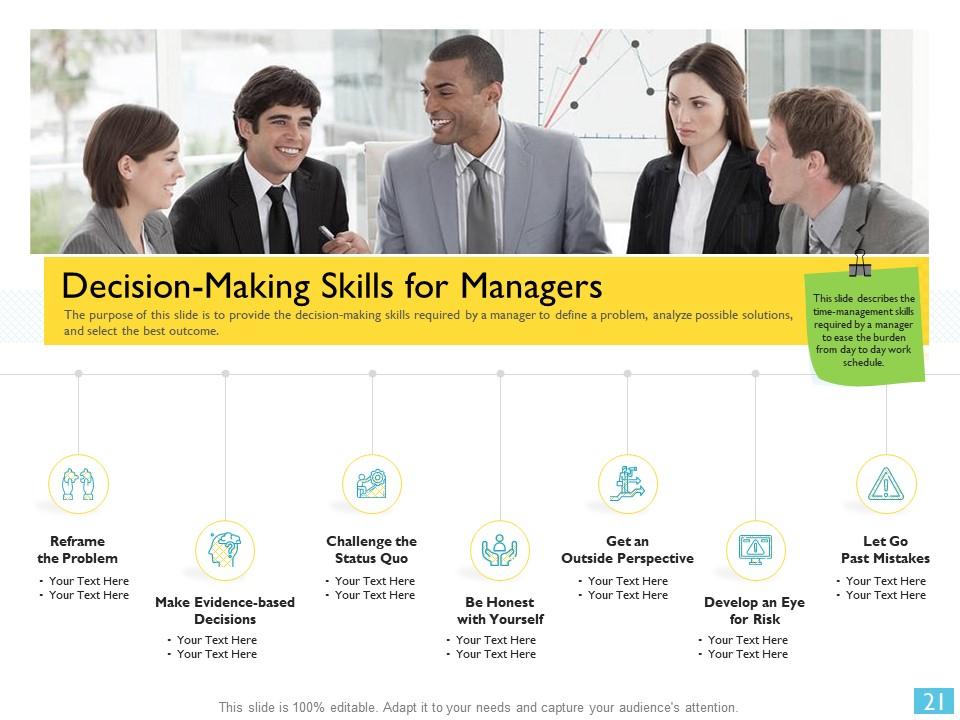
This PowerPoint Presentation demonstrates the decision-making process. It includes all the crucial skills a capable and confident manager must possess to attain goals within a defined timeline. The slide serves as a strategic approach to making time-wise decisions. Grab it today.
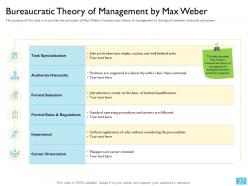
Template 9: Bureaucratic Theory of Management by Max Weber
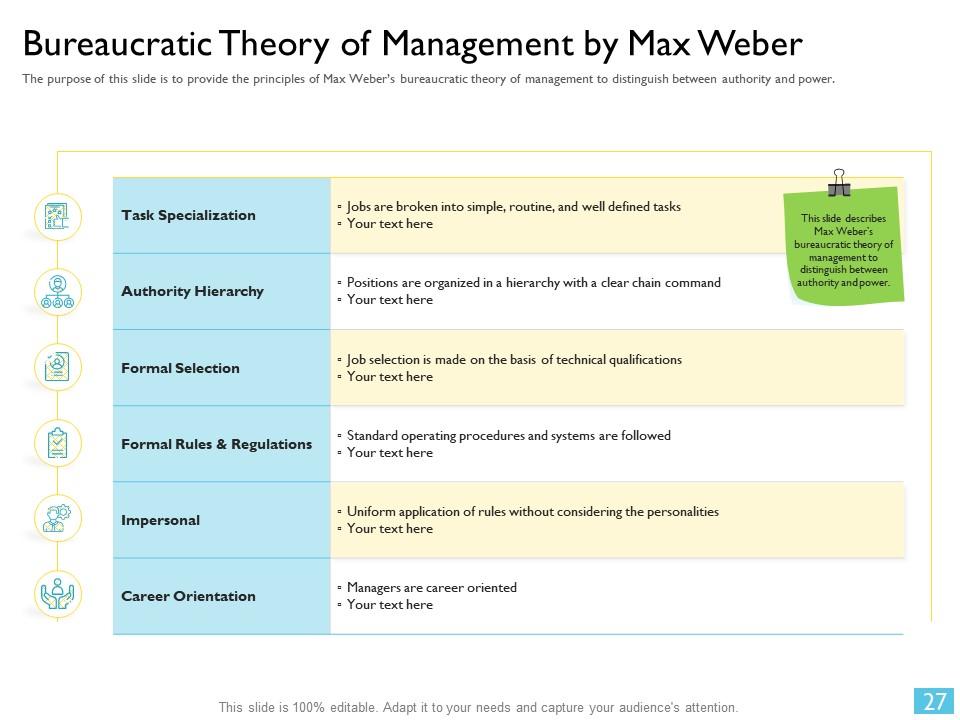
This PPT Framework encompasses the strategic approach of Max Weber's theory of bureaucracy to streamline organizational management. It defines a rigid hierarchy of authority, standardized procedures and techniques, and a transparent chain of rules to strictly follow. The slide subtly divides into different sections: task specialization, authority hierarchy, formal selection, formal rules and regulations, impersonal, and career orientation. This simple arrangement of the PPT slide helps smoothly seize its accessibility.
Template 10: Tips for Being a Better Leader
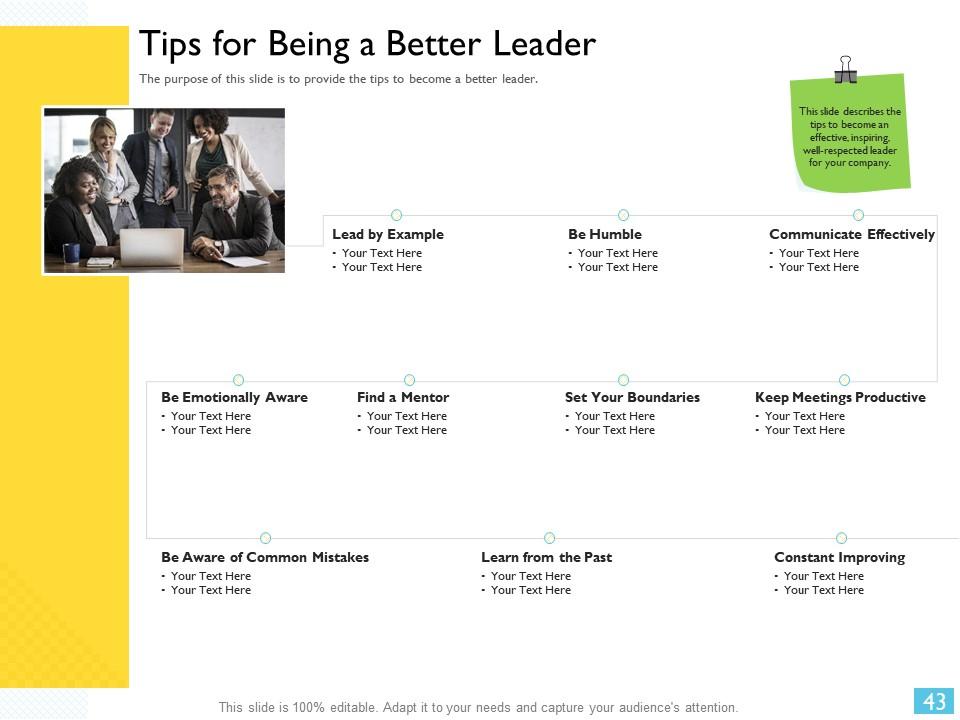
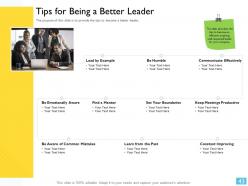
As we advance in our job levels, we will be assigned more top-level responsibilities. On the other end of the spectrum, a team working under confident leaders feels motivated and more connected to their business. Leaders are not born with the correct or polished leadership skills. They need to reassess and reform their strategies and skills to advance their careers and businesses. These PPT slides bring essential elements that can make you confident and capable leaders in any business setting and compatible with any team member.
Get the Right Tool to Succeed in Your Leadership Role
Brush up your leadership and management skills using our powerful PowerPoint Slides and move closer to becoming a competent leader. Leadership and management skills can be developed or polished at any stage; you only need robust tools and effective techniques. SlideTeam is here to back your vision into a tangible goal anytime, anywhere.
Grab this Management of Team Security Slides bundle to uncover the secrets of building an effective security guard team.
Leadership Vs Management Powerpoint Presentation Slides with all 54 slides:
Use our Leadership Vs Management Powerpoint Presentation Slides to effectively help you save your valuable time. They are readymade to fit into any presentation structure.



FAQs for Leadership Vs Management
So basically, management is all about keeping the machine running - budgets, deadlines, making sure stuff gets done on time. Leadership though? That's where you're getting people excited about where you're all headed together. Managers handle the "how" and "when," but leaders own the "why" and "where we're going." Honestly, most jobs need both skills now, but if you want to move up, I'd focus way more on the leadership side. Vision stuff, learning how to actually influence people, emotional intelligence - that's the gold. Way harder to fake than just being organized (which don't get me wrong, still matters). Those soft skills are what separate the good ones from the great ones.
Look, start with making people feel safe to mess up - nobody's gonna take risks if they think you'll throw them under the bus. Actually celebrate the smart failures, not just wins. Stop micromanaging every little step (seriously, this kills creativity faster than anything). Let them figure out their own path to the solution. Try asking "what if we..." instead of just telling them what to do. Oh, and here's the big one - be their shield from all the corporate nonsense above you. They can't innovate if they're constantly dealing with politics and red tape. Trust me on this.
Look, management can totally kill your leadership if you're not careful about it. Micromanaging every little thing? That's just gonna crush your team's spirit. But here's what I've noticed - solid management actually helps leadership flourish. You need those systems and clear communication so people feel supported instead of suffocated. The trick is removing obstacles for your team while still giving them room to breathe and grow. Honestly, I think too many managers get caught up in feeling powerful rather than being useful. Quick check: are your habits empowering people or just feeding your need for control?
Leaders are all about the big picture - they inspire people and push for change. Managers? They're the ones actually getting stuff done and keeping things running smoothly. I've noticed good leaders don't mind uncertainty and they influence people without pulling the "because I'm the boss" card. They're always thinking "what if we tried this?" Meanwhile, managers are planning everything out and making sure results stay consistent. Honestly though, you need both. The smartest executives I know can flip between leader mode and manager mode depending on what's happening. It's like... different tools for different jobs, you know?
First thing - dig into what your company's actually trying to accomplish. Then figure out what resources you're working with (honestly, this step sucks but you gotta do it). Your vision should be exciting enough to get people pumped but realistic enough that you won't crash and burn halfway through. I always think backwards from the main goals - what would actually stretch the team in a good way? Get your stakeholders involved early so they can help you find that sweet spot between inspiring and doable. Oh, and don't forget to explain both the vision AND how you'll get there. People need the why AND the what.
Dude, there's a massive difference here. Management is mostly about hitting deadlines and keeping processes running smoothly - pretty mechanical stuff. Leadership though? That's where emotional intelligence becomes everything. You've got to read people, figure out what drives them, handle all the messy interpersonal drama. I swear, some of the smartest managers I know totally bombed when they got promoted because they just couldn't connect with their team on that human level. Makes sense when you think about it - managing controls systems, but leading means influencing actual people. And people don't respond to spreadsheets and logic alone.
Honestly, just flip your focus from tracking tasks to watching how your people actually engage. I'd start measuring stuff like whether your team feels empowered to make decisions and if they're bringing you fresh ideas. The magic happens when you stop micromanaging the "how" and let them own that part - you just worry about the big picture. Instead of jumping straight into instructions, ask "what do you think?" first. Sounds simple but it works. Oh, and make your one-on-ones about their growth, not just status updates. Start small though - don't overhaul everything at once or you'll overwhelm yourself.
You'll want to manage more during crises or when deadlines are breathing down your neck - stuff like budget planning where things need to run like clockwork. Leadership matters most when everything's changing or you're pushing for innovation. People need inspiration then, not just someone barking orders. Honestly though, I think most situations call for both - it's just about what to emphasize. Quick gut check: does your team need structure and accountability right now, or are they craving vision and motivation? That'll tell you which direction to lean.
Oh man, this stuff is so context-dependent. Like in Asian countries, there's way more respect for formal authority and structured chains of command - people expect that hierarchy. But then you've got places like Scandinavia where everything's super flat and collaborative. Silicon Valley's kinda similar actually. Power distance makes a huge difference too. Some cultures need those clear reporting lines while others let anyone jump in and lead projects. Honestly, I've seen people crash and burn when they don't adapt their style. You really can't assume what works in one place will fly somewhere else.
So here's the thing - most people think leadership and management are identical. They're not! Leadership is about inspiring people no matter where you sit in the company. Management? That's organizing stuff and keeping processes running. Oh, and people also believe you can't be both a manager AND a leader. Total BS if you ask me. The best bosses I've worked for did both effortlessly. My advice? Work on developing both skills. You'll crush it way harder when you can handle the day-to-day tasks while also motivating your team to actually care about the work.
Honestly, stop treating leadership and management like they're totally different jobs. You want people who can run the day-to-day stuff AND actually inspire their teams - yeah, they're harder to find but so worth it. I've watched companies crash because they promoted amazing managers who couldn't lead anyone out of a paper bag, or these charismatic "visionary" types who were disasters at actual operations. Train your current people where they're weak. Rotate them around so they get both experiences. Your job descriptions should demand both skill sets, not just one or the other. Figure out where you're lopsided first though.
Honestly, the best way is just throwing them into real management stuff - but start small. Give them a project to own or have them mentor someone new. Instead of just handing off tasks, let them make actual decisions and see the whole thing through from planning to cleanup. I always do a debrief afterward to talk through what worked and what was a disaster (there's always something lol). Set up low-stakes situations where they can practice the hard conversations, work with budgets, manage timelines. That combo of real experience plus your coaching afterward? That's what builds their confidence up.
Honestly, the biggest shift is you stop just putting out fires and start thinking like 2-3 years ahead. Your brain switches from "how do we fix this now" to "why are we even doing this?" There's no playbook anymore - which is terrifying at first, not gonna lie. You're literally making up the path as you go. The whole thing feels way more ambiguous than management ever did. Vision and culture stuff becomes your world instead of just following processes. It's weird how much you start asking "what if" instead of "when can this be done."
Honestly, 360-degree feedback is amazing - shows you exactly how people see your leadership style and catches those blind spots you miss. Cross-functional projects are perfect too since you're juggling deadlines while motivating people who don't even work for you (which is honestly harder than managing your own team). Executive coaching helps if you find someone who gets both the strategic and people side. Shadow leaders you respect when possible. Oh, and just ask your team straight up what's working and what isn't - they'll tell you. Pick one thing and stick with it for three months though.
Honestly, feedback is like having mirrors everywhere - shows you stuff you can't see on your own. When you're leading, it tells you if people actually get your vision or if they're just nodding politely while thinking you've lost it. Management-wise, you'll catch those annoying bottlenecks before they turn into disasters. Don't wait for yearly reviews though, that's useless. Try quick weekly chats or maybe anonymous boxes if people are scared to speak up. I swear, the gap between what we think is happening and reality is always bigger than expected.
-
Amazing product with appealing content and design.
-
Professional and unique presentations.
-
Innovative and Colorful designs.
-
Colors used are bright and distinctive.
-
Attractive design and informative presentation.
-
Really like the color and design of the presentation.
-
Editable templates with innovative design and color combination.
-
Innovative and Colorful designs.