

Maps of the african africa continent countries in powerpoint





Try Before you Buy Download Free Sample Product
 Impress Your
 Audience
 100%
100% Editable
 Save Hours
 of Time


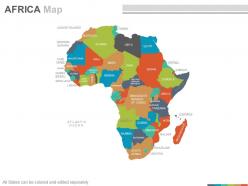
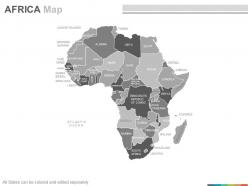
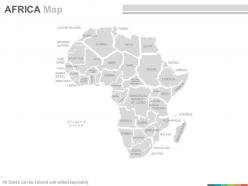
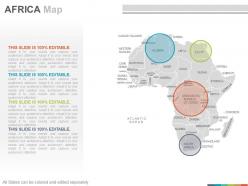
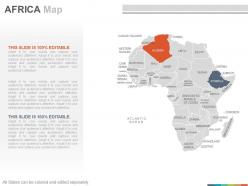
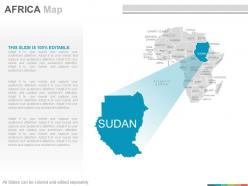
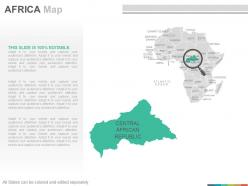
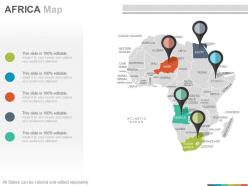
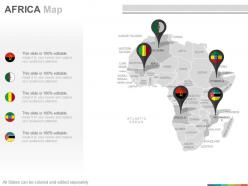
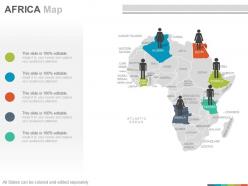
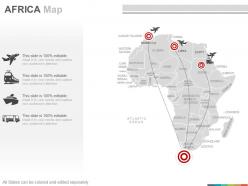
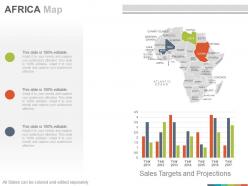
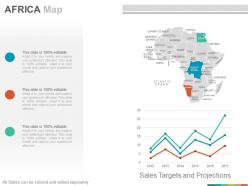
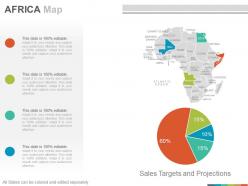
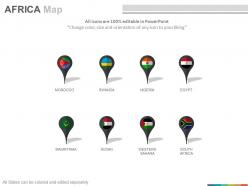
You are just a click away from representing the second-largest and second most populated continent so just download our maps of the African Africa Continent Countries in PowerPoint design. This PPT slide design involves you in explaining that the unique cultural heritage, its natural heritage, nation’s social and economic values, their relations with other nation’s worldwide, the importance of its situated countries emblems and flags, their political and ethical values etc. The Continent is very rich with its renewable natural resources as it has several high mountains which can also be described with this Presentation slide. This PPT slide design composes of beautiful graphics and PowerPoint images etc., for a valuable interpretation of the relevant topic. Additionally, our Presentation design helps in initiating the historical value of the continent as the Ethiopia which is the second largest country in terms of population served as a symbol of Africa’s independence in the colonial period. So explore more with this PowerPoint template. Our Maps Of The African Africa Continent Countries In Powerpoint hand you the advantage. You will gain from the beginning.
People who downloaded this PowerPoint presentation also viewed the following :
Maps of the african africa continent countries in powerpoint with all 22 slides:
Ride the surf with our Maps Of The African Africa Continent Countries In Powerpoint. They will keep you upright till you hit the shore.
FAQs for Maps of the african africa continent
So basically, European colonizers drew up African borders at meetings like Berlin 1884 - totally ignoring where different ethnic groups actually lived. It's pretty crazy how arbitrary those lines were. After independence, new governments were stuck with these weird inherited boundaries but had to somehow create national unity anyway. Take Nigeria or Kenya - they ended up redrawing their internal borders later to make things work better. Now mapping focuses more on practical stuff like managing resources and city planning. Though honestly, some of those colonial border issues still cause problems today with disputes and everything.
Maps of Africa are totally shaped by who's making them and why. Western maps usually stick to colonial borders and European names, but local mapmakers highlight traditional kingdoms or trade routes that ignore modern country lines. The language thing is massive - indigenous names vs colonial languages tells you everything about who the map's for. Some incorporate traditional art styles too, which is actually pretty cool. Honestly, the most important question is always who created it and what their agenda was. That context reveals the whole cultural perspective being pushed.
Maps are huge for African development, honestly. You can't build roads, railways, or power grids without knowing the actual geography first. Governments use them to find mineral deposits and figure out where the good agricultural land is. Digital mapping is where things get really interesting though - mobile banking, delivery apps, all that stuff needs GPS data. I mean, imagine trying to run Uber without maps, right? Investment decisions become total guesswork without solid geographic data. If you're looking at development projects there, definitely check what mapping resources exist in that area before you do anything else.
Honestly, digital mapping completely changes how kids connect with geography. Tools like Google Earth let them zoom into their own neighborhoods - they go crazy seeing their house from space. You can track real stuff happening around them instead of just drilling capitals (okay, Ouagadougou is still pretty fun to say though). Show deforestation changes over time, map local rivers they've actually seen. Most tools download for offline use too, which saves you when the wifi inevitably craps out. My advice? Pick one tool and build a lesson around something they can walk to after school.
Look at an African map and you'll see these weirdly straight borders cutting right through where tribes actually lived. European powers just sat around tables in the 1880s drawing lines based on their own competition - not caring about the people there. Pretty messed up honestly. Those arbitrary boundaries became major headaches after independence since ethnic groups got split apart or forced together. The straight lines following longitude/latitude? Dead giveaway of colonial mapmaking. Each border basically tells the story of some European conference room decision that still affects millions today.
So African mapping is totally different from what we're used to - it's way more about relationships and actual lived experience than just drawing precise lines on paper. Instead of coordinates, these maps show things like ancestral connections or where people migrate seasonally. Most are oral traditions or temporary drawings in sand, which honestly makes so much sense when you think about it. They incorporate time and memory as core elements. Really shows how Western cartography misses huge chunks of spatial knowledge that communities have always had. It's like storytelling mixed with navigation - pretty fascinating stuff if you're looking into African geography.
Scale's the biggest nightmare - massive deserts, rainforests, highlands, coasts all need totally different approaches. Satellite imagery gets useless when clouds block everything for months (tropical areas are the worst). Ground surveys? Good luck in conflict zones or places that are literally unreachable. Colonial borders make zero geographic sense too, which creates some really bizarre mapping situations. Oh and definitely partner with local institutions if you're doing this - they actually know the terrain and can verify your data isn't complete garbage.
Honestly, maps are a game-changer for this stuff. They show you exactly where people are moving - like from rural areas into cities - so governments can actually plan ahead for housing and schools. Way better than staring at endless spreadsheets, trust me. You'll see which regions people are abandoning and why (drought, no jobs, etc). The trick is layering population density maps with economic data - that combo hits different and shows you where help's needed most. Plus you can spot the root problems causing people to leave in the first place.
Yeah, climate change is making African resource maps super unreliable - what was accurate five years ago? Totally useless now. Rainfall patterns keep shifting so water tables move, desertification is eating up farmland, and coastal mining sites are literally washing away. Honestly, traditional paper maps are pretty much dead at this point. Most governments are switching to satellite tracking and real-time GIS systems instead. Oh, and if you're planning anything long-term there, definitely check you're using current data - I've seen projects fail because they relied on outdated info. Climate projections are your friend too.
Yeah, so colonial borders still mess with how Africa gets mapped today. Most cartographers just use those old European boundaries instead of actual ethnic or cultural territories that make sense. Resource extraction sites get way more attention than they deserve too - which is honestly pretty annoying. The main thing? Always check who made the map you're looking at. Different mapmakers have different agendas. I'd say cross-reference a few sources, especially ones by African cartographers. They'll give you a way better picture of what's actually going on geographically versus the colonial leftover stuff.
Honestly, most world maps are pretty messed up when it comes to Africa. The Mercator projection makes it look tiny when it's actually massive - bigger than North America, China, India, and Europe combined! Plus those colonial borders don't match real cultural groups at all. I'd go with Peters or AuthaGraph projections since they show actual sizes. Oh, and watch your color choices too - some can be weirdly stereotypical. It's wild how distorted our view of the continent is just from bad map choices.
African tourism maps are pretty cool - they use bright colors and icons to mark everything from Egypt's pyramids to South Africa's rock art. UNESCO sites get special symbols, and you'll see markers for museums and traditional villages too. What's smart is they include festival dates because visiting during Timkat in Ethiopia or Mali's Festival au Désert is totally worth planning around. Many maps have suggested cultural routes connecting related sites, like those old West African trade paths. Oh, and look for QR codes - some maps have digital layers with extra context that's actually helpful when you're figuring out your trip.
Dude, mobile GIS is absolutely huge across Africa right now. Smartphones are everywhere for field data collection - agriculture, urban planning, you name it. Cloud platforms like ArcGIS Online are taking off since internet infrastructure keeps getting better. Makes teamwork way smoother than the old days. Real-time satellite imagery? They're crushing it. Deforestation tracking, crop monitoring, water management - the whole deal. Honestly, the innovation coming out of local tech hubs is pretty impressive. If you're doing mapping work there, definitely check out mobile data collection apps and connect with those local partners. They'll know the terrain better than anyone.
So participatory mapping lets communities document their own land - boundaries, resources, all that stuff - using GPS and basic mapping tools. Really useful in places like Africa where official government maps totally ignore traditional land rights. Then some mining company rolls in and acts like nobody was there, you know? Communities can fight back with these maps, prove their claims, get involved in local planning. GPS tech has made this way more accessible than it used to be. Your best bet is finding local NGOs who run mapping workshops. They'll know the area and have the contacts you need.
Dude, you can't plan infrastructure in Africa without good topo maps - trust me on this. They show elevation changes, slopes, all that terrain stuff that'll make or break your project. Skip this step and you'll end up with a highway that dead-ends into a cliff face (seen it happen). Engineers use them to find the best routes and figure out real costs upfront. Water projects especially need these since, you know, gravity exists and water flows downhill. Oh, and they help you avoid building through protected areas too. Honestly, just get the detailed maps first - saves tons of money later.
-
it is good
-
Really like the color and design of the presentation.
-
Enough space for editing and adding your own content.