


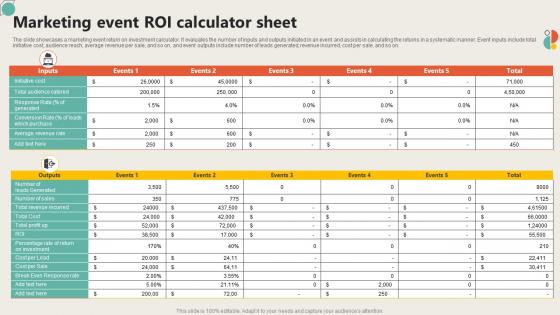
Marketing Event ROI Calculator Sheet




Try Before you Buy Download Free Sample Product
 Impress Your
 Audience
 100%
100% Editable
 Save Hours
 of Time


The slide showcases a marketing event return on investment calculator. It evaluates the number of inputs and outputs initiated in an event and assists in calculating the returns in a systematic manner. Event inputs include total initiative cost, audience reach, average revenue per sale, and so on, and event outputs include number of leads generated, revenue incurred, cost per sale, and so on.
People who downloaded this PowerPoint presentation also viewed the following :
Marketing Event ROI Calculator Sheet with all 6 slides:
Use our Marketing Event ROI Calculator Sheet to effectively help you save your valuable time. They are readymade to fit into any presentation structure.





FAQs for Marketing Event
Okay so you definitely need to track the money stuff first - revenue from attendees, lead quality, conversion rates. Cost per lead matters too since events get expensive quick (seriously, venue costs are insane these days). For engagement, look at session attendance, booth visits, social buzz, maybe some brand awareness surveys. Pipeline velocity is clutch - event leads usually convert way faster than cold outreach. Oh and set up your tracking codes beforehand! UTM parameters, unique landing pages, whatever. You'll hate yourself later if you can't connect the dots back to actual results.
Honestly, I'd focus on just 3-4 key things instead of going crazy with tracking everything. UTM codes for your pre-event emails are clutch, and most event apps now capture session attendance plus poll responses automatically. QR codes at booths actually work these days - people finally scan them! Social media tracking with your event hashtag is obvious but important. For in-person stuff, time how long people hang at exhibits and grab business cards digitally if you can. Oh, and send that post-event survey within 24 hours while people still remember. The real trick is connecting all this engagement data back to actual sales later - that's where the magic happens.
Honestly, start with Eventbrite or Cvent - they'll automatically grab all your registration data without you doing extra work. For tracking website stuff, Google Analytics with UTM codes is clutch. The real game-changer though? HubSpot or Salesforce connecting attendees to actual sales later on. I've seen people miss out on tracking conversions that happen like 3 months after an event. Excel works fine for making charts your boss gets, or Tableau if you're feeling fancy. Just make sure you set up tracking BEFORE launching anything - learned that one the hard way.
Honestly, post-event surveys are your best bet for figuring out if that marketing event was worth it or just expensive networking. Sure, you can count heads - but did those 200 people actually walk away wanting your product? Surveys bridge that gap between attendance numbers and real business impact. Send one out within 48 hours while everything's still fresh. Ask about purchase intent and how their opinion of your brand changed. The feedback's usually brutal but super helpful - you'll learn what totally bombed and what actually resonated with people.
Look, lead gen is basically how you figure out if your event was worth the cash or just an expensive party. Track qualified leads, their potential value, and conversion rates from past events. Here's the thing though - B2B leads can take forever to actually buy something, so don't freak out if your immediate numbers suck. Quality beats quantity every time. You gotta follow those leads through your entire sales process to see the real ROI. Otherwise you're just guessing and probably being way too pessimistic about what worked.
So start setting up UTM codes on all your social links like two weeks before the event - that's honestly the most important part. Track your usual stuff like engagement and reach, but don't sleep on story saves and views. Those actually tell you way more than likes sometimes. During the event, watch how your hashtags perform and if you're gaining followers. The real money though? Compare what you spent on social ads against actual registrations and sales that came through those UTM links. Each platform will surprise you with different conversion rates. Just make sure you're tracking everything from the start or you'll be kicking yourself later trying to piece it together.
First things first - you've gotta compare similar stuff. Two-day conferences obviously cost way more than webinars, but the lead quality is probably night and day different. Think about timing too. Trade show leads might take like 6+ months to actually buy anything, while people from digital events convert super fast. Don't forget the stuff that's harder to measure - brand awareness, keeping existing customers happy, all that. Honestly, I'd just make a simple scoring system that fits what you actually care about most, then stick to tracking the same way every time. Makes life easier.
Honestly, follow-up is where the magic happens with events. Sure, you'll collect leads during the actual thing, but most people don't buy on the spot. The real conversions come weeks later through your email sequences and personal outreach. I've watched events with pretty meh turnout absolutely kill it ROI-wise because they nailed the follow-up game. Without tracking what happens after, you're missing like 70% of the story. It's kinda like leaving a movie halfway through, you know? Give yourself at least 90 days to see what those contacts actually turn into.
Look, there's no perfect number but I shoot for keeping event costs under 30-40% of what you expect to make back. Don't just track immediate sales though - think pipeline, customer lifetime value, brand stuff too. Here's what drives me crazy: teams will stress about saving $500 on lunch while completely ignoring attendee quality. That's backwards. Put your money toward venue, speakers, and making the experience actually good rather than fancy swag nobody wants. Oh and define what "success" looks like first, then figure out your budget from there.
So here's the thing with brand awareness - it's like planting seeds that take forever to grow. People hit your events but don't buy anything right away, which is honestly super frustrating. Then months later they'll randomly remember your booth and convert after seeing you on LinkedIn or whatever. Most tracking systems are set to like 30 days, but that's way too short for events. You need 6-12 months minimum to see the real picture. I learned this the hard way - our event ROI always looked terrible until we extended those attribution windows. Now the numbers actually make sense.
Track stuff like brand awareness bumps and customer lifetime value changes - those actually matter. Survey people before/after events to see if their perception shifted, then multiply by your typical customer worth. Social media engagement spikes? Calculate what you'd pay for that same reach in ads. Honestly, it does feel like you're pulling numbers out of thin air sometimes, but better than pretending intangible benefits don't exist. Email signups are easier to track - just score those leads and estimate downstream revenue. Don't go crazy though, pick maybe 2-3 metrics or you'll never stick with it.
You really need benchmarks or you're flying blind honestly. Like if you're celebrating 15% ROI but everyone else is hitting 30%, that's rough. Or maybe you're stressing over numbers that are actually solid for your industry. It's kinda like not knowing if your salary is decent without checking what others make in the same job. Benchmarks help you figure out where you're actually falling short and what goals make sense. I'd grab 2-3 good industry reports and check your numbers against them every quarter. Makes a huge difference in knowing if you should pivot or keep doing what you're doing.
Honestly, the worst mistake is only looking at immediate sales afterward. You're missing the whole brand awareness piece that way. Track ALL your costs too - not just booth fees but staff time, travel, the whole nine yards. Attribution gets messy since people buy months later after seeing you multiple times. Set your success metrics before the event starts or you'll be scrambling later trying to figure out if it worked. I always compare event ROI against other marketing channels - sometimes you realize that trade show budget could've been way better spent on digital ads. Short and long-term tracking is key.
Dude, sponsorships are a game-changer for event ROI. You're basically getting someone else to pay for chunks of your event while tapping into their audience too. It's like borrowing their megaphone. The credibility boost is huge - quality sponsors attract better attendees who actually convert. I've watched events slash costs by 40% and double their turnout this way. Just don't go after any random company with deep pockets though. Find partners whose crowd overlaps with yours, otherwise you're just wasting everyone's time. Makes all the difference.
Okay so first things first - figure out what success looks like before you do anything else. Lead gen stuff is obvious: qualified leads, contact info, demo requests. Track engagement too - who showed up to sessions, booth traffic, social buzz. Oh and the money stuff your boss will definitely ask about later: cost per lead, revenue from the event, ROI. I always tell people to pick like 3-5 metrics tops that actually matter to your team. More than that and you'll go crazy trying to track everything. Get some baseline numbers if you've done events before. Set realistic targets and write them down where everyone can see. Trust me, defining success after the fact is a nightmare.
-
Unique design & color.
-
“Excellent service from the customer support team when I wanted a slide that was a bit different from those on their standard menu. Super helpful.”