


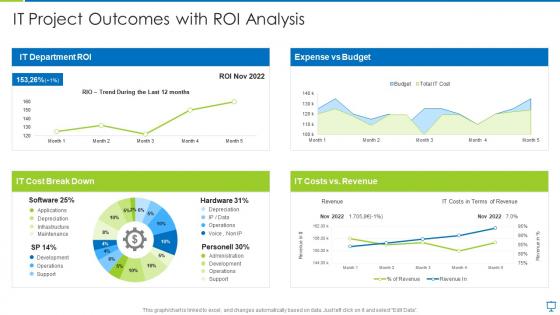
It project outcomes with roi analysis




Try Before you Buy Download Free Sample Product
 Impress Your
 Audience
 100%
100% Editable
 Save Hours
 of Time


Our It Project Outcomes With Roi Analysis are topically designed to provide an attractive backdrop to any subject. Use them to look like a presentation pro.
People who downloaded this PowerPoint presentation also viewed the following :
It project outcomes with roi analysis with all 7 slides:
Use our It Project Outcomes With Roi Analysis to effectively help you save your valuable time. They are readymade to fit into any presentation structure.





FAQs for It project outcomes
Focus on the basics first: cost savings, revenue bumps, and productivity gains. Time-to-value is huge too. Track error reduction rates and how much smoother operations get afterward. If users are involved, definitely measure their satisfaction - that data is pure gold when you need budget for the next project. Security and compliance improvements are real benefits but honestly a pain to put numbers on. Oh, and don't go overboard trying to measure everything. Pick maybe 3-4 metrics that actually matter for your specific goals and stick with those consistently.
Honestly, the upfront stuff is just the tip of the iceberg. Yeah, you've got your obvious costs - licenses, hardware, implementation. But then there's all the hidden crap that adds up fast: maintenance contracts, training your team, support fees, downtime when you're switching over. Scope creep is basically guaranteed, so pad that budget. Don't forget indirect costs either - like how much time your people will spend babysitting the new system. I always make a spreadsheet tracking everything out 3-5 years because that's when the real picture emerges. Get actual vendor quotes instead of ballparking it. Trust me on this one.
Dude, you absolutely need stakeholders bought in from day one or you're screwed. They're the ones who actually know what success looks like and can tell you which features matter vs. which ones are just nice-to-haves. When they're involved, they become advocates for the project instead of resistors - and trust me, user adoption can tank even the most brilliant solution. Their feedback keeps you from going down rabbit holes too. I've seen so many projects fail because teams thought they knew better than the people who'd actually use the thing. Get them in on planning AND measuring results.
Honestly, risk management is like having a safety net for your budget. Spot problems early - integration issues, scope creep, resource shortages - and you won't get hit with nasty surprises later. I've watched projects completely implode, losing like 30-40% of their ROI because nobody saw the warning signs coming. Short sentences here work better than long ones, but here's the thing: you've got to bake contingency planning right into your project timeline from the start. Can't just slap it on at the end and hope for the best. Regular risk check-ins will save your ass every time.
Dude, timeline delays absolutely wreck your ROI. The longer you take, the later money starts flowing back in - it's simple math but painful. Budgets always balloon on stretched projects (seriously, when don't they?). Meanwhile your shiny new tech becomes yesterday's news before you even launch it. Future benefits lose value compared to immediate ones too, which sucks. You want to move fast enough to see returns quickly. But don't rush so much that you build garbage and have to fix everything later. That balance is tricky to nail down.
Look, I get that putting dollar signs on fuzzy stuff feels weird, but you've gotta do it. Figure out what that intangible thing actually affects first - like if better employee satisfaction means less turnover, calculate those hiring costs you'd save. Same with customer experience boosting retention rates. Security upgrades? Estimate what a breach would cost you. Yeah, it's kinda like educated guessing, but honestly executives need numbers they can stack up against other priorities. Just be upfront about your assumptions and get some business leaders to back your estimates. Nobody expects perfect math here.
For IT project ROI tracking, start with what you've got - Excel honestly works fine for smaller stuff. Microsoft Project and Smartsheet handle basic cost tracking pretty well. If you need something beefier, Clarity PPM and Planview have solid financial analytics (though they're pricier). Jira with financial plugins is decent for real-time tracking. ServiceNow's IT Business Management module is another option. The biggest thing? Pick whatever your team will actually use. I've seen fancy tools sit there gathering dust while people go back to spreadsheets. Start simple, then upgrade when you outgrow it.
Complex projects will absolutely tank your ROI if you're not careful. They cost way more upfront and take forever to show returns. Failure rates are higher too. Scope creep becomes this nightmare that just keeps eating your budget - I've seen it happen so many times. Users struggle to adopt complicated systems, which pushes back your payback timeline even further. Integration issues pop up everywhere. But here's the thing: sometimes the complexity is worth it if the business value is huge. Just don't kid yourself about the real costs and timeline when you're calculating ROI.
Benchmarking's basically your reality check - helps you figure out if your ROI projections make sense or if you're just being way too optimistic. Compare what you're expecting against industry averages and you'll quickly see where you stand. Other companies have done this stuff before, so why not learn from their numbers? It also shows you which metrics actually matter in your space. Honestly, stakeholders love seeing real data instead of just your gut feelings. Start with Gartner reports or hit up your industry association - they've usually got decent ROI benchmarks you can steal. Well, not steal, but you know what I mean.
Dude, scope creep will kill you every time. Legacy systems are basically designed to mess with your integration plans - I swear they do it on purpose. Training costs? Everyone forgets those exist until go-live day. Then there's the whole "users will love this immediately" fantasy... yeah right. Cost-wise, tack on 30% to whatever you're thinking. Benefits take way longer than anyone admits - push your timeline out at least 6 months. Oh, and maintenance isn't free forever. Talk to actual users before you finalize anything. They'll tell you stuff that'll save your butt later.
Wait 3-6 months after go-live so people actually get used to the system first. Compare your original projections to what really happened - cost savings, productivity, revenue, all that stuff. But here's the thing: don't just stare at spreadsheets. Actually talk to the people using it daily because they'll tell you what's broken. I've watched so many teams celebrate "successful" launches while users are quietly hating life. Measure the same things you promised at the start. Be brutally honest about what flopped. Write down lessons learned - you'll definitely need them next time.
Look, ROI matters but don't get tunnel vision on just the numbers. Some projects look amazing on paper but take forever to actually pay off. I'd weigh things like how complex the tech is, what resources you'll need, and honestly - how risky it is. A 300% ROI project means nothing if it's built on sketchy, unproven stuff. Business alignment is huge too. Plus check if your projects depend on each other - that gets messy fast. My move? Build a quick scoring system that balances ROI with all this other stuff. Way better than just picking the highest number.
Look, you want your IT projects hitting the stuff that actually matters to the business - revenue growth, cost cuts, competitive edge. Don't just automate whatever's easiest (we've all done that though). Map everything back to real business goals first. ROI gets so much cleaner when you can show how your project boosted customer retention or grabbed market share. Stakeholders actually get excited about funding when they see clear value. Plus your success metrics become way more meaningful. Honestly, this approach saves you from those awkward budget meetings where you're scrambling to explain why anyone should care about your project.
Dude, change management makes or breaks IT projects - I've seen amazing tech fail because nobody bothered with it. People just won't use new systems if you don't get them on board first. Train them properly, listen to their complaints (even the dumb ones), and actually make them want to switch over. Otherwise you're throwing money at software that'll collect digital dust. Honestly, the fanciest system is useless if your team ignores it. Don't wait until after you've built everything - start thinking about this stuff right from the beginning.
Honestly, Agile is a game-changer for ROI in fast-moving projects. You're shipping working software every few weeks instead of waiting months like the old waterfall days. When priorities shift (and they always do), you can actually pivot without losing your mind. The feedback loops keep you building stuff people want, not what sounded good in a meeting ages ago. Plus you avoid that nightmare scenario where you spend forever on something that's already outdated by launch. My advice? Start with your highest-value features first and knock those out in your early sprints.
-
Very well designed and informative templates.
-
Really like the color and design of the presentation.