


Marketing plan for cloud services powerpoint presentation slides




Try Before you Buy Download Free Sample Product
 Impress Your
 Audience
 100%
100% Editable
 Save Hours
 of Time


Get our professionally designed Marketing Plan For Cloud Services PowerPoint Presentation Slides to help the clients to determine the cloud journey with the company. With the use of this PPT slide deck, mention the key challenges of cloud services along with solutions to overcome those challenges. This PPT contains various templates explaining the company overview of key statistics, milestones, management team, etc. The need for cloud services in your business can be discussed by using a cloud computing PPT slideshow. Discuss the characteristics and benefits of cloud computing by using these readily available PPT layouts. Describes the additional benefits of cloud computing by taking the assistance of this PPT theme. Give an overview of the competitive landscape of cloud services. After that, showcase the types of cloud services provided by the company. The cloud computing models which are SAAS, PAAS, and IAAS can be easily described with the help of cloud management PPT templates. You can mention the impact of cloud services on the company by incorporating the cloud storage PPT presentation.
People who downloaded this PowerPoint presentation also viewed the following :
Content of this Powerpoint Presentation
Slide 1: This slide introduces Marketing Plan for Cloud Services. State your company name and begin.
Slide 2: This slide shows Agenda of Selling Cloud Services with related imagery and text boxes.
Slide 3: This is another slide showing Agenda of Selling Cloud Services with related imagery.
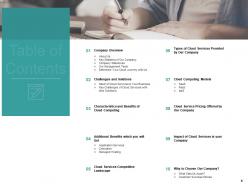
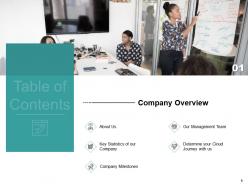
Slide 4: This slide displays Table of Contents describing- Company Overview, Cloud Computing, Challenges and Solutions, etc.
Slide 5: This slide showcases Table of Contents highlighting Company Overview.
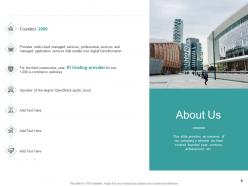
Slide 6: This is About Us slide to show company specifications etc.
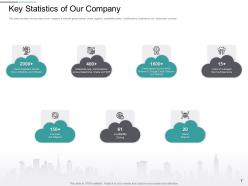
Slide 7: This slide displays Key Statistics of Our Company describing- Countries and Regions, Availability Zones, Global Regions, etc.
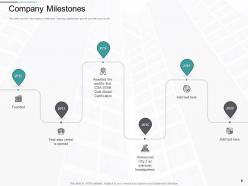
Slide 8: This slide shows Company Milestones with the help of a timeline.
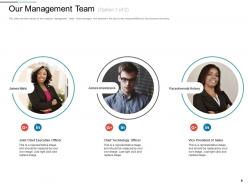
Slide 9: This slide shows Our Management Team with names and designation.
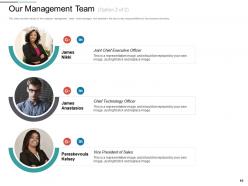
Slide 10: This is another slide showing Our Management Team with names and designation.
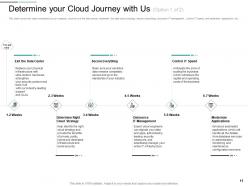
Slide 11: This slide presents Determine your Cloud Journey with Us.
Slide 12: This is another slide displaying Determine your Cloud Journey with Us.
Slide 13: This slide displays Table of Contents highlighting Challenges and Solutions.
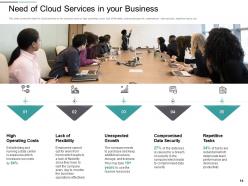
Slide 14: This slide shows Need of Cloud Services in your Business describing- Unexpected Growth, High Operating Costs, Compromised Data Security, etc.
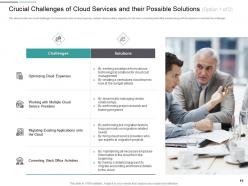
Slide 15: This slide presents Crucial Challenges of Cloud Services and their Possible Solutions.
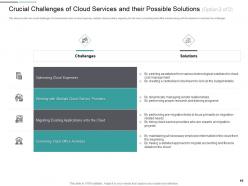
Slide 16: This is another slide displaying Crucial Challenges of Cloud Services and their Possible Solutions.
Slide 17: This slide represents Table of Contents highlighting Characteristics and Benefits of Cloud Computing.
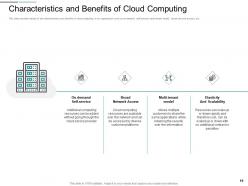
Slide 18: This slide showcases Characteristics and Benefits of Cloud Computing describing- Multi-tenant model, Elasticity and Scalability, On-demand Self-service, etc.
Slide 19: This slide shows Table of Contents highlighting Additional Benefits which you will Get.
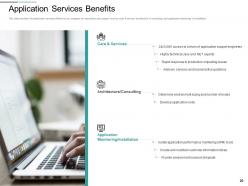
Slide 20: This slide presents Application Services Benefits describing- Care & Services, Architecture/Consulting, etc.
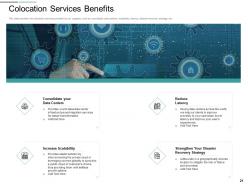
Slide 21: This slide displays Colocation Services Benefits describing- Consolidate your Data Centers, Increase Scalability, Reduce Latency, etc.
Slide 22: This slide represents Fully Managed Dedicated Hosting Services describing- Database Products, Custom Dedicated Servers, Networking, etc.
Slide 23: This slide showcases Table of Contents highlighting Cloud Services Competitive Landscape.
Slide 24: This slide shows Cloud Services Competitive Landscape in tabular form.
Slide 25: This slide presents Table of Contents highlighting Types of Cloud Services Provided by Our Company.
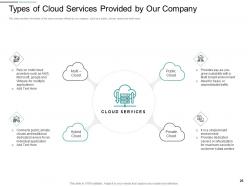
Slide 26: This slide displays Types of Cloud Services Provided by Our Company like Public Cloud, Private Cloud, Multi –Cloud, etc.
Slide 27: This slide represents Table of Contents highlighting Cloud Computing Models.
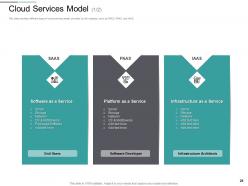
Slide 28: This slide showcases Cloud Services Model such as SAAS, PAAS, and IAAS.
Slide 29: This is another slide showing Cloud Services Model describing- Infrastructure, Software, platform, etc.
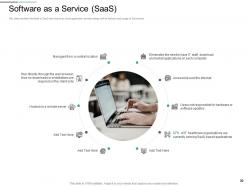
Slide 30: This slide presents Software as a Service (SaaS) such as- Managing from a central location, Accessible over the internet, Hosted on a remote server, etc.
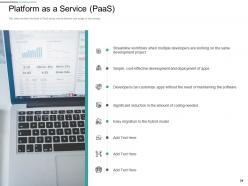
Slide 31: This slide displays Platform as a Service (PaaS) providing the detail of PaaS along with its features and usage of this service.
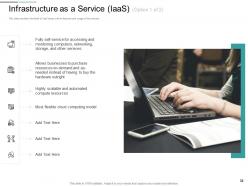
Slide 32: This slide represents Infrastructure as a Service (IaaS) describing its features and usage of this service.
Slide 33: This is another slide showing Infrastructure as a Service (IaaS).
Slide 34: This slide represents Table of Contents highlighting Cloud Service Pricing Offered by Our Company.
Slide 35: This side showcases SaaS Pricing Structure Offered by Our Company with variety of monthly plans.
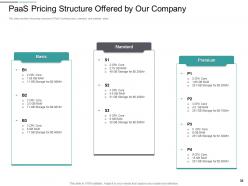
Slide 36: This slide provides the pricing structure of PaaS covering basic, standard, and premium plans.
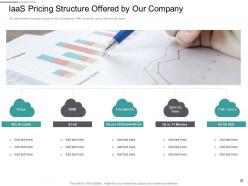
Slide 37: This slide shows IaaS Pricing Structure Offered by Our Company.
Slide 38: This slide presents Table of Contents highlighting Impact of Cloud Services in Your Company.
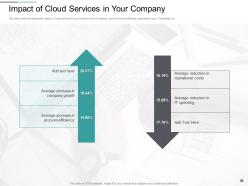
Slide 39: This slide displays Impact of Cloud Services in Your Company describing- Average increase in company growth, Average increase in process efficiency, etc.
Slide 40: This slide showcases Table of Contents highlighting Why to Choose Our Company?
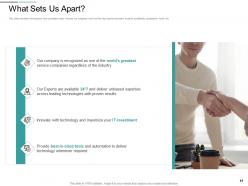
Slide 41: This slide is titled as What Sets Us Apart? with relatated imagery and icons.
Slide 42: This slide shows Customer Success Stories with images, names, designations, etc.
Slide 43: This slide displays Icons for Selling Cloud Solutions.
Slide 44: This slide is titled as Additional Slides.
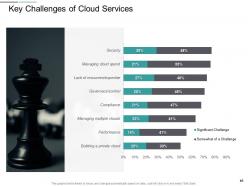
Slide 45: This side shows Key Challenges of Cloud Services with the help of bar graph.
Slide 46: This is Our Awesome Team slide with names and designation.
Slide 47: This is About Us slide to show company specifications etc.
Slide 48: This is Our Target slide. State your targets here.
Slide 49: This is Our Missions slide with related imagery and text.
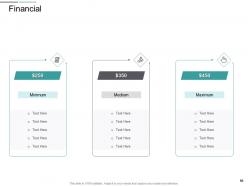
Slide 50: This is a Financial slide. Show your finance related stuff here.
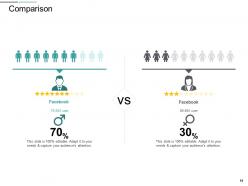
Slide 51: This is a Comparison slide to show comparison between products, commodities etc.
Slide 52: This is Our Goal slide. Show your firm's goals here.
Slide 53: This is a Quotes slide to convey message , beliefs etc
Slide 54: This is a Puzzle slide with additional text boxes.
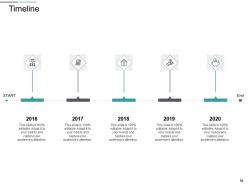
Slide 55: This is a Timeline slide. Show data related to time intervals here.
Slide 56: This is an Idea Generation slide to state a new idea or highlight information, specifications, etc.
Slide 57: This is a Thank you slide with address, contact number and email address.
Marketing plan for cloud services powerpoint presentation slides with all 57 slides:
Use our Marketing Plan For Cloud Services Powerpoint Presentation Slides to effectively help you save your valuable time. They are readymade to fit into any presentation structure.












FAQs for Marketing plan for cloud services
First thing - figure out who you're actually selling to. Startups want different stuff than big enterprises or mid-size companies. Your messaging has to match that. Cost savings and security are obvious selling points, but honestly the cloud space is so saturated you need to really stand out. Pricing strategy matters more than people think. Content marketing is your friend here - case studies kill it for cloud services. Oh, and don't sleep on partnerships with other vendors. Map out your whole sales process from when someone first hears about you to when they actually buy. Start with detailed buyer personas though, that'll guide everything else.
Look at who you're already helping first - what specific problems are you actually solving? Company size and industry matter way more than basic demographics here. Honestly, "small business" targeting is pretty useless because it's so vague. Zero in on real pain points instead. Maybe it's companies drowning in remote work tech issues, or ones outgrowing their old server setup. Survey your current clients about their biggest headaches - that's gold for building personas. Then test different messages with each group. Oh, and skip the generic stuff that could apply to anyone.
Dude, you absolutely have to do competitive analysis. Map out your top 5 competitors first - their pricing, features, messaging, the works. I always throw it in a basic spreadsheet because you'll literally see the gaps right away. Figure out where they're targeting and honestly, where they're failing hard. That's your opening. Their screwups become your selling points, you know? This stuff directly impacts everything - what you charge, which features you build first, how you market. Oh and pay attention to their go-to-market approach too. Sounds boring but it's actually kind of fun once you get into it.
Honestly, content marketing and SEO are where I'd put my money first - tons of people are googling around trying to solve their tech headaches. LinkedIn's pretty clutch too since that's where all the IT decision-makers actually spend their time (seriously, who thought selling enterprise stuff on Instagram was a good idea?). Email sequences work great because nobody's buying cloud services on a whim. It's a whole process. I'd probably start by making some useful stuff like migration guides or those cost calculator tools, then use those to grab emails and keep nurturing people over time. The sales cycle's just too long to rush it.
Start with keywords your prospects actually use - stuff like "enterprise cloud migration" or "SaaS security compliance." Create real content around these terms, not keyword-stuffed garbage. Case studies work great because these buyers need proof before dropping serious cash. Long buying cycles mean you need content for every stage too. Oh, and check what keywords your competitors rank for first - saves you from guessing. Local SEO matters if you're going after specific regions. White papers are solid gold in this space since decision-makers love detailed technical stuff.
Track qualified leads over total numbers - trust me, vanity metrics will mess you up. Cost per acquisition and trial-to-paid conversion rates are your bread and butter. Customer lifetime value matters tons since it's all subscription-based. Demo requests and free trial signups show engagement. Retention rates tell you if people actually stick around, plus watch for expansion revenue when customers upgrade. Oh, and definitely build a simple dashboard - sounds boring but you'll catch problems way faster before they eat your budget. Short sentences mixed with longer ones keep you sane when reviewing data.
Honestly, partnerships are a game-changer for cloud marketing. You're basically tapping into someone else's audience and credibility - which beats cold outreach every time. Look for system integrators, consultants, or complementary tech companies that aren't direct competitors. Co-create some content together, maybe split booth costs at events, or cross-promote to each other's customers. The cool thing is these partners usually know specific industries way better than you do, so they can help fine-tune your messaging. I'd start small though - find 3-5 companies and pitch a joint webinar or case study first.
Honestly, just hit the three big ones: unpredictable costs, security nightmares, and how complicated migration actually is. Everyone's terrified of getting slammed with surprise bills - I've seen it happen and it's brutal. Then there's the whole "is our data actually safe up there" panic, plus downtime fears and CTOs losing sleep over control issues. Integration headaches are real too, along with training your team and getting locked into one vendor forever. Oh, and definitely tailor your pitch by person - your CFO doesn't care about the same technical stuff your IT director obsesses over.
Honestly, you need case studies that actually match your prospects' problems and show real numbers. Generic "amazing results!" stuff is useless now - everyone sees right through it. Focus on clients from similar industries or company sizes, then highlight specific metrics like how much money they saved or how fast the migration took. Different buyer personas need different versions too. Use testimonials early in the funnel for awareness, save detailed case studies for when they're seriously considering you. Oh and always include their job title and company name - makes it way more credible than anonymous quotes.
Honestly, everyone's going crazy for AI/ML right now - it's everywhere. Multi-cloud and edge computing are big too. Instead of just pushing your single solution, talk about flexibility and how everything plays nice together. Companies are super tight with budgets, so cost optimization messaging hits different right now. Security stuff is massive with all these privacy laws floating around. Oh and skip the boring feature lists - people want to see actual ROI examples and hybrid strategies that work in the real world. Way more compelling than technical specs.
Make content that actually helps people understand this stuff - like blogs breaking down SaaS vs IaaS or videos showing how migration works. Address real problems they're dealing with, not just your product features. Security worries, cost issues, that kind of thing. Webinars are honestly pretty great since people can jump in with questions. Oh, and start by asking your sales team what they get asked most - then create content around those exact questions. Case studies showing actual ROI work well too. You'll cut through way more noise if you're solving real problems instead of just talking at people.
LinkedIn's where you want to start - that's where B2B people actually spend time and make decisions. Post case studies, quick tips, maybe some behind-the-scenes stuff from your cloud projects. Twitter's solid for jumping into industry chats and sharing your thoughts. YouTube works really well for demos and tutorials too. Honestly? Skip Facebook unless you're going after small businesses - it's kinda dead for B2B. The real trick is staying consistent and actually responding to comments instead of just posting and ghosting. Pick one platform first, get your posting rhythm down, then add others once you've got some traction going.
Start by looking at your customer data - you'll probably find 3-4 clear groups based on company size and how much they actually use your product. Small businesses just want to save money and keep things simple, so hit them with ROI numbers and easy migration stories. Enterprise folks? Totally different - they're obsessed with security and compliance details. Heavy users are perfect for upselling, while light users need more hand-holding to get them engaged. Oh, and timing is honestly just as crucial as what you're sending them. Create separate email templates for each segment once you figure out who's who.
GDPR and CCPA will absolutely wreck you if you mess up, so nail those first. Your marketing claims about security and uptime need solid documentation backing them up - learned that one the hard way. HIPAA, SOX, and other industry stuff should be front and center if you're going after those markets. Clients get super picky about where their data lives geographically, so be upfront about storage locations. Oh, and definitely run everything past legal before launching campaigns. Trust me on that one - especially anything mentioning compliance certifications.
Dude, start with content that actually solves their cloud headaches - whitepapers on security stuff, cost calculators, migration checklists. SEO all of it around "cloud migration strategy" and similar terms. Email sequences are clutch since these decisions drag on forever (seriously, I've seen companies take like 6 months just to pick a vendor). Webinars work well too. Gate your best content behind forms. Map everything to where they are in the process - someone just researching needs different stuff than someone ready to migrate. Oh, and audit what content gaps you have first. Don't just create random stuff.
-
Much better than the original! Thanks for the quick turnaround.
-
Use of different colors is good. It's simple and attractive.
-
Great quality slides in rapid time.
-
Understandable and informative presentation.
-
Very well designed and informative templates.
-
Unique design & color.
-
Presentation Design is very nice, good work with the content as well.
-
Great designs, really helpful.
-
It saves your time and decrease your efforts in half.