


Meeting the target or goal




Try Before you Buy Download Free Sample Product
 Impress Your
 Audience
 100%
100% Editable
 Save Hours
 of Time


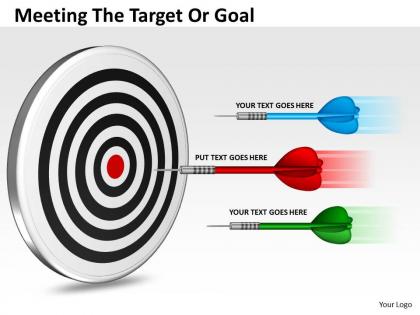
Presenting this meeting the target or goal PPT slide template that clearly asks you if you have met your goal or not. You may get a lot of samples out there demonstrating the journey from target to the destination, but I can bet that you will stop here. This effective presentation template let you avoid the scheduling uninterrupted blocks of focus-time to work on your action steps while leaving the open time in your complete schedule for the unexpected. In this presentation design a user can exactly demonstrate the schedule for something different. No doubt a different presentation template like meeting the goal can help you avoid the interrupted blocks so as to focus time to work on your action steps which leave open time in your schedule for the unexpected. So, make this clear in your mind that where a target implies, the goal can be broader.Help yourself put on the perfect presentation. High quality meeting the target or goal design will have you looking great in record time.
People who downloaded this PowerPoint presentation also viewed the following :
Meeting the target or goal with all 4 slides:
World class design and customer service come together to offer you these meeting the target or goal. Thousands of styles are available.

FAQs for Meeting the
Honestly, you gotta get specific about what you actually want - none of that "I'll get healthier" nonsense. Write down exactly what success looks like and set a real deadline. Track your progress somehow, whether it's numbers or checkmarks or whatever works. Make sure it's challenging but not completely unrealistic (learned that one the hard way). Breaking big goals into smaller chunks is where the real magic happens though. Put it somewhere you'll see it daily - I stick mine on my bathroom mirror like a weirdo. Pick one goal right now and nail down those details. Trust me on this.
Okay so visualization is basically mental practice - you're rehearsing success in your head before it happens. Athletes swear by this stuff because it actually strengthens the neural pathways for whatever you're trying to do. Pretty wild, right? Plus you can spot problems ahead of time and figure out how to deal with them. I used to think it was total BS until I tried it myself. Just spend like 5-10 minutes each morning picturing your day going smoothly, including how you'll handle the inevitable curveballs. Your brain starts treating those goals as way more doable.
Dude, accountability is seriously a lifesaver when it comes to goals. Your motivation will totally disappear at some point - mine always does around week 3 of anything. But when someone's actually checking if you showed up? You'll drag yourself there even when you don't want to. Find someone who matches what you're trying to do. Maybe it's a gym buddy, or someone at work for career stuff. I've even seen people post their goals on social just for the peer pressure. The trick is picking someone who won't let you make excuses but isn't a total jerk about it either.
SMART goals are honestly pretty flexible - you can use them for whatever. Career stuff? Be specific about the exact role you want. Fitness goals work great with numbers like "run a 5K in under 30 minutes." Even creative projects can have milestones if you get creative about it. Most people mess up the realistic part though - they either shoot way too low or go completely overboard. Timeframes matter too. You can't learn Spanish in three weeks, but maybe conversational level in six months? Just pick one goal and actually write out each piece. Trust me, it helps way more than keeping it all in your head.
Honestly, the biggest thing that helped me was chopping up huge goals into tiny stuff I could actually do. Like, forget the massive end result when you're stuck - just focus on what's right in front of you. I used to freeze up completely with big goals until I figured this out. Here's something weird but it works: write down "when I mess up, I'll do this instead" before you even start. Check your progress weekly, not every day, because daily stuff fluctuates like crazy and you'll just get bummed out. Oh, and tell someone your deadline or they won't happen. Just pick one small thing for tomorrow.
Honestly, tracking progress is like having a personal hype man. You see those small wins adding up and suddenly you're motivated to keep going. Without it? Goals just float around in your head feeling impossible. I'm terrible at this myself, but even something super basic like crossing stuff off a list gives you that little dopamine hit. Plus you catch yourself slipping before it becomes a total disaster. Video games figured this out ages ago - there's a reason progress bars are everywhere! Start with whatever feels easiest, maybe just check in with yourself weekly.
So there's actually some solid research behind goal-setting that's pretty interesting. Self-Determination Theory says you need three things: autonomy, competence, and feeling connected to others. Goal Setting Theory proves specific, tough goals beat that vague "just do your best" stuff every time. Social Cognitive Theory is where self-efficacy comes in - if you don't believe you can do it, you'll quit when things get hard. Oh, and Implementation Intention Theory (weird name, I know) is about making "if-then" plans so you don't have to rely on willpower alone. Bottom line: be specific with goals, rack up small wins to build confidence, and plan for when motivation tanks.
Honestly, time management is just about seeing your deadlines coming instead of panicking last minute. Breaking stuff down into smaller chunks and blocking time on your calendar shows you where things might get messy. I was awful at this until I started doing weekly check-ins - seriously changed everything. The Pomodoro thing works great, or just time-blocking whatever feels right. Pick one method this week and see what happens with your current deadline. Even if it's not perfect, you'll probably feel way less stressed about it.
Dude, growth mindset is seriously a total game-changer. When you hit obstacles, instead of thinking "I suck at this," you're like "okay, what's the puzzle here?" Your brain actually starts focusing more on learning than just winning. Setbacks don't crush you as much because you see them as info, not some judgment on whether you're smart enough. I used to beat myself up so much before I got this. Try asking "what can I learn?" next time you're stuck instead of spiraling into self-doubt. Makes such a difference.
Dude, collaboration is a total game-changer for hitting your goals faster. You get access to other people's skills, connections, and resources that you'd never have on your own. Plus there's that accountability factor - way harder to procrastinate when someone's expecting you to deliver. Fresh perspectives are huge too. I can't tell you how many times someone else spotted something obvious that I completely missed. The trick is finding people whose strengths actually complement yours, not just anyone who's available. Pick one goal where teaming up could literally cut your timeline in half and test it out.
Honestly? Most people go way too big right away. Like "I'm gonna revolutionize my entire existence this month" - we've all been there lol. Doesn't work. Make stuff specific instead. "Write 500 words daily" beats "be a better writer" every time. Don't pile on like 7 goals either because you'll just get overwhelmed. I'd stick to maybe 2-3 max. Pick one thing first. Break it down into weekly chunks you can actually nail. Way less intimidating that way.
Honestly, celebrating small wins is a game changer for staying motivated. Your brain gets those little dopamine hits when you acknowledge progress, which makes you actually want to keep going. Way better than waiting months for one big moment that might not even feel that great anyway. I learned this the hard way lol. Set yourself mini-milestones along the way - doesn't have to be anything fancy. Just recognizing you hit a small goal counts. It's proof you're moving forward when the finish line still looks tiny in the distance. Those little energy boosts really add up.
Dude, being specific with your goals makes such a difference. Like, studies actually show you're 2-3x more likely to hit goals when they're clearly defined instead of vague. Your brain literally builds better pathways when it knows exactly what you're aiming for - which is pretty cool if you ask me. "Get healthier" is way too wishy-washy and gives you tons of wiggle room to slack off. But "walk 10,000 steps daily"? Now you've got something concrete to track. I always tell people to include actual numbers or dates when they set goals. Makes it way harder to BS yourself about whether you're making progress or not.
Apps like Notion and Todoist are game-changers for breaking down big goals into manageable chunks. They'll send you reminders and track deadlines so you don't forget stuff. Honestly, the visual progress bars hit different than paper lists - there's something addictive about watching those percentages climb. Real data beats guessing every time. Don't overcomplicate it though. Pick one tool that fits how you actually work, not some fancy system you'll abandon in a week. I made that mistake before. Start small and add features as you go.
So basically, intrinsic goals are stuff you actually care about - like getting better at something or building real relationships. Extrinsic ones? That's chasing money, status, or trying to impress people. The intrinsic stuff tends to stick way better. You won't quit when it gets hard because it matters to YOU, not because someone else thinks it should. External motivation works for a bit but usually burns out pretty fast - I've definitely been there with goals I thought I wanted but really didn't. Next time you're setting a goal, ask yourself if you'd still want it even if nobody else knew about it.
-
Wonderful templates design to use in business meetings.
-
Thanks for all your great templates they have saved me lots of time and accelerate my presentations. Great product, keep them up!