


presentación de diapositivas de propuesta de desarrollo de software nuevo




Try Before you Buy Download Free Sample Product
 Impress Your
 Audience
 100%
100% Editable
 Save Hours
 of Time


El enfoque empresarial centrado en el cliente ha hecho que el mercado sea más competitivo por naturaleza. Cada organización está desarrollando y adaptándose a la tecnología moderna para mantenerse al día con las tendencias cambiantes del mercado. Llegar al público objetivo adecuado se ha vuelto fácil con aplicaciones móviles duraderas y efectivas. Prometa a sus clientes una interfaz de software amigable y accesible con nuestra Nueva Propuesta de Desarrollo de Software Diapositivas de Presentación de PowerPoint. Utilice nuestra diapositiva de PPT para mencionar los principales entregables como una arquitectura eficiente para computadoras y teléfonos, componentes internos esenciales de los diseños y sistemas rentables. Exprese claramente los objetivos del proyecto y el contexto del proyecto a sus clientes potenciales con la ayuda de esta plantilla de diseño de aplicaciones PPT. Tome la asistencia de estas atractivas diapositivas de propuesta para ilustrar el marco y el enfoque que su empresa adopta para los diseños de aplicaciones móviles. Empleando este vigorizante diseño de PPT, puede elaborar el proceso de descubrimiento, los flujos de pantalla, el desarrollo de aplicaciones, la importación de datos, la sincronización, los comentarios y el lanzamiento del nuevo software. Resalte el alcance de sus servicios como evaluación de proyectos, proceso de desarrollo, revisión de código y aseguramiento de la calidad con la ayuda de este diseño de PPT de gestión de software. Además de esto, el gráfico de diseño de software PPT también lo ayudará a crear un cronograma adecuado para la finalización del proyecto. Determine el costo total del proyecto en el que un cliente tiene que invertir para diseñar la aplicación con la ayuda de esta presentación de estrategia digital PPT. Utilice este diseño de PPT innovador para mencionar la declaración de trabajo y el contrato, y brindar a su cliente potencial una mejor comprensión de la empresa. Puede usar estas plantillas de propuesta para enumerar las opciones, características, desafíos y soluciones de desarrollo de aplicaciones para hacer que su audiencia tome conciencia de la importancia de los servicios que ofrece su empresa. Transmita los valores fundamentales, los objetivos y los logros de su empresa con la ayuda de esta presentación de diapositivas de interfaz de aplicación PPT. Descargue nuestro conjunto de PPT de desarrollo web y convenza a los clientes de que inviertan en sus servicios de software.
People who downloaded this PowerPoint presentation also viewed the following :
Contenido de esta presentación de Powerpoint
Diapositiva 1: Esta diapositiva presenta la Propuesta de Nuevo Desarrollo de Software. Mencione el nombre del cliente, el usuario asignado, la fecha de envío y comience.
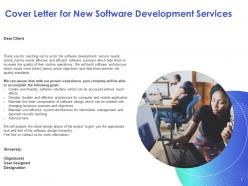
Diapositiva 2: Esta diapositiva muestra la Carta de Presentación para los Nuevos Servicios de Desarrollo de Software
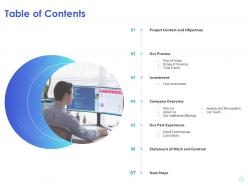
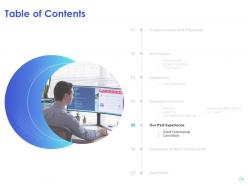
Diapositiva 3: Esta diapositiva muestra la Tabla de Contenidos de la presentación.
Diapositiva 4: Esta diapositiva muestra la Tabla de Contenidos
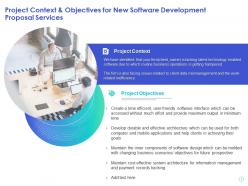
Diapositiva 5: Esta diapositiva describe el Contexto del Proyecto y los Objetivos para los Servicios de Propuesta de Nuevo Desarrollo de Software
Diapositiva 6: Esta diapositiva muestra la Tabla de Contenidos.
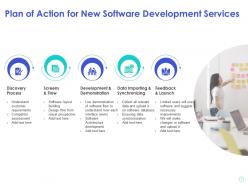
Diapositiva 7: Esta diapositiva muestra el Plan de Acción para los Nuevos Servicios de Desarrollo de Software.
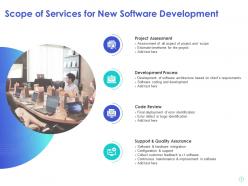
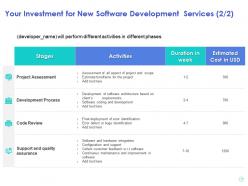
Diapositiva 8: Esta diapositiva describe el Alcance de los Servicios para el Nuevo Desarrollo de Software.
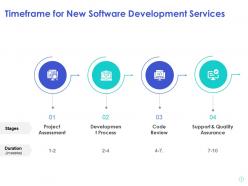
Diapositiva 9: Esta diapositiva muestra el Cronograma para los Nuevos Servicios de Desarrollo de Software.
Diapositiva 10: Esta diapositiva muestra la Tabla de Contenidos de la presentación.
Diapositiva 11: Esta diapositiva muestra los detalles de Inversión.
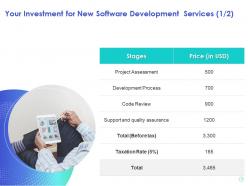
Diapositiva 12: Esta diapositiva muestra los detalles de Inversión.
Diapositiva 13: Esta diapositiva muestra la Tabla de Contenidos de la presentación.
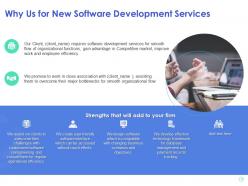
Diapositiva 14: Esta diapositiva muestra las razones para elegirnos para los Nuevos Servicios de Desarrollo de Software
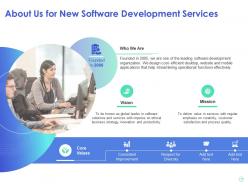
Diapositiva 15: Esta es la diapositiva Sobre Nosotros para mostrar las especificaciones de la Empresa.
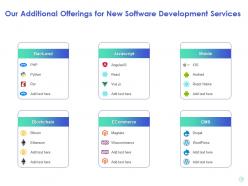
Diapositiva 16: Esta diapositiva muestra Nuestras Ofertas Adicionales.
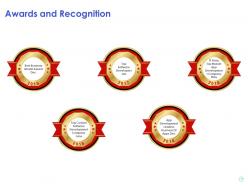
Diapositiva 17: Esta diapositiva muestra los Premios y Reconocimientos
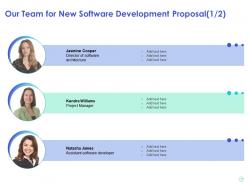
Diapositiva 18: Esta es la diapositiva de Nuestro Equipo con Nombres y Designaciones.
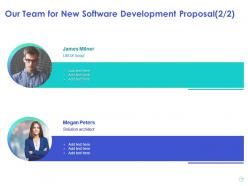
Diapositiva 19: Esta es la diapositiva de Nuestro Equipo con Nombres y Designaciones.
Diapositiva 20: Esta diapositiva muestra la Tabla de Contenidos
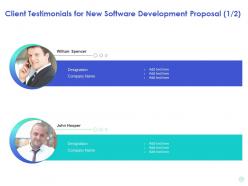
Diapositiva 21: Esta diapositiva muestra los Testimonios de Clientes.
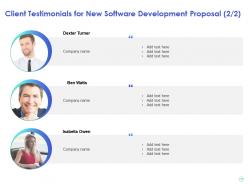
Diapositiva 22: Esta diapositiva muestra los Testimonios de Clientes.
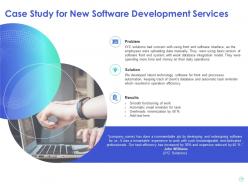
Diapositiva 23: Esta diapositiva representa el Caso de Estudio para los Nuevos Servicios de Desarrollo de Software
Diapositiva 24: Esta diapositiva muestra la Tabla de Contenidos
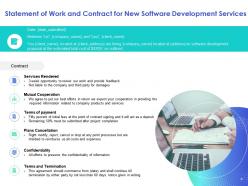
Diapositiva 25: Esta diapositiva describe la Declaración de Trabajo y el Contrato para los Nuevos Servicios de Desarrollo de Software
Diapositiva 26: Esta diapositiva muestra la Tabla de Contenidos.
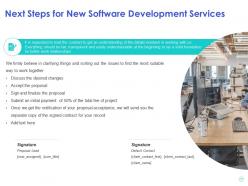
Diapositiva 27: Esta diapositiva muestra los Próximos Pasos para los Nuevos Servicios de Desarrollo de Software
Diapositiva 28: Esta es la diapositiva de Contáctenos con Dirección, Correo electrónico y Número de contacto.
Diapositiva 29: Esta es la Diapositiva de Iconos para la Propuesta de Nuevo Desarrollo de Software
Diapositiva 30: Esta diapositiva se titula Diapositivas Adicionales para avanzar.
Diapositiva 31: Esta es la diapositiva Sobre Nosotros para mostrar las especificaciones de la Empresa.
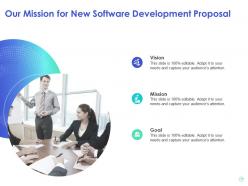
Diapositiva 32: Esta es la diapositiva de Nuestra Misión con Misión, Visión y Objetivos.
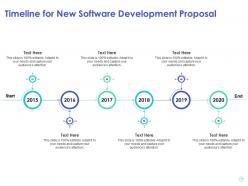
Diapositiva 33: Esta diapositiva muestra el proceso de Línea de Tiempo.
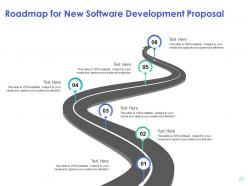
Diapositiva 34: Esta diapositiva muestra el proceso de Hoja de Ruta.
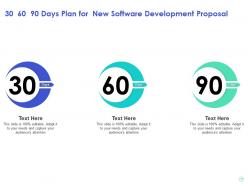
Diapositiva 35: Esta es la diapositiva del Plan de 30 60 90 Días.
Propuesta de desarrollo de software nuevo presentación de diapositivas de PowerPoint con las 35 diapositivas:
Utiliza nuestras Diapositivas de Presentación de Propuesta de Desarrollo de Software para ayudarte de manera efectiva a ahorrar tu valioso tiempo. Están listas para encajar en cualquier estructura de presentación.
FAQs for New software development proposal
So first thing - get super specific about what you're actually building and when. Budget breakdown is huge too, don't just throw out random numbers. Show them your team because honestly, people buy from people they trust. Technical approach matters but explain it like they're not engineers (unless they are, obviously). Risk stuff is boring but necessary - clients freak out when problems hit and there's no plan. The real secret though? Ditch the template bullshit. Actually read what they need and speak directly to their problems. Takes way more time but that's how you win.
Honestly, discovery calls are where you win or lose the whole thing. Ask about their actual problems, not just "what are your goals" BS. When you write the proposal, use their exact words back at them - if they said "streamline workflow," don't write "optimize processes." I always list their priorities in the same order they mentioned them. Sounds obvious but most people screw this up. Show them you've got relevant experience with similar projects, but skip the generic case studies. Write it like you're fixing THEIR specific mess. Oh, and match your timeline to whatever deadline is stressing them out most - that's usually what gets you the signature.
Dude, you HAVE to nail down your project scope first - trust me on this. It's literally what saves you from clients going "oh wait, can we add just one more thing?" every other day. Been there, done that, wanted to throw my laptop out the window lol. Map out exactly what features you're building, when stuff gets delivered, and - this part's crucial - what you're NOT doing. Honestly, that exclusions list might be more important than anything else. Get them to sign off before you touch any code. Your future self will thank you when the project actually finishes on time and budget.
Break your budget into chunks - dev hours, infrastructure, third-party stuff. Show the math behind each feature estimate instead of just saying "it'll cost $50k" or whatever. I always add 10-15% buffer because scope creep is basically inevitable. Use ranges when you're not totally sure about something, like "API integration: 15-20 hours." State your assumptions clearly too - "this is based on current requirements" covers your ass later. Oh and definitely list what's NOT included. Clients appreciate the transparency and it saves you from those awkward "wait, that costs extra?" conversations down the road.
Honestly, you'll see Agile (especially Scrum) in like 90% of proposals these days. Waterfall's still solid for projects with locked-down requirements though. Hybrid approaches are pretty common too. Agile gets tossed around everywhere because clients eat up words like "iterative" and "flexibility" - even when it's overkill for their project. But here's the thing: your methodology should match what they actually need. Consider their comfort level with uncertainty, how complex the project is, and whether requirements might shift. Don't just go with what's trendy right now.
Okay so first thing - split everything into clear phases with actual milestones they can see. Discovery/planning upfront, then dev work (I usually do it by features or sprints), testing, then launch. Always build in buffer time because I've literally never had a project go perfectly to plan lol. Each phase needs concrete deliverables, not just "we'll work on stuff." Map out dependencies too - like when you need their feedback or content. Oh and be realistic with timing rather than trying to impress them with speed. Define upfront what happens if they want changes halfway through.
Honestly, lead with your wins - like actual numbers. "Cut deployment time by 40%" or "handled 50-person migration" beats vague promises any day. Client testimonials are clutch if you've got them. Instead of just rattling off tech stack stuff, explain how you actually solved real problems with those tools. Oh, and certifications matter too - definitely mention those. I always think the "show don't tell" thing is huge here. Make it super easy for them to visualize your team crushing their project. Concrete examples > everything else.
Make a risk section right at the start - cover technical stuff, business risks, scope creep, all that. Timeline buffers are huge because projects always run long (learned this the hard way). Resource availability and integration headaches should definitely be on there. For each risk, write down how you'll actually handle it. Backup tech options, change management rules, whatever makes sense. Don't just list problems - show you've thought through solutions. Honestly, the best approach is getting your team together first to brainstorm everything that could go sideways. Then document it properly.
Honestly, you need detailed proposals for the messy stuff - enterprise projects, system integrations, anything with compliance headaches. Fixed-price work too, since you're gambling your margins on nailing the scope upfront. Scope creep's always lurking anyway, right? Simple maintenance or small features? Skip the full treatment. Here's my test: if you can't sum up the project in one sentence, write the damn proposal. Otherwise you'll be explaining why you're over budget later. Trust me on this one.
Definitely dig into current industry frameworks and drop specific names in your proposal - Agile, OWASP, ISO 27001, that kind of stuff. I always go overboard researching this part tbh, but clients eat it up. Look at what competitors are doing too. Instead of vague "we follow best practices" nonsense, get specific about microservices or DevOps approaches. Cite actual standards docs in your appendix. Oh, and if anyone on your team has relevant certs, definitely mention those. Case studies help a ton here - shows you're not just throwing buzzwords around but actually know what works in real situations.
Honestly, the worst thing you can do is be vague about what you're actually delivering - nothing pisses off clients more than surprises halfway through. Give yourself buffer time and budget too because something always goes wrong. Generic copy-paste proposals are death - I've seen people blow deals because they forgot to change the company name lol. Really dig into their specific problems during discovery instead of just rattling off your skills. That upfront work pays off huge when you can show exactly how you'll solve their headaches. Don't rush the requirements phase either. Sounds boring but it'll save your ass later.
Honestly, visuals are a game-changer for proposals. Charts make timelines super clear, and mockups let clients actually see what you're building instead of just imagining it. Breaking down technical stuff with diagrams beats drowning people in text every time. Screenshots of past work? Those build trust fast. I've found that each visual needs to either explain something confusing or highlight why they should pick you. Oh, and don't throw in random graphics just because they look cool - that actually backfires. You'll look way more professional keeping things focused.
Okay so deliverables sections are honestly a lifesaver - they stop scope creep before it becomes a total disaster. What you're doing is spelling out exactly what you'll build and when. Plus what "finished" actually means for each thing. I can't tell you how many times I've watched projects blow up because the client thought "user dashboard" meant one thing but got something totally different. It's basically your safety net. When requirements start getting wonky (and they will), you've got something solid to point back to. Oh and make everything super specific - vague deliverables are useless.
Don't just dump client feedback at the end - weave it throughout the whole proposal. Document everything from your discovery calls (pain points, requests, concerns) and map those directly to your sections. Their feedback should actually drive your technical approach and timeline. I always add little "addressing your concerns" boxes for the big stuff so they know I was paying attention. Honestly, this makes clients feel heard way more than generic solutions. The whole point is showing your solution responds to what they actually told you, not some cookie-cutter approach.
Look, case studies are basically your proof you're not just talking out your ass. Anyone can say they're amazing at React development. But showing how you cut load times by 40% on a real project? That's what gets clients nodding along. You're turning boring proposals into actual stories they can picture themselves in. The trick is matching examples to their exact headache - if they're struggling with dashboards, show them your dashboard wins. It's way more convincing than rattling off technical skills. Trust builds faster when there's concrete evidence behind your claims.
-
Topic best represented with attractive design.
-
Designs have enough space to add content.
-
Very unique and reliable designs.
-
Awesome presentation, really professional and easy to edit.