


New Product Research Powerpoint Presentation Slides
Decide target market for your product using content-ready New Product Research PowerPoint Presentation Slides. Personalize marketing campaigns, decide your audience and attract their attention. Add professionally designed ready-to-use new product research PowerPoint presentation templates to design a marketing mix that matches the expectations of customers. Incorporate market segmentation PPT presentation slides, divide broader consumer market into potential customers sharing common characteristics. This product market segmentation PowerPoint deck comprises of templates like market segmentation, product market mapping, market research for new product, fundamental analysis of market, market landscape, detailed market analysis for new product, fundamental analysis, competitive strategies, market attractiveness, etc. Use market STP framework to reach to the widest range of the customers. Conduct market analysis and evaluate the favourable market trends with the help of new product research PowerPoint presentation slides. Not just this, create an apt marketing program and positioning strategy using easy-to-understand market segmentation PowerPoint templates. Feel that drive build up inside you due to our New Product Research Powerpoint Presentation Slides. You will acquire inspiration.
Decide target market for your product using content-ready New Product Research PowerPoint Presentation Slides. Personalize ..












-

- Google Slides is a new FREE Presentation software from Google.
- All our content is 100% compatible with Google Slides.
- Just download our designs, and upload them to Google Slides and they will work automatically.
- Amaze your audience with SlideTeam and Google Slides.
-

Want Changes to This PPT Slide? Check out our Presentation Design Services
-

- WideScreen Aspect ratio is becoming a very popular format. When you download this product, the downloaded ZIP will contain this product in both standard and widescreen format.
-

- Some older products that we have may only be in standard format, but they can easily be converted to widescreen.
- To do this, please open the SlideTeam product in Powerpoint, and go to
- Design ( On the top bar) -> Page Setup -> and select "On-screen Show (16:9)” in the drop down for "Slides Sized for".
- The slide or theme will change to widescreen, and all graphics will adjust automatically. You can similarly convert our content to any other desired screen aspect ratio.
Compatible With Google Slides

Get This In WideScreen
You must be logged in to download this presentation.


Do you want to remove this product from your favourites?
PowerPoint presentation slides
Presenting new product research presentation slides. This deck comprises of total of 24 PPT templates. Each template consists of professional visuals, diagrams, and icons. This presentation has been crafted after a thorough research and comprises of relevant content. Our PowerPoint experts have designed this presentation keeping the customers’ requirements in mind. This presentation is completely customizable. You can edit the colour, text, icon, and font size as per your need. Downloading is easy and simple.

People who downloaded this PowerPoint presentation also viewed the following :
Content of this Powerpoint Presentation
Slide 1: This slide is introduction for New Product Research. State your company name and get started.
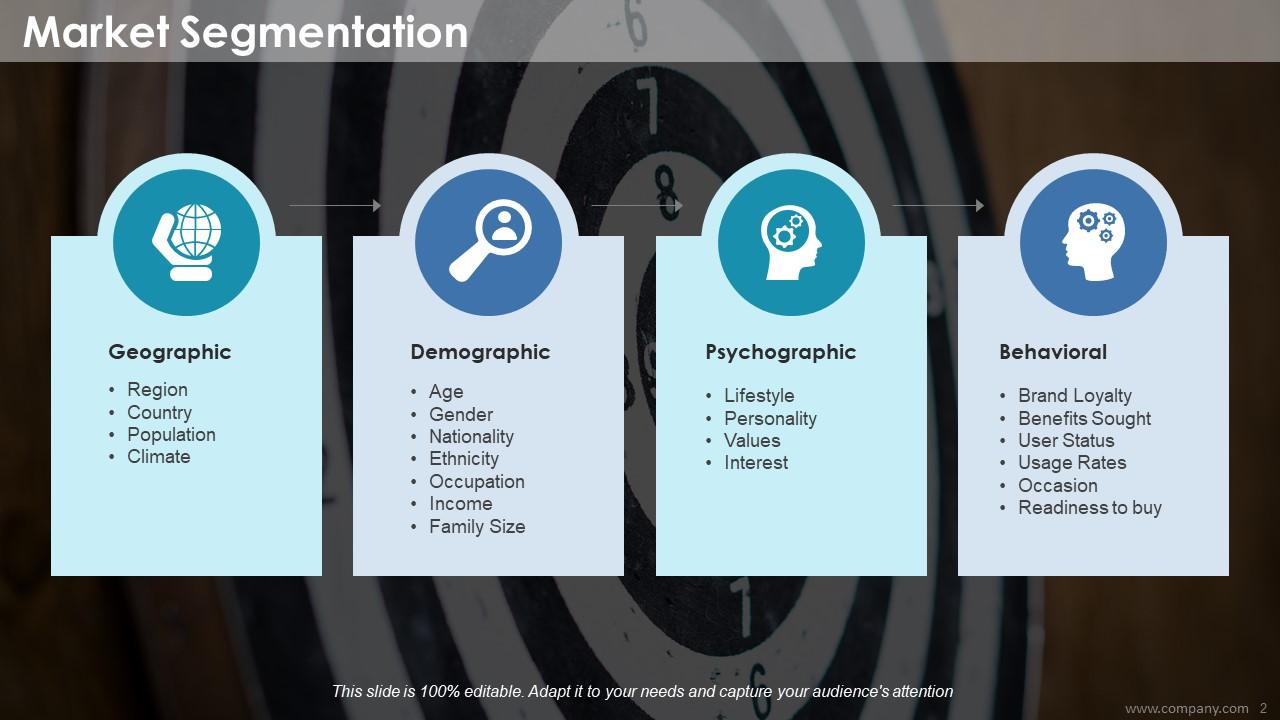
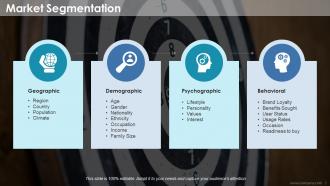
Slide 2: This slide showcases Market Segmentation which includes various types such as- Region, Country, Population, Climate, Geographic, Age, Gender, Nationality, Ethnicity, Occupation, Income, Family Size, etc.
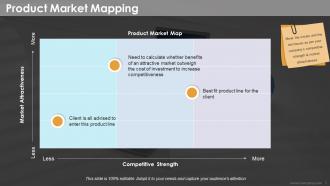
Slide 3: This slide presents Product Market Mapping comparing two parameters.You can edit these according to your business requirement.
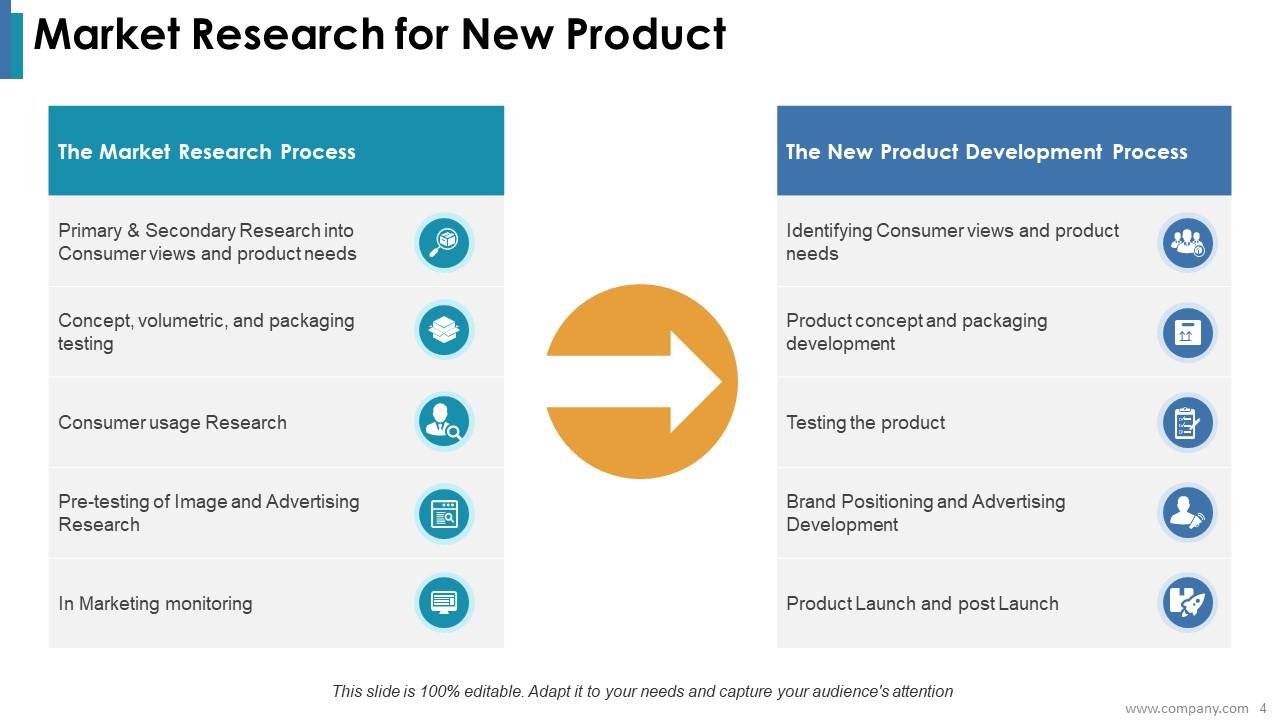
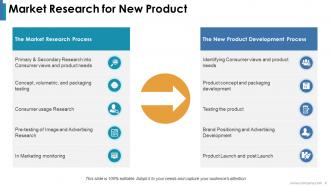
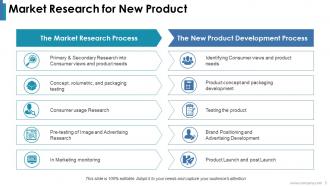
Slide 4: This slide shows Market Research for New Product.This also includes two processes showing different steps.
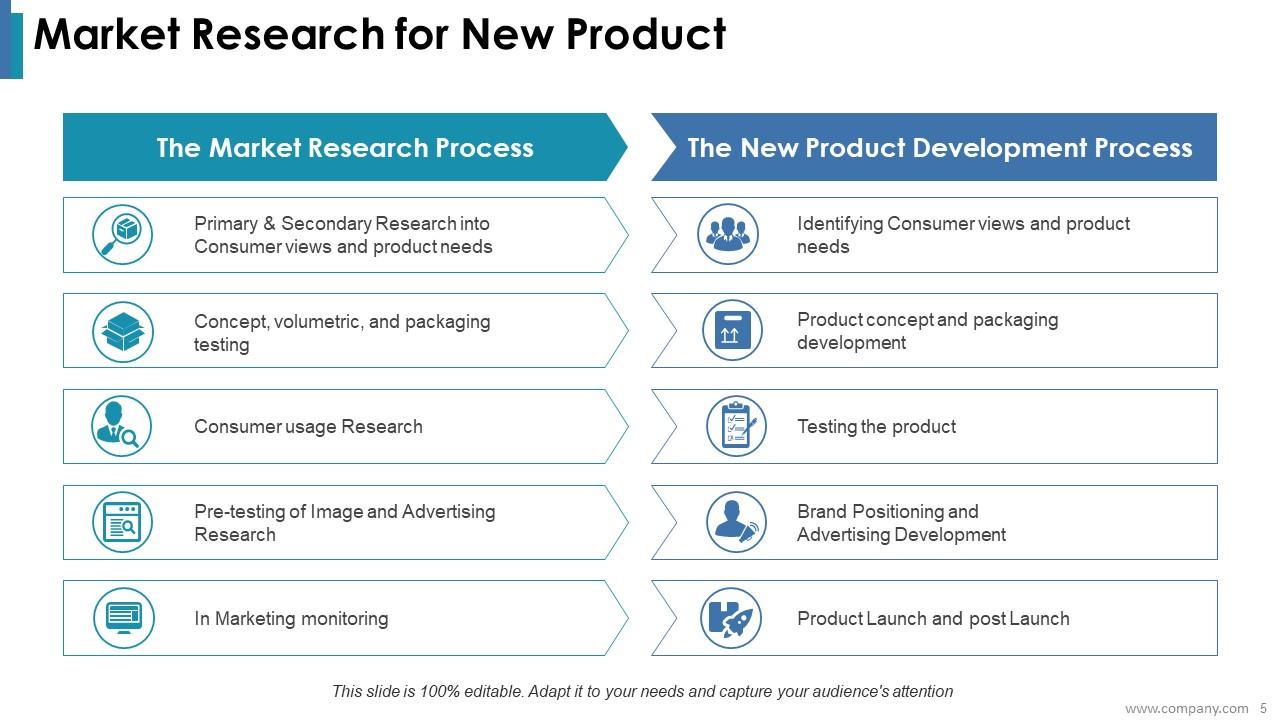
Slide 5: This slide explains about Market Research for New Product. You can use according to your requirements using following parameters like- Primary & Secondary Research, Concept, volumetric, and packaging testing, Consumer usage Research Pre-testing of Image and Advertising Research, In Marketing monitoring, Identifying Consumer views, Product concept and packaging development, Testing the product.
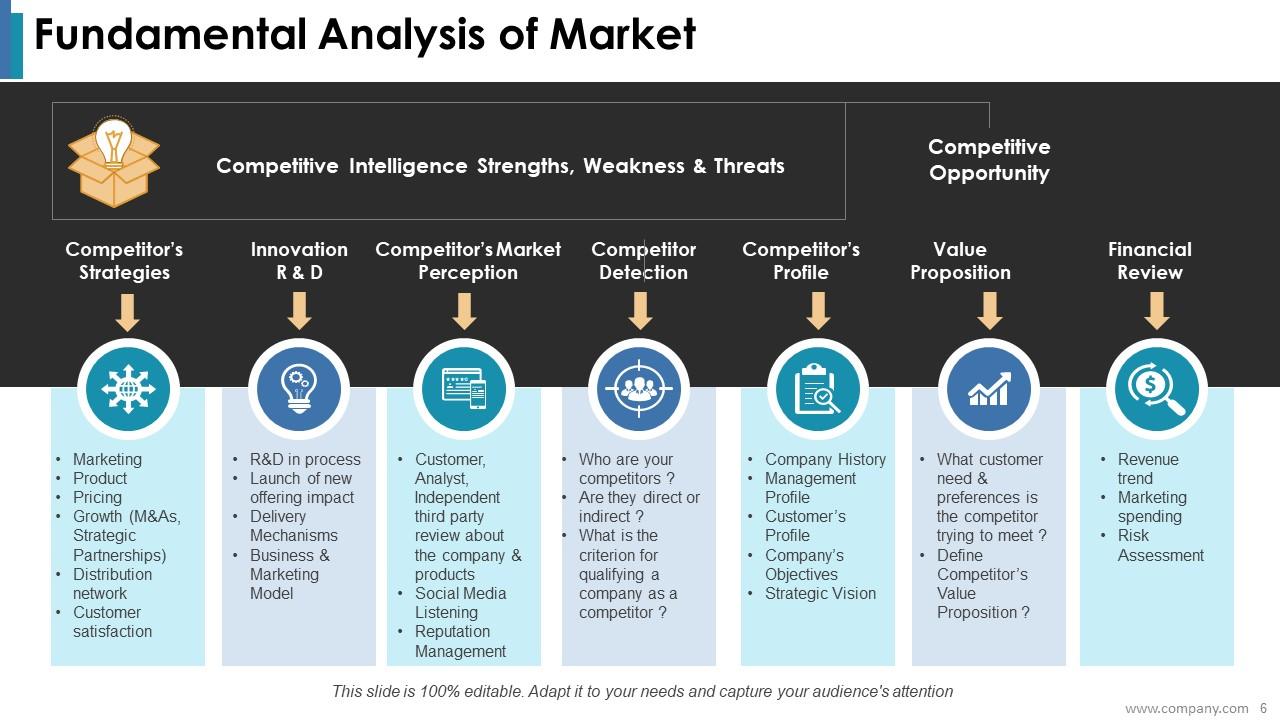
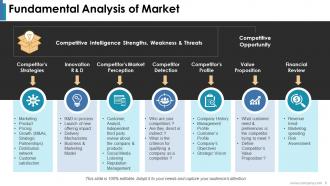
Slide 6: This slide showcases Fundamental Analysis of Market.Listing are seven stages that you can use as per your own need.
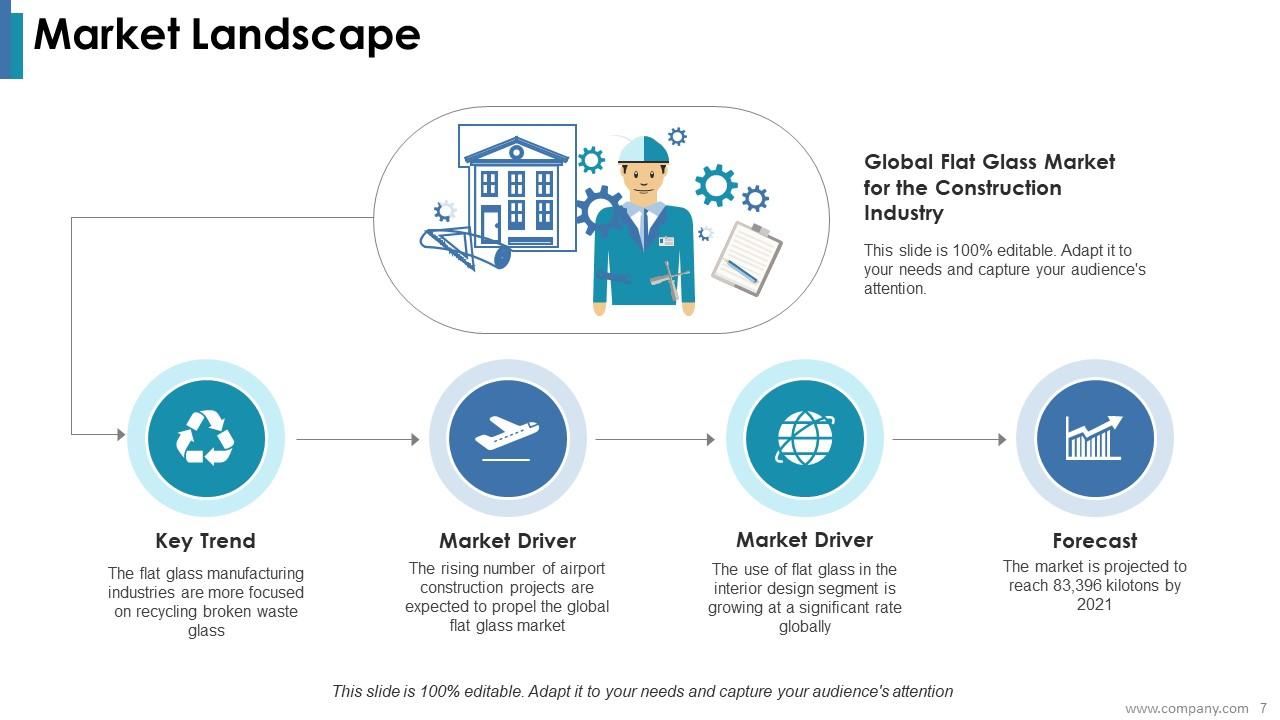
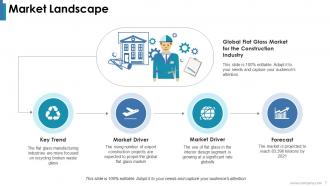
Slide 7: This slide shows Market Landscape. You can use it for your market analysis.
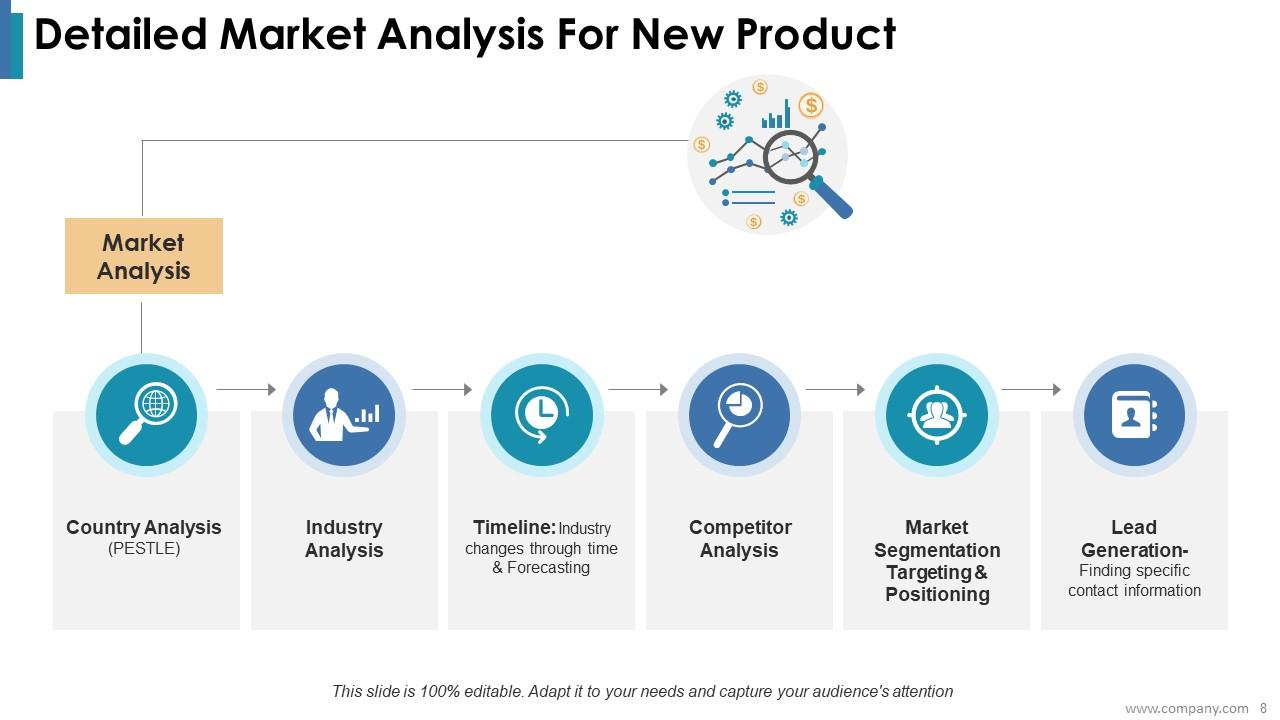
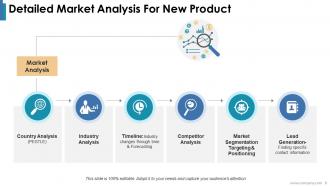
Slide 8: This slide displays Detailed Market Analysis For New Product. With these you can analyse market using these factors such as- Market Analysis, Industry Analysis, Competitor Analysis, Lead Generation, Finding specific contact information, Country Analysis (PESTLE), Timeline, Market Segmentation, Targeting & Positioning.
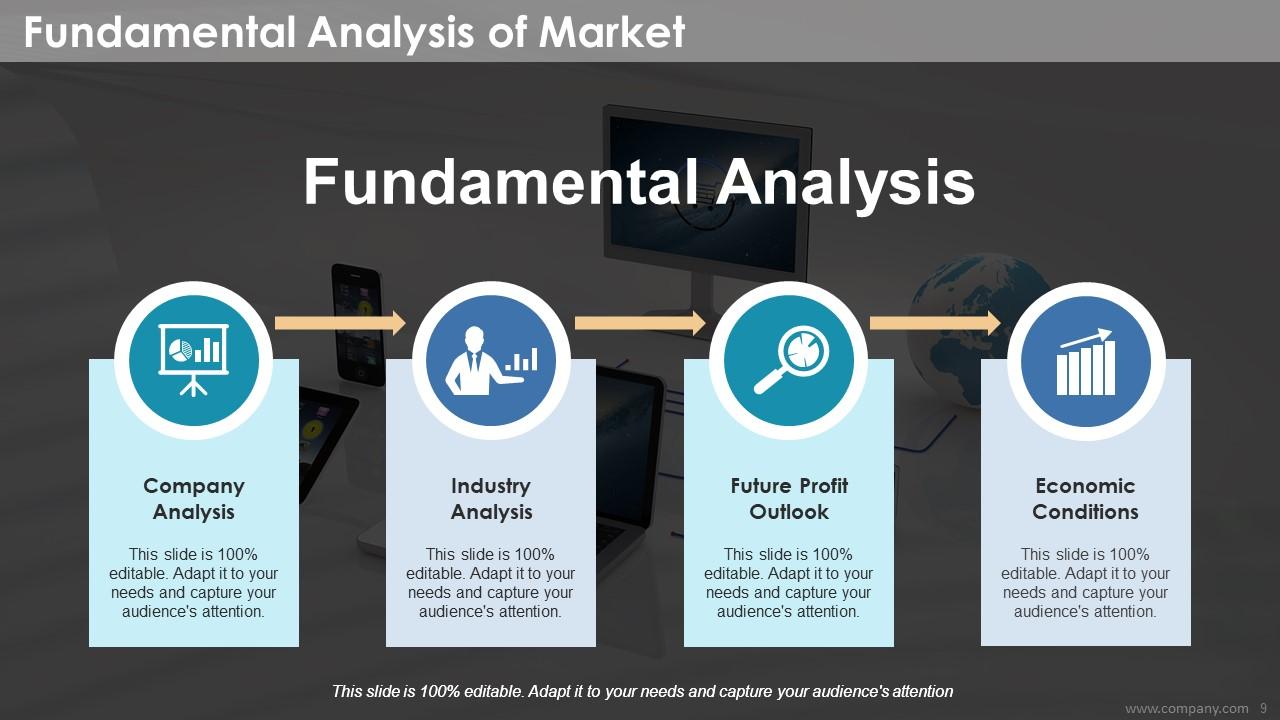
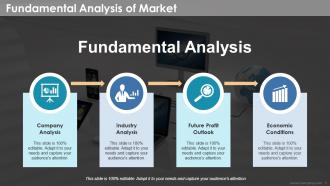
Slide 9: This slide displays Fundamental Analysis of Market.This also help you to analyse following stages- Company Analysis, Industry Analysis, Future Profit Outlook, Economic Conditions.
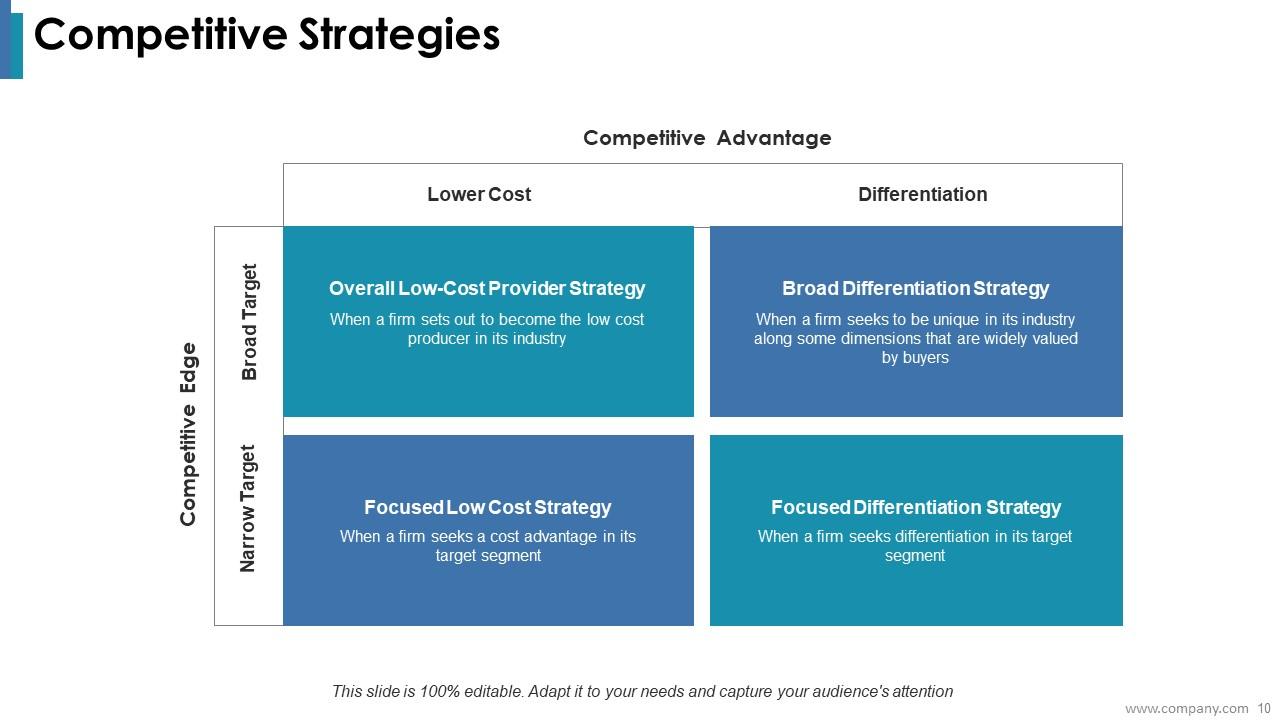
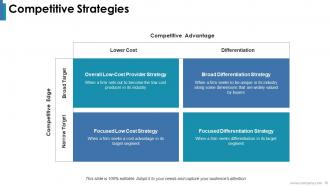
Slide 10: This slide shows Competitive Strategies. It also includes four quadrant which are categorize as- Lower Cost, Differentiation, Narrow Target, Broad Target.
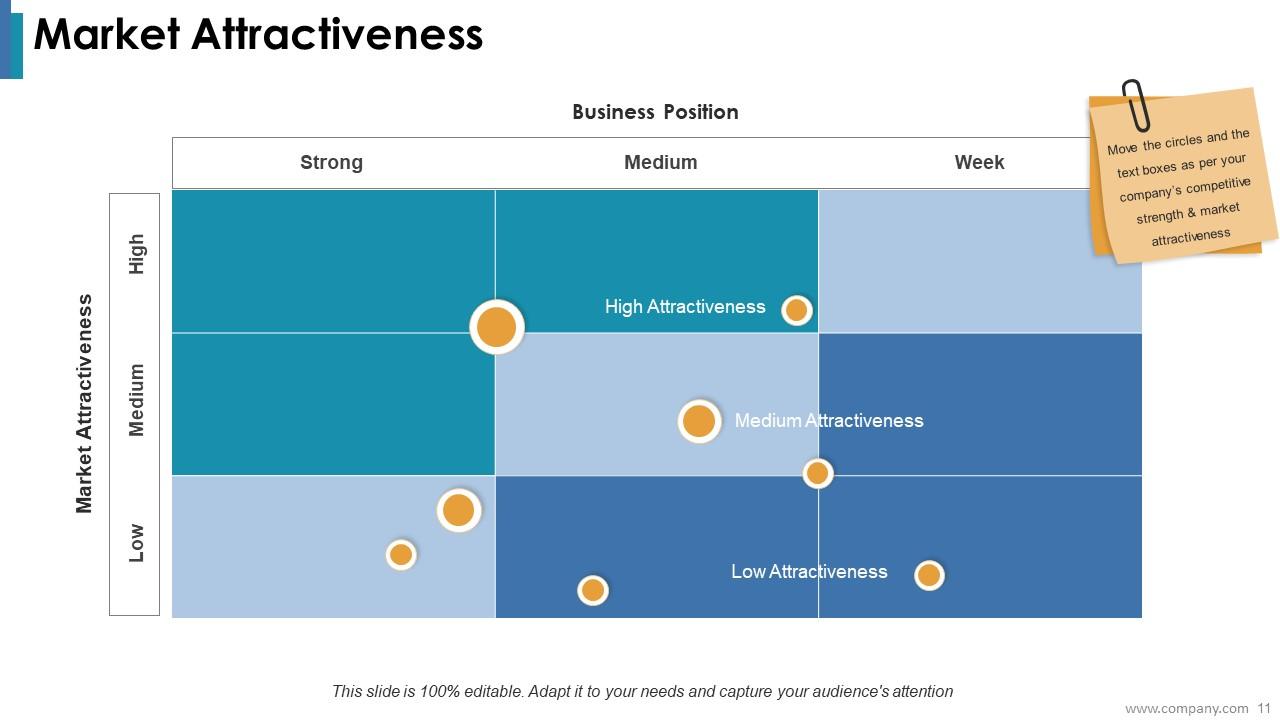
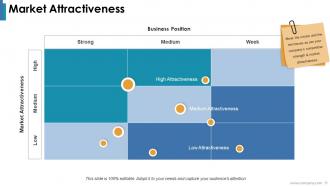
Slide 11: This slide displays Market Attractiveness. It also describe three level of attractiveness such as- High Attractiveness, Medium Attractiveness, Low Attractiveness.
Slide 12: This slide shows the Coffee break.
Slide 13: This slide presents many New Product Research Icon.You can use according to your requirement.
Slide 14: This slide shows Graphs and Charts to begin with.
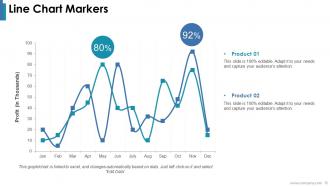
Slide 15: This slide showcases Line Chart Markers.This graph/chart is for comparison of two products.
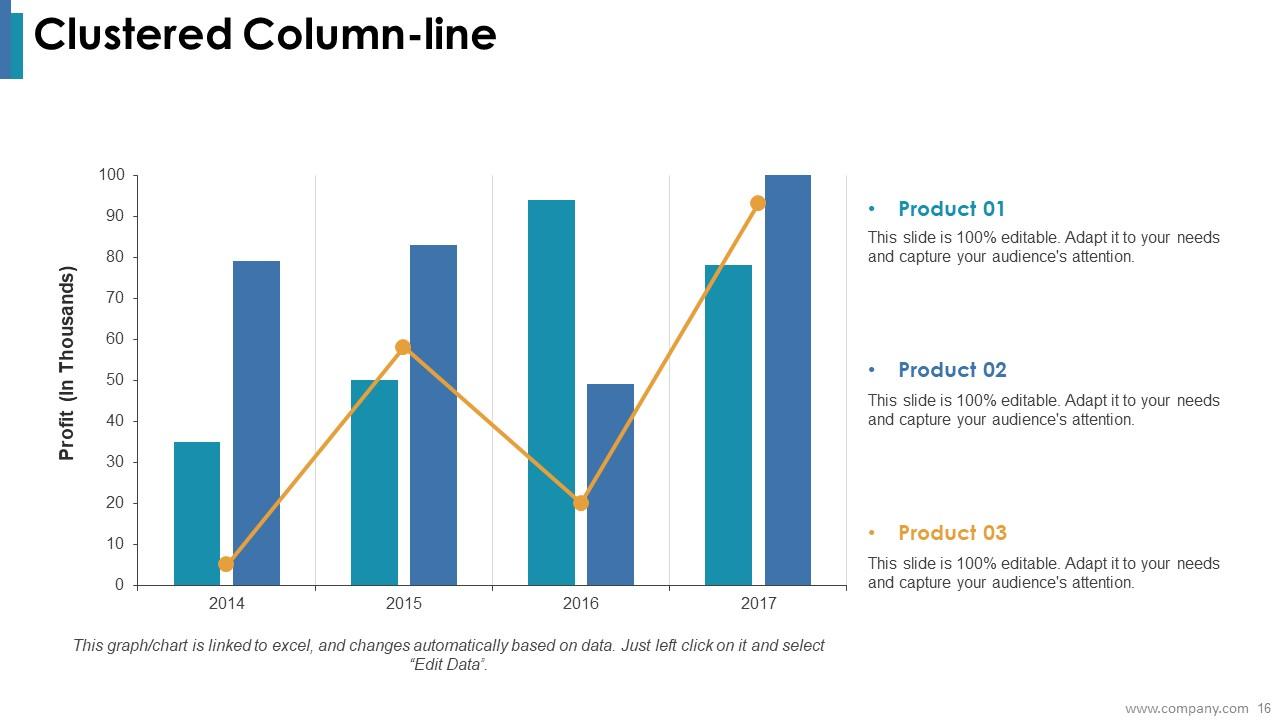
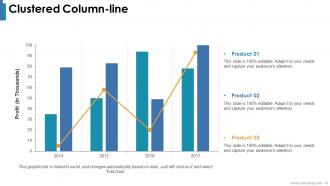
Slide 16: This slide displays Clustered Column-line.You can use for comparing three products.
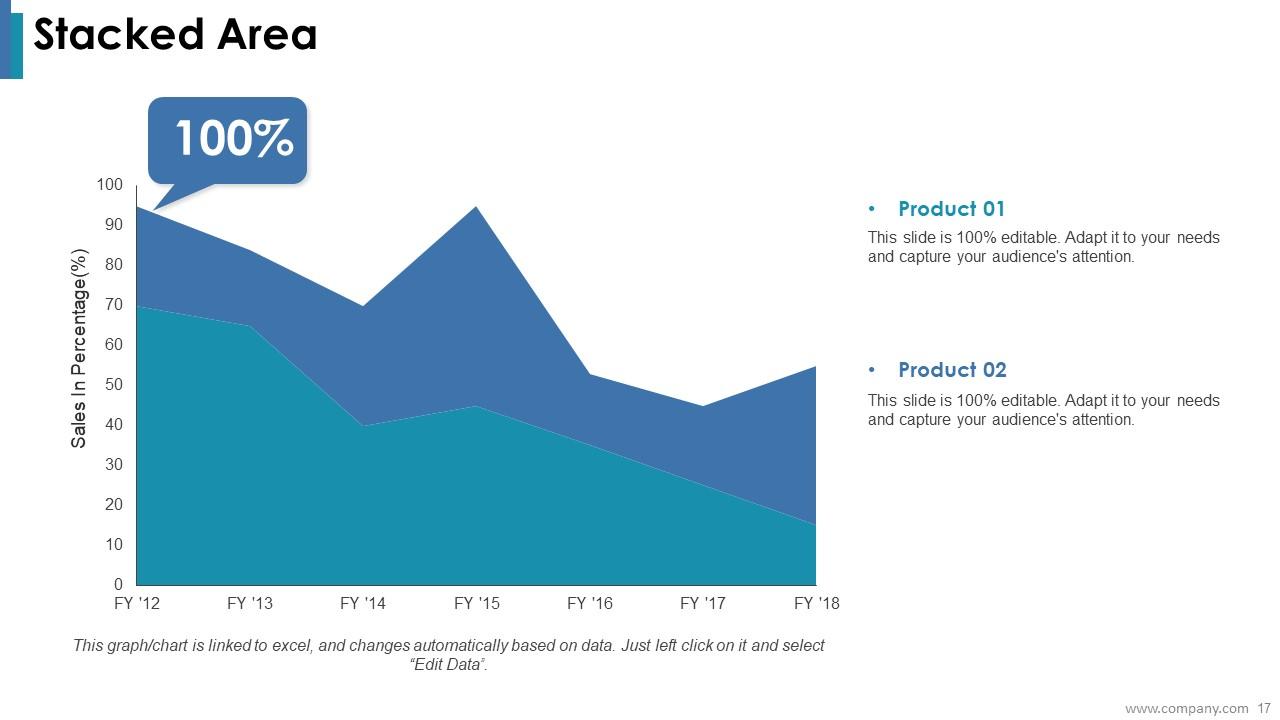
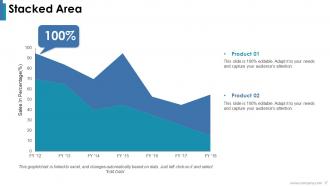
Slide 17: This slide shows Stacked Area.You can use as per your requirement.
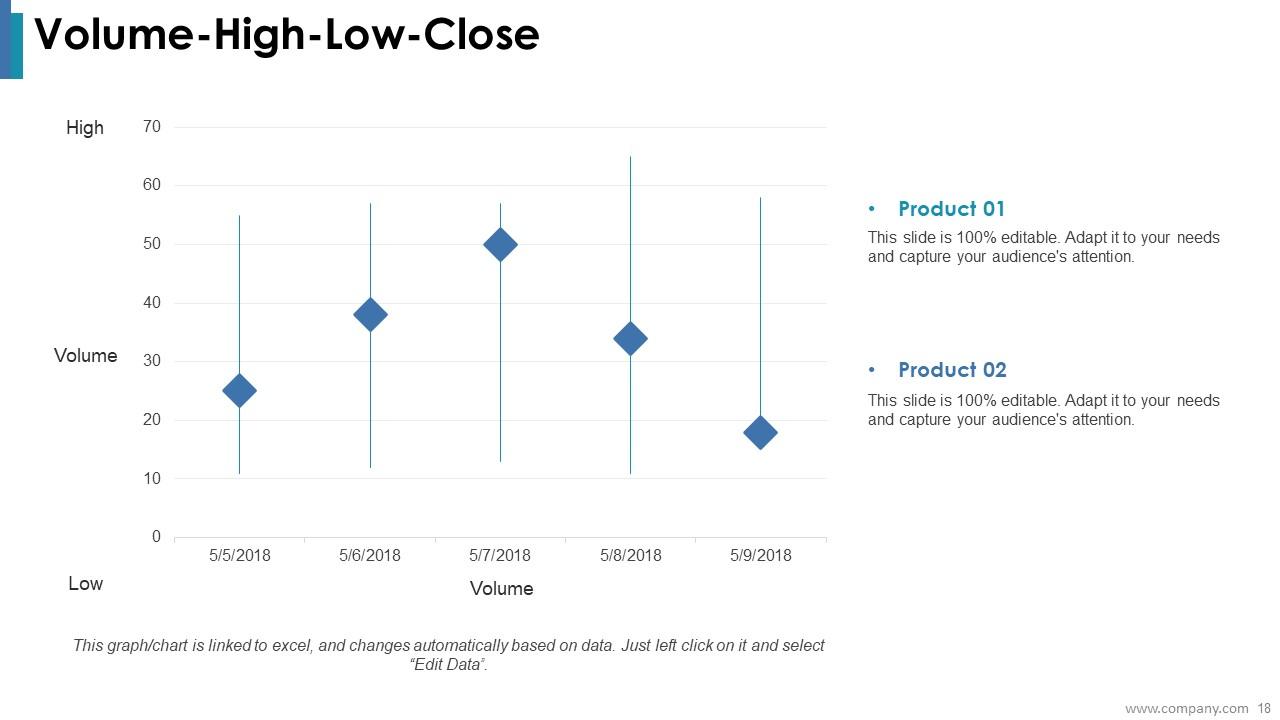
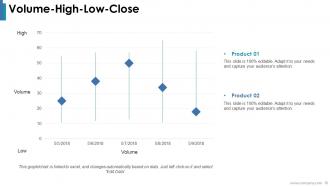
Slide 18: This slide is showing Volume-High-Low-Close. Make your product comparison with high and medium volume.
Slide 19: This slide is for some Additional you can use for further.
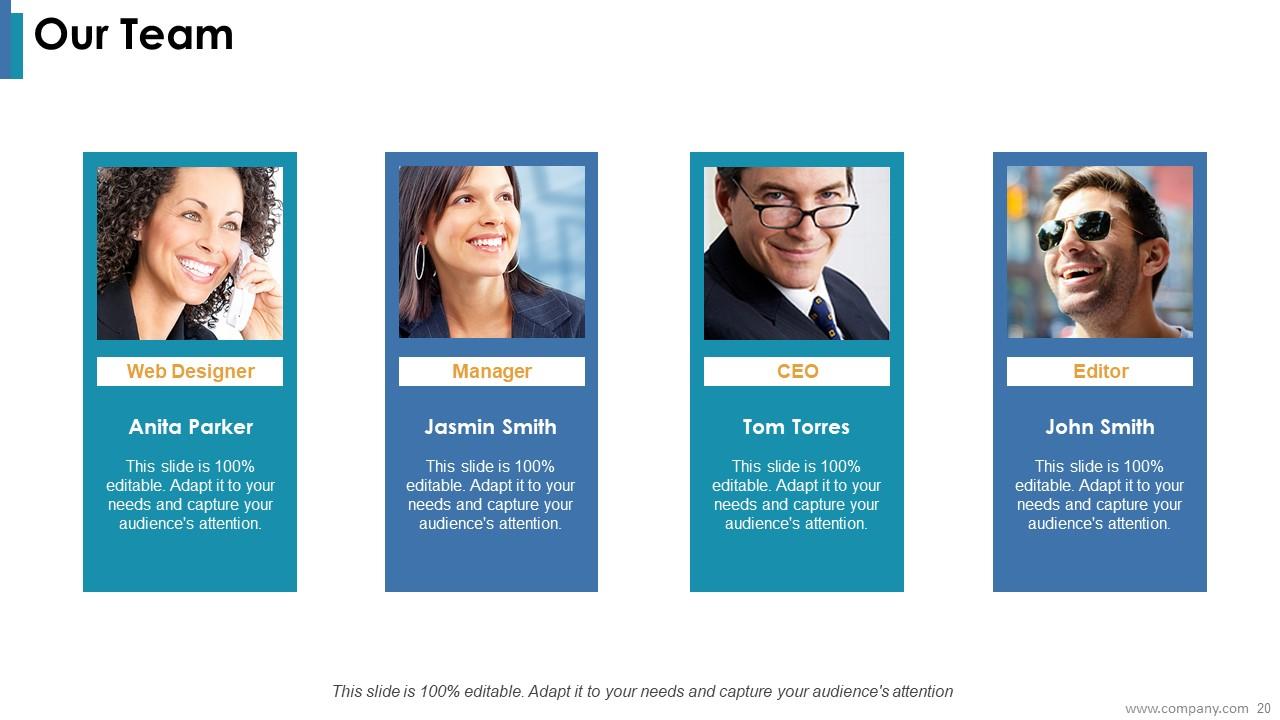
Slide 20: This slide is an Our Team slide with Name and Designation.
Slide 21: This slide is an About us.You can share your company details.
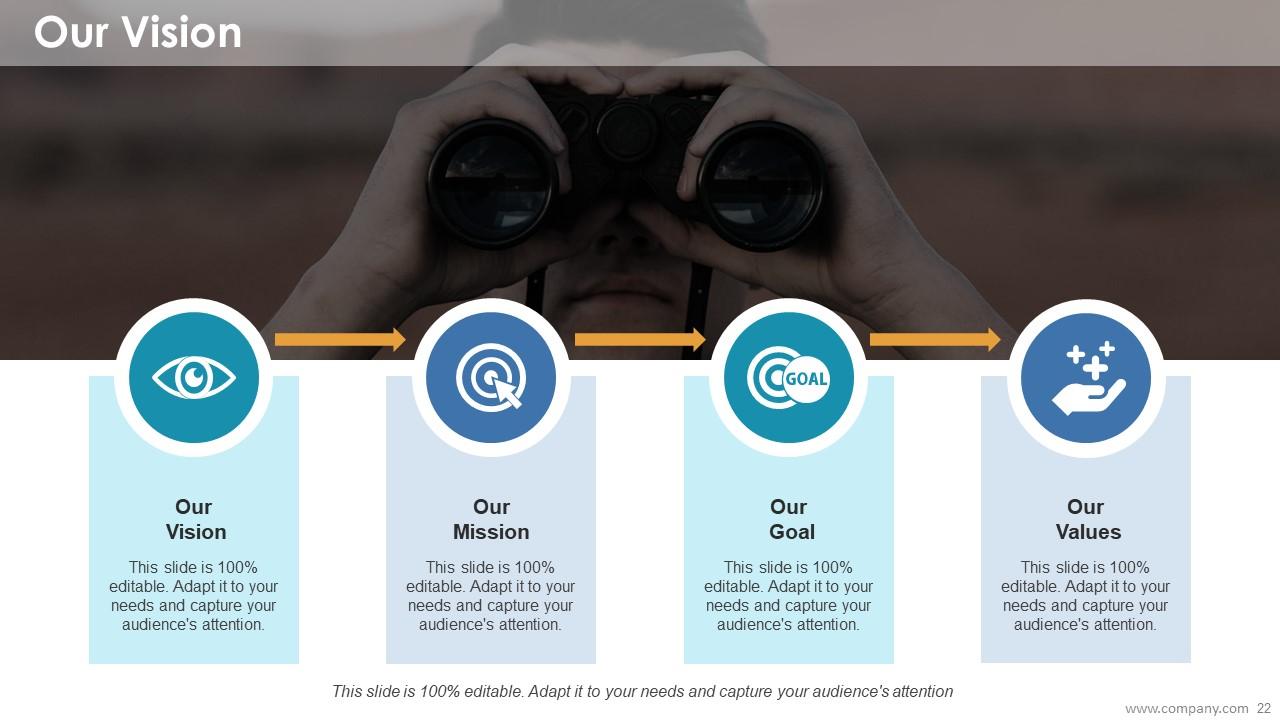
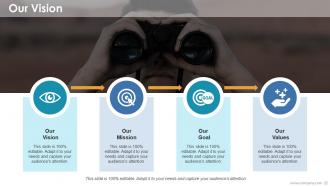
Slide 22: This slide shows about Our vision.You can use to give mission, goal and target.
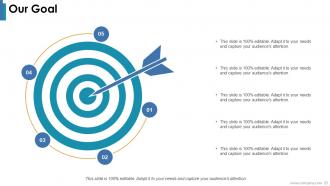
Slide 23: This is an Our goal slide.You can add your goals as per your business.
Slide 24: This is a Thank You slide with Address# street number, city, state, Contact Numbers, email Address.
New Product Research Powerpoint Presentation Slides with all 24 slides:
Choose the course you desire with our New Product Research Powerpoint Presentation Slides. They enable you to decide your actions.
-
Great product with highly impressive and engaging designs.
-
Awesome presentation, really professional and easy to edit.
