


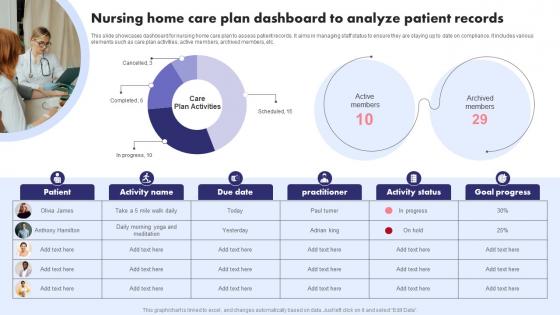
Nursing Home Care Plan Dashboard To Analyze Patient Records




Try Before you Buy Download Free Sample Product
 Impress Your
 Audience
 100%
100% Editable
 Save Hours
 of Time


This slide showcases dashboard for nursing home care plan to assess patient records. It aims in managing staff status to ensure they are staying up to date on compliance. It includes various elements such as care plan activities, active members, archived members, etc.
People who downloaded this PowerPoint presentation also viewed the following :
Nursing Home Care Plan Dashboard To Analyze Patient Records with all 10 slides:
Use our Nursing Home Care Plan Dashboard To Analyze Patient Records to effectively help you save your valuable time. They are readymade to fit into any presentation structure.








FAQs for Nursing Home Care Plan Dashboard To
You'll need health assessments, personalized goals, med management, and regular check-ins. Don't forget social/emotional support and family involvement stuff too. Emergency protocols are huge - learned that one the hard way! The paperwork is honestly brutal at first, but think of it as building a roadmap for each person. Get your whole team involved - nurses, therapists, social workers, everyone. Cookie-cutter plans suck and don't work anyway. Really listen to what residents and families actually want. That's where the magic happens, not in some generic template.
Honestly, when you tailor care plans to each person, everything just works better. Meds get managed properly, therapy actually helps, and residents aren't miserable. Makes sense, right? Nobody wants cookie-cutter treatment when they're dealing with their own specific health stuff. The trick is getting families involved from the start and making sure your staff doesn't just ignore all those personalized notes. I'd look at your assessment process first - are you actually learning what makes each resident tick, or just checking boxes? When people feel seen as individuals instead of room numbers, satisfaction scores go through the roof.
Honestly, get families involved right from the start - they're not just visitors, they're part of the team. They know stuff about the resident's history and quirks that you'd never pick up on during your shifts. Schedule regular sit-downs where they can share what they're seeing and ask questions. Document everything they tell you and keep them in the loop with updates. Families spot changes we miss sometimes, which is actually pretty helpful. Don't treat it like you're doing them a favor - their input genuinely makes the care plan better.
So the official rule is quarterly reviews - that's what Medicare wants. But real talk, you'll be updating those things constantly. Someone's health changes? Update it right away. New meds or they can't walk as well? Same thing. Honestly, some places do monthly check-ins for their sicker residents because waiting three months is kinda nuts when someone's declining fast. I'd set those calendar reminders for the required ones but don't be afraid to document changes as they happen. Way easier than trying to remember everything later.
You'll mostly deal with the MDS - it's this massive federal thing that drives everything and determines reimbursement rates (honestly such a pain but unavoidable). There's also the RAI with care area assessments covering falls, nutrition, mobility stuff. Most places throw in ADL scales, cognitive tests like the MMSE, and pain scales too. Depression screenings and med reviews get mixed in there somewhere. Oh, and definitely figure out your facility's MDS schedule first - that'll show you when all the big comprehensive assessments are actually due so you're not scrambling.
You really can't skip on training your staff properly - it'll totally tank your care plans. Half the problem is people don't get WHY they're doing something, just that they have to check boxes. I've literally seen places where staff couldn't even find the digital care plans (embarrassing). Shortcuts happen when people are confused. Different shifts start doing totally different things. You need hands-on practice sessions and regular check-ins to see who's actually getting it. Honestly? Start by figuring out where your biggest training gaps are right now.
Ugh, time is the biggest killer - you're drowning trying to make individual plans when everyone's already swamped. Getting all the details about each resident's medical stuff, what they actually like, family drama, daily routines... it's honestly exhausting. Then their needs shift constantly so you're updating everything nonstop. The paperwork alone makes me want to scream sometimes. Families are another headache because they all want different things and you're stuck in the middle. Start with decent assessment systems though, and build in review times so you're not always playing catch-up later.
With dementia residents, the whole approach is about working with what they can still do, not fighting what they've lost. Daily routines help a ton. Instead of constantly correcting them, redirect their attention - way less frustrating for everyone. The environment needs tweaking too, like reducing wandering risks and confusion triggers. Activities that tap into older memories work best since those tend to stick around longer. Communication style matters huge - each person's different. Oh, and dignity gets forgotten way too often in care, which honestly breaks my heart. Plans need monthly updates because things change fast.
Okay so here's the thing - you absolutely need everyone talking to each other. Nurses, doctors, social workers, therapists, even housekeeping sometimes. No single person has the full picture, which honestly makes sense when you think about it. Regular team meetings are where the magic happens - you'll catch issues early and actually build care plans that work. Don't let the loudest voice dominate though, that's a mistake I've seen too many places make. Schedule consistent huddles and genuinely listen to what each person brings. Also random thought but dietitians often notice behavioral changes first since they see eating patterns. Make sure their input counts too.
Honestly, start with electronic health records that update in real time - your staff can document everything instantly instead of scrambling with paperwork later. Wearable devices are pretty solid too for tracking vitals around the clock. Mobile apps make medication management so much easier between shifts (seriously, the coordination alone is worth it). Telehealth's great if you need specialists but don't want the whole transportation nightmare. Here's the thing though - don't go crazy trying to digitize everything at once. Pick like 2-3 tools that actually fix your worst headaches first, then build from there.
Listen, the whole thing comes down to actually having real conversations with residents. Not the checkbox stuff - I mean sitting down when they're alert and asking "what matters to you?" instead of just "do you agree with this plan?" Document what they say in their actual words. Include whoever they want there - family, friends, whatever. Oh and use however they communicate best, whether that's talking or writing things down. Your team needs to revisit these preferences way more often than once a year. People change their minds! The residents should feel like partners in this, not like care is just happening to them.
Track your key stuff monthly - medication compliance, falls, hospital readmissions, functional improvements. Honestly though, don't go crazy with too many metrics or you'll drown in spreadsheets. Pick maybe 3-4 that actually matter for your residents. The numbers only tell half the story anyway. Family surveys and just talking to residents directly? That's where you catch things the data misses completely. We do quarterly team reviews to spot patterns and tweak our approach. But here's the thing - make sure you're actually using this info to change how you do things, not just filing reports nobody reads.
Look, CMS guidelines and your state licensing requirements are non-negotiable here. Document everything - informed consent, emergency protocols, who's responsible for what. Resident rights matter big time, so respect their choices in the decision-making process. Honestly, medication management procedures can make or break you during audits. Keep records updated regularly because thorough documentation saves your butt if things go sideways later. Nobody wants to deal with lawsuits over sloppy paperwork. Staff responsibilities need to be crystal clear too - confusion leads to problems fast.
Dude, cultural stuff is SO important for care plans. Ask families directly what they need - don't just guess based on someone's background. Some want to make every decision, others are like "you're the experts." Food is huge too (honestly, take away my coffee and I'd probably waste away lol). Language barriers are tricky, plus people express pain differently. Religious practices matter. End-of-life beliefs vary wildly between cultures. Family involvement expectations are all over the place. Communication styles too - some are super direct, others more indirect. It's really about listening to what each person actually wants.
So I'd start with those quick daily huddles - 15 minutes max where everyone just shares patient updates. Game changer, honestly. Make sure you're all using the same EHR system so notes are updated in real-time. Can't tell you how many times I've seen things go sideways because someone only got the verbal handoff. Weekly team meetings for your trickier cases too. Oh, and create some kind of standard template for care plans - saves so much time later. The whole thing works way better when communication happens regularly, not just during emergencies.
-
The best part about SlideTeam is their meticulously prepared presentations (complete-decks and single-slides both), infused with high-quality graphics and easy to edit. All-in-all worthy products.
-
SlideTeam is the best in the business. Their templates are engaging and customizable. You can rely on them.