

Healthcare Administration Analysis With KPI Dashboard





Try Before you Buy Download Free Sample Product
 Impress Your
Audience
 100%
Editable
 Save Hours
of Time


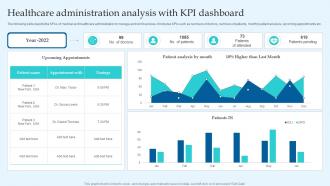
The following slide depicts the KPAs of medical and healthcare administration to manage and remit services. It includes KPIs such as numbers of doctors, numbers of patients, monthly patient analysis, upcoming appointments etc.
People who downloaded this PowerPoint presentation also viewed the following :
Healthcare Administration Analysis With KPI Dashboard with all 7 slides:
Use our Healthcare Administration Analysis With KPI Dashboard to effectively help you save your valuable time. They are readymade to fit into any presentation structure.






FAQs for Healthcare Administration Analysis
Honestly, healthcare admin is wild now - you're literally running a business while keeping patients happy. Budgets, staffing, all that regulatory stuff you have to stay on top of. Plus there's constantly new tech rolling out (EHR systems are... a lot). Quality metrics, patient satisfaction scores, getting different departments to actually talk to each other. Insurance changes every five minutes too, which is always a headache. The whole field shifts so fast you just gotta roll with it. But seriously - work on your communication skills with everyone from doctors to janitors. That'll save you so much drama down the road.
Look, you've got to weave compliance right into your everyday stuff instead of making it this separate headache. Do regular audits and train your team properly. Document literally everything - trust me on this one, it'll save your ass when inspectors show up. Most people I know use compliance software now because honestly, who can keep track of all those deadlines manually? Stay on top of regulation changes by signing up for industry updates and actually talk to the regulatory folks. Oh, and start with assessing where you are now so you know what gaps need fixing first.
Dude, technology totally changed the game for healthcare admin. Electronic records beat paper hands down - way faster and fewer mistakes. You can automate scheduling, speed up insurance claims, and actually see what's happening in real-time instead of guessing. Data analytics help spot where things get stuck too. Telemedicine blew up obviously (covid was wild for that). Honestly though, just figure out what's driving you crazy first - like if billing takes forever or patients can't book appointments easily. Fix the biggest headache and you'll see results fast.
So here's the thing - good communication literally cuts through all those annoying bottlenecks that mess up your workflow. Staff can actually share patient details properly, schedules don't get screwed up, and problems get flagged before they explode. The facilities I've seen that get this right? Their patient flow is smooth and teams aren't constantly stressed out. Oh, and solid handoff protocols between shifts are game-changers - like seriously huge difference. I'd map out where communication falls apart most in your place first, then hit those spots with some standardized processes.
Start with preventive care - way cheaper than dealing with emergencies later. Administrative stuff is where you'll find tons of waste (honestly, healthcare paperwork is insane). Cross-train your staff so they're flexible, and use data to figure out when you actually need more people. Evidence-based protocols help cut unnecessary tests while keeping quality high. Oh, and don't sleep on supplier negotiations. Team up with other facilities for bulk purchasing if you can. Pick one thing to focus on first, see how it works, then expand from there. You don't want to overwhelm everyone at once.
Honestly, data analytics is a total game-changer for healthcare decisions. No more flying blind with guesswork. You'll spot patient flow patterns, predict when you need more staff, and catch cost problems before they blow up. Real-time quality tracking too, which is huge. My friend at Metro General says instead of waiting weeks for reports, they're now making calls based on actual trends and predictive stuff. Resource allocation gets way smoother. Patient satisfaction jumps. Financial planning becomes... well, actually manageable for once. Just pick one metric you want to fix and start there.
Oh man, you're dealing with a nightmare right now. Staff shortages are brutal, especially with nurses leaving left and right. Budget's probably tight too, which makes everything worse. Then there's all the regulatory stuff - honestly, that alone could be someone's full-time job. The trick is focusing on keeping the people you already have instead of constantly hiring. Way cheaper that way. I know it sounds obvious, but retention beats recruitment every time. You can't maintain quality care if you're always training new people. Short sentences help sometimes. But yeah, it's like trying to balance everything at once while the rules keep changing.
Honestly, get out from behind your desk and actually talk to people. Round with your frontline staff regularly - they'll tell you what's broken if you listen. Patient feedback sessions are huge too. Train everyone on communication skills, not just the clinical stuff (this part gets overlooked way too much). Make it crystal clear that patient experience counts just as much as outcomes, then back that up with your performance metrics. Short version: when staff see you celebrating the people who go above and beyond for patients, that attitude spreads like wildfire. Don't be one of those administrators who loses touch with what's happening at bedside.
You gotta find that middle ground, honestly. Too controlling and your team burns out fast - patient care tanks. Go too hands-off? Total chaos with compliance nightmares everywhere. What works is switching it up based on what's happening. Crisis mode? Be direct. Planning stuff? Get everyone involved. Building trust is huge, especially since clinical staff think totally differently than admin people. I always try being upfront about why I'm making decisions. Oh, and connect everything back to how it affects patients - that's what actually matters to everyone. It's tricky but you'll figure out your rhythm.
Honestly, healthcare policies basically run your life as an administrator. New regulations come out constantly, and suddenly you're drowning in compliance paperwork and retraining staff on procedures that changed overnight. Your whole focus shifts depending on what's trending - quality metrics, cost cuts, or patient access stuff. Like with value-based care, you're tracking patient outcomes instead of just counting how many people came through the door (which was way simpler, not gonna lie). The annoying part? These policy changes determine what you'll be stressed about next quarter before you even see them coming. Stay on top of it or you'll be scrambling.
You absolutely need a crisis plan mapped out beforehand - seriously, don't wing it. Figure out who's making the calls, who talks to press, who handles internal stuff. Chain of command is everything here. Honestly? The biggest disasters I've witnessed happen when everyone thinks they're the hero and starts making decisions they shouldn't. Keep your messaging the same everywhere, write everything down, and patient safety comes first obviously. Practice these situations with your team regularly - like actually run through them, not just talk about it. Oh and keep those contact lists current because you'll be scrambling enough already.
Start with one department - maybe mental health or follow-ups work best. Telehealth's amazing for reaching people who can't make it to your office easily, plus patients actually prefer not sitting in those awful waiting rooms for routine stuff. Make sure whatever platform you pick talks to your current EHR system or you'll hate yourself later. Virtual consultations are perfect for chronic disease check-ins and basic appointments. Don't try to go all-digital overnight though - test it small first, see what your patients actually use, then expand from there. Way less headache that way.
Start with the business basics - finance, operations, strategic planning. Healthcare regulations and compliance are obviously huge too. You'll need to understand how clinical stuff actually flows. Leadership skills matter way more than most people think. You're juggling doctors, nurses, admin staff - everyone has opinions. Data analytics is becoming half the job now, which honestly wasn't what I expected when I first looked into this field. Try to get some real experience while you're studying. Shadow someone or volunteer at a hospital. The day-to-day reality is pretty different from what textbooks tell you.
So most healthcare places are finally getting their act together with this stuff. They're doing employee assistance programs and flexible schedules - basic things that should've existed ages ago tbh. Peer support groups are huge, plus mental health days and stress workshops. The trick is actually making people feel safe using these resources without judgment. Oh, and definitely survey your team first about what's stressing them out most. You can't really help if you don't know what the actual problems are. Some places even have "psychological safety" training now, which sounds fancy but just means people won't get punished for speaking up about burnout.
So telehealth's definitely sticking around - that much is clear. Data analytics is driving pretty much every decision now, and patient experience has become this huge priority. Remote work changed recruiting for the better, honestly makes my job way easier. Healthcare systems are throwing money at automation for all the boring admin stuff, plus they're building more flexible operations after COVID showed how fragile everything was. Oh, and mental health support isn't just a nice-to-have anymore, it's actually integrated into standard care. My take? Get used to digital transformation stuff because it's happening fast whether people want it or not.
-
Crisp and neat slides. Makes it fun and easier to curate presentations.
-
Awesomely designed templates, Easy to understand.