

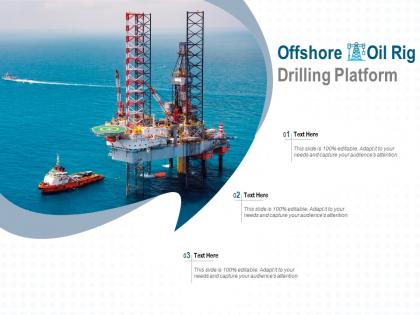
Offshore oil rig drilling platform




Try Before you Buy Download Free Sample Product
 Impress Your
 Audience
 100%
100% Editable
 Save Hours
 of Time


Our Offshore Oil Rig Drilling Platform have a wide span. Bridge the divide with your views.
People who downloaded this PowerPoint presentation also viewed the following :
Offshore oil rig drilling platform with all 6 slides:
Click on "Share" with our Offshore Oil Rig Drilling Platform. Work your ideas around the digital divide.






FAQs for Offshore oil
Oil spills are the nightmare scenario, but there's tons of other stuff too. Drilling tears up seafloor habitats and creates constant water/air pollution. Marine animals get screwed over by noise that messes with whale migration, plus all the toxic crap bioaccumulates up the food chain. Even after they stop drilling, the infrastructure changes things permanently. Deepwater Horizon was insane - really opened people's eyes to how bad it can get. You'll want to look at both regular operational damage AND the potential for massive accidents when you're evaluating this stuff.
Oil spills are the obvious nightmare, but offshore drilling screws with marine life in ways people don't always think about. The constant noise from machinery totally disrupts whale migration routes and messes up how fish communicate. Coral reefs and wetlands get hit the hardest since they're crazy sensitive to any contamination. Even the deep ocean stuff gets stirred up from all the sediment and chemical runoff. Oh, and if you're doing environmental work on this - definitely push for those baseline biodiversity surveys before drilling starts. You'll need that data later to prove what actually got damaged.
So offshore rigs these days have these huge blowout preventers - they're like emergency brakes that can slam shut if things get sketchy. Everything's monitored 24/7 now too, gas levels, equipment stress, you name it. The positioning systems are wild though - rigs stay perfectly stable even when waves are going crazy. Oh and they build in backup systems for anything critical, so one thing breaks and something else takes over automatically. Honestly the whole setup is pretty impressive - no single thing stops disasters but together they create like 5 different safety nets.
Yeah so it's all over the place honestly. The US has like multiple agencies (BOEM, BSEE) doing crazy detailed environmental reviews. Norway probably has the strictest safety rules after all their North Sea stuff - makes sense. The UK's kinda in between, but developing countries? Often pretty limited oversight. Brazil's been cracking down more after some big incidents though. Oh and definitely check out the specific regulatory body's website for wherever you're looking - most have English versions now with current requirements and how to apply.
Offshore drilling is honestly a huge money maker for coastal towns. Creates tons of jobs - rig workers, engineers, all that support staff. Plus the ripple effect is crazy - local hotels, restaurants, service companies all benefit from having those workers around. Tax-wise, communities rake in royalties and property taxes that basically fund their schools and roads. Yeah, the environmental stuff is always gonna be controversial, but purely from an economic standpoint? It's massive. Most of these coastal areas would be pretty screwed financially without it.
So they've got these massive underwater shut-off valves called blowout preventers now. Double-hull tankers too, which makes sense after all those disasters. Real-time monitoring catches leaks right away - tech's honestly pretty impressive since Deepwater Horizon happened. Companies have to keep cleanup crews and equipment nearby, can't just wing it anymore. Inspections are way stricter now too. But here's the thing - don't just look at industry standards. Check each company's actual spending on prevention and their safety record. That's where you'll see who's serious and who's cutting corners.
So offshore drilling basically lets countries get oil and gas from way more places instead of relying on just a few suppliers. There's honestly a crazy amount of reserves under the ocean that different nations can access. When one region has political drama or supply issues, offshore sources from other areas can pick up the slack. It spreads out the risk geographically, which is smart. Countries end up with more bargaining power too - like when energy markets go nuts, they've got backup options. Makes the whole supply chain way less fragile than putting all your eggs in one basket.
So renewables are basically our ticket away from drilling offshore for oil. Solar and wind keep getting cheaper, which means we'll need less ocean drilling over time. Right now they're handling electricity pretty well, but transportation is trickier - that's where EVs and hydrogen come in. Honestly though, we're still pretty hooked on oil for now. The whole transition isn't happening super fast, but it's definitely moving. Storage tech is the real game-changer here - once batteries get better and cheaper, offshore drilling becomes way less necessary. It's all about how quickly costs drop.
Look, public opinion can totally make or break offshore drilling projects. Communities get spooked about spills and environmental damage, then politicians cave to pressure and regulators crack down hard. Deepwater Horizon was like the perfect storm of bad PR - took years to recover from that mess. Your costs and timelines go through the roof when you're battling angry locals. Companies that actually know what they're doing? They start community outreach super early, stay transparent, build trust before problems hit. Once people turn against you, honestly it's game over. Way easier to prevent than fix.
Dude, the costs alone will kill you - we're talking hundreds of millions per rig. Everything has to be chopped up and hauled back with these massive specialized vessels. Environmental regs are insane too, you've got to basically restore the seafloor like nothing was ever there. Weather's another nightmare - some of these things are in locations where you can only work a few months out of the year. Oh, and there's this whole thing about whether to remove everything or leave parts as artificial reefs. My advice? Start the regulatory paperwork yesterday because that process drags on forever.
Yeah, offshore drilling really screws over local fishermen. The noise from seismic surveys scares fish away for months - it's honestly ridiculous how long the effects last. Plus you've got oil spill risks contaminating everything, and all that equipment blocking off areas where people used to fish. Fishermen end up traveling way farther just to find decent catches, which obviously kills their profits. Some places try to help with compensation programs or exclusion zones, but honestly the damage is usually already done. I'd check what kind of protections they're actually enforcing in your area, though some are better than others.
Oh man, offshore drilling tech has gotten way better lately. Blowout prevention systems now have smart sensors that catch problems early - no more waiting for disasters. They're using digital twins to simulate everything in real-time, which cuts down waste big time. Electric systems are replacing those loud diesel engines (seriously, so much quieter). The drilling fluids actually biodegrade now instead of just sitting in the ocean forever. Most companies have zero-discharge systems that capture all the nasty stuff for proper disposal onshore. If you're looking at projects, definitely go with operators who've already adopted this stuff rather than the laggards.
Offshore drilling gets messy fast when countries start fighting over who owns what waters. Companies bail the second there's territorial drama - nobody wants a billion-dollar rig stuck in some political mess. Look at the South China Sea - China literally sends boats to chase away other drilling operations from areas they claim. It's wild how countries turn drilling permits into poker chips for negotiations. Your whole project timeline can get screwed because two governments are having a spat. That's why smart investors always run geopolitical risk checks before putting money down.
Honestly, offshore drilling just digs us deeper into the fossil fuel hole. All that oil gets burned eventually - basic math means more CO2. These projects run 20-30 years, so companies keep pumping even when renewables get dirt cheap because they're trying to make their money back. Creates this whole political mess too since you've got jobs and tax money wrapped up in it. Makes the transition way messier than it needs to be. If you're looking at energy investments, I'd be worried about those assets becoming worthless down the line.
Yeah so offshore drilling's carbon footprint is way higher than wind or solar - no surprise there. But compared to regular onshore oil? Pretty similar actually when you look at the whole process. All those floating platforms and transport ships burn through insane amounts of energy. Coal's still the worst but honestly not by as much as I thought it'd be. Natural gas offshore comes out cleaner than oil though. Oh and don't just look at extraction numbers if you're comparing stuff - the full lifecycle emissions tell the real story.
No Reviews