


Omnichannel marketing for creating a seamless customer experience powerpoint presentation slides




Try Before you Buy Download Free Sample Product
 Impress Your
 Audience
 100%
100% Editable
 Save Hours
 of Time


Our Omnichannel Marketing For Creating A Seamless Customer Experience Powerpoint Presentation Slides are topically designed to provide an attractive backdrop to any subject. Use them to look like a presentation pro.
People who downloaded this PowerPoint presentation also viewed the following :
Content of this Powerpoint Presentation
Slide 1: This slide introduces Omnichannel Marketing For Creating a Seamless Customer Experience.
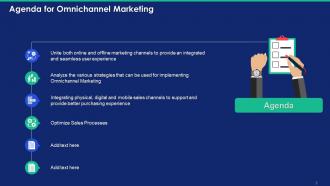
Slide 2: This slide presents the Agenda for Omnichannel Marketing.
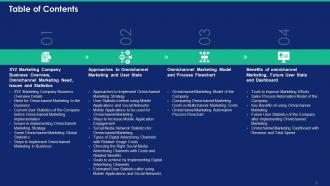
Slide 3: This slide shows Table of Contents.
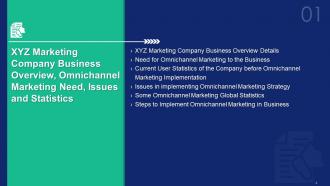
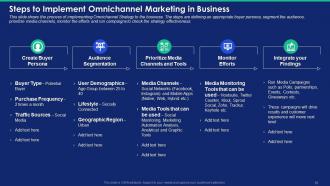
Slide 4: This slide showcases Steps to Implement Omnichannel Marketing in Business.
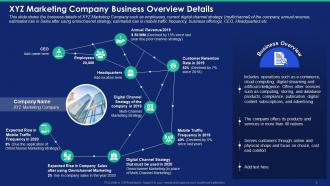
Slide 5: This slide shows the business details of XYZ Marketing Company such as employees, current digital channel strategy (multichannel) of the company, annual revenue, estimated rise in Sales after using omnichannel strategy, estimated rise in mobile traffic frequency, business offerings, CEO, Headquarters etc.
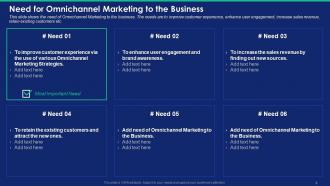
Slide 6: This slide shows the need of Omnichannel Marketing to the business.
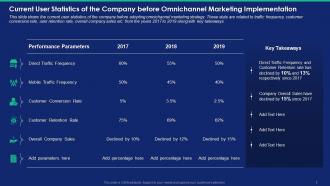
Slide 7: This slide shows the current user statistics of the company before adopting omnichannel marketing strategy. These stats are related to traffic frequency, customer conversion rate, user retention rate, overall company sales etc. from the years 2017 to 2019 along with key takeaways.
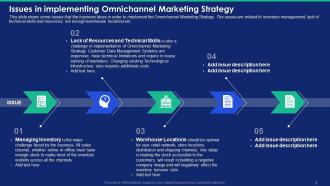
Slide 8: This slide shows some issues that the business faces in order to implement the Omnichannel Marketing Strategy.
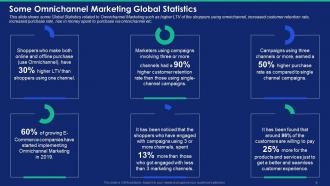
Slide 9: This slide shows some Global Statistics related to Omnichannel Marketing such as higher LTV of the shoppers using omnichannel, increased customer retention rate, increased purchase rate, rise in money spent to purchase via omnichannel etc.
Slide 10: This slide shows the process of implementing Omnichannel Strategy to the business.
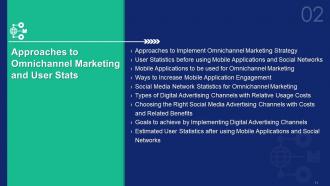
Slide 11: This slide shows Approaches to Omnichannel Marketing and User Stats
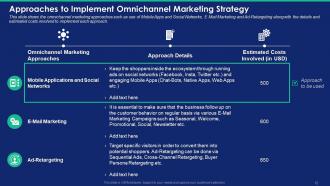
Slide 12: This slide shows the omnichannel marketing approaches such as use of Mobile Apps and Social Networks, E-Mail Marketing and Ad-Retargeting along with the details and estimated costs involved to implement each approach.
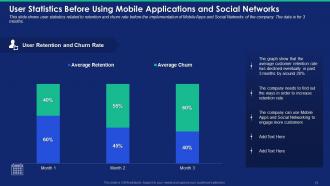
Slide 13: This slide shows user statistics related to retention and churn rate before the implementation of Mobile Apps and Social Networks of the company. The data is for 3 months.
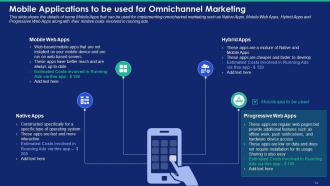
Slide 14: This slide shows the details of some Mobile Apps that can be used for implementing omnichannel marketing such as Native Apps, Mobile Web Apps, Hybrid Apps and Progressive Web Apps along with their relative costs involved in running ads.
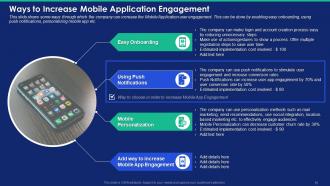
Slide 15: This slide shows some ways through which the company can increase the Mobile Application user engagement. This can be done by enabling easy onboarding, using push notifications, personalizing mobile app etc.
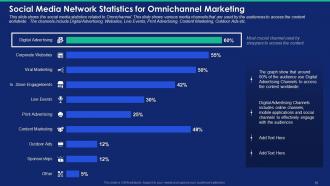
Slide 16: This slide shows the social media statistics related to Omnichannel. This slide shows various media channels that are used by the audiences to access the content worldwide. The channels include Digital Advertising, Websites, Live Events, Print Advertising, Content Marketing, Outdoor Ads etc.
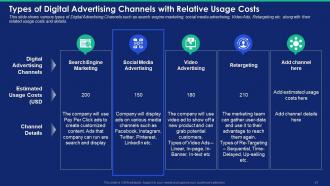
Slide 17: This slide discusses various types of Digital Advertising Channels such as search engine marketing, social media advertising, Video Ads, Retargeting etc. along with their related usage costs and details.
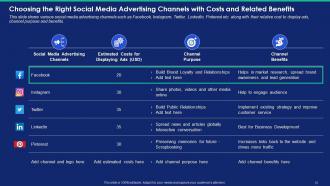
Slide 18: This slide shows various social media advertising channels such as Facebook, Instagram, Twitter, LinkedIn, Pinterest etc. along with their relative cost to display ads, channel purpose and benefits.
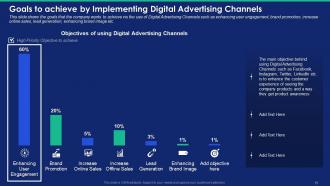
Slide 19: This slide shows the goals that the company wants to achieve vis the use of Digital Advertising Channels such as enhancing user engagement, brand promotion, increase online sales, lead generation, enhancing brand image etc.
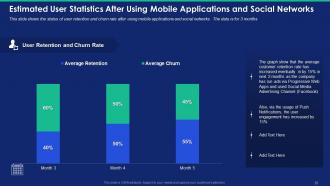
Slide 20: This slide represents the status of user retention and churn rate after using mobile applications and social networks. The data is for 3 months.
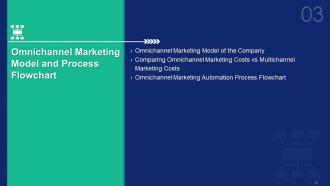
Slide 21: This slide depicts Omnichannel Marketing Model and Process Flowchart.
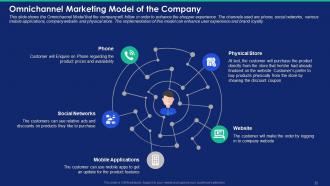
Slide 22: This slide shows the Omnichannel Model that the company will follow in order to enhance the shopper experience.
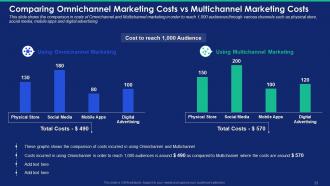
Slide 23: This slide presents the comparison in costs of Omnichannel and Multichannel marketing in order to reach 1,000 audiences through various channels such as physical store, social media, mobile apps and digital advertising.
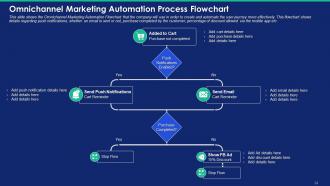
Slide 24: This slide shows the Omnichannel Marketing Automation Flowchart that the company will use in order to create and automate the user journey more effectively.
Slide 25: This slide showcases the Benefits of Omnichannel Marketing, Future User Stats and Dashboard
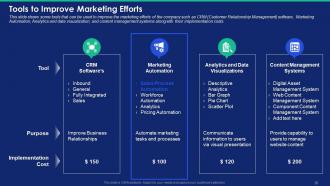
Slide 26: This slide shows some tools that can be used to improve the marketing efforts of the company such as CRM (Customer Relationship Management) software, Marketing Automation, Analytics and data visualization, and content management systems along with their implementation costs.
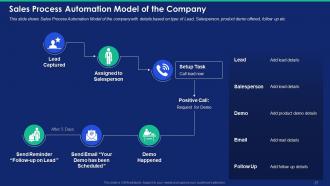
Slide 27: This slide shows Sales Process Automation Model of the company with details based on type of Lead, Salesperson, product demo offered, follow up etc.
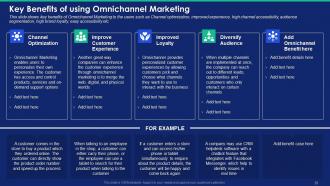
Slide 28: This slide presents key benefits of Omnichannel Marketing to the users such as Channel optimization, improved experience, high channel accessibility, audience segmentation, high brand loyalty, easy accessibility etc.
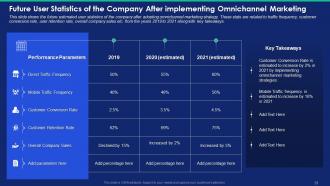
Slide 29: This slide depicts the future estimated user statistics of the company after adopting omnichannel marketing strategy.
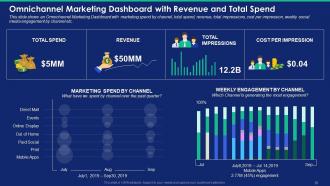
Slide 30: This slide shows an Omnichannel Marketing Dashboard with marketing spend by channel, total spend, revenue, total impressions, cost per impression, weekly social media engagement by channel etc.
Slide 31: This is Omnichannel Marketing for Creating a Seamless Customer Experience Icons Slide
Slide 32: This slide is titled as Additional Slides for moving forward.
Slide 33: This slide depicts Our Mission, Vision and Value
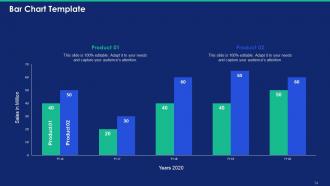
Slide 34: This slide showcases Bar Chart for comparison of products.
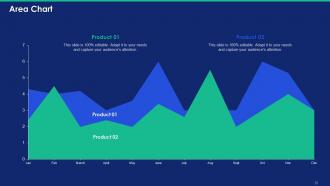
Slide 35: This slide displays Area Chart for comparison of products.
Slide 36: This is Our Team slide with Names and Designations.
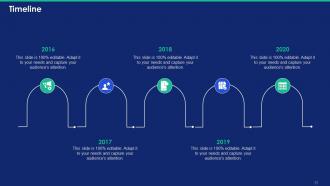
Slide 37: This slide shows Timeline process.
Slide 38: This is Idea Generation slide.
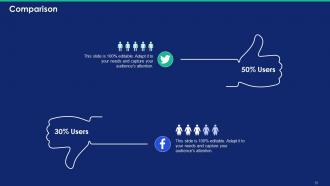
Slide 39: This slide showcase Comparison with data in percentage.
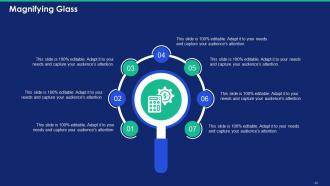
Slide 40: This slide depicts Magnifying Glass.
Slide 41: This slide depicts Goals of the Company.
Slide 42: This is Thank you slide with Contact details.
Omnichannel marketing for creating a seamless customer experience powerpoint presentation slides with all 42 slides:
Use our Omnichannel Marketing For Creating A Seamless Customer Experience Powerpoint Presentation Slides to effectively help you save your valuable time. They are readymade to fit into any presentation structure.


FAQs for Omnichannel marketing for creating a seamless customer experience
Key components of an effective omnichannel marketing strategy include integrated customer data platforms, consistent brand messaging across touchpoints, seamless cross-channel experiences, personalized content delivery, and unified analytics tracking. These elements work together by breaking down silos between departments, enabling real-time customer journey optimization, and delivering cohesive experiences that drive higher engagement and conversion rates across all channels.
Businesses ensure seamless omnichannel experiences by integrating customer data platforms, maintaining consistent brand messaging, synchronizing inventory systems, and implementing unified customer service protocols. Through strategic technology integration, companies like Starbucks and Sephora deliver personalized interactions across digital and physical touchpoints, ultimately enhancing customer satisfaction while driving increased loyalty and revenue growth.
Data analytics enables omnichannel marketing optimization by tracking customer journeys across touchpoints, identifying high-performing channels, personalizing content delivery, and measuring campaign effectiveness in real-time. Through advanced analytics platforms, retailers and financial services companies streamline resource allocation, enhance customer experiences, and increase conversion rates, ultimately delivering unified messaging and competitive advantage.
Brands personalize omnichannel messaging by leveraging customer data analytics, behavioral tracking, dynamic content systems, and AI-driven segmentation to deliver tailored experiences across touchpoints. Through unified customer profiles, companies like Netflix and Amazon customize email campaigns, social media ads, and in-app recommendations simultaneously, ultimately enhancing engagement while maintaining consistent brand voice across all channels.
Companies commonly face data integration difficulties, inconsistent messaging across channels, technology infrastructure limitations, organizational silos, and customer experience fragmentation when implementing omnichannel marketing. These challenges often stem from legacy systems and departmental disconnect, with many organizations finding that strategic coordination and unified customer data platforms ultimately deliver seamless experiences and competitive advantage.
Omnichannel marketing significantly enhances customer retention and loyalty by delivering consistent, personalized experiences across all touchpoints, reducing friction in customer journeys, and enabling seamless transitions between channels. This strategic approach allows brands to build deeper relationships through unified data insights, with retail giants like Starbucks and Sephora finding that integrated experiences increase repeat purchases and customer lifetime value.
Marketing automation platforms, CRM systems, customer data platforms, social media management tools, and analytics software enable comprehensive omnichannel strategies. These technologies streamline customer interactions by centralizing data, personalizing messaging, and tracking engagement across touchpoints, with many retailers and financial services finding that integrated approaches deliver significantly improved customer experiences and higher conversion rates.
Businesses measure omnichannel marketing success through customer lifetime value, cross-channel attribution tracking, unified customer journey analytics, conversion rates across touchpoints, and brand consistency scores. These metrics enable organizations to optimize resource allocation, identify high-performing channel combinations, and enhance customer experiences, with many retailers and financial services companies finding significantly improved ROI and customer retention rates.
Integrating social media into omnichannel strategy involves consistent messaging across platforms, unified customer data management, cross-platform content adaptation, social listening integration, and seamless handoffs between channels. Retail brands and financial services increasingly leverage these practices by synchronizing social campaigns with email marketing, enabling social-to-store conversions, and maintaining unified customer profiles, ultimately delivering cohesive experiences and enhanced engagement.
Businesses can leverage customer feedback by consolidating data from social media, surveys, reviews, support tickets, and in-store interactions into unified analytics platforms. This comprehensive approach enables companies to identify recurring issues, track sentiment trends, and prioritize improvements, with many retailers and service providers finding that integrated feedback systems drive faster product iterations and enhanced customer experiences.
Brands excelling in omnichannel marketing include Starbucks with seamless app-to-store experiences, Disney's integrated park and digital platforms, Sephora's virtual try-ons connecting online and retail, and Amazon's unified ecosystem across devices. These companies streamline customer journeys by synchronizing data, personalizing touchpoints, and maintaining consistent messaging, ultimately delivering enhanced customer experiences and increased loyalty across all channels.
Mobile optimization is critically important in omnichannel marketing, as mobile devices account for over half of digital interactions and serve as the primary touchpoint connecting online and offline experiences. Through responsive design, mobile-first content, and location-based services, businesses streamline customer journeys across channels, with retailers finding that mobile-optimized strategies increase conversion rates and enhance overall customer satisfaction.
Artificial intelligence enhances omnichannel experiences through predictive analytics, personalized content delivery, automated customer segmentation, real-time behavioral tracking, and cross-platform journey optimization. These AI capabilities streamline customer interactions by delivering consistent messaging, anticipating individual preferences, and seamlessly connecting touchpoints, with many retailers finding that intelligent automation ultimately reduces response times while significantly improving customer satisfaction and conversion rates.
Small businesses can compete effectively by leveraging cost-efficient digital tools, focusing on personalized customer experiences, and maintaining consistent messaging across fewer, well-chosen channels. By prioritizing mobile optimization, social media engagement, and email marketing integration, smaller companies often deliver more agile, responsive customer service than larger competitors, ultimately building stronger customer loyalty and community connections.
Current trends shaping omnichannel marketing include AI-powered personalization, voice commerce integration, social media shopping features, augmented reality experiences, and real-time customer data analytics. These technologies streamline customer journeys by delivering consistent messaging, enabling seamless platform transitions, and providing predictive insights, with retailers increasingly finding that unified experiences drive higher conversion rates and customer loyalty.
-
Awesome use of colors and designs in product templates.
-
Great product with effective design. Helped a lot in our corporate presentations. Easy to edit and stunning visuals.
-
Best Representation of topics, really appreciable.
-
Design layout is very impressive.
-
Amazing product with appealing content and design.