


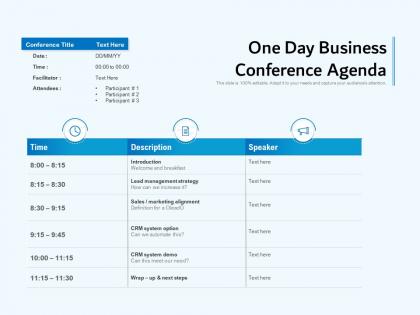
One day business conference agenda




Try Before you Buy Download Free Sample Product
 Impress Your
 Audience
 100%
100% Editable
 Save Hours
 of Time


Our One Day Business Conference Agenda are explicit and effective. They combine clarity and concise expression.
People who downloaded this PowerPoint presentation also viewed the following :
One day business conference agenda with all 2 slides:
Give your audience a fulfilling experience. They will find our One Day Business Conference Agenda elevating.
FAQs for One day
Put session titles and clear objectives at the top. Speaker bios help people know who they're listening to. Timing is crucial - add 15-minute buffers because speakers always run long. Room locations, tech requirements, what to bring. Coffee breaks are honestly where the best conversations happen, so don't skip those networking slots. Send everything out two weeks early minimum so people can block their calendars. Oh, and include a quick conference overview so attendees aren't walking in blind. Contact info for last-minute questions is a lifesaver too.
Good agendas stop people from zoning out because everyone knows what's coming next. Break things into time blocks with clear goals for each part. Don't forget breaks - nobody can sit through hours of meetings without losing their minds. When people see the schedule ahead of time, they actually come prepared with decent questions. I always add a quick "here's why this matters" note next to each topic. Honestly makes a huge difference in getting people to care. It prevents those awkward moments where someone goes "sorry, what are we discussing again?"
Don't pack your schedule too tight - biggest mistake I see everywhere. People need actual breaks between sessions, not just rushed bathroom runs. Back-to-back presentations are brutal. Also, never schedule your best content right after lunch unless you want half the room nodding off lol. Discussions always run longer than you think they will on paper. Buffer time is your friend - like 10-15 minutes between big segments. Speakers will definitely go over (they always do), and your attendees won't hate you for giving them a second to breathe and actually network.
Honestly, buffer time is everything - like 10-15 minutes between big sessions. Don't just think bathroom breaks either, people need time to actually finish conversations. I made this mistake once and our Q&A completely wrecked the schedule for the rest of the day. Quick agenda reminders help too, and definitely get someone to be the timekeeper. Oh, and prep some backup content for sessions that end early (happens more than you'd think). Trust me, people would rather leave on time than sit through filler content just because there's 20 minutes left.
Dude, you definitely need that feedback - it's like your cheat sheet for next time. People will tell you which sessions rocked, which speakers they loved, and what timing felt weird. Send those surveys super quick though, like within 48 hours while everything's still fresh. I learned this the hard way once - waited too long and got like three responses back. You'll start seeing patterns too, maybe everyone wants more hands-on stuff instead of boring lecture-style talks. Seriously, without this input you're just guessing what worked.
Start with their biggest pain points - what they actually showed up to learn. Front-load the critical stuff while people are still awake and caffeinated. Post-lunch sessions? Good luck keeping anyone's attention. Mix up your speakers so you don't have three similar talks in a row (learned that one the hard way). I usually think about business impact first, then worry about the day's flow and energy. Don't stack all your heavy content early though. End with something actionable - people need to walk away feeling like they can actually DO something, not drowning in theories they'll forget by Tuesday.
Build in 10-15 minute buffers between sessions - seriously, it's a lifesaver. Get someone assigned to each room for tech problems and keeping speakers on track. Do your tech rehearsal the day before because something WILL break (learned this the hard way). Put up clear signs and maybe grab some volunteers to help people find rooms. Oh, and have backup plans ready! Speakers run late or don't show up all the time. I swear, conferences bring out Murphy's Law like nothing else. Having a Plan B will keep you from losing your mind when everything goes sideways.
Honestly, mobile event apps are your lifesaver here - Whova and Eventbrite both work great for pushing updates straight to people's phones. Everyone's constantly checking their phone anyway, so might as well use that to your advantage. Push notifications are clutch when speakers bail last minute or rooms get switched around. If you're running something smaller though, just create a shared Slack channel or throw everything in a Google Doc with live editing. Way less fancy but gets the job done. The main thing is picking ONE spot for updates and drilling it into everyone's heads that email won't cut it for day-of changes.
Go with like 70% hands-on stuff, 30% presentations. Front-load the important info when everyone's still awake, then switch it up every hour or so with workshops or breakouts. Death by PowerPoint is real - I've sat through way too many conferences where people just checked out completely. Your interactive bits need to actually relate to what you just talked about though, not some random team-building exercise. Always leave time for discussion after big sessions so people can actually digest everything. Oh, and plan your schedule around energy levels, not just what topics sound good together. Trust me on this one.
Honestly, you've gotta get ahead of this early. Send speakers your full agenda overview plus conference goals way before the event - like, don't wait until the week of. Most of them actually love getting specific talking points because it makes their job easier (who knew?). I'd schedule calls with each one to walk through their presentations and see how everything flows together. The trick is being super clear about what you want the event to accomplish, then giving them what they need to make it happen. Trust me, a little extra prep work upfront saves you from that awkward disjointed feeling between sessions.
Timing's everything - run breakouts right after big presentations while people are still buzzing. Give each group something concrete to solve, not just "chat about X." Trust me, without a clear goal they'll just ramble about lunch plans. Get facilitators for each room and stick to time limits. Oh, and buffer in like 5-10 minutes between breakouts and whatever's next - groups always need that extra beat to finish up. The magic happens when teams report back to everyone else. Creates this accountability thing plus everyone gets to steal the good ideas from other groups.
Survey your people first - find out what they actually want to learn and their experience levels. Mix up the format because some folks hate sitting through long presentations while others can't stand forced group activities. Build in solid networking time (honestly that's half the reason people come anyway). Get speakers from different backgrounds and industries. Oh, and definitely include both beginner and advanced stuff so nobody feels left out. The trick is keeping your schedule flexible enough to pivot if something isn't working. Quick questionnaire upfront will save you tons of headaches later.
Track attendance and how much people actually participated during the session. Did you stick to your timeline? Post-event surveys are honestly the best way to figure out if your content hit the mark and if everything flowed well. I'd also check whether you actually met your main goals - that's what counts. Don't forget about networking moments and if action items got assigned to the right people. Oh, and send out a feedback form within 48 hours while it's all still fresh in everyone's heads.
Honestly, the trick is making networking feel natural instead of forced. Coffee breaks between sessions work great, or try walking lunches - way better than awkward seated meals. I always cringe when conferences just throw "networking time" on the schedule with zero structure. People just end up scrolling their phones! Give folks conversation starters or some kind of shared activity. End panels 10 minutes early so attendees can actually talk to speakers. Oh, and those 15-minute mingles before keynotes? Pure gold. The whole point is making connections happen organically, not like some mandatory office mixer.
Honestly, Canva's where I'd start - their business agenda templates actually look decent and don't scream "generic PowerPoint." PowerPoint works too if you're already comfortable with it. Google Slides is clutch when you need everyone editing at once, which happens more than you'd think. Prezi's cool for those swooshy presentations, but sometimes it's overkill for a basic agenda. Adobe stuff looks amazing but takes forever to learn unless you're already into design. I'd just grab a Canva template and tweak it - you'll have something that doesn't look terrible in like 10 minutes.
No Reviews