


Online Banking System Data Flow Diagram




Try Before you Buy Download Free Sample Product
 Impress Your
 Audience
 100%
100% Editable
 Save Hours
 of Time


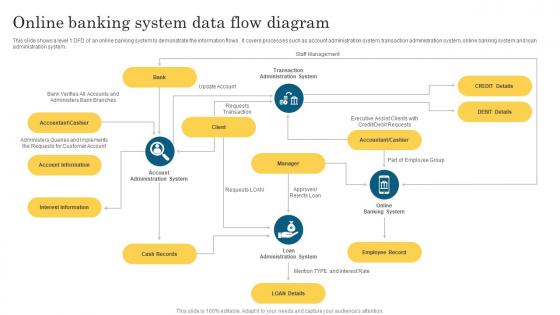
This slide shows a level 1 DFD of an online banking system to demonstrate the information flows. It covers processes such as account administration system, transaction administration system, online banking system and loan administration system.
People who downloaded this PowerPoint presentation also viewed the following :
Online Banking System Data Flow Diagram with all 6 slides:
Use our Online Banking System Data Flow Diagram to effectively help you save your valuable time. They are readymade to fit into any presentation structure.





FAQs for Online Banking System
So banks use multi-factor authentication, encryption, and they're constantly watching for fraud stuff. All your data gets encrypted when it goes between your phone and their servers. They'll automatically log you out after a while, send alerts if something looks sketchy, and monitor transactions around the clock for weird patterns. Biometric logins are becoming pretty common too - honestly way easier than remembering passwords. Just never click email links that say they're from your bank, even if they look legit. Always go directly to their site or app instead.
Dude, get the mobile app if you don't have it yet - you can literally do everything from your couch. Check balances, move money around, pay bills, even deposit checks by taking a photo. I honestly can't remember the last time I stepped foot in an actual branch, which is kinda weird now that I think about it. Everything happens instantly and you get pinged for every transaction. Set up autopay for your regular bills and use those budgeting features - they're actually pretty decent for seeing where your money goes. No more waiting in those awful lines or filling out paper stuff. Trust me, it'll save you so much time.
Honestly, mobile banking changed everything. Before, you'd have to sit at your computer just to check your balance - now it's right there on your phone 24/7. Taking pics to deposit checks still feels like magic to me lol. Banks had to redesign everything because nobody's dealing with tiny buttons you can't even tap properly. Push notifications mean you know instantly when money moves. Biometric stuff like Face ID made security way better too. Oh, and everything happens in real-time now which is pretty sweet. If you're building anything banking-related these days, you've gotta think mobile first or you're screwed.
So banks basically use automated tools plus tons of audits to stay compliant with stuff like PCI DSS and SOX. You need systems that automatically catch sketchy transactions, encrypt everything, and track every single user action - which honestly sounds exhausting but whatever. Most have whole teams checking these logs every day. Real-time dashboards are huge for monitoring, and you'd want quarterly reviews to spot problems before regulators show up at your door. The oversight is actually crazy when you think about it.
Honestly, the security stuff will make you want to pull your hair out - those ancient mainframes hate talking to anything modern. Plus all the compliance regulations for financial data are absolutely brutal. Getting customers on board is rough too, especially with older folks who don't trust putting their money online. Oh, and good luck keeping everything running 24/7 when everyone's trying to log in at once during busy times. My advice? Roll it out in phases and spend serious money on teaching people how to use it from the start.
Dude, COVID basically forced everyone into online banking whether they liked it or not. Branch closures meant even my 70-year-old neighbor had to figure out mobile deposits. Banks saw app downloads jump like 200-300% in some cases - insane numbers. Here's the kicker though: people actually loved the convenience once they got past the initial learning curve. I mean, who wants to wait in line at a bank anyway? Even with everything reopened now, most folks just stuck with digital. Usage patterns are still way higher than they were back in 2019.
Honestly, AI and machine learning are crushing it right now - fraud detection, personalized insights, the whole nine yards. Blockchain's making everything way more secure too. You can integrate with pretty much any fintech app through APIs now, which is clutch. Biometric auth is everywhere (thank god, no more password resets). Cloud stuff lets you process everything in real-time without breaking a sweat. If I had to pick one thing though? Start with AI features first. Users actually notice when their experience gets smoother and more secure.
Banks have pretty solid security these days - they encrypt everything when you're sending data and use fancy algorithms to spot weird spending patterns. Multi-factor authentication is standard now, plus they've got fraud teams watching transactions around the clock. Those verification texts are annoying but they actually work! Real-time monitoring will auto-block suspicious stuff before it goes through. Honestly, the machine learning detection is getting scary good at knowing what's "you" vs. what's not. Just make sure you turn on all the security features they offer and set up account alerts.
Honestly, the AI stuff banks use now is pretty solid. Those chatbots actually get what you're asking instead of giving you random responses. Your bank's probably already using it to catch fraud before it even touches your account - which is huge because dealing with that mess later sucks. It learns how you normally spend so legitimate transactions go through faster. Oh and you're not stuck waiting on hold forever since it handles basic stuff 24/7. The fraud alerts alone are worth it. Definitely turn those on if your bank has them.
Most banks have phone support running 24/7 since financial emergencies don't care about business hours. You can also do live chat, email, or those AI bots for basic stuff. The in-app messaging is actually pretty decent - you can chat with real people while you're looking at your account. They split things up by complexity too. Password reset? Bot handles it. Fraud issue? Goes straight to a specialist. Oh, and definitely use the secure messaging in your banking app instead of regular email for anything account-related. Way safer.
Strong passwords are a must, obviously. Two-factor authentication too if your bank has it. Never click email links even if they look real - phishing stuff is everywhere now. Log into your bank's actual website or app directly. Public WiFi is sketchy for banking, so avoid that. Check your statements pretty often for random charges. Account alerts are clutch - mine buzz my phone whenever money moves. Always log out properly when you're finished. Oh and honestly? Most people are way too trusting with this stuff.
Honestly, UI can totally make or break a banking app. My bank's app is such a mess that I literally avoid logging in unless I absolutely have to. People won't use something that's slow or confusing - period. You want clean design where users can quickly check their balance and categorize transactions without thinking too hard about it. Mobile optimization is huge too since everyone's doing banking on their phone now. The whole thing needs to feel trustworthy but simple, which is trickier than it sounds. Definitely do user testing early because catching those annoying friction points saves you headaches later.
Dude, contactless payments are literally everywhere now - can't escape them. Biometric stuff is becoming the norm too, which is actually pretty cool. AI fraud detection keeps getting scarier good at catching sketchy transactions. Oh, and every single app has some buy-now-pay-later thing built in now, it's wild. Crypto's slowly creeping into mainstream banking, though still feels kinda experimental. The embedded finance trend is huge - random companies just throwing payment features into their platforms. For your system, you'll want to stay flexible and focus on making things smooth for users. That's honestly what matters most.
So banks targeting underserved folks mostly go mobile-first and team up with local organizations. They'll add features like cheap accounts, multi-language support, and easy signup without credit checks. Some even put banking kiosks in corner stores which is honestly pretty smart. Financial education gets built in too since lots of people are jumping into digital banking for the first time. Oh, and transparent fees are huge for building trust - nobody likes surprise charges. If you're working on something like this, accessibility should be your main focus along with getting involved in the actual community.
Okay so consent is huge - you need people to actually agree to what you're collecting, not just buried in fine print. Banks already hoard so much personal financial stuff, so be transparent about what you're tracking and why. Only grab data you actually need for the service to work. Also make it easy for users to see, fix, or delete their info. Honestly, people are trusting you with their most private financial details. Being sketchy about data practices will tank that trust way faster than you'd think, even if you're technically following the rules.
-
The templates are easy to get, and the chat customer support is excellent.
-
Good research work and creative work done on every template.