


Loan Origination System Work Flow Diagram




Try Before you Buy Download Free Sample Product
 Impress Your
 Audience
 100%
100% Editable
 Save Hours
 of Time


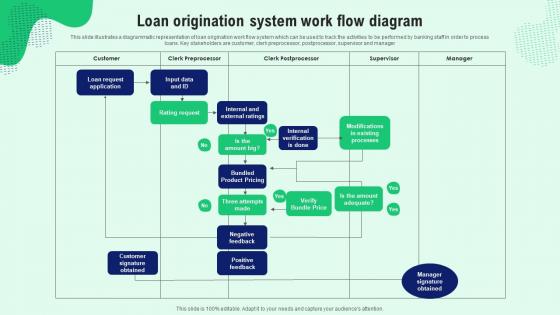
This slide illustrates a diagrammatic representation of loan origination work flow system which can be used to track the activities to be performed by banking staff in order to process loans. Key stakeholders are customer, clerk preprocessor, postprocessor, supervisor and manager.
People who downloaded this PowerPoint presentation also viewed the following :
Loan Origination System Work Flow Diagram with all 6 slides:
Use our Loan Origination System Work Flow Diagram to effectively help you save your valuable time. They are readymade to fit into any presentation structure.





FAQs for Loan Origination System
So basically you've got five main steps: application intake, credit analysis, underwriting, approval/denial, then closing. First thing is gathering all their paperwork - income docs, assets, credit history, all that fun stuff. Your underwriters will dig into the risk assessment and double-check everything. Verification is honestly such a headache but you can't skip it. Once approved, you move to closing where they sign everything and get their money. Oh and trust me, borrowers will blow up your phone asking for updates like every other day, so keep good notes on where things stand.
Your credit score is huge - they check that first. Payment history matters too, plus any nasty stuff like bankruptcies or collections. Income verification comes next through pay stubs or tax returns. They'll calculate your debt-to-income ratio to see if you can actually handle the payments. Employment history and assets might get checked depending on the lender. Honestly, I'd pull your credit report ahead of time because there's always some random error that pops up. Better to catch it early than scramble later when you're trying to close on something.
Honestly, it's a game changer - all that tedious manual stuff gets automated so you're not waiting around forever. Credit reports, income verification, risk assessments? Done in minutes now instead of days. Your customers can upload docs online (thank god we don't have to deal with fax machines anymore). Machine learning does the initial screening and catches obvious red flags early, which means your underwriters can actually focus on the tricky cases that need a real person looking at them. Plus you can give people real-time updates instead of making them wonder what's happening. I'd start with digitizing document collection first - easiest win you'll get.
Honestly, getting your docs together first is a total game changer. Grab your recent pay stubs, last two years of tax returns, bank statements - basically everything financial. Check your credit report too because random stuff on there can mess things up fast. Self-employed? Make sure you've got solid employment verification ready. The more complete your first submission is, the less they'll bug you later for random paperwork. I learned this the hard way lol. Scan everything into a folder on your phone so you can just fire off whatever they need instantly.
Oh man, you're gonna need SO much paperwork from borrowers. Pay stubs, tax returns, bank statements - basically their whole financial life story. Credit reports obviously, plus employment verification letters. Don't forget property docs if there's collateral involved. The list changes depending on what kind of loan, but sometimes I swear we ask for everything except their first-grade report card! ID verification too, and documentation of existing debts. Here's what I learned the hard way though - give them the complete checklist right away. Trust me, asking for stuff piece by piece just pisses everyone off.
So basically, personal loans are your quickest bet - just income proof and credit checks, no collateral headaches. Auto loans take a bit longer since they need to appraise the car and handle title stuff, but the vehicle backing the loan speeds things up. Mortgages though? Total nightmare honestly. You're looking at property appraisals, tons of paperwork, employment verification, the works. Takes weeks instead of days. Oh and definitely give yourself extra time on mortgages - they always find some random document they need at the last minute.
Honestly, the worst part is always income verification - people's finances are way messier than they seem. You'll deal with missing docs constantly, credit surprises that come out of nowhere, and appraisal delays screwing up your whole timeline. Regulatory stuff slows everything to a crawl too. Communication gets crazy between borrowers, underwriters, processors - it's like herding cats sometimes. Last-minute loan changes? Ugh, don't even get me started on those. Just set expectations early and stay on top of documentation from the start. Trust me on this one.
Build compliance into every step of your loan process - application, underwriting, the whole thing. Document everything because auditors love paper trails. Trust me, get automated compliance software; tracking this stuff manually will make you lose your mind. Train your team on TILA, RESPA, and fair lending regs regularly. Review loan files before you fund them, and watch for any weird patterns in your approvals that might look discriminatory. I know it sounds like a lot, but treating compliance as part of the actual workflow instead of something you tack on later will save you major headaches down the road.
Dude, loan origination is honestly where everything gets decided. You're capturing borrowers and figuring out if they're worth the risk - that approve/deny moment is huge. Get your underwriting solid and keep the customer experience smooth, and you'll see way fewer defaults later. Screw it up though? You're stuck dealing with problems through the entire servicing process. All that data quality and risk stuff you nail down upfront - it literally shapes your pricing and how your whole portfolio performs. I know it sounds boring, but getting origination right saves you so much pain later on.
Set expectations right from the start - timelines, what docs they need, the whole process. People hate being left in the dark. Quick check-ins are huge too, even just texting "still waiting on your employment stuff" keeps them chill. I swear half the deals that blow up are just because people think you forgot about them. Some folks want calls, others prefer email, so mix it up. Oh and don't wait for them to bug you - staying ahead of it saves everyone headaches. Way easier than playing catch-up later.
Dude, the lending world is moving crazy fast right now. AI automation is everywhere - credit decisions, document checks, you name it. Approval times went from weeks to literally minutes. Wild stuff. Borrowers want that Amazon experience now, so digital platforms aren't optional anymore. Open banking and embedded lending are huge too. Oh, and lenders are ditching traditional credit scores for cash flow data instead. Way smarter approach honestly. If your company isn't planning some kind of digital overhaul, you're gonna get steamrolled. This isn't slowing down anytime soon.
So underwriting usually starts around day 3-7, once you've got all the initial paperwork sorted. Takes about 2-5 business days for them to go through everything - income docs, appraisal, the whole risk analysis thing. Sometimes longer if it's a weird deal. This all happens while they're doing inspections and title work too. After underwriting approves it, you're looking at maybe 1-3 more days before closing. Oh, and seriously - make sure your borrower's docs are perfect before you send them over. I learned that the hard way. All those back-and-forth requests will drive you crazy and slow everything down.
Dude, you're basically running the whole show from start to finish. First contact with customers, collecting all their paperwork, credit checks - the works. People get super stressed about loans (honestly can't blame them), so you'll spend tons of time walking them through everything. Income verification is huge, plus you gotta explain all the loan terms without making their eyes glaze over. Oh, and coordinating with processors and underwriters to keep things moving? That's like half your day right there. Stay super organized because you're taking each application all the way to closing. Communication is everything in this job.
Getting pre-approved is honestly clutch when you're house hunting. Sellers take you way more seriously when they know you've got financing locked down already. Plus you'll know your actual budget upfront so you won't fall in love with places you can't afford (learned that one the hard way). The whole process moves faster too since your lender already has all your paperwork. Oh, and don't just go with whoever offers the highest amount - pick a lender you'd actually want to close with. Makes everything smoother down the road.
Focus on three main things: smoother data collection, automated decisions, and keeping people in the loop. Digital forms should pull customer info automatically and connect to credit bureaus - seriously, people get annoyed filling out the same stuff over and over. Set up automated underwriting for simple apps, but keep humans involved for tricky ones. The status updates are huge though. Build real-time tracking into your portal so applicants aren't wondering what's happening. Nobody wants to sit around guessing if they got approved or not. Automated texts and emails at each step work great for this.
-
Stunning collection! With a wide variety of options available, I was able to find a perfect slide for my presentation. Thank you, SlideTeam!
-
I joined SlideTeam last month and there’s no doubt that I tend to find our bond only strengthening over time. Best place to find world-class themes, templates, and icons.