

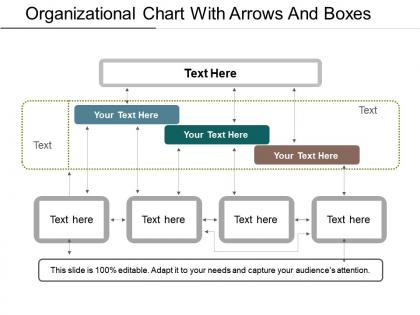
Organizational chart with arrows and boxes




Try Before you Buy Download Free Sample Product
 Impress Your
 Audience
 100%
100% Editable
 Save Hours
 of Time


Cages come apart with our Organizational Chart With Arrows And Boxes. Flourish in the freedom they bring.
People who downloaded this PowerPoint presentation also viewed the following :
Organizational chart with arrows and boxes with all 5 slides:
Increase the degree of faith folks have in you with our Organizational Chart With Arrows And Boxes. It will inspire greater belief.




FAQs for Organizational chart with
You need clear reporting lines first - like who actually reports to who. Define everyone's roles so there's no confusion about responsibilities. Don't make spans of control too wide either. Communication between departments has to flow smoothly, and decision-making power should sit at the right levels. Seriously, the worst thing is when every tiny decision has to go up the chain. Your structure needs to match what your business is trying to do, not just look pretty on an org chart. Start by mapping your current setup - see where decisions actually get made vs where they should.
Honestly, your team structure makes a huge difference in how things actually get done. When people know who's in charge and what their job is, productivity usually goes up. But don't go overboard with rigid hierarchies - I've seen teams get bogged down with like 5 approval steps for everything. Flatter structures work better for keeping people engaged since they feel more ownership. Really depends on your team size though. Short version: find what works for your specific situation and check in with people regularly to see if they're frustrated with the process or not.
Okay so flat structures are awesome for quick decisions - no waiting around for approvals from like five different managers. Communication flows way better too. Your team actually feels heard instead of just being another cog. Downside though? Once you hit maybe 50+ people, things get chaotic fast. Nobody knows who's really in charge of what. Hierarchical setups give you clear career ladders and someone's always accountable when stuff goes wrong. But man, the bureaucracy kills momentum sometimes. I'd go flat if you're small and need to move quickly. How big is your team again?
Start with the basics - what's your company size and where are you in growth? Those drive everything else. Then look at how info actually moves around your org right now. Decisions getting stuck somewhere? That's your red flag. Industry norms matter too (finance works way different than startups, obviously). Map out a couple options but here's the thing - test small changes first. I've seen companies blow up their whole structure at once and it's just... messy. Your team's collaboration style counts more than you'd think. Don't rush the big moves.
So basically, your org structure controls who talks to who and how info moves around. Hierarchical setups mean everything goes up and down through layers - slower but you know who's boss. Flat structures? Way more direct communication across teams, honestly feels less bureaucratic (though sometimes it gets a bit chaotic). Matrix is confusing since you've got multiple managers, but collaboration is solid. The trick is working WITH your structure instead of against it - I've seen companies burn so much energy fighting their own setup. Match your communication style to how you're organized or you'll just create weird bottlenecks.
Think of org charts as your cheat sheet for figuring out who's who and how everything connects. You can see the whole hierarchy - executives at the top, down to regular team members. Really handy for new people or when you're working across different departments. They'll also show you where things might get stuck or if someone's managing way too many people (which happens more than you'd think). Just make sure yours is current - there's nothing worse than reaching out to someone who quit months ago!
Honestly, you gotta stay flexible with how your team's set up - business changes constantly and your structure should too. Check in regularly on what's actually working. Flatten things out when decisions are taking forever to get made. Cross-functional teams work great for new projects, and don't be afraid to axe roles that don't make sense anymore. I'd pick one area where things feel slow and try something small there first. Better to catch problems early than wait until everything's a mess. It's like... you wouldn't keep wearing winter clothes in summer, right?
Functional structure puts all the experts together - marketers with marketers, finance with finance. Makes sense but honestly creates those annoying silos where departments barely talk. Divisional splits things by product or region, so each team acts like their own little business. Way better for actually serving customers. Matrix? You're reporting to two bosses which sounds like hell but weirdly works for complicated projects. Go functional if specialization matters most. Pick divisional when you need speed and customer focus. Matrix works when you can't choose between expertise and collaboration - though good luck with those dual reporting headaches!
Look, when you actually understand how your company works - like who reports to who and who makes what decisions - you can figure out why teams are butting heads. Half the time it's just people not knowing whose job is whose, honestly. You'll spot if the real issue is mixed signals from different bosses or if two departments are getting conflicting marching orders. Plus you know exactly which higher-ups need to get involved to fix things for real, not just slap a band-aid on it.
Honestly, remote work is completely changing how companies are structured. That whole "corner office means you're important" vibe? Pretty much dead now. Teams are skipping middle managers way more since everyone's just a Slack message away anyway. Companies are actually creating new positions like "Head of Remote" - which sounds weird but makes sense, I guess. Instead of organizing around departments, they're building around how work actually flows between people. My advice? Look at your team's workflow first, then figure out reporting structure. Don't just stick with the old pyramid thing because that's how it's always been done.
Dude, your org chart basically controls how fast stuff gets done. Flat companies? Decisions happen quick since there's less red tape to cut through. But those old-school hierarchies where everything goes up the chain? Ugh, so slow. I swear some places take forever just to pick what coffee to order. The upside is hierarchical places usually keep things more consistent - everyone's on the same page. Matrix structures are just confusing though. You'll have two different bosses wanting opposite things. Check where your approvals are getting stuck - that's probably your problem right there.
Dude, communication is everything here - uncertainty freaks people out way more than actual change. Figure out your new structure first before you blow up what you have now. Who are the people you absolutely cannot lose? Write those names down. This whole thing turns into a shitshow really quick without proper planning, trust me. Get your department heads involved early so they can help their teams through it. Oh, and don't rush the timeline - people need to see you've got control of this thing. Regular updates help too. You don't want them thinking you're just moving stuff around for no reason.
So here's what I've learned the hard way - your team's actual personality matters way more than whatever org chart looks pretty on paper. Like, does your crew love brainstorming everything to death? Go flat with lots of cross-functional stuff. More the "just tell me what to do" type? Traditional hierarchy works better. You can't just steal Netflix's playbook if your people freak out without clear rules, you know? I've seen companies try that - total disaster. Honestly look at what behaviors actually get rewarded around there, then build something that fits how you guys naturally work together.
Honestly? Don't rush it without getting everyone on board first. People will fight you hard if they don't get why things are changing. Communication gets messy fast too - suddenly no one knows who's in charge of what or who they even report to anymore. Also, copying what worked at some other company is usually a disaster. Your culture's different, your goals are different. Oh and the timeline thing - I learned this the hard way - people need way longer than you'd think to actually adjust to new processes. Budget like double the time you're planning for training and getting used to everything.
You'd think structure would slow things down, but it's actually the opposite. Clear decision-making paths mean you can pivot super fast instead of having endless meetings about who decides what. Been in those nightmare scenarios before - not fun. Your people stop wasting brain power on office politics and confusion when they know their roles. More mental space for actual problem-solving. Plus you avoid those weird turf battles that kill momentum. Honestly, just sketch out how decisions currently flow in your company. Bet you'll spot some obvious bottlenecks you can fix today.
-
The Designed Graphic are very professional and classic.
-
Great designs, Easily Editable.