


Organizational Project Team Transition Plan




Try Before you Buy Download Free Sample Product
 Impress Your
 Audience
 100%
100% Editable
 Save Hours
 of Time


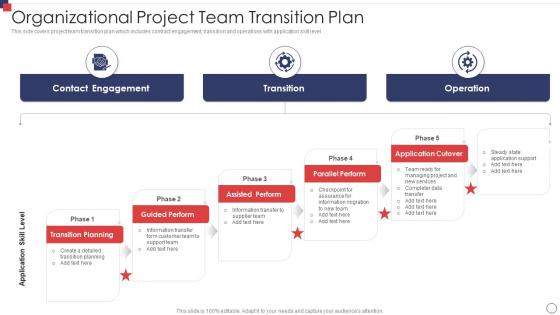
This side covers project team transition plan which includes contract engagement, transition and operations with application skill level.
People who downloaded this PowerPoint presentation also viewed the following :
Organizational Project Team Transition Plan with all 6 slides:
Use our Organizational Project Team Transition Plan to effectively help you save your valuable time. They are readymade to fit into any presentation structure.





FAQs for Organizational Project
Honestly, start with your end goal and work backwards - that's the easiest way to map everything out. You'll need solid timelines, clear roles for everyone, and communication rules so people aren't constantly confused. Build in checkpoints where you can pivot if things get messy (and trust me, they will). Don't skip the boring stuff like training plans and resource allocation. Risk planning is huge too. Stakeholder mapping sounds fancy but it's just figuring out who matters and keeping them happy. Regular reviews are your lifeline for catching problems early.
Honestly, you've gotta tailor your approach for each group. Executives want the high-level stuff - timelines, budgets, strategic wins. Middle managers need the nitty-gritty about how their teams are affected and what processes they'll own. Frontline employees? Focus on training dates and job changes, plus reassure them they're not getting axed (seriously, that's half the battle). IT wants technical specs and system requirements - pretty straightforward there. Don't send everyone the same boring document though. Create specific materials that answer each group's "what's in it for me" question. Way more effective than blasting generic info to everyone.
Honestly, communication can make or break the whole thing. People freak out when they don't know what's happening - I've watched transitions completely crash because nobody bothered updating the important people. You've gotta be upfront about timelines and role changes. Don't wait for them to come asking questions either. Regular check-ins are your friend here. When things get weird (and they will), being transparent about roadblocks actually builds trust instead of breaking it. Sounds obvious but you'd be surprised how many people skip this part.
Honestly, risk assessment is a lifesaver for transitions. Map out everything that could go sideways first - bottlenecks, missing resources, people pushing back. Then rank them by how likely they are and how much damage they'd do. I've watched so many projects crash because teams just crossed their fingers and hoped for the best. Spoiler: hope isn't a strategy. Once you've got your risk list, build backup plans and pad your timeline for the scary stuff. Oh, and definitely communicate realistic expectations upfront. Your stakeholders will thank you later when you're not scrambling to explain why everything's behind schedule.
Okay so first thing - figure out what actually needs to get handed off, then pick your tools around that. I'd go with something like Asana for tracking who's doing what and when. Google Docs or Confluence work fine for the knowledge dump stuff. Oh and honestly? Record some quick video walkthroughs of the tricky processes. People retain that way better than reading docs. Set up check-ins but don't go overboard - maybe weekly at first. Loom's decent for updates if people can't meet live. Just don't pick like 5 different platforms or everyone will hate you.
Honestly, the best way is tracking your main metrics against whatever baseline you had before rolling things out. Productivity, error rates, employee satisfaction - that stuff. Timeline milestones too. Some changes won't show up for weeks though, which is super frustrating but totally normal. I'd also do surveys or just casual check-ins because sometimes the numbers miss important things. Maybe set review points at 30, 60, and 90 days? That way you can tweak things if they're not working. The qualitative feedback is almost more valuable than the hard data sometimes.
Honestly, the biggest mistake is being super vague about who's doing what and when. Like saying "we'll figure it out as we go" - terrible idea. Don't dump everything on people at once either, trust me on that one. You've gotta talk to the actual workers early, not just management. Oh, and build in extra time because stuff always goes wrong. I swear, plans never work exactly how you think they will. Set up regular check-ins so you can pivot when things inevitably get weird. Having clear goals helps too - otherwise you're just flying blind and hoping for the best.
Dude, you've gotta figure out who needs what training before everything goes sideways. Map out the skill gaps first - what don't people know yet? Then build a realistic timeline. Most companies totally screw this up by cramming training at the last minute, which is honestly just setting everyone up to fail. Set up multiple touchpoints: initial sessions, practice time, plus ongoing support like help desks or mentors. Don't forget the process changes alongside technical stuff - people need both. Document it all and make someone actually own each piece. Oh, and give people real runway to learn, not just box-checking exercises.
Track the obvious stuff first - KPIs, project timelines, budget shifts, any service hiccups. The people side is trickier though, and honestly where most transitions fall apart. Watch employee satisfaction, retention, training progress, productivity. Communication flow between teams matters too. Set up a weekly dashboard review with stakeholders - but keep it to maybe 5-7 metrics tops. I learned this the hard way, but more data just creates noise. You'll miss the signals that actually tell you if things are working.
Honestly, flexibility from day one is everything. Build in buffer time and figure out what's actually critical vs just nice extras. I got burned when our main vendor bailed last minute - never again! Map out backup plans for your biggest risks and set clear checkpoints where you'll stop and reassess. Communication is huge too. Nobody wants to be blindsided by changes, so loop stakeholders in early. Oh, and this is key - pick someone to be your go-to change person who can evaluate impact fast and make calls without waiting around for endless approvals.
So a transition plan is like your step-by-step roadmap - it shows what happens when and in what order. Change management is bigger picture though, it's about getting people actually on board with the changes. I learned this the hard way on a project last year lol. Your transition plan covers the "what" and "when" stuff, but change management deals with the messy human side of things. You really need both working together or you'll end up with great planning but nobody following it. Short version: one's tactical, one's psychological.
Oh man, cultural stuff can totally make or break your transition plan. Different teams have completely different communication styles and ways of handling change. Some people want every single detail mapped out, others just need the big picture and they'll figure it out. I learned this the hard way when a solid plan crashed because we ignored how people actually work together. Survey your key people first - ask what they prefer. Then adjust your timeline and how often you check in based on what you find. Honestly saves so much headache later.
Start by figuring out who actually needs to know what - not everyone cares about the same details. Set up weekly check-ins and maybe monthly town halls. Mix up how you communicate too - email for some stuff, Slack for quick updates, face-to-face when it matters. The key thing is making it two-way. Nobody likes being talked at constantly. Try coffee chats or simple surveys to get feedback. Oh, and be honest about when things go wrong, not just the wins - people appreciate that more than you'd think. Just start scheduling regular touchpoints now instead of putting it off.
So basically you need a transition plan to stop everyone from sliding back into their old ways - which honestly happens way more than people think. Map out the key steps and timelines first. Figure out who's gonna resist the changes and tackle that head-on. You'll want to build in training and knowledge transfer too, but do it systematically rather than just winging it. The real trick is creating accountability systems that actually stick. Oh, and start by identifying where you're most likely to backslide - those are your danger zones.
Honestly, GE's CEO succession planning is legendary - companies still copy their leadership pipeline approach. Microsoft nailed it too when they went from Ballmer to Nadella. Total culture shift. Caterpillar's probably boring but they're smart about documenting everything when their senior engineers retire. Mayo Clinic's clinical handoffs are another solid example you could steal ideas from. Your industry association might have better case studies though - way more relevant than whatever Harvard's teaching. Those generic business school examples don't always translate to real situations.
-
SlideTeam just saved my project! Thank you so much. The variety of templates helped me showcase multiple perspectives easily.
-
Wow! The design and quality of templates on SlideTeam are simply the best.