


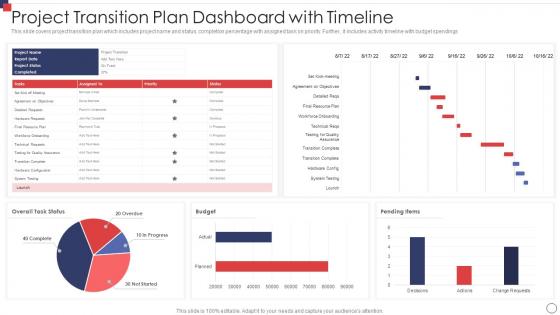
Project Transition Plan Dashboard With Timeline




Try Before you Buy Download Free Sample Product
 Impress Your
 Audience
 100%
100% Editable
 Save Hours
 of Time


This slide covers project transition plan which includes project name and status, completion percentage with assigned task on priority. Further, it includes activity timeline with budget spendings.
People who downloaded this PowerPoint presentation also viewed the following :
Project Transition Plan Dashboard With Timeline with all 7 slides:
Use our Project Transition Plan Dashboard With Timeline to effectively help you save your valuable time. They are readymade to fit into any presentation structure.





FAQs for Project Transition Plan
So you'll want to map out who's involved and their roles first. Then set up knowledge transfer sessions - honestly this is where most transitions completely bomb because people think everything is "common sense" when it's definitely not. Document all the processes, contacts, and weird little things that live in people's brains. Timeline with handoff dates, risk assessment for what might blow up, and some way to measure if it's actually working. Oh and book those knowledge sessions ASAP - everyone's calendar turns into a nightmare otherwise.
Dude, map out everyone who's gonna be affected first - figure out what they actually need to know. Then set up regular check-ins, like weekly updates or whatever works. I'm telling you, it's way better to over-communicate than have people feeling lost. Give them real stuff to do too - testing things, reviewing training materials, that kind of thing. Oh and definitely create some way for them to give feedback or complain before stuff becomes a huge mess later. The whole point is they shouldn't feel like you're just doing things TO them, you know? Make them part of it.
Honestly, the worst part is when people bounce without writing anything down - drives me crazy. You'll deal with knowledge gaps, messy handoffs, and everyone freaking out about timelines. Start your transition stupid early, even if it feels excessive. Get those runbooks done properly. Make sure there's actual overlap time between the old person and whoever's coming in. Oh, and definitely set up regular check-ins with stakeholders so they don't spiral. But seriously, figure out who has all the critical info stored in their brain and get it out of there before they disappear.
Pick 3-4 things you can actually measure to show the team's ready to take over. Document all your processes and make sure training's done - that's huge. Timeline stuff matters too because honestly, these handoffs always want to stretch out way longer than they should. Track if the daily operations are still running smooth once you step back. If there's customer stuff involved, check satisfaction scores. The trick is getting everyone to agree upfront on what "success" looks like before you even start. Don't overcomplicate it with some crazy spreadsheet - keep it simple and trackable.
Honestly? Communication can make or break the whole thing. Keep everyone updated on timelines and who's doing what - people hate being left in the dark. I've watched transitions completely implode because someone didn't know their role shifted or they missed a deadline. Nobody told them! Set up regular check-ins and write stuff down. Better to over-communicate than have your team guessing what's next or scrambling to catch up. Trust me, assumptions kill productivity faster than anything.
Honestly, get everyone on Slack or Teams right away - it's a game changer for keeping people updated. For tracking actual tasks, Asana or Monday work great. Put everything in cloud storage though, seriously. I've watched handoffs completely implode because someone's computer crashed with all the important stuff on it (nightmare scenario). Oh and Loom is clutch for recording those knowledge transfer sessions - people can rewatch the tricky parts later instead of frantically taking notes. Just don't wait until the last minute to set this stuff up.
Start way sooner than feels necessary - trust me on this one. Set up different training tracks for different roles because sitting through irrelevant stuff is torture. Get your SMEs to run the sessions since they actually know where things break. Make it hands-on instead of just slides. Write everything down as you go (people's brains turn to mush during transitions). Give them tons of practice time and Q&A. Oh, and schedule some "office hours" after you go live. That's when the real questions come out - when they're actually trying to do their jobs with the new system.
Weekly reviews work best during transitions, but honestly some teams can get away with every two weeks if everything's going smoothly. I'd stick with weekly though - catches problems before they blow up. Complex stuff or critical systems? Do quick daily check-ins for the first couple weeks. The biggest thing is picking a schedule and actually sticking to it. Don't skip reviews just because things look good on the surface. Book those recurring meetings now or you'll forget.
Honestly, the biggest thing is just talking to people before they hear rumors in the hallway. Nobody likes being blindsided at work, you know? Figure out who the main players are and what's actually bugging them about this change. Don't sugarcoat it - tell them the good AND the messy parts they'll deal with. Ask for their input too, even if you can't use every idea. People just want to feel heard. Oh, and find those naturally positive people on each team early. They'll do half your work for you spreading good vibes about whatever's coming.
Make a living doc that covers what you did AND why you made each decision. Timelines, contacts, lessons learned - all that stuff. Screenshots are clutch here (trust me on this one). Document your handoff meetings and note which people fought you on changes. Track what actually worked vs what you originally planned. The real trick is making it searchable later. Stick it somewhere your team won't lose it, maybe in that shared drive everyone actually uses? And yeah, keep updating it as things change.
Skills gap analyses and stakeholder interviews are your best bet for figuring out if they're actually ready. Do change readiness surveys too - catches the emotional stuff you might miss otherwise. Quick RACI matrix helps see if people know their roles (seriously, this trips up way more teams than it should). Check their workload capacity while you're at it. Hard skills matter obviously, but don't ignore communication patterns and who's gonna resist changes. Scorecard plus honest chats with team leads usually tells you what you need to know.
Dude, stakeholder feedback is everything. Your plan's gonna crash without it, trust me. I've watched so many "flawless" transitions blow up because nobody bothered asking the actual workers what they thought - like, why wouldn't you do that first? They'll spot risks you missed, tell you if your timeline's completely insane, and help you avoid those awkward surprises later. Plus you need them on board or they'll just resist the whole thing. Start getting their input early and keep asking throughout. Don't be that person who finalizes everything then asks for opinions.
Honestly, you gotta watch both the tech stuff and whether people are actually using it. Check your system uptime, how fast things process, error rates - compare that to before you switched. User adoption's critical too - are people logging in? Actually using features? How many support tickets are flying in? The human element is where most transitions crash and burn though. Survey your team about satisfaction and track productivity like task completion rates. Set up some kind of dashboard and review monthly for three months, then quarterly. Way easier to spot problems early. Oh and don't obsess over every tiny dip in the first few weeks - there's always an adjustment period.
Honestly, just ditch the massive handoff document approach - it never works anyway. Break everything into sprints instead. Keep your docs updated as you go rather than scrambling at the end (learned this the hard way). Make transition stuff part of your sprint goals from day one. Get the receiving team involved early - maybe have them sit in on some sprints? Way better than dumping everything on them later. Oh, and start writing down deployment steps and weird system behaviors right away. Trust me on this one. Transition should be ongoing, not some frantic last-minute thing.
Start by figuring out how each department actually works - their workflows, who approves what, the usual stuff. Marketing teams love their meetings while IT people just want you to submit a ticket (honestly, fair enough). Write down who needs info and when, since that's where things always get messy between departments. Spot any shared resources or dependencies early because departments fighting over priorities will mess up your timeline fast. Regular check-ins with department heads help catch problems before they blow up. Oh, and make a RACI matrix so nobody's confused about their role.
-
“Thanks to SlideTeam. Now I can make smart presentations in a fraction of time without any hassle.”
-
This design is not only aesthetically pleasing but it has many uses making the cost worthwhile. The graphics look stunning, and you can edit them as per your needs.