Project portfolio management dashboard and chart
Try Before you Buy Download Free Sample Product
Audience
Editable
of Time
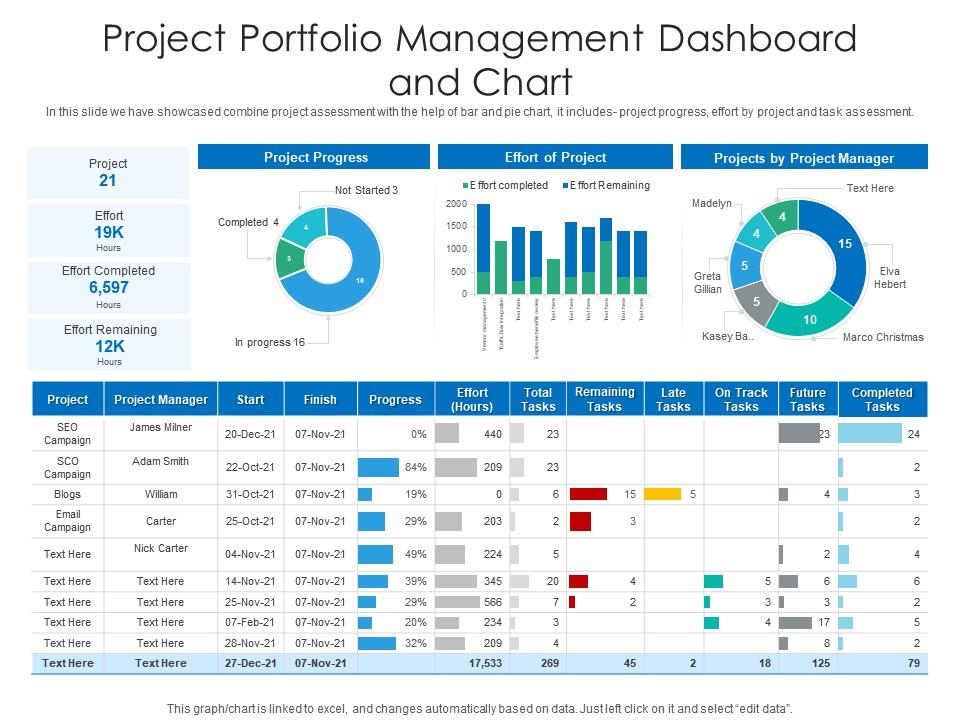
In this slide we have showcased combine project assessment with the help of bar and pie chart, it includes- project progress, effort by project and task assessment.
People who downloaded this PowerPoint presentation also viewed the following :
Project portfolio management dashboard and chart with all 2 slides:
Use our Project Portfolio Management Dashboard And Chart to effectively help you save your valuable time. They are readymade to fit into any presentation structure.
FAQs for Project portfolio management
You've gotta nail the governance piece first - figure out who's actually calling the shots. Then focus on strategic alignment so your projects aren't just random stuff. Resource management and performance tracking are obvious musts. Risk management across everything is huge too, honestly most teams completely whiff on this part. Set up standardized processes for picking and evaluating projects. Regular portfolio reviews keep things from going sideways. Seriously though, start with governance because if decision-making is a mess, your whole framework becomes this bureaucratic nightmare that just slows everyone down.
So basically, project portfolio management is like having a strategic filter for all your work stuff. You're not just saying yes to every cool new project that comes up (trust me, that's a trap). Instead, you score each one against things like ROI and how well it fits your bigger goals. Honestly, most teams skip this step and wonder why they're spread too thin. Create some scoring criteria, then map your current projects to see what's actually moving the needle. Your portfolio becomes this living thing that shifts when priorities change. Try mapping what you've got now first - might shock you what you find.
Honestly, you need both financial and strategic stuff to really see what's going on. ROI and NPV are obvious choices for the money side. Then track how well your portfolio actually hits those strategic goals - otherwise what's the point, right? Resource utilization is huge too since you don't want teams either drowning or twiddling their thumbs. Project success rates and time-to-market are solid metrics. Oh, and don't sleep on customer satisfaction scores because that's what actually drives everything. Just throw these on a simple dashboard and review monthly with your stakeholders.
So basically, portfolio management lets you see everything at once - that's where the magic happens. You'll catch weird dependencies and resource conflicts way earlier. Mix up your projects too - some safe ones, some moonshots. Kinda like not putting all your money in crypto, you know? When something's tanking, you can pull resources and put them somewhere better. The early warning thing is huge honestly. Map out what you've got running now and figure out which ones are actually risky. Short answer: visibility prevents disasters.
Honestly, stakeholder engagement can make or break everything. Get executives on board for funding, loop in department heads for resources, and actually listen to end users - they'll tell you what projects matter. Skip this stuff and you're screwed. Misaligned priorities everywhere, people fighting over resources, projects that sit unused. I've watched so many portfolios crash because someone thought stakeholder meetings were a waste of time (spoiler: they're not). Keep communicating progress regularly. Involve key people in prioritization calls. And yeah, be upfront about trade-offs when things change.
Honestly, PPM tech just handles all the boring stuff that usually kills your day. Real-time dashboards show you portfolio health and resource allocation without constantly updating spreadsheets - thank god. The AI analytics are actually useful too, predicting risks and suggesting optimizations. Collaboration tools keep everyone on the same page about priorities, which prevents so many arguments later. Most platforms play nice with whatever project tools you're already using. Oh, and definitely start with your worst pain point first - no sense fixing everything at once when one thing is driving you crazy.
Honestly, the worst part is everyone thinking their project is THE priority - drives you nuts. Resource conflicts and scope creep will eat you alive if you're not careful. What worked for me: set up clear ranking criteria first, then get a centralized system going for who gets what resources. Regular portfolio reviews help too, though they can feel like a pain initially. Communication makes or breaks this stuff - people need to see how their projects actually tie to company goals. Oh, and start simple! Just use a basic scoring matrix at first. You can get fancy later once your team stops panicking about the whole "portfolio thinking" concept.
Think of prioritization methods as your sanity-saver when everyone wants their project funded. Frameworks like scoring models or ROI calculations help you rank stuff objectively instead of just going with whoever screams loudest (honestly, some meetings feel like that). Your method totally shapes what gets picked - financial metrics = money-focused projects, strategic alignment = long-term thinking. The key is finding something that fits your company's actual priorities. Then stick with it across all projects, otherwise people will call favoritism and you're back to square one.
Honestly, resource allocation is what makes or breaks your whole portfolio. You need to figure out which projects get the people, money, and time - otherwise everyone's spread way too thin. I've watched this destroy so many good portfolios, it's not even funny. Map out what resources you're already committed to, then stack that against which projects actually matter. High-value stuff should get priority while the smaller things don't suck everything dry. You'll probably spot some obvious places to shuffle things around for better results right away.
Honestly, start with like a 60/40 or 70/30 split - short-term stuff versus long-term projects. I've watched way too many teams chase quarterly numbers and completely forget about the big picture (it's painful to see). During your governance meetings, be super protective of that long-term bucket. Don't let people raid it for "urgent" things. You'll want to track both immediate ROI and strategic progress so you can actually prove to leadership why this balance works. Oh, and break those big initiatives into smaller milestones - stakeholders stay happy while you're building toward the real goals.
So basically, portfolio management stops your teams from working on random stuff that doesn't matter. You map all your projects against what the company actually wants to achieve - and wow, you'll be shocked how much effort gets wasted on pointless things. Resources get used way better since there's no more fighting over who gets what. Executives can finally see what's happening instead of flying blind. Customers get value faster too. Honestly, most companies think they're being strategic but they're just throwing darts at a board. Start by listing your current projects and see which ones actually move the needle.
Honestly, just keep a running list of what worked and what totally bombed on each project. Most teams skip this step and it's such a waste. Look for patterns - like maybe certain project types always blow the budget, or you keep overestimating what your team can actually handle. Also track which clients are worth the headache and which ones just drain resources. I used to think this was boring admin stuff, but having that info during planning meetings is gold. You'll stop making the same costly mistakes and can focus more on the approaches that actually pay off.
Honestly, start with standardized status reports so everyone's on the same page. Visual dashboards are a game-changer - they show risks and resource conflicts instantly. I can't tell you how many meetings I've sat through that just turned into endless rambling. Time-box your presentations and send materials 48 hours beforehand. People actually read them, surprisingly. Capture decisions in real-time with owners and deadlines attached. Oh, and ask your stakeholders upfront what communication gaps they're seeing - you'd be amazed what they'll tell you. Three main things though: templates, visuals, structured discussion.
Monthly reviews are your baseline - gotta catch problems before they snowball. Then every quarter, do the deep dive into whether stuff still makes sense with your bigger goals. Some teams do weekly check-ins too, which honestly isn't terrible if you keep it short. Like 15 minutes max. Just don't become one of those places where everyone's constantly in meetings about meetings, you know? Start monthly and see how it feels. You might need more frequent updates, or maybe less if your projects are pretty stable. Really depends on how fast things change in your world.
Look, leadership makes or breaks PPM - I've watched so many portfolios crash because executives couldn't pick priorities and stick with them. Your leaders need to actually align the portfolio with business goals and fight for resources. They're the ones handling all those competing stakeholders too. Without solid governance and decision-making processes from the top, projects just drift. Oh, and when you're shifting portfolio direction? Leadership has to drive that change management piece. Make sure they're accountable for the whole portfolio's success, not just cheerleading individual projects from the sidelines.
-
Excellent design and quick turnaround.
-
Informative design.
-
Awesome use of colors and designs in product templates.