


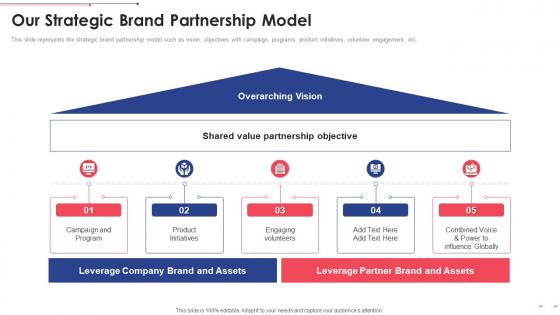
Our Strategic Brand Partnership Model Brand Collaboration Investor Funding Elevator




Try Before you Buy Download Free Sample Product
 Impress Your
 Audience
 100%
100% Editable
 Save Hours
 of Time


This slide represents the strategic brand partnership model such as vision, objectives with campaign, programs, product initiatives, volunteer engagement, etc.
People who downloaded this PowerPoint presentation also viewed the following :
Our Strategic Brand Partnership Model Brand Collaboration Investor Funding Elevator with all 6 slides:
Use our Our Strategic Brand Partnership Model Brand Collaboration Investor Funding Elevator to effectively help you save your valuable time. They are readymade to fit into any presentation structure.





FAQs for Our Strategic Brand Partnership Model Brand Collaboration
Honestly, I'd focus on three big things: do your values actually line up, how much audience crossover is there, and what's their reputation like? You want some overlap but not total - otherwise what's the point, right? Their rep is huge because you'll be linked to whatever mess they might create later. Don't get fooled by follower counts either. Look at engagement rates instead. I'd also peek at how they've handled partnerships before and whether they actually have the resources to pull this off. Quick Google search and social media scroll should tell you everything you need to know.
Honestly, you've gotta do the research first. Map out what your brand actually stands for - values, mission, who you're targeting. Then dig into potential partners beyond their polished pitch decks. I always check their recent campaigns and social posts because that's where you see their true colors. Set up calls where you're brutally honest about deal-breakers. Don't get distracted by pretty aesthetics either. Ask them directly about issues your customers care about. Make a checklist of must-haves and actually stick to it when filtering partners.
Honestly, just focus on the basics first - reach, impressions, engagement rates. Click-throughs and conversions are obviously huge too. Sales attribution is where it gets tricky though, that stuff's always a pain to track cleanly. I'd also look at brand sentiment and social mentions during your campaign window. Oh, and hashtag performance if you're doing social. Here's the thing - pick like 3-5 metrics max before you even start. Trust me on this one. Otherwise you'll be swimming in spreadsheets later trying to figure out what actually worked.
Look, audience overlap is pretty crucial for collabs. If you're both hitting the same 80%+ of people, you're just doubling up on content for the same crowd - kinda pointless, right? Your engagement usually tanks too. But go too low on overlap and the audiences might not mesh well together. I'd shoot for like 20-40% overlap. You get some shared trust from the crossover audience, plus you're actually reaching new people. Definitely worth checking your analytics against theirs first - learned that one the hard way. That middle zone is where the magic happens.
Honestly, social media is like having a megaphone for brand collabs. When you team up with influencers or other brands, their followers see real people actually using your stuff - way more believable than regular ads. The algorithm eats up collaborative content too, which is great. You get to tap into each other's audiences and create that behind-the-scenes buzz people love. Oh, and you can track how it's performing right away. My advice? Find partners whose audience matches yours first. Then just focus on making content that doesn't scream "advertisement" - nobody wants that vibe.
Look for partners where your audiences actually overlap - don't just go after whoever has the most followers (even though that shiny number is so tempting, right?). Your brand voice needs to stay consistent throughout everything. Nobody should suddenly sound like someone else. Be upfront about the partnership because people can spot fake excitement instantly. The whole thing should feel natural for both of you instead of forced. Here's what I always ask myself: if my customers randomly found this collab, would they think "yeah, that makes total sense"? That's your litmus test right there.
Look for brands where your audiences actually overlap but the collab feels unexpected. Don't just throw logos together—that's instant cringe. Map out what makes you unique first, then find someone whose strengths fill your gaps. Co-create something exclusive or swap platforms for real cross-pollination. Tell a story that connects both your histories. Honestly, the weirdest pairings sometimes work best (streetwear meets luxury, anyone?). Focus on shared values over aesthetics alone. Give both fanbases something they literally can't get anywhere else. That's where the magic happens.
So definitely get your escalation stuff sorted before anything goes sideways. Pick point people from both brands who can actually make decisions fast - not someone who has to ask their manager's manager, you know? Document the big stuff and do regular check-ins so problems don't fester. I've watched collabs implode over the dumbest miscommunications that were totally preventable. Stay focused on solutions instead of who screwed up. Both teams need a safe way to speak up when something's bugging them. The whole thing works better when you're hunting for those win-win situations where neither brand gets thrown under the bus.
Biggest risks? Your brands might clash horribly, plus if they mess up it reflects badly on you too. You'll probably lose some creative control, which honestly sucks but it's part of the deal. Sometimes partnerships just look fake - audiences can smell that from miles away. My advice: research the hell out of potential partners first. Set boundaries about messaging and values before signing anything. Always include exit clauses because things go sideways more often than you'd think. Try to keep approval rights over final content. Oh, and start small! Test things out with mini collabs before jumping into something huge.
Okay so influencer collabs take your regular partnerships and make them way more believable. Think about it - when an influencer you follow recommends something, you're more likely to trust it than some random corporate post, right? You're getting access to their audience who actually listens to them. Plus the content ends up being more creative and engaging than typical B2B stuff. Oh and you'll reach people your traditional partners probably can't. Honestly, I'd start by finding influencers who vibe with both your brand and your partner's crowd - that alignment is everything.
Dude, limited drops are pure magic for collabs. People go crazy when they think they'll miss out on something exclusive. Set a hard deadline and actually stick to it - that's what makes it work. Customers feel special having something rare, plus they buy faster instead of overthinking it. The "limited time only" thing blows up on social media way more than regular launches. Both brands can charge premium prices too. Honestly, I've watched collabs sell out in like 3 hours just because of the scarcity angle. Creates this whole buzz that regular products never get.
Oh man, cultural stuff is huge - seriously can't skip this part. Research local values and business customs first, not later. What kills it in the US might totally flop in Japan or actually offend people elsewhere. Colors mean different things, timing matters, even your messaging can backfire hard. I remember hearing about brands using funeral colors for happy campaigns... so awkward. Communication styles vary wildly too. Honestly, get local cultural consultants involved early in planning. Don't treat them like an afterthought when things go wrong.
Dude, Nike x Apple is still one of my favorites - fitness tech plus athletic gear just makes sense. Spotify teamed up with Uber so you can play your music during rides, which is genius. Starbucks puts coffee shops inside Barnes & Noble stores too. GoPro and Red Bull though? That partnership is insane for extreme sports content. You want brands where audiences overlap but you're not competing directly. Both should bring something different that makes the experience better for customers. Honestly, just think about where your customers hang out when they're not buying from you - that's where the magic happens.
Honestly, start by actually listening to your customers first - surveys, reviews, whatever. Share those insights with whoever you're collaborating with right away. I've watched so many partnerships create products that totally miss the mark because they skipped this part. Get customers involved early through beta testing or sneak peeks. Makes them feel like they're part of the process, you know? Set up some kind of shared dashboard so you and your partner are seeing the same feedback in real-time. That way you're both building stuff people actually want instead of guessing.
Dude, brand collabs are getting crazy data-driven now. AI's already matching companies based on audience overlap and shared values - some of these tools are honestly wild. Micro-influencers are blowing up because people want authenticity over huge follower counts. The really cool stuff though? Cross-industry partnerships. Like fitness brands working with mental health apps, or food companies teaming up with sustainable packaging startups. I'd start building relationships outside your space now. Those weird, unexpected partnerships always create the most buzz anyway.
-
Extensive range of templates! Highly impressed with the quality of the designs.
-
Every time I ask for something out-of-the-box from them and they never fail in delivering that. No words for their excellence!