


Strategic alliance lifecycle model in channel partner




Try Before you Buy Download Free Sample Product
 Impress Your
 Audience
 100%
100% Editable
 Save Hours
 of Time


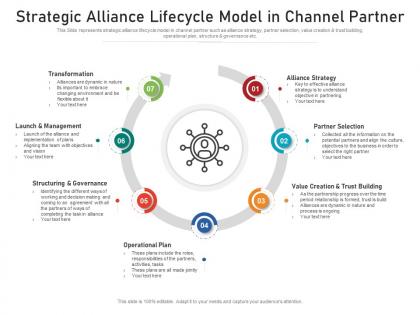
This Slide represents strategic alliance lifecycle model in channel partner such as alliance strategy, partner selection, value creation and trust building, operational plan, structure and governance etc.
People who downloaded this PowerPoint presentation also viewed the following :
Strategic alliance lifecycle model in channel partner with all 2 slides:
Use our Strategic Alliance Lifecycle Model In Channel Partner to effectively help you save your valuable time. They are readymade to fit into any presentation structure.

FAQs for Strategic alliance lifecycle model
So there are basically five phases to strategic alliances. First you've got formation - finding partners and hammering out the deal. Then implementation kicks in where you actually launch everything. Management comes next and honestly? This is where most partnerships either crush it or quietly fall apart. After that you hit evaluation to see if you're actually hitting your goals. Finally there's the termination/renewal phase where you decide if it's worth continuing. Oh and each phase needs totally different skills, so don't spread your team too thin across all of them at once.
Honestly, I'd look at three main things when picking partners. First - do your goals actually make sense together? Sounds basic but people skip this step all the time. Check out their work culture and how they communicate too, because mismatched styles will drive you insane later. The boring operational stuff matters more than you think - compatible systems, similar quality standards, timezone overlaps if you're working remotely. My advice? Test things out with small projects first. It's way better than jumping into something huge and discovering you can't stand working together.
Honestly, it comes down to getting aligned from day one and doing your homework on who you're partnering with. Make sure you both actually want the same things - I can't tell you how many partnerships I've watched crash because people assumed they were on the same page but never talked it through. Do real due diligence on their culture and track record, not just the flashy stuff. Figure out how decisions get made and what happens when you disagree (because you will). Oh, and don't go all-in right away - test things out with something smaller first to see if you can actually work together.
Honestly, cultural differences will mess up your alliance faster than you think. One partner wants lightning-fast decisions while the other needs like five committee meetings - super frustrating. Communication styles clash too. Meeting etiquette, reporting chains, even how people give feedback varies wildly between companies. I've seen partnerships fall apart over this stuff (though obviously other factors play in too). Do your homework on their culture before signing anything. Set up some joint training early on or get cultural liaisons involved. Sounds formal but it actually helps teams work together without stepping on each other's toes constantly.
Here's the thing about partnerships - what matters changes as you go. Early on, you're looking at whether you actually fit together strategically and what resources each side brings. Later it's all about operational synergies and real market results. Track different stuff at each phase: formation (alignment scores, resource access), implementation (hitting milestones, integration working), maturity (revenue growth, cost cuts, innovation). Here's what'll mess you up though - some benefits take forever to show up. Don't freak if ROI looks terrible at first. Set up a scorecard with both leading indicators like partner satisfaction and lagging ones like financial returns. That way you can fix things before you're screwed.
Honestly, misaligned expectations are the worst - nobody's on the same page from day one. Communication falls apart fast, especially when you've got clashing company cultures. Resource fights get messy too (who's paying for what?). Then there's the whole governance nightmare of figuring out who actually makes decisions. Tech integration is a pain when systems don't mesh well. And obviously, staff hate change. My advice? Get your communication sorted early and set up clear decision-making rules. Check in constantly or small problems become disasters real quick.
Honestly, communication makes or breaks these things. You'll want regular check-ins happening at every level - executives, project teams, everyone. Map out early who talks to whom and how often, then actually do it. Misalignment kills partnerships crazy fast, way faster than budget issues or whatever. I've watched so many "strategic" alliances turn into basic vendor relationships because people quit being real about goals and concerns. Oh, and don't just do formal meetings - create space for actual relationship stuff too. The informal conversations matter more than you'd think.
Leadership makes or breaks these things, seriously. You need people who can actually handle conflict when it comes up (and it will). Strong leaders keep everyone focused on the big picture instead of getting bogged down in petty stuff. Most alliances crash during the first real disagreement because nobody's really committed at the top. Both sides need executive sponsors who aren't just there for show - they need to be engaged and able to make real decisions. I've seen too many "partnerships" where it's just middle management trying to make something work while executives treat it like an afterthought.
Deal with conflicts fast and head-on - don't let them simmer. Most alliance drama actually comes from mixed-up expectations, not the real business issues (which is kinda frustrating but true). Set up regular team check-ins and make sure everyone knows who to call when shit hits the fan. Joint committees work well if they can actually make decisions. Document everything because people have selective memory later. Build some trust by being transparent about what's going on. Having a clear process beforehand saves you from those relationship-killer arguments down the road.
Track the money stuff first - revenue growth, cost savings, ROI, that kind of thing. But don't stop there because numbers alone are kinda misleading. Partner satisfaction scores matter just as much, plus how often you're actually talking and hitting those joint goals you set. Oh, and operational stuff like faster time-to-market or better resource use. I'd do a quarterly check-in covering all three areas. Makes it way easier to catch problems before they blow up. Trust me, the relationship metrics will save your ass when the financial ones start looking sketchy.
Yeah, market conditions are huge for partnerships. Growing markets? You'll fly through those early stages because there's enough pie for everyone. But man, when things go south - recessions, new regulations, competitors swooping in - even the strongest alliances can fall apart overnight. I watched one partnership that seemed bulletproof completely implode when their industry got hit with new compliance rules. Build flexibility into your agreements upfront though, and you can pivot when stuff gets crazy. Otherwise you're just sitting there watching your partnership become yesterday's news.
Honestly? Mismatched expectations destroy partnerships faster than anything. You gotta nail down who decides what upfront, plus how you'll actually measure if this thing's working. Cultural clashes are insane - I watched one deal blow up literally over how they ran meetings. Most people rush the homework phase or think they'll just wing it later (spoiler: they won't). The ones that work spend forever on relationship stuff and figuring out how to handle fights before anyone signs. Oh, and start by talking exit strategies first. Sounds dark but it actually makes everyone trust each other more.
Honestly, you'll want to nail down one solid platform first - maybe Asana or Monday for tracking who's doing what. Slack's a game changer too since you can just message people directly instead of formal emails (which nobody reads anyway). For documents, Google Workspace lets everyone edit stuff simultaneously without that annoying "wait, which version are we using?" chaos. Video calls keep things personal when you're not in the same building. Oh, and cloud storage is pretty much non-negotiable these days. Start simple with whatever both teams can actually use without a ton of training.
Look, you've gotta think about the breakup before you even shake hands. Sounds harsh but hear me out - knowing how partners might bail (acquisition, IPO, contract ends, whatever) lets you set up the whole thing differently from day one. Your governance structure, who owns what IP, how integrated you get operationally - it all depends on those exit scenarios. Different ways out = different contract terms and asset splits. I learned this the hard way once, but anyway... map out those potential exit paths right during your first partnership talks, not when everything's already falling apart. Saves you massive headaches later.
Just be real with them from the start - don't hide your weaknesses or oversell what you can actually pull off. Keep other partners' confidential stuff locked down too, because breaking that trust will absolutely destroy your reputation. I've watched partnerships blow up because someone wasn't honest about money problems or other commitments they had going on. Honestly, the worst thing you can do is surprise them later with something you should've mentioned upfront. Set up clear rules about communication and ethics before signing anything. Both sides need to know exactly what they're walking into.
-
Unique and attractive product design.
-
Great quality product.
-
Enough space for editing and adding your own content.
-
Very well designed and informative templates.
-
Excellent template with unique design.