


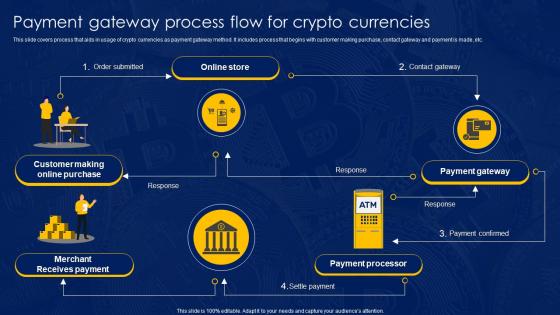
Payment Gateway Process Flow For Crypto Currencies




Try Before you Buy Download Free Sample Product
 Impress Your
 Audience
 100%
100% Editable
 Save Hours
 of Time


This slide covers process that aids in usage of crypto currencies as payment gateway method. It includes process that begins with customer making purchase, contact gateway and payment is made, etc.
People who downloaded this PowerPoint presentation also viewed the following :
Payment Gateway Process Flow For Crypto Currencies with all 6 slides:
Use our Payment Gateway Process Flow For Crypto Currencies to effectively help you save your valuable time. They are readymade to fit into any presentation structure.





FAQs for Payment Gateway Process Flow
So you'll need a merchant interface for payment requests, plus a blockchain connector to handle the actual crypto transactions. Wallet management is key for addresses and keys. Rate conversion tools are crucial since crypto prices are all over the place - honestly, that part can be a headache. Security modules handle encryption and fraud detection, and settlement rails convert crypto back to fiat when needed. The API layer connects everything so your system can talk to the gateway. I'd map out what you actually need first though. Most providers let you pick and choose components, so you won't waste money on stuff you don't use.
So crypto gateways basically skip the whole traditional banking thing and go straight through blockchain networks. When someone pays you in Bitcoin, it gets verified by the blockchain instead of Visa - which is honestly pretty cool. Settlement happens way faster since there's no bank clearing bullshit to deal with. But here's the catch: crypto prices are all over the place, so you're dealing with constant volatility. Also, compliance stuff is totally different than regular payments. Most people I know just auto-convert to regular money unless they actually want to hold crypto long-term.
Multi-signature wallets are your lifeline here - require multiple keys for transactions so one compromised account can't wipe you out. Keep most funds in cold storage, obviously. Two-factor auth and end-to-end encryption aren't optional either. Real-time fraud detection will catch sketchy stuff early. You'll also need regular security audits and compliance with AML/KYC rules (boring but necessary). Build everything security-first from day one - patching holes later is way harder and more expensive. Exchange hacks happen constantly, so paranoia is basically a job requirement at this point.
Crypto rates are wild - they can swing hard even in like 10 minutes. So when someone pays you, the conversion rate at that exact moment decides how much actual cash you get. Most payment gateways will either lock in the rate right when the payment starts, or they'll give you maybe 10-15 minutes before it expires. Honestly, smaller transactions can really get screwed by bad timing. Check what your gateway's policy is on rate-locking. Setting minimum payment amounts isn't a bad idea either - saves you from those annoying little hits when rates move against you.
Honestly, crypto payments are pretty sweet for merchants. You'll save big on fees - like 1-3% instead of the usual 3-5% card processing costs. Settlement happens way faster too, and you can sell globally without dealing with currency exchange nonsense. Plus you're tapping into customers who are actually excited to spend their crypto (which is weirdly enthusiastic but whatever). The no-chargeback thing is nice since transactions can't be reversed, though that cuts both ways if someone screws up. I'd just start with a decent payment processor to try it out first.
Okay so smart contracts are basically like having an automated payment system that runs on blockchain. No middleman needed. They hold your money in escrow until whatever conditions you set are met - delivery confirmed, service done, whatever. Then boom, funds get released automatically. The cool part? Way fewer trust issues since everything's coded in advance. Gas fees can be a pain though, so definitely check which blockchain your gateway uses first. Some are way faster and cheaper than others. Your customers pay, the contract verifies it, holds the cash, then sends it to your wallet once everything checks out. Pretty neat system honestly.
Yeah, crypto fees beat traditional payments by a lot. Credit cards hit you with like 2.5-3.5%, but crypto's usually just 0.5-2%. The cool thing is crypto fees aren't percentage-based like Visa - they're network fees instead. Bitcoin gets annoying when the network's jammed though, costs can spike. But honestly, you'll save a ton on bigger transactions where that percentage difference actually matters. I'd mess around with small amounts first to see what you're really paying with your setup. The savings add up fast once you get the hang of it.
Honestly, crypto regulations are a total mess right now - every country does their own thing. Some places love it, others ban it completely. The big stuff you need to worry about is AML and KYC compliance, plus tax reporting since most places treat crypto like property, not actual currency. Consumer protection laws matter too if transactions go sideways. I'd definitely find a fintech lawyer who knows crypto inside and out. Yeah it costs money upfront, but way cheaper than getting hit with compliance violations later. The whole space is still pretty much the Wild West in a lot of places.
Yeah so crypto refunds are weird - you can't just reverse them like regular payments. Blockchain doesn't work that way. You have to send a totally new transaction back to their wallet address. The annoying part is finding their correct receiving address, but it should be somewhere in your payment gateway logs. Double-check that address before hitting send because once it's gone, it's gone lol. Honestly, if you're doing this regularly, maybe look into setting up some automated return system through your processor. Way less room for expensive mistakes that way.
So most payment gateways stick with Bitcoin and Ethereum - Bitcoin's still the go-to for basic stuff, Ethereum handles all the smart contract magic. Binance Smart Chain pops up a lot too since it's way cheaper to use. Newer ones are adding Polygon and Solana because honestly, nobody wants to deal with insane gas fees anymore. Speed matters too - waiting forever for transactions is just annoying. When you're picking a gateway, definitely check what blockchains they support first. That's gonna determine how much you pay and how fast things actually process.
So payment gateways basically run a bunch of automated checks you don't see. They'll verify who customers are through KYC stuff, watch for weird transaction patterns, and keep records of everything. Rapid big transfers or payments from sketchy countries? That gets flagged for review. They also cross-check against government watchlists to block anyone they're not supposed to work with. Honestly, the documentation part is key - you want to actually read through their compliance setup before you integrate anything. Most decent gateways are pretty transparent about how they handle this stuff.
Honestly, start with which coins they actually support - Bitcoin and Ethereum are obvious, but think about what your customers might want down the road. Security's probably your biggest concern (multi-sig wallets are clutch), and don't sleep on checking their compliance stuff. Transaction fees will eat into your profits if you're not careful - some gateways are sneaky about this. Processing speed matters too, nobody wants to wait forever. Oh, and make sure it won't be a nightmare integrating with whatever system you're already using. Their support better be decent because you'll probably need it. Just pick your top 3 dealbreakers and work from there.
Yeah, crypto settlement timing is honestly a pain because of how much prices bounce around. Like if Bitcoin tanks 5% while your $100 payment is processing, you'll come up short on the actual cash amount. Most gateways try to fix this by locking in rates for maybe 10-15 minutes, or they just convert everything at the exact moment of settlement. The crazy part is crypto swings way harder than regular currencies - we're talking 10%+ moves in just a few hours, which is nuts. I'd go with a gateway that has really tight rate-lock windows and actually explains their volatility rules clearly upfront.
Honestly, the volatility thing is brutal - prices swing like crazy between payment start and confirmation. Managing private keys confuses the hell out of most people, and don't even get me started on gas fees. Network congestion screws up transactions constantly. Regulatory uncertainty makes businesses super skittish about jumping in too. I'd probably go with gateways that lock in prices upfront and spell out fees clearly. Oh, and transaction speed is still pretty wonky depending on which network you're using. Makes the whole experience feel clunky for customers.
Honestly, just keep it super simple at first. Put some basic guides on your site with screenshots - like those step-by-step things that show people exactly what to click. Email your customers about the perks too (lower fees, faster international stuff). Don't get all nerdy with blockchain explanations right away - people mostly care if it's secure and won't be a hassle. Oh, and definitely add an FAQ section for the usual worries about prices going crazy and whether it's safe. I'd start with one solid explainer page and see what questions keep coming up. Makes the whole thing way less scary for people.
-
Time saving slide with creative ideas. Help a lot in quick presentations..
-
I’ve been your client for a few years now. Couldn’t be more than happy after using your templates. Thank you!