


Electronic Banking Management Electronic Fund Transfer System Process Flow




Try Before you Buy Download Free Sample Product
 Impress Your
 Audience
 100%
100% Editable
 Save Hours
 of Time


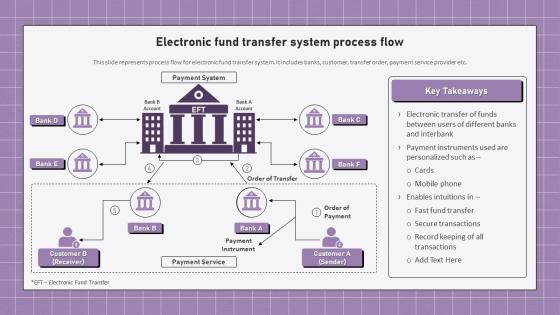
This slide represents process flow for electronic fund transfer system. It includes banks, customer, transfer order, payment service provider etc.
People who downloaded this PowerPoint presentation also viewed the following :
Electronic Banking Management Electronic Fund Transfer System Process Flow with all 6 slides:
Use our Electronic Banking Management Electronic Fund Transfer System Process Flow to effectively help you save your valuable time. They are readymade to fit into any presentation structure.





FAQs for Electronic Banking Management Electronic Fund Transfer
Primary EFT systems include ACH transfers, wire transfers, direct deposits, debit and credit card transactions, and mobile payment platforms like PayPal and Venmo. These systems streamline financial operations by enabling instant transfers, reducing processing costs, and enhancing transaction security, with banks and retailers finding that automated EFT solutions significantly improve customer experiences while minimizing operational overhead.
Electronic Fund Transfers enhance security through encrypted data transmission, multi-factor authentication, real-time fraud detection, and automated monitoring systems that minimize human error. Unlike traditional cash or check payments, EFTs enable banks and financial institutions to track transactions instantly, verify identities digitally, and detect suspicious patterns immediately, ultimately delivering faster response times and significantly reduced fraud risk.
Electronic Fund Transfer regulations include the Electronic Fund Transfer Act and Regulation E in the US, PSD2 in Europe, and various central bank guidelines across Asia-Pacific regions. These frameworks enhance consumer protection, transaction transparency, and cross-border payment efficiency, with many financial institutions finding that compliance ultimately streamlines operations while delivering stronger customer trust and competitive advantage.
Consumers benefit from Electronic Fund Transfers through enhanced convenience, improved security, automatic transaction records, faster processing times, and reduced need for physical cash handling. These digital payment methods streamline daily financial activities by enabling 24/7 access, minimizing theft risks, and providing detailed spending tracking, ultimately delivering greater financial control and operational efficiency for personal money management.
Intermediaries like banks and payment processors serve as essential infrastructure providers in EFT systems, facilitating secure transaction routing, authentication, settlement, and regulatory compliance between parties. These institutions streamline electronic payments by managing risk assessment, fraud detection, and cross-network connectivity, with financial institutions and fintech companies finding that strategic partnerships ultimately deliver faster processing times and enhanced customer experiences.
Mobile banking has significantly accelerated Electronic Fund Transfer adoption by making transactions more accessible, convenient, and immediate through smartphones and apps. With banking institutions reporting increased customer engagement, mobile platforms have streamlined fund transfers, reduced processing times, and enhanced user experiences, ultimately driving higher transaction volumes and broader EFT acceptance across demographics.
Key technological advancements driving EFT evolution include blockchain technology, artificial intelligence, real-time processing systems, mobile payment platforms, and cloud-based infrastructure. These technologies enhance security by encrypting transactions, streamline operations through automated fraud detection, and enable instant transfers, with many financial institutions finding that customers increasingly expect seamless, 24/7 payment capabilities.
Electronic Fund Transfer fees are typically lower than credit card processing fees, wire transfers, and check handling costs, ranging from $0.50-$3.00 per transaction compared to 2-4% for card payments. Many banks find that EFT reduces operational expenses through automated processing, lower fraud risk, and minimal manual intervention, ultimately delivering cost advantages for both financial institutions and businesses.
Businesses can protect against EFT fraud through multi-factor authentication, real-time transaction monitoring, encryption protocols, employee training, and regular security audits. These measures work by detecting suspicious patterns, securing data transmission, and minimizing human error, with many financial institutions and retailers finding that layered security approaches significantly reduce fraud losses while maintaining customer trust.
Consumer rights in Electronic Fund Transfers include error resolution protections, liability limits for unauthorized transactions, timely notification requirements, and access to dispute mechanisms under regulations like Regulation E. Financial institutions must investigate disputed transactions within specific timeframes, provide provisional credits during investigations, and maintain transparent communication channels, with consumers benefiting from structured resolution processes that ultimately enhance trust and security in digital banking relationships.
Electronic Fund Transfer risks include fraud and identity theft, unauthorized transactions, technical system failures, data breaches, and regulatory compliance challenges. While consumers face potential account compromises and privacy concerns, businesses encounter operational disruptions, financial losses, and reputational damage, with many financial institutions finding that robust security protocols and real-time monitoring significantly minimize these vulnerabilities while maintaining competitive advantage.
The speed of Electronic Fund Transfers significantly enhances business operations by enabling real-time cash flow management, faster supplier payments, and immediate customer transaction processing. Through instant transfers, organizations streamline accounts receivable, reduce payment delays, and optimize working capital allocation, with many retail and manufacturing companies finding that faster settlements improve vendor relationships and operational efficiency.
The future outlook for Electronic Fund Transfers appears increasingly promising, with fintech innovations driving faster processing speeds, enhanced security protocols, blockchain integration, and seamless cross-border capabilities. These technological advances enable financial institutions to deliver real-time transactions, reduce operational costs, and improve customer experiences, with many banks finding that strategic EFT modernization delivers significant competitive advantages in an increasingly digital financial landscape.
International regulations significantly impact cross-border Electronic Fund Transfers through compliance requirements, reporting standards, anti-money laundering protocols, and data protection mandates. These frameworks, while creating operational complexities, ultimately enhance transaction security and transparency, with financial institutions increasingly leveraging automated compliance systems to streamline cross-border payments and maintain regulatory adherence.
Users increasingly prefer Electronic Fund Transfer platforms offering instant transfers, mobile-first interfaces, enhanced security features, and seamless integration with digital wallets and budgeting tools. These preferences drive financial institutions to streamline their services through real-time processing, biometric authentication, and intuitive user experiences, ultimately delivering faster transactions and improved customer satisfaction in an increasingly competitive digital banking landscape.
-
Great templates that you can use in your next keynote or conference. They are perfect for quick and visually-engaging delivery.
-
Unique research projects to present in meeting.