

Performance evaluation process powerpoint presentation slides




Try Before you Buy Download Free Sample Product
 Impress Your
 Audience
 100%
100% Editable
 Save Hours
 of Time


Highlight the performance evaluation process with this presentation deck. Performance evaluation is the crucial aspect of business management as you need to understand your strengths and weaknesses which you can analyze once you assess your performance. Evaluating the employee performance helps the businesses to assess their contribution in the business growth. There are certain metrics on which you analyze the performance of the employee and ensure that the individual gets complete value for his efforts. Our PPT deck contain some valuable information related to performance evaluation process such as establish performance standard, employee communication, employee self-evaluation, feedback, improvement plan etc. If you have to create a presentation sharing the above-mentioned aspects then you may have to study and do lot of research. With our presentation deck, you can ensure to save your time as all slides are designed with professional approach and are completely editable that gives you liberty to amend and share them as per your business need. Download performance evaluation process PowerPoint deck to share the details related to performance evaluation process. Our Performance Evaluation Process Powerpoint Presentation Slides attract bigger crowds. A lot of folks find them greatly appealing.
People who downloaded this PowerPoint presentation also viewed the following :
Content of this Powerpoint Presentation
Slide 1: This slide Performance Evaluation Process. State Your Company Name and begin.
Slide 2: This slide showcases Content which further presents- Performance Review Timeline, Establish Performance Standard, Employee Communication, Employee Self Evaluation, Performance Evaluation Template, Providing Feedback, Performance Improvement Plan.
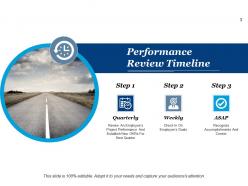
Slide 3: This slide shows Performance Review Timeline.
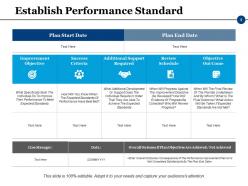
Slide 4: This slide presents Establish Performance Standard.
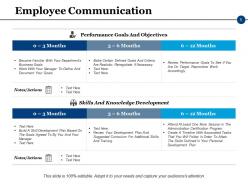
Slide 5: This slide showcases Employee Communication.
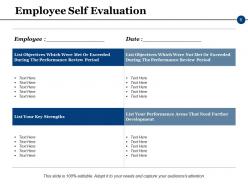
Slide 6: This slide shows Employee Self Evaluation.
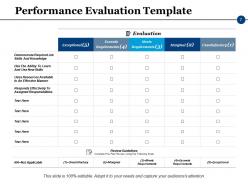
Slide 7: This slide Performance Evaluation Template. You can add the table content of your company performance points with rating.
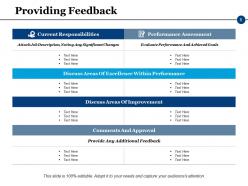
Slide 8: This slide showcases Providing Feedback. Add the different parameters which we have discussed in slide.
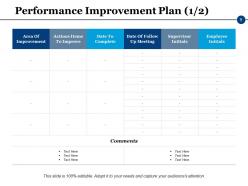
Slide 9: This slide presents Performance Improvement Plan (1/2).
Slide 10: This slide showcases Performance Improvement Plan (2/2). Add the performance improvement.
Slide 11: This slide shows Performance Evaluation Process Icon Slide.
Slide 12: This slide is titled Additional slides to proceed forward.
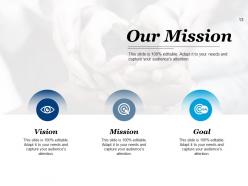
Slide 13: This is Our mission slide with imagery and text boxes to go with.
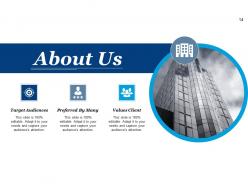
Slide 14: This is an About us slide to state company specifications etc.
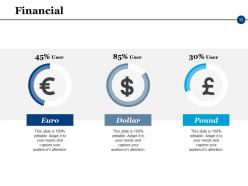
Slide 15: This slide presents Financial scores to display.
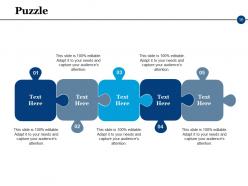
Slide 16: This slide presents a PUZZLE slide with the following subheadings- Integrity and Judgment, Critical and Decision Making, Leadership, Agility
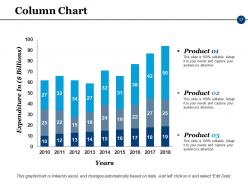
Slide 17: This slide shows Column Chart.
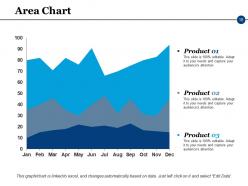
Slide 18: This slide presents Area Chart.
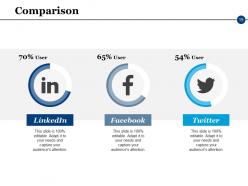
Slide 19: This slide showscase Comparison.
Slide 20: This slide presents Venn.
Slide 21: This slide showcases Bulb Or Idea
Slide 22: This slide presents a Mind map with text boxes.
Slide 23: This is a Thank You slide with image.
Performance evaluation process powerpoint presentation slides with all 23 slides:
Abide by the judgement with our Performance Evaluation Process Powerpoint Presentation Slides. Insist on folks implementing every clause.



FAQs for Performance evaluation process
Okay so first thing - set clear goals from the start, don't wing it. Regular check-ins are huge (most places totally bomb this part). Use metrics that actually mean something, not just random busy work stuff. Two-way feedback is clutch too. Document everything as you go - trust me on this one, it'll save your butt later. Oh and definitely get employees to do self-assessments. They notice things about their own work that you might miss. Connect it all back to real business results. That's basically it - sounds simple but most companies somehow screw it up anyway lol.
So basically performance reviews connect your day-to-day work to the company's big picture goals. Your manager will help you set objectives that ladder up to team priorities, then department stuff, then whatever the CEO cares about this year. Think of it like those Russian dolls but way less cute and more about hitting targets. The whole point is making sure you're not just busy but actually working on things that matter to the business. Honestly, half the time these connections feel forced, but you should still be able to trace your goals back to at least one major company initiative. Makes the whole process way more meaningful.
You know how annual reviews are basically useless? Continuous feedback fixes that by making it an actual conversation throughout the year. Give people course corrections right when stuff happens, not six months later when they can't even remember what project you're talking about. It's honestly way less awkward than those formal sit-downs because you've already tackled most problems as they pop up. The trick is being specific and not waiting around - just work it into your regular check-ins. Think of it like GPS for people development instead of letting them drive in circles for half a year.
Honestly, just figure out what actually matters for each role first. Sales people? Track their revenue and how they handle clients. For developers, look at their code quality and whether they hit project deadlines. Admin folks are totally different - they need to nail accuracy and communicate well with everyone. The biggest mistake is using the same boring template for everyone. Ask each team what good work looks like day-to-day, then pick maybe 3-5 things that really make or break success in that job. Way more useful than some generic checklist that doesn't tell you anything real about performance.
Oh man, we all fall into these traps! Recency bias is huge - you'll only remember what someone did last week. Then there's the halo effect where one amazing project makes you forget they screwed up three other things. Confirmation bias too, where you hunt for proof your gut feeling was right. I've started jotting down notes monthly instead of scrambling at review time. Way better than relying on my terrible memory. Ask yourself what contradicts your rating - sounds weird but it works. Get input from other people who worked with them, and honestly? Focus on what they actually DID, not whether you think they're "motivated" or whatever.
Honestly, performance management software is a total lifesaver. It'll automatically collect 360 feedback and send deadline reminders so you're not constantly chasing people down. The analytics piece is pretty cool too - you can spot team trends without manually crunching numbers. Most platforms sync with your existing HR tools, which cuts out so much tedious data entry (thank god). Having everything in one place means no more digging through random files for old reviews. I'd start by figuring out what's eating up most of your time right now, then find something that specifically fixes those headaches first.
Focus on stuff you can actually measure - sales figures, how fast they finish projects, customer ratings, that kind of thing. The touchy-feely metrics are honestly just too subjective and inconsistent. Mix in some behavioral stuff too like teamwork and problem-solving, but you need real examples to back it up. Oh, and make sure you're using the same standards for people in similar roles - otherwise it gets messy fast. I'd pick maybe 3-5 key things to track for each position and document it all year long, not just when reviews come around.
Dude, most places still do the annual review thing but it's honestly pretty useless. By then you're both like "wait, what happened in February again?" Try quarterly check-ins instead - way better for actually catching stuff early. Monthly one-on-ones are even better if you can swing it. The whole trick is giving feedback while it's still relevant, not digging up ancient history. I mean, who remembers specifics from 8 months ago? Start with quarterly and see how it goes. You can always tweak it based on what actually works for your people.
Honestly, self-assessments are pretty useful - you'll catch stuff you wouldn't notice otherwise. Employees will bring up wins and struggles from their angle, which can be eye-opening (sometimes in ways you don't expect). It makes reviews feel less like you're just judging them from above. They get to reflect on their work beforehand too, so conversations end up being way more productive. Don't take everything they write as fact though - compare it with what you've seen. The gaps between their view and yours? That's where the real development planning happens.
Be super transparent about your criteria from the start. Share rubrics so people know exactly what you're looking for. Document stuff all year long, not just during review time - honestly, this saves so much drama later. Let employees set their own goals and do self-evals first. Total game changer for getting buy-in. Train your managers on scoring consistently so they can actually explain their decisions. Regular feedback throughout the year means no nasty surprises. Oh, and definitely ask your team what feels unfair about the current process - they'll tell you exactly what's broken. Fix those things first.
Do it face-to-face or video call if you can - way better than just texting about it. Lead with what they're doing well, then get specific about what needs work. Give actual examples and clear next steps. Too many managers just fire off an email with some generic form attached, which honestly drives me crazy. Ask what they need from you too - like what's blocking them or where they're stuck? Let them think about it and ask questions back. Oh, and don't forget to circle back in a month or so to see how it's going.
Honestly, performance reviews are such a pain but you've got to stay on top of them all year long. Don't wait until the last minute to scramble together notes - document stuff as it happens. Be super clear about what you expect from people upfront, then give feedback regularly so there aren't any surprises. The hardest part is staying objective and focusing on actual behaviors instead of whether you just like someone or not. During the review itself, let them talk too - it shouldn't be a one-way lecture. Oh, and make sure they understand your criteria beforehand. Transparency goes a long way in avoiding those awkward "wait, what?" moments.
Honestly, most managers totally blow this - they just check boxes instead of actually helping people grow. Focus your reviews on where your employee wants their career to go, not just what they did last quarter. Ask what skills they need and create real development goals with actual deadlines. I mean, that's the whole point, right? Connect their current work to future opportunities they're excited about. The key is following up on those development commitments you make together. Don't just write them down and forget - that's worse than doing nothing.
For multi-source feedback, 360 reviews are your best bet - get input from managers, peers, direct reports, maybe even clients. Culture Amp works well, though honestly Google Forms does the job too. Don't overthink the platform. Structured interviews or focus groups are solid alternatives. Peer nominations can be interesting - people vote on who excels at what. Just be super clear about what feedback you want. Give people actual time to think, not some rushed 24-hour thing. Oh, and definitely start simple with one method. You can always add more later once you've got the hang of it.
Track the obvious stuff first - completion rates, retention, whether people actually get promoted after good reviews. But honestly? The real test is whether your employees think it's worthwhile or just bureaucratic nonsense. Survey them about fairness and usefulness. Also watch if managers are doing thorough evaluations or scrambling to finish them the night before (we've all seen that happen). Short version: measure both the process itself and whether it's actually moving the needle on business results. Employee buy-in matters more than most companies realize.
No Reviews