

Personal journey in organization powerpoint presentation slides




Try Before you Buy Download Free Sample Product
 Impress Your
 Audience
 100%
100% Editable
 Save Hours
 of Time


The employee journey is the period that an employee spends at a company, beginning when the employee applies and ending when the employee leaves. The employee path is the time between these two moments and the interactions that the employee has. In this deck, we have focused on the current state analysis which focuses on current challenges faced by the organization, employee engagement index, poor employee engagement, domino effect of disengaged employees, etc. We have outlined the challenges of personal development along with the solutions and phases involved in employees personal growth. In this PowerPoint presentation, we have focused on steps of personal development planning such as PDP preparation, education, progress tracking, review, and modification. This module focuses on how the company will encourage personal growth, the impact of introducing PDP in the organization, and different self-improvement dashboards are covered here.
People who downloaded this PowerPoint presentation also viewed the following :
Content of this Powerpoint Presentation
Slide 1: This slide introduces Personal Journey in Organization. State Your Company Name and begin.
Slide 2: This is an Agenda slide. State your agendas here.
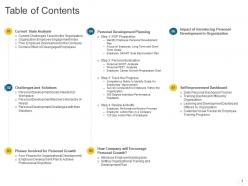
Slide 3: This slide shows Table of Content for the presentation.
Slide 4: This is another slide continuing Table of Content for the presentation.
Slide 5: This slide covers the current challenges faced by our company such as lack of management direction, poor communication, etc.
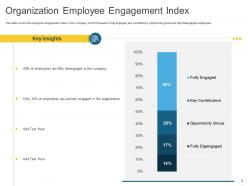
Slide 6: This slide presents the employee engagement index of our company.
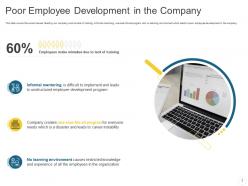
Slide 7: This slide displays Poor Employee Development in the Company.
Slide 8: This slide represents the effect of disengaged employees in the company.
Slide 9: This slide shows Table of Content for the presentation.
Slide 10: This slide presents the personal development goals needed at a workplace.
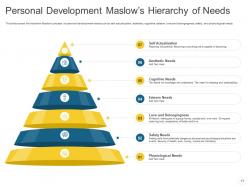
Slide 11: This slide displays the Abraham Maslow's process of personal development needs.
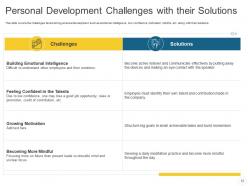
Slide 12: This slide represents Personal Development Challenges with their Solutions.
Slide 13: This slide shows Table of Content for the presentation.
Slide 14: This slide shows Four Phases for Organizational Development.
Slide 15: This slide presents Employee Development Plan to Achieve Professional Objectives.
Slide 16: This slide displays Table of Content for the presentation.
Slide 17: This slide represents 4 Step Process of Personal Development Planning.
Slide 18: This slide focuses on the steps needed for employee personal development.
Slide 19: This slide identifies the long term and short term goals needed by an employee.
Slide 20: This slide covers the SMART goals which must be considered by an employee such as specific, measured, agreed upon, realistic, and time.
Slide 21: This slide shows Table of Content for the presentation.
Slide 22: This matrix presents the strength, weakness, opportunity, and threats of an employee at personal level.
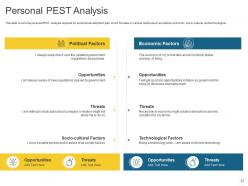
Slide 23: This slide displays the personal PEST analysis required for personal development plan.
Slide 24: This slide represents Employee Career Growth Progression Chart.
Slide 25: This slide presents Table of Content for the presentation.
Slide 26: This slide displays matrix which can be used to identify the goals for employees improvement.
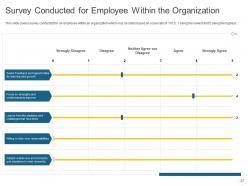
Slide 27: This slide covers survey conducted for an employee within an organization.
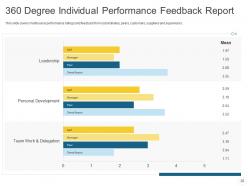
Slide 28: This slide covers multisource performance ratings and feedback from subordinates, peers, customers, etc.
Slide 29: This slide shows Table of Content for the presentation.
Slide 30: This slide presents the employee performance review process which starts with the human resource, employee, evaluator and finally administrator.
Slide 31: This slide displays the employee action plan based on goal, objective, activities performed, lead accountability and involved partners details.
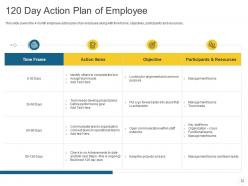
Slide 32: This slide represents the 4 month employee action plan of an employee.
Slide 33: This slide shows Table of Content for the presentation.
Slide 34: This slide covers the personal training plan made for an employee.
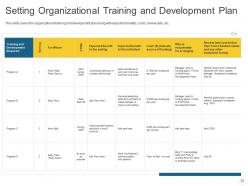
Slide 35: This slide presents the organizational training and development plan along with expected benefits, costs, review date, etc.
Slide 36: This slide displays Table of Content for the presentation.
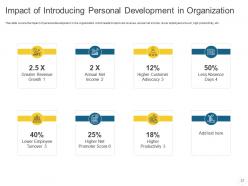
Slide 37: This slide represents the impact of personal development in the organization.
Slide 38: This slide shows Table of Content for the presentation.
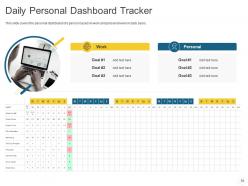
Slide 39: This slide covers the personal dashboard of a person based on work and personal level on daily basis.
Slide 40: This slide presents the training dashboard offered by the organization along with cost details based on different departments and bands.
Slide 41: This slide displays the L&D dashboard offered by business to different teams and bands along with the location.
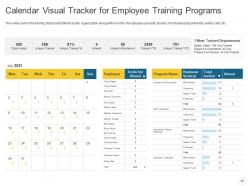
Slide 42: This slide represents Calendar Visual Tracker for Employee Training Programs.
Slide 43: This slide shows Personal Journey in Organization for Icons.
Slide 44: This slide is titled as Additional Slides for moving forward.
Slide 45: This slide shows Employee Experience Within an Organization.
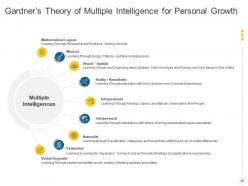
Slide 46: This slide presents Gardner’s Theory of Multiple Intelligence for Personal Growth.
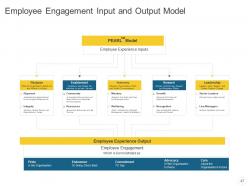
Slide 47: This slide displays Employee Engagement Input and Output Model.
Slide 48: This is Our Mission slide with related imagery and text.
Slide 49: This is About Us slide to show company specifications etc.
Slide 50: This is Our Team slide with names and designation.
Slide 51: This slide shows Puzzle with related icons and text.
Slide 52: This is Our Target slide. State your targets here.
Slide 53: This slide shows Venn diagram with text boxes.
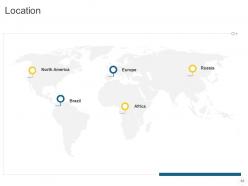
Slide 54: This is a Location slide with maps to show data related with different locations.
Slide 55: This slide shows Post It Notes. Post your important notes here.
Slide 56: This is a Thank You slide with address, contact numbers and email address.
Personal journey in organization powerpoint presentation slides with all 56 slides:
Use our Personal Journey In Organization Powerpoint Presentation Slides to effectively help you save your valuable time. They are readymade to fit into any presentation structure.

























FAQs for Personal journey in organization
Dude, I got so fed up seeing all these opportunities around me while feeling totally stuck in my role. You know that feeling? The gap between what I could actually do versus what I was doing every day was driving me crazy. Finally realized nobody else was gonna plan my career for me - had to stop waiting around. This place has tons of resources if you actually go looking for them. My take: pick one thing you suck at that's bothering you, then hunt down someone here who's already nailed it. Way easier than you'd think.
Oh totally! Started out just doing whatever tasks got thrown my way, following the playbook others had set up. But now? I'm actually helping write that playbook and showing new people the ropes. Takes some adjusting tbh - suddenly you're owning entire chunks of projects and people actually care what you think in meetings. The best part is finally seeing how your stuff fits into the whole company puzzle instead of just your little corner. Random tip though: write down your wins as they happen because this shift is so gradual you'll miss it otherwise.
Oh man, I totally bombed at cross-functional stuff initially. Walked into every team thinking they all worked the same way - spoiler alert, they don't! Marketing moves fast, engineering wants details, finance needs numbers upfront. I kept hitting these weird walls because I wasn't reading the room. Had to basically slow down and figure out what each person actually cared about before pitching anything. Game changer honestly. Now I ask way more questions first instead of jumping straight to solutions. It's like... you gotta do the homework before the test, you know?
Honestly? The mentorship program at my company was huge for me. Got paired with someone two levels up and those regular check-ins were eye-opening. Also did these monthly cross-department shadowing things - sounds boring but you pick up so much just watching how other teams work. Oh and the 360 feedback tool, which was absolutely brutal but I needed to hear it lol. Started keeping this random reflection journal too where I'd jot down what I learned each week. Cheesy as hell but it actually helped me piece things together. If you're looking for a place to start, definitely hunt down a mentor first.
Dude, seriously - the people I've worked with have made all the difference. My first boss literally forced me to speak up in meetings (terrifying but changed everything). This one senior person became like my unofficial career coach too. I would've screwed up so much more without them, no joke. Here's the thing though - you can't just wait around hoping someone will help you. Grab coffee with people early on. Ask real questions, not just small talk stuff. Actually listen when they give advice. Building those relationships before you desperately need them is everything.
Oh man, becoming a manager totally flipped everything for me. Used to just worry about my own stuff, you know? Then suddenly you're responsible for everyone else's careers and whether the whole team succeeds. I definitely screwed up at first - tried controlling every little thing instead of letting people do their jobs. Learning to turn down cool projects that didn't fit our goals was tough too, but super necessary. Those awkward transition periods suck while you're in them, but honestly? That's where all the real growth happens.
Dude, culture literally makes or breaks your growth potential. Good companies actually promote people and throw mentorship your way - you'll get those stretch projects that push you. Toxic places though? Total career killers. They box you in forever. When you're interviewing, dig into how people actually moved up there. Ask employees straight up about their progression stories. Red flags are obvious - knowledge hoarding, zero risk-taking, leadership that doesn't invest in development. Oh, and places that treat mistakes like crimes instead of learning moments? Run. You want somewhere that celebrates when you mess up and grow from it.
You'll start out doing specific projects and supporting team stuff that helps hit company goals. As you get more experience, things shift - you'll mentor people, spot ways to make processes better, maybe lead some cross-team projects. Honestly, some of my best contributions happened during random hallway conversations that led to new ideas. Your unique perspective becomes valuable in bigger strategic talks too. Oh, and definitely document this stuff for performance reviews - you're probably making more impact than you think you are. It's wild how those "small" contributions actually matter.
Honestly, active listening changed everything for me. I used to just dive into fixing problems without really getting what people needed - yeah, that backfired more than once. Now I ask way more follow-up questions first and actually map out what's bugging different stakeholders. Cross-functional communication is huge too. Managing up effectively? Game changer. You've gotta translate your work into business impact language that executives actually care about, not just the technical stuff. Try this approach in your next couple meetings - you'll notice the difference pretty quick. It's wild how much smoother things go.
Honestly, I just keep a running notes doc of my wins and any good feedback I get - saves my butt during reviews. Performance metrics are cool and all, but I also watch for the softer stuff. Like, are people asking for my input more? Am I getting pulled into bigger meetings? My project load getting more interesting? That day-to-day feedback from coworkers hits different than formal reviews too. Sometimes you'll notice you're becoming the go-to person for certain things before it even shows up officially. Just track the small stuff consistently - you'd be surprised how much it adds up over time.
Dude, feedback is like your career GPS - shows you where you actually are vs where you think you are. I used to dodge it completely (huge mistake honestly). Now I chase it down because it's the quickest way to fix stuff before it becomes a real problem. Your boss sees things differently than your coworkers, and even random comments from other teams matter. Don't just ask "how am I doing?" though - that gets you nowhere. Try "what's one thing I could do better in meetings?" Way more useful. Also kinda weird how much faster you improve when you're not guessing what needs work.
Honestly, you want to find that sweet spot where what you're excited about actually helps the company too. I learned this the hard way - used to think I had to choose one or the other. Talk to your manager regularly about where you want to go so they can spot opportunities for you. The best moves I've made happened when both me and the company benefited. If there's literally no overlap between what you want and what they need? That's probably a sign this isn't the right place. Start small - find one thing you're genuinely interested in that could solve a real problem they're dealing with.
Stay curious and ask those "stupid" questions - seriously, everyone's winging it way more than they let on. Grab projects that scare you a little, but don't become the yes-person who takes on everything (learned that one the hard way). Find someone you can get coffee with regularly. That informal mentor thing? Game changer. I'd start building those connections immediately instead of waiting until you feel like you know what you're doing. The confident people aren't actually more prepared than you - they're just better at pretending they've got it figured out.
Dude, the team you're on literally makes or breaks how fast you develop. Good teams teach you communication, feedback skills, all that people-reading stuff that actually matters for promotions. Toxic ones though? Total growth killer. You'll waste all your energy on office drama instead of learning anything useful. I've seen it happen so many times. Look for projects where people genuinely want to help each other succeed. If you're stuck somewhere bad, definitely have that awkward conversation with your manager about switching teams - it's worth it.
Honestly? I used to think I needed to be the smartest person in every meeting. Total mistake. What actually works is asking good questions and just... getting out of your team's way so they can figure stuff out. Sounds counterintuitive but hear me out - the best leaders I know spend way more time developing their people than trying to impress anyone. Try doing one-on-ones where you mostly listen. I swear it'll change everything about how your team sees you. Being curious beats being a know-it-all every single time.
-
I discovered this website through a google search, the services matched my needs perfectly and the pricing was very reasonable. I was thrilled with the product and the customer service. I will definitely use their slides again for my presentations and recommend them to other colleagues.
-
Awesome presentation, really professional and easy to edit.