


Preventive Maintenance Powerpoint Ppt Template Bundles





Try Before you Buy Download Free Sample Product
 Impress Your
 Audience
 100%
100% Editable
 Save Hours
 of Time


We are introducing our comprehensive Preventive Maintenance PowerPoint PPT presentation, designed to illuminate the essence of Proactive Maintenance, Scheduled Maintenance, Routine Maintenance, and Planned Maintenance. This dynamic presentation is vital for professionals aiming to optimize their operations. Dive into strategic maintenance practices, exploring the benefits of staying ahead with Proactive Maintenance, adhering to timelines through Scheduled Maintenance, establishing consistency with Routine Maintenance, and embracing foresight with Planned Maintenance. The PPT seamlessly integrates visuals and insightful content to empower your team with the knowledge needed for effective maintenance planning and execution. Elevate your understanding and approach to maintenance strategies with this invaluable resource.
People who downloaded this PowerPoint presentation also viewed the following :
Preventive Maintenance Powerpoint Ppt Template Bundles with all 28 slides:
Use our Preventive Maintenance Powerpoint Ppt Template Bundles to effectively help you save your valuable time. They are readymade to fit into any presentation structure.
-

Preventive Maintenance
-
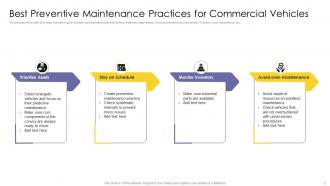
Best Preventive Maintenance Practices for Commercial Vehicles
-
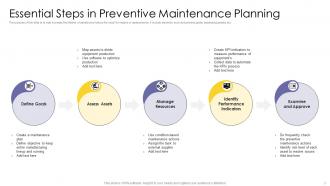
Essential Steps in Preventive Maintenance Planning
-
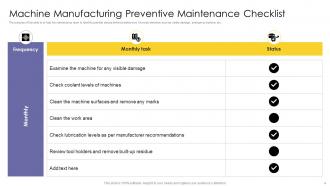
Machine Manufacturing Preventive Maintenance Checklist
-
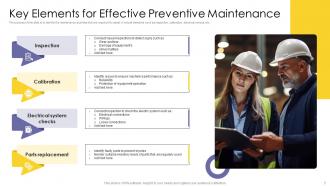
Key Elements for Effective Preventive Maintenance
-
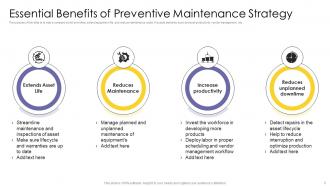
Essential Benefits of Preventive Maintenance Strategy
-
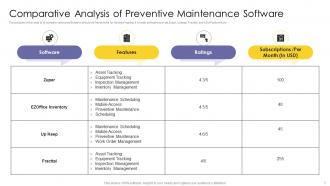
Comparative Analysis of Preventive Maintenance Software
-
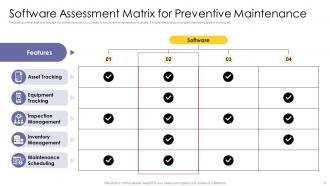
Software Assessment Matrix for Preventive Maintenance
-
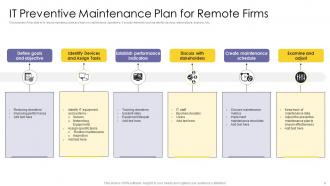
IT Preventive Maintenance Plan for Remote Firms
-
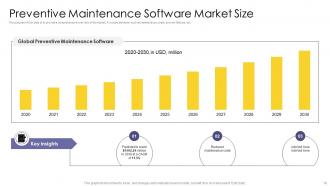
Preventive Maintenance Software Market Size
-
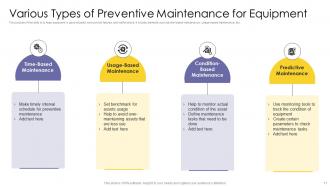
Various Types of Preventive Maintenance for Equipment
-
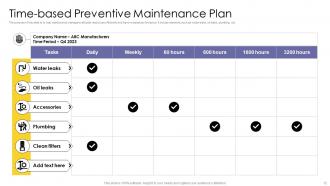
Time based Preventive Maintenance Plan
-
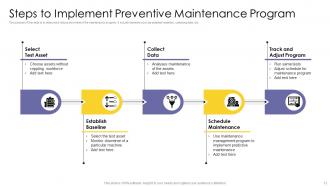
Steps to Implement Preventive Maintenance Program
-
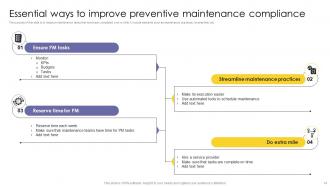
Essential ways to improve preventive maintenance compliance
-
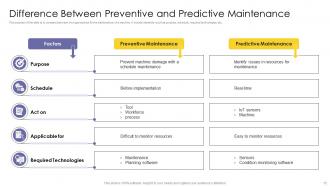
Difference Between Preventive and Predictive Maintenance
-
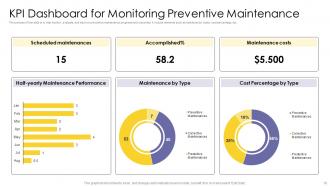
KPI Dashboard for Monitoring Preventive Maintenance
-
E commerce Website Preventive Maintenance Icon
-
Data Server Preventive Maintenance Icon
-
Preventive Maintenance Schedule Service Icon
-

Thank You
-

-

-

-

-

-

-

-

FAQs for Preventive Maintenance Powerpoint
Honestly, the cost savings alone make it worth it - you're looking at 20-30% less on repairs. Equipment breakdowns become way more predictable instead of those random "oh crap" moments that kill your whole production line. Your machines actually last longer since you're fixing small stuff before it turns into expensive disasters. The safety aspect is pretty big too, catching dangerous issues early. My buddy's plant started with just their main conveyor system and it worked out great. Your team won't be running around putting out fires all the time either, which is nice.
Dude, preventive maintenance will save you so much money in the long run. Like, you'll spend $100 on oil changes instead of dropping $5k when your engine completely dies - no joke. I know reactive maintenance seems cheaper since you're only fixing broken stuff, but emergency repairs get crazy expensive. The downtime alone will kill you. Plus there's that constant stress of wondering what's gonna break next, which honestly just ruins everything. My cousin learned this the hard way with his truck last year. Track what you're spending on repairs for a couple months and you'll totally see what I mean.
Honestly, getting management on board is the worst part - they'll question every dollar until you show results. Most places have that "why fix what's working" attitude too. Finding the sweet spot for maintenance timing is tricky since you don't want to waste money doing it too often, but spacing it out defeats the whole point. Your team will probably push back hard because nobody likes changing routines that already work fine. Oh, and good luck if you don't have decent equipment records to start with - most companies track that stuff terribly. I'd say pick your most important machines first, prove it works, then roll it out from there.
So basically, IoT sensors are like having your equipment constantly text you updates about how it's doing - temperature, vibration, all that stuff. You'll catch problems way before they turn into expensive breakdowns. No more guessing games about maintenance schedules or waiting for things to just die on you. The sensors actually tell you when parts are getting worn out. Honestly, it's pretty crazy how much clearer everything becomes when you have real data instead of just crossing your fingers. Just try it on one important machine first - add some basic sensors and you'll see what I mean.
Look, data analysis is like having a crystal ball for your maintenance schedule. You can spot failure patterns and usage cycles that you'd totally miss otherwise. Historical breakdown data shows you what's actually wearing out vs what's still got life left - why waste money replacing good parts? Environmental factors matter too, so track how heat or humidity mess with your equipment. The whole point is scheduling based on real need instead of some random timeline. Honestly, most places still do maintenance way too early because they're scared of breakdowns.
Honestly, just focus on the stuff that actually matters - downtime and unplanned repair costs will tell you everything. Mean time between failures is solid too. Asset availability percentage? That's where you'll see real impact on profits. I always tell people to track maintenance cost per unit and maybe OEE if you're feeling fancy. But here's the thing - don't go crazy with like 10 different metrics. Pick 3 or 4 max, get your baseline numbers first, then check monthly. You'll start seeing patterns pretty quick and can tweak your schedules from there.
Manufacturing and healthcare companies see the biggest benefits - downtime there literally costs millions. Assembly lines shutting down or hospital equipment failing? That's catastrophic beyond just money. Energy companies and data centers also win big since their stuff runs constantly under crazy conditions. Oh, and aviation obviously - nobody wants mechanical issues mid-flight! Transportation's another one. The pattern here is simple: if your business can't handle surprise shutdowns and runs expensive equipment non-stop, preventive maintenance becomes survival mode, not just good practice.
Oh man, regulated industries are a whole different beast. FAA, FDA - they don't mess around with compliance schedules and documentation. You're stuck following their checklists instead of just fixing stuff when it breaks, which honestly kills your flexibility. But here's the thing - it actually works. Catches problems early before they become disasters. The paperwork is annoying until auditors show up, then you'll be grateful for every boring form you filled out. My advice? Figure out which regs actually apply to your gear first, then build from there.
Definitely start with hands-on training - way better than sitting in some boring classroom. Have your experienced techs work directly with the new people on actual equipment. Make sure everyone gets the "why" behind what they're doing, not just following steps like robots. Documentation training is massive too. People hate doing paperwork but it'll save your ass later. Safety stuff is obvious but don't skip it. Cross-training is smart so you're not screwed when Dave calls in sick again. Oh, and do refresher sessions regularly - procedures change and honestly, people just forget things. Focus on your most critical equipment first, then work your way down.
Look, you definitely want to catch stuff before it breaks down completely - those emergency repairs are brutal and always happen when you're swamped. Regular inspections let you actually plan when to fix things instead of scrambling. Think of it like car maintenance, you know? Oil changes beat buying a new engine every time. Figure out which equipment would screw you over most if it died, then just make a basic schedule for checking on it. You'll save money and your sanity. Plus you can time maintenance around slower production days instead of panicking.
Start with a CMMS - something like Fiix or UpKeep handles your scheduling and work orders. Monday.com works too if you're not ready for the fancy stuff yet. You'll need basic diagnostic gear like multimeters and maybe thermal cameras, depends on what you're maintaining though. Honestly? Pick whatever your team will actually use. I've seen companies drop thousands on software that just sits there collecting digital dust. Start simple - vibration analyzers and all that advanced stuff can come later once you've got the basics down. Build up slowly.
Start with the equipment that'd totally screw you if it broke down. Make a basic spreadsheet for filters, oil changes, that kind of stuff - nothing fancy. Get your team doing simple maintenance so you're not calling repair guys for every tiny issue (those service calls add up fast). Your equipment manuals are actually useful here - set realistic schedules based on how much you actually use things, not just what the manufacturer says. Oh, and put aside some cash each month for maintenance. Trust me, it beats those surprise breakdowns that always happen during your busiest week.
Dude, it's basically like getting your car serviced regularly instead of waiting for it to die on the highway. You know those little oil changes and filter swaps? They stop small problems from turning into massive disasters. I learned this the hard way with my old Honda - should've listened to my dad about maintenance schedules lol. But seriously, studies show equipment with regular checkups lasts like 20-40% longer than stuff that only gets fixed when it breaks. Yeah, scheduling those maintenance windows is annoying, but your equipment will thank you for years. Way cheaper than buying new stuff constantly.
Start by digging into the manufacturer specs and failure history for each machine. Some equipment is honestly just high-maintenance - needs constant babying. Others? They'll run forever with minimal fuss. Focus on what actually matters: how critical each piece is to your operation, the environment it's working in, and which maintenance tasks prevent your most expensive breakdowns. Don't just grab some cookie-cutter schedule off the internet. Customize everything - frequency, procedures, spare parts - based on how YOU actually use the stuff and what level of risk keeps you up at night.
Dude, skipping maintenance is such a bad idea. Your equipment starts guzzling 10-30% more energy when it's not properly maintained. Leaks become a huge problem too - oils and chemicals everywhere. Equipment failures mean emergency shutdowns that waste way more materials than just doing scheduled maintenance would. I honestly think companies are crazy for risking it. One place I know got slammed with environmental violations because their neglected pump leaked hydraulic fluid all over. Set up those PM schedules now because dealing with breakdowns later? That's an environmental disaster waiting to happen.
-
My team has been relying on SlideTeam’s professional PPT designs for a while now. It has greatly sped up quality work at my organization. So thanks!
-
The presentations are very helpful. I am always able to get appropriate templates for the different topics related to my profession.