


Equipment Maintenance Powerpoint Ppt Template Bundles




Try Before you Buy Download Free Sample Product
 Impress Your
 Audience
 100%
100% Editable
 Save Hours
 of Time


Equipment maintenance is the process of inspecting, maintaining, and repairing machinery, vehicles, and other assets to ensure their dependability, safety, and functionality. It involves proactive measures to prevent malfunctions, reduce costs, and improve efficiency. Industries such as manufacturing, construction, transportation, healthcare, and facilities management all benefit from safe and effective equipment maintenance. Boost your equipment management procedures with our Equipment Maintenance PowerPoint presentation. Discover the groundbreaking concept of Predictive Maintenance, which harnesses sensor technology and advanced analytics to stop equipment breakdowns before they happen. Learn about the significance of regular equipment inspections for ensuring maximum equipment reliability and early detection of any issues. The presentation also provides strategies for creating effective maintenance schedules that balance corrective and preventative measures to minimize downtime and maximize asset performance.
People who downloaded this PowerPoint presentation also viewed the following :
Equipment Maintenance Powerpoint Ppt Template Bundles with all 30 slides:
Use our Equipment Maintenance Powerpoint Ppt Template Bundles to effectively help you save your valuable time. They are readymade to fit into any presentation structure.
-
Equipment Maintenance
-
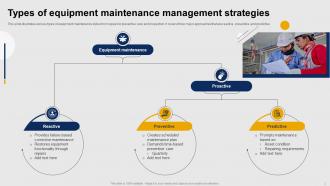
Types of equipment maintenance management strategies
-
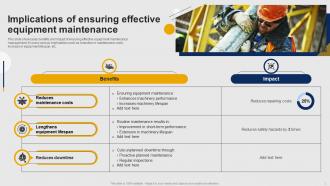
Implications of ensuring effective equipment maintenance
-
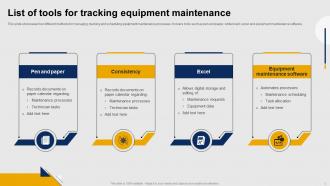
List of tools for tracking equipment maintenance
-
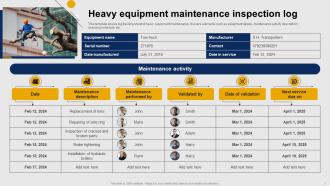
Heavy equipment maintenance inspection log
-
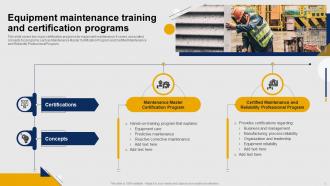
Equipment maintenance training and certification programs
-
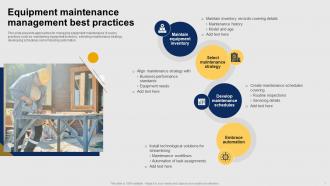
Equipment maintenance management best practices
-
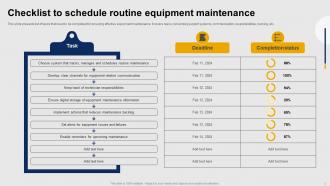
Checklist to schedule routine equipment maintenance
-

Augmented reality for equipment maintenance management
-
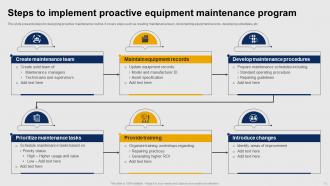
Steps to implement proactive equipment maintenance program
-
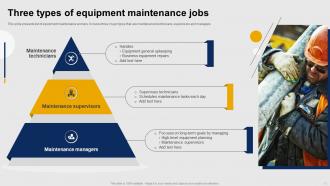
Three types of equipment maintenance jobs
-
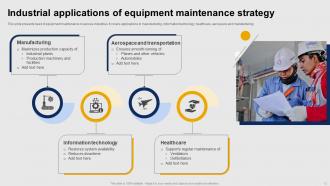
Industrial applications of equipment maintenance strategy
-

Comparative analysis of equipment maintenance strategy
-
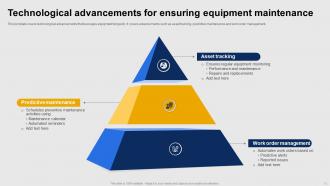
Technological advancements for ensuring equipment maintenance
-
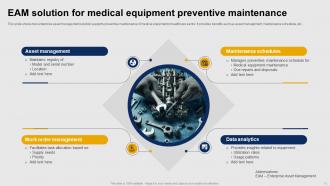
EAM solution for medical equipment preventive maintenance
-
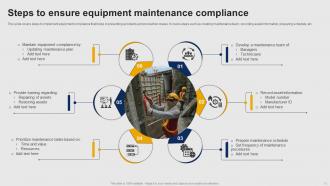
Steps to ensure equipment maintenance compliance
-
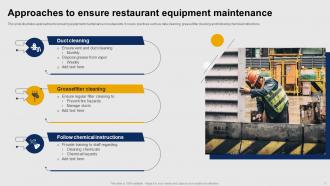
Approaches to ensure restaurant equipment maintenance
-
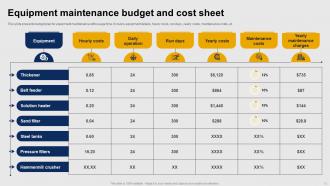
Equipment maintenance budget and cost sheet
-
Icon showcasing routine maintenance icon for computer equipment
-
Industrial equipment maintenance management strategy icon
-
Hospital safety equipment maintenance icon
-

Thanks for watching
-

-

-

-

-

-

-

-

FAQs for Equipment Maintenance Powerpoint
Look, I can't stress this enough - regular maintenance will save your ass. Three main reasons: stops expensive breakdowns, makes your stuff last way longer, and keeps you safe. I've literally watched people skip a $500 tune-up only to face a $15K emergency repair later. What a nightmare. Your equipment also runs so much smoother when it's taken care of properly. Less downtime, better performance, the whole deal. Worn parts can be dangerous too. Honestly, just make a basic schedule and actually follow it - that's half the battle right there.
So basically predictive maintenance uses sensors to watch your equipment in real-time instead of just doing scheduled stuff. Way smarter approach if you ask me. The sensors pick up vibration, temperature, oil quality - all that good stuff that tells you what's actually happening. You fix things based on real data, not guesswork. Honestly saves a ton of money since you're not replacing parts unnecessarily or dealing with surprise breakdowns. Can cut downtime by like 50%. My buddy at work started with just their main conveyor belt and now they're rolling it out everywhere. Start small though.
Dude, the worst thing companies do is just wait for stuff to break before fixing it. So wasteful. They skip regular check-ups thinking they're saving time, but then end up with way bigger problems later. Also, nobody keeps decent records - like, how are you supposed to spot patterns without data? Training gets overlooked too, so you've got people doing repairs differently every time. Honestly, just start with basic preventive maintenance and stick to it. Write everything down, even though it's boring as hell at first. Trust me on this one.
Yeah, so basically every type of equipment breaks down differently. Your HVAC stuff needs filter swaps and those seasonal checkups. But servers? They just need cooling and monitoring - not much hands-on work. Heavy machinery is a whole different beast - it's all about keeping things lubricated and swapping out worn parts before they fail. Honestly, trying to use the same maintenance schedule for everything is just asking for trouble. I'd group your equipment by type first, then look up what the manufacturers actually recommend. Each category has its own quirks you've gotta deal with.
Training your people is huge for equipment maintenance - honestly can't stress this enough. Most major breakdowns happen because someone missed early warning signs or didn't follow proper procedures. Your crew becomes like your early warning system if they know what to look for. I've watched companies blow thousands on repairs that could've been caught early. Basic maintenance tasks aren't rocket science, but people need to actually understand why they're doing them. Find where your biggest knowledge gaps are first, then do some hands-on training sessions. Way more effective than just handing out manuals nobody reads anyway.
Track three things: total maintenance costs, downtime hours, and OEE (overall equipment effectiveness). Most companies get a reality check when they actually calculate cost per hour and compare it to industry standards. Measure breakdown frequency against your planned maintenance schedule too. Here's what'll probably surprise you - emergency repairs cost 3-5x more than preventive work, which is honestly nuts when you think about it. Just throw this stuff in a spreadsheet monthly. You'll spot the money drains fast. Oh, and definitely compare reactive vs preventive costs - that's usually the biggest wake-up call.
Honestly, just start tracking everything in one place - CMMS if you have it, or even a basic spreadsheet works. Date, who did what, parts used, problems you found. Take photos of everything too, especially wear patterns. I used to skip this step when I was slammed, but it'll save your ass later when something breaks again. Part numbers are clutch - be consistent or you'll never find anything when you're searching. The whole team needs access to it though. Your system doesn't have to be fancy right now, just start somewhere.
So basically you stick IoT sensors on your equipment to track temperature, vibration, all that stuff. Then it tells you when maintenance is actually needed instead of just doing it every X months like we used to. Honestly, it's pretty cool - you get alerts before things break down completely. The system figures out the best times to do repairs based on real usage patterns. My advice? Don't overthink it at first. Just pick one machine that's critical, throw some basic sensors on it, and compare what the data says versus your current schedule. You'll probably be surprised.
Ugh, downtime is brutal - literally burns money while you watch. Your machines stop but you're still paying workers to stand around doing nothing. Plus customers get pissed about delayed orders. I've seen studies saying it costs manufacturers like $50K to $300K+ per hour depending on what you make (crazy right?). The worst part? It snowballs fast - suddenly you're paying overtime just to catch up. Way cheaper to do regular maintenance than deal with that mess. Trust me, switching from "fix it when it breaks" to actual scheduled upkeep saves your sanity and wallet.
Honestly, you've got to make them feel like they actually own the equipment, not just babysit it. Train everyone on basic care and explain the "why" - once they realize 10 minutes of daily checks saves hours of being down, they'll buy in. Simple checklists help tons. Gamifying it sounds cheesy but actually works! Those lunch sessions where techs share horror stories about skipped maintenance? Pure gold. Oh, and never punish someone for flagging potential issues - you want them talking, not hiding problems. Trust me on that last part.
Four things to watch if you want to know whether your maintenance is actually worth it. Equipment uptime is the big one - basically how much your stuff is actually running vs sitting broken. MTBF and MTTR sound super technical but they're just tracking time between breakdowns and how long repairs take. Pretty straightforward once you get used to them. The cost thing is crucial though - if you're spending more than 10% of what new equipment costs, you're probably babying something that should be replaced. Oh, and don't get fancy with tons of metrics right away. Get these basics down first, then you can add the weird niche ones later.
Start with the stuff that'll actually shut you down or hurt someone - that's your real priority right there. I'd make a quick scoring system weighing downtime costs, how likely things are to break, and any regulatory stuff you can't ignore. Most companies go crazy with these huge tracking spreadsheets that just collect dust anyway. Group similar work together so you're not constantly switching setups. Schedule the big jobs during planned shutdowns when you can. Oh, and definitely get your maintenance guys involved in deciding what comes first - they're the ones who actually hear the weird noises and feel when something's off.
Honestly, predictive analytics with IoT sensors has been a total game-changer lately. You get real-time data on vibration, temp, performance - stuff that'll predict failures weeks out. Digital twins sound like something from a movie but they're actually super practical for equipment modeling. AR for repairs is wild too - techs get visual overlays through smart glasses walking them through fixes step by step. I'd probably start with basic IoT sensors on your critical equipment first if you haven't. The payback's usually pretty fast, and you don't have to go all-in right away.
Honestly, most conflicts happen because people get caught off guard by surprise outages. Share your maintenance schedules way ahead of time - like, weeks in advance if you can. Regular check-ins help too. I'd set up shared calendars so production and procurement know what's coming. Oh, and definitely teach a few folks from other departments basic troubleshooting. Trust me, you don't want to be the only person who can fix something when it breaks at 2am on a weekend. It saves everyone's sanity when minor stuff pops up during off-hours.
So the big things you're gonna run into are disposing of all the nasty stuff like oils and coolants, plus your equipment probably sucks up way more energy than it should. Oh and all the replacement parts create tons of waste - that part honestly surprised me when I first dealt with this. Start with an audit of what you're currently doing, you'll find some easy fixes right away. Set up recycling for your fluids and metals, do more preventive maintenance so things run efficiently, and try to buy refurbished parts instead of new ones. Biodegradable lubricants are worth looking into too.
-
Understandable and informative presentation.
-
SlideTeam is my one-stop solution for all the presentation needs. Their templates have beautiful designs that are worth every penny!