


Process Flow Of Clinical Trial Phases




Try Before you Buy Download Free Sample Product
 Impress Your
 Audience
 100%
100% Editable
 Save Hours
 of Time


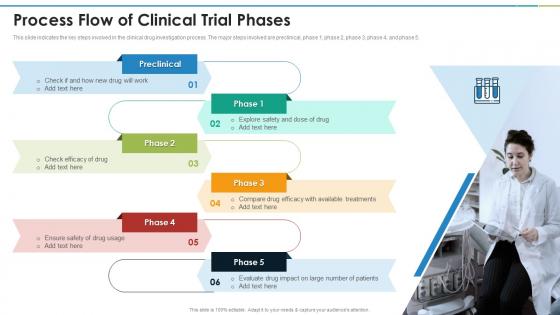
This slide indicates the key steps involved in the clinical drug investigation process. The major steps involved are preclinical, phase 1, phase 2, phase 3, phase 4, and phase 5.
People who downloaded this PowerPoint presentation also viewed the following :
Process Flow Of Clinical Trial Phases with all 6 slides:
Use our Process Flow Of Clinical Trial Phases to effectively help you save your valuable time. They are readymade to fit into any presentation structure.





FAQs for Process Flow Of
So there are four phases. Phase I is all about safety - they test on like 20-100 people to make sure it won't kill you basically. Phase II gets bigger (100-300 people) and actually checks if the thing works. Then Phase III is where shit gets real - thousands of people, and they're comparing it to whatever treatment already exists. Most drugs die here honestly. Oh, and Phase IV happens after it's approved, just watching for weird long-term stuff. If you're thinking about joining one, definitely ask which phase it is because that tells you a lot about the risks you're taking on.
So basically, researchers can't just shove a form at you and expect you to sign. They have to explain everything in normal English - what might go wrong, how long it'll take, all that stuff. The consent form needs approval from an ethics board first. Oh and here's the key thing - you can bail out whenever you want without getting in trouble. I've seen some of these forms before and honestly? Half of them are still written like medical textbooks. Super annoying. But yeah, they're supposed to give you time to ask questions too.
So the IRB is like your ethics referee for clinical trials. They've gotta approve your study protocol before you can even think about recruiting patients. What they're checking? Whether your risks make sense, if your consent process doesn't suck, and that you're not being sketchy about participant selection. Honestly, they can be a pain but they're there for good reason. Here's the thing though - any changes you make mid-study have to go back through them too. I learned that one the hard way! Just build extra time into your timeline because IRB reviews always take longer than you expect.
So they basically have this checklist of who can join - age, what stage your condition is, past treatments, general health stuff. Kind of like screening for a really specific club, honestly. A cancer study might say no if you have heart issues, or only want people who haven't tried X treatment yet. The whole point is keeping people safe while getting good data. Short sentences mixed with longer ones here. If you're thinking about it, definitely have them explain every single requirement - sometimes the reasons aren't obvious and you want to know exactly where you stand.
So there's basically Phase I, II, and III - each one does something different. Phase I is all about safety and figuring out dosage (like, will this actually harm people?). Then Phase II tests if it even works on smaller groups. Phase III is where they compare it against whatever treatment already exists, but with way more people. Oh, and Phase IV happens after FDA approval to watch for long-term stuff. They build on each other step by step. Honestly, if you're looking at trials, Phase III is usually your best bet since it's the most tested but still new.
So clinical trials are basically how we figure out if new treatments actually work before doctors start using them on everyone. They test safety first, then effectiveness - there's like 3 phases that get progressively bigger. Phase 1 is literally "will this kill you" and by phase 3 they're comparing it to whatever treatment already exists. Takes forever honestly, but makes sense when you think about it. Otherwise we'd just be guessing whether lab stuff actually helps real patients. If you're thinking about joining one, definitely ask what phase it is and what they're measuring. That stuff matters.
Three big things: informed consent, risk-benefit analysis, and fair participant selection. People need to actually understand what they're getting into - skip the legal mumbo jumbo and be straight with them about potential risks. Don't just recruit from one demographic unless there's a solid scientific reason. IRBs might feel like a pain, but honestly they catch stuff you'll miss. I learned this the hard way once. Your participants' safety comes first, period. Even if that means tossing work you've spent forever on, which totally sucks but that's how it goes.
So basically they lock in all the statistical methods before the trial even starts - prevents them from just picking whatever results look good later. The whole thing's pretty bureaucratic honestly, but there's good reasons. Blinding keeps everyone from getting biased, randomization helps too. Then you've got independent reviewers going through everything, plus the FDA basically tears it apart with a microscope. Oh and they have to follow these CONSORT guidelines for reporting stuff. When you're looking at results, just check if they actually stuck to their original plan and whether the study was big enough for what they were trying to prove.
So there are actually tons of safeguards in place! Independent review boards have to sign off on everything before it even starts. Then you've got monitoring boards constantly watching for any red flags during the actual trial. They'll give you informed consent papers explaining all the risks - fair warning though, they're usually a nightmare to get through. The research team has to report every single side effect to the FDA and other agencies. Here's the thing I really like: trials have built-in stopping rules, so if something sketchy comes up, they can pull the plug immediately. Just make sure whatever trial you're looking at has all the proper oversight paperwork.
So the FDA basically tears apart your clinical trial data in phases - starts with your IND application, then they go through each phase looking at safety and efficacy stuff. They're ridiculously thorough with statistical analyses and adverse events. Manufacturing details too. Once you hit Phase III, you submit either a BLA or NDA and wait 6-12 months for their decision. Honestly feels like forever when you're waiting. My advice? Get those pre-submission meetings scheduled early so you don't get blindsided later in the process.
Basically, whatever comes out of major clinical trials ends up changing everything - approvals, treatment guidelines, insurance coverage, the works. Good results? New drugs hit the market fast and doctors update protocols within months. Bad results are just as crucial since they'll yank dangerous meds or change how we dose things. Here's the annoying part though - policy changes can take forever because of all the red tape and money stuff. My advice? Keep up with the big trial publications in your area. What gets published now will probably shift your practice standards in the next year or two.
So you can basically ditch a lot of the in-person visits with apps and wearables tracking everything in real-time. Way better for keeping people in the study since they don't have to schlep to the clinic constantly. Plus you'll get participants from all over instead of just whoever lives nearby. The data's actually better quality too - continuous monitoring beats those random snapshot visits. Oh and people can just fill out surveys or log symptoms from their couch. I'd start small though, maybe pick one part of your process to digitize first and see how it goes.
Honestly, people think clinical trials are like a last resort thing when you're out of options - but that's not really how it works anymore. Most trials test treatments that might actually be better than what's available now. You won't necessarily get stuck with a placebo either. Cancer trials usually give you the standard treatment PLUS whatever they're testing. Oh, and you can bail whenever you want - like, for literally any reason. I'd definitely ask upfront about the whole placebo deal though, just so you know what you're getting into.
Oh man, global trials are such a headache. FDA wants one thing, EMA wants something totally different, and don't get me started on Japan's PMDA - they're in their own world. Everything's different too: consent forms, data packages, review timelines, even which ethics boards you need approval from. Some places let you do centralized reviews while others make you go local. Honestly? Figure out the big regulatory differences before you finalize your protocol. And definitely hire local consultants for each region - trust me on this one, it'll save you so much pain later.
Oh man, there's so much working against diverse clinical trials. Historical medical abuse makes people (rightfully) suspicious. Language barriers are huge too. Most trials happen in areas that aren't accessible to different communities anyway. Different groups can respond totally differently to the same treatment - side effects, effectiveness, everything varies. But somehow we're still getting mostly homogenous data, which is honestly pretty ridiculous at this point. Cultural differences and work schedules get ignored in protocols too. You need that representation though, otherwise you're developing treatments that only work safely for whoever was easiest to recruit.
-
Templates are beautiful and easy to use. An amateur can also create a presentation using these slides. It is amazing.
-
They had the topic I was looking for in a readymade presentation…helped me meet my deadline.