

Procurement Management Flow Chart With Order Confirmation




Try Before you Buy Download Free Sample Product
 Impress Your
 Audience
 100%
100% Editable
 Save Hours
 of Time


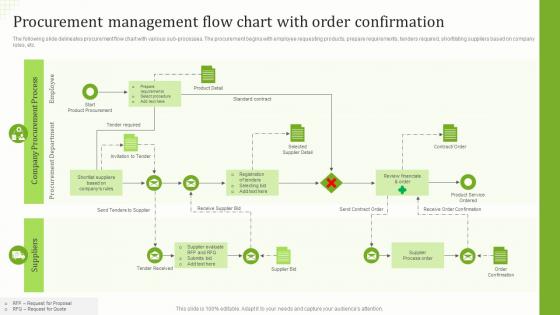
The following slide delineates procurement flow chart with various sub processes. The procurement begins with employee requesting products, prepare requirements, tenders required, shortlisting suppliers based on company rules, etc.
People who downloaded this PowerPoint presentation also viewed the following :
Procurement Management Flow Chart With Order Confirmation with all 6 slides:
Use our Procurement Management Flow Chart With Order Confirmation to effectively help you save your valuable time. They are readymade to fit into any presentation structure.





FAQs for Procurement Management Flow Chart
So first you gotta figure out what you actually need - I know it sounds obvious but people rush this part constantly. Then find potential vendors and send out RFPs. Evaluate their responses, pick someone, negotiate the contract terms. After that it's all about managing the relationship ongoing. Honestly, the boring upfront planning stuff will save you so much drama later. Oh and document everything clearly from day one - trust me on this one. Skip any of these steps and you'll probably regret it.
Honestly, picking the right suppliers is make-or-break for your whole procurement game. You're basically deciding your costs, quality, and how fast things get delivered. I've watched teams mess this up by rushing it - total nightmare later. Your supplier choices control whether you hit budget, keep quality solid, and pivot when the market shifts. Short sentences work here. The trick is matching what suppliers can actually do with what you need strategically. Oh and map out what you want from each relationship first, or you'll end up with random partnerships that don't really serve your goals.
Procurement policies are basically your safety net for all the purchasing stuff. They set rules for picking vendors, getting contracts approved, and staying within spending limits. Without them? You're risking fraud, overspending, or ending up with terrible vendors. I've seen people get burned by this - explaining compliance mess-ups to your boss is not fun. The trick is actually making sure your team knows these policies exist and follows them. Having rules buried in some manual nobody reads defeats the whole point. Keep yours updated and train people when things change.
Honestly, tech tools are a game-changer for procurement stuff. I'd start with e-procurement platforms - they'll automate your purchase approvals and let you track spending without constantly checking spreadsheets. AI tools are pretty solid for forecasting demand and checking if suppliers are sketchy. Everything goes digital so you're not dealing with random paper trails anymore (thank god). The approval workflows speed things up too. My advice? Don't try to automate everything at once - pick whatever's annoying you most right now, like PO approvals, and start there.
Here's what I'd focus on if I were you: cost savings, supplier performance, and how efficient your processes actually are. Track your cost reduction percentage against budget, plus supplier delivery times and quality scores. Procurement cycle times matter too - from when someone puts in a request to actual delivery. Oh, and definitely measure contract compliance rates because that's honestly where most companies screw up and hemorrhage money. If supplier diversity is a thing at your company, throw that in. But don't go crazy - pick maybe 4-5 metrics that actually move the needle instead of tracking every possible data point. Once you've got solid data coming in, then you can get fancier with it.
Honestly, just split everything into "we're screwed without this" vs "would be nice to have." Safety stuff, compliance, anything that keeps your business running - that's priority one. After that, figure out what'll actually make you money back fastest. I make a quick scoring chart with urgency, impact, and cost - nothing fancy. Don't overthink it though, sometimes you gotta trust your gut and move on. Spread the big purchases out if you can swing it, and save like 10% for those random emergencies that always pop up. Oh, and write down why you chose what you did - people will definitely come asking later!
Honestly, do your research first - check out their competition and what others are paying. Don't just focus on the sticker price either. Shipping, warranties, all that extra stuff adds up fast and people always forget about it. I learned that the hard way once. Come in with a few different scenarios ready to go. Building rapport helps, but don't let it cloud your judgment. Be prepared to walk away if the deal sucks. Oh, and whatever you agree to, make sure you can actually follow through on your end. Get everything documented too.
Honestly, getting other departments involved early saves you so much headache later. Finance can spot budget red flags, legal catches contract issues, and actual end users tell you what they really need (not what you assume). IT will complain about everything eventually anyway - better to hear it upfront than during implementation, right? You'll cut down on all those annoying revision rounds. Approvals move faster too. Sometimes I'll create a quick stakeholder list just to keep track of who needs to weigh in. Makes the whole process way smoother.
Ugh, procurement is such a pain. Budget freezes always hit at the worst times - like right when you've found the perfect vendor. Then legal drags their feet on contract reviews for weeks. Supplier reliability? Don't even get me started. I swear some of these companies promise the moon then ghost you. If you're in anything regulated, compliance stuff will slow you down even more. Honestly the approval processes alone could drive you crazy. My advice? Always have backup vendors ready and build in way more time than you think you need. Seriously, Plan B suppliers are lifesavers.
Honestly, data analytics is a game-changer for procurement - it stops you from just winging it all the time. You'll start seeing which suppliers are actually reliable and which ones are just promising the world. The forecasting piece is where it gets interesting though - no more scrambling when you suddenly need 500 units of something. I'd probably start with tracking supplier performance first, then work your way up to the fancier predictive stuff. Oh, and having real numbers makes contract negotiations so much easier than going in with just hunches. Way less awkward.
Honestly, just play it straight - treat all vendors the same and make your criteria crystal clear upfront. Don't take any gifts or freebies from suppliers (seriously, people get burned by this stuff all the time). Document everything so you can cover yourself if questions come up later. Oh, and think about the bigger picture too - does this supplier actually treat their workers decently? Do their environmental practices match what your company claims to care about? It's not just about getting the best price anymore. Keep everything transparent and you'll be fine.
So sustainability's totally changing how we pick vendors now. Companies are looking at carbon footprints and ethical sourcing just as much as price and quality. Honestly, if you're not doing this yet, you're behind. Add green certifications to your RFP requirements and prioritize local suppliers - cuts down shipping emissions too. Build environmental metrics into performance reviews. Oh, and create a sustainability checklist for evaluating new vendors. Makes the whole process way more systematic. It's not just nice-to-have anymore, it's expected in most industries.
Look, sticking with the same suppliers long-term is honestly a game changer. Better pricing kicks in once they see your volume. Quality improves too since they actually get what you need. When everything hits the fan, guess who gets priority service? Plus they'll tip you off about new stuff before your competitors even know it exists. We've saved so much time not having to vet random vendors every few months - that process is such a pain. Just make sure you pick solid partners from the start and actually track how they're doing. I'd focus on your top 3-5 critical ones first.
You've gotta move fast and throw the usual red tape out temporarily. Bump up spending limits so your team can actually make decisions without waiting for approvals. Critical supplies first - obvious but worth saying. Don't put all your eggs in one supplier basket either, because Murphy's law will definitely kick in. Keep everyone in the loop about delays constantly, even if it feels like over-communicating. Oh, and start building backup supplier relationships now while things are calm - future you will thank present you. Document what works and what doesn't for next time.
Start with the basics - negotiation, analytical thinking, and relationship skills are must-haves. Data analysis is where it's at right now, especially with all the supply chain tech everyone's using. Building trust with suppliers is literally half the battle (crazy how many people skip this part). Risk management became way more important after COVID messed everything up. Oh, and definitely specialize in whatever industry you're in rather than staying general - companies pay more for deep expertise. The relationship stuff might sound obvious but it's honestly what separates good procurement people from great ones.
-
Their products can save your time, effort and money. What else you need. All in one package for presentation needs!
-
I discovered this website through a google search, the services matched my needs perfectly and the pricing was very reasonable. I was thrilled with the product and the customer service. I will definitely use their slides again for my presentations and recommend them to other colleagues.