


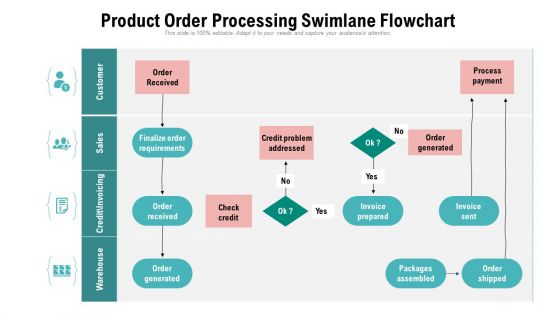
Product order processing swimlane flowchart





Try Before you Buy Download Free Sample Product
 Impress Your
 Audience
 100%
100% Editable
 Save Hours
 of Time


Our Product Order Processing Swimlane Flowchart are explicit and effective. They combine clarity and concise expression.
People who downloaded this PowerPoint presentation also viewed the following :
Product order processing swimlane flowchart with all 2 slides:
Give your audience a fulfilling experience. They will find our Product Order Processing Swimlane Flowchart elevating.

FAQs for Product order
So basically you've got order receipt, inventory check, payment processing, then picking/packing and shipping. Don't forget confirmation emails and tracking updates too. Inventory syncing is honestly where most people mess up - if that's not working right, everything else gets chaotic. Payment can happen upfront or after you confirm stock, whatever works for your setup. Clear handoffs between steps are clutch so nothing gets lost. I'd map out what you're doing now first to see where things are getting stuck. Once inventory's dialed in though, the rest usually runs pretty smooth.
Honestly, automation is a game-changer for order processing. It handles all the boring stuff - data entry, inventory checks, payment processing - without you having to babysit it. Your team gets freed up from mind-numbing tasks, which they'll probably thank you for. The system runs 24/7 and catches way fewer mistakes than humans do. I'd probably start small though. Look at whatever's eating up most of your time right now and automate that first. Maybe it's routing orders to warehouses or sending tracking emails to customers. Quick wins keep everyone happy while you figure out the bigger picture.
Dude, the inventory sync stuff will make you want to scream - orders come through but your stock levels are completely wrong. Payment failures happen constantly too. Then there's shipping delays, duplicate orders when people get impatient and click twice, plus addresses that don't validate so packages just bounce back to you. Oh, and trying to get your order system to actually talk to your fulfillment platform? Good luck with that mess. Customers always want to change orders after you've already processed them. Honestly set up some decent error alerts early because fixing this stuff after it's already broken is the worst.
Dude, you NEED solid inventory management if you want orders to actually work. Real-time stock updates prevent you from selling stuff you don't have - super embarrassing when that happens. Your warehouse team won't be running around confused either. Set up automatic alerts for low stock levels, and honestly? Do cycle counts regularly even though they're boring as hell. Accurate inventory = faster picking and shipping. The whole process just flows better when you know exactly what's sitting on your shelves. Trust me on this one.
Dude, customer complaints are literally showing you where your order process is screwing up. When people bitch about late shipping updates or confusing tracking, that's actually valuable intel. I made the mistake of brushing off "minor" complaints until I realized they were red flags for bigger problems. Look for patterns in what keeps coming up - maybe you need to automate those status emails or fix whatever's slowing down fulfillment. Honestly, most businesses are terrible at connecting feedback dots. Start sorting through recent complaints and see what themes emerge. It'll tell you exactly what to fix first.
Honestly, AI and machine learning are total game-changers right now. They're handling everything from predicting inventory to catching fraud automatically. Cloud systems are finally ditching those ancient legacy platforms (thank god). APIs actually let your different systems talk to each other now, which is wild. Real-time analytics means you can see order status instantly, and mobile platforms let customers track stuff from anywhere. Oh, and robotic process automation does all the boring repetitive work so your team can focus on the weird edge cases. I'd probably start by looking at what you've got now and figuring out where upgrades would make the biggest difference.
Honestly, you've gotta create checkpoints everywhere - receiving, picking, packing, shipping, the whole deal. Barcode scanners or RFID will let your team verify against orders at each step. I know double-checking feels like overkill but it beats angry customers calling later. Your inventory needs real-time updates too so you're not selling ghost products. The trick is making verification automatic instead of hoping people remember stuff (spoiler: they won't). Start with wherever you're screwing up most and build from there.
Track your order accuracy and how fast you're getting stuff out the door - those are big ones. Customer satisfaction scores too, obviously. Honestly, people don't mind waiting if you're just honest about delivery times upfront. Also watch your error rates and returns from screw-ups. Cost per order matters for your bottom line. Pick accuracy and inventory turnover are worth monitoring weekly. Maybe throw together a basic dashboard? That way you'll catch issues before they spiral. Oh, and cycle time from order to delivery - customers obsess over that one.
Order processing totally depends on your industry, honestly. Manufacturing uses heavy ERP systems with long lead times - they batch everything. E-commerce is the opposite - real-time inventory, fast fulfillment. Healthcare moves slower because of all the compliance stuff, but for good reason. B2B gets messy with approval chains and custom pricing (way more headaches than regular retail). Food service? Speed wins every time. Nobody's waiting around for their lunch order. My advice? Look at what the big players in your space are doing and steal their playbook. Just scale it down to what you can actually handle budget-wise.
Make returns stupid easy - that's honestly the secret. Give people 30-60 days, throw in prepaid labels, and let them start returns online without jumping through hoops. I swear, some companies create these nightmare forms that make you want to just keep whatever junk you're trying to return. Handle exchanges as new orders instead of messing with the original one - way cleaner for tracking inventory. Quick inspections matter too. Oh, and set up those automated emails so people know what's happening. Returns aren't fun, but they don't have to suck for your customers.
Honestly, your order data is sitting there telling you everything you need to know - you just gotta look at it right. Track when people order most, where your team gets stuck, and you'll start seeing demand spikes coming. I've seen companies avoid total chaos just by paying attention to patterns they already had. Start simple though - just watch your order-to-ship times and how often you mess up orders. That'll keep you busy for a while. You can get fancy later with inventory optimization and catching problems before customers start complaining.
Okay so three big things to watch out for: GDPR/CCPA stuff when you're collecting customer data, consumer protection rules around pricing and refunds, and contract law since every order is basically a legal agreement. PCI DSS compliance is absolutely critical if you're handling credit card info - I've seen companies get destroyed over this. Your terms of service need to be rock solid and visible during checkout. Honestly, get a lawyer involved from day one instead of waiting for problems to hit. Oh, and document everything religiously and make sure your team knows the basics.
Good communication cuts out all that annoying back-and-forth that kills productivity. Be upfront about order details and timelines from the start. Customers won't bug you constantly for updates if they actually know what's happening. Send them status updates at key points - but skip the corporate jargon, just talk normally. Here's the thing though: tell them immediately when something goes wrong. Don't wait and hope it fixes itself (spoiler: it won't). Set up automatic notifications for routine stuff, but always have a real person available when things get messy.
Honestly, automation is your best friend here - set up inventory checks and payment stuff to run automatically. Map out what you're doing now first though, you'll probably find some ridiculous time-wasters. Batch similar orders together (seriously, this alone can cut 40% off processing time). Don't let orders sit around waiting for approvals - create clear chains so people know who signs off on what. Oh, and give your team live inventory access so they're not constantly calling the warehouse to check stock. Pre-approve your regular customers too if you can swing it.
So multichannel selling makes your order stuff way messier since orders flood in from your site, Amazon, eBay, wherever. You'll want everything feeding into one system - trust me, managing separate platforms is a nightmare and you'll oversell inventory constantly. Get all your channels connected to a single hub that tracks stock and handles shipping. Otherwise you're basically playing whack-a-mole with stock problems all day. Oh and honestly? Focus on getting the integration working smoothly before you try to optimize anything else. Save yourself the headache.
No Reviews