


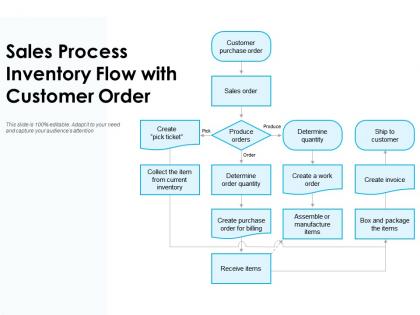
Sales process inventory flow with customer order




Try Before you Buy Download Free Sample Product
 Impress Your
 Audience
 100%
100% Editable
 Save Hours
 of Time


Introducing our Sales Process Inventory Flow With Customer Order PowerPoint Presentation Slide. Select this PPT template designed explicitly to graphically represent the inventory flow. Choose this PPT layout to highlight the entire process flow starting from customer purchase order to shipment of the order. With this PPT theme, you can showcase the lifecycle of the sales order process effectively and efficiently. Develop a plan of action for successful service delivery and positioning with the assistance of this PPT design. Create an order management process by taking the aid of this PPT visual. Monitor, control, and regulate the product activity of your organization with the help of this content-specific and pre-ready PPT graphic. Define the inventory management process flow in an easily accessible way by incorporating this PPT slide. Download this completely customizable PPT presentation to create a visual treat for your audience.
People who downloaded this PowerPoint presentation also viewed the following :
Sales process inventory flow with customer order with all 2 slides:
Give your audience a fulfilling experience. They will find our Sales Process Inventory Flow With Customer Order elevating.
FAQs for Sales process inventory flow
So basically you've got six main steps: order receipt, inventory check, picking, packing, shipping, and delivery confirmation. First validate the order details and payment. Then check if you actually have everything in stock - honestly the worst feeling is realizing you're out of something after someone already paid. Pick the items, pack them up secure, choose your shipping method. Generate tracking info and confirm delivery with the customer. Oh and definitely keep people updated throughout the whole process! Nobody wants to wonder if their package fell into a black hole somewhere.
Honestly, speed and communication are everything. Get your orders out fast and keep people in the loop constantly - they're used to Amazon tracking now so anything less feels janky. Tighten up your inventory so you're not overselling stuff that's backordered. Packaging matters more than you'd think too. Damaged stuff showing up just ruins everything you worked for. I'd start by looking at where things slow down in your current setup. Oh, and whatever you promise delivery-wise, beat it if you can. People remember when you surprise them. Your shipping partners need to be solid or it'll bite you later.
Look, inventory management is basically everything when it comes to order fulfillment. Without knowing what you actually have in stock, you're just guessing - and trust me, overselling customers is a total nightmare. You need real-time tracking so your system matches reality. Set up automated reorder points and do regular cycle counts to keep your data clean. This way you can give customers realistic delivery dates and catch backorders before they become problems. First thing though? Check your accuracy rates. If you're under 95%, that's where I'd start fixing things. Oh, and spreading inventory across multiple warehouses helps too if you're big enough for that.
So here's the deal - in-house fulfillment gives you way more control and faster processing, but it's pricier. Dropshipping saves you money since you're not dealing with inventory headaches. Custom packaging? Rush orders? That's where having your own setup shines. But man, dropshipping suppliers can really screw you over sometimes. If you're just starting out with limited cash, dropshipping makes sense. Once you hit decent volume though, bringing it in-house usually improves your margins and makes customers happier. It's basically control vs. convenience - pick your poison.
Honestly, start with an ERP like SAP or NetSuite - they'll connect your inventory, shipping, all that stuff in one spot. A good WMS will automate your picking and packing (saves so much time). For the customer side, you need solid order management software. API integrations between your store and fulfillment centers are clutch - seriously makes everything flow better. Oh, and automated tracking notifications are a must. Customers basically expect real-time updates now. Map out your current setup first though. Find where things get stuck, then tackle those problems in order of what's killing you most.
Honestly, start simple - just track order accuracy and delivery times since customers will definitely call you out on those. I'd add order cycle time too (how long from click to ship). Cost per order matters but maybe focus on that later? Returns are actually super useful - they'll show you if your packing sucks or pickers are grabbing wrong stuff. Customer satisfaction scores give you the real story behind all the numbers. Pull these monthly and see how you're doing against whatever targets make sense. Don't go crazy with metrics at first though - pick 2-3 and actually use them rather than drowning in spreadsheets.
Most companies deal with three main headaches: can't find their inventory, orders get messed up, and shipping takes forever. Plus their departments never talk to each other, which is honestly infuriating when you're trying to fix things. Best bet is getting an integrated order system that connects everything. Automate the boring stuff too. Real-time tracking helps a ton - customers stop calling every five minutes asking where their order is. Make sure sales, warehouse, and shipping actually communicate instead of working in silos. Start by mapping out your current process first. You'll spot the worst bottlenecks pretty quickly.
Dude, automation will totally transform your order fulfillment - like, it's honestly crazy how much faster everything moves. Set up workflows that automatically route orders to the right teams and trigger inventory checks without anyone touching them. No more manual data entry mistakes either, which used to drive me nuts at my old job. Your team gets to focus on the weird edge cases instead of boring repetitive stuff. Processing times get way faster, and orders basically handle themselves once they're in the system. I'd start by mapping out what you're doing now and pick the most annoying repetitive steps to automate first.
Dude, fulfillment speed is basically everything for keeping customers coming back. People are so spoiled by Prime now - they expect stuff fast and get annoyed when it's not. But honestly? Being reliable beats being randomly super quick. Like, I'd rather know my package is coming Tuesday and have it actually show up Tuesday than wonder if it'll be Monday or Thursday. Set realistic delivery dates upfront, then nail them every single time. That consistency is what makes people trust you over your competitors. Speed gets their attention, but reliability keeps them loyal.
Honestly, this comes down to getting your sales and fulfillment people actually talking to each other. Most of the time, sales is out there promising delivery dates that fulfillment knows are impossible - which is just asking for trouble. Start with weekly meetings where sales shares their pipeline and fulfillment gives real updates on what's backed up or delayed. Have your sales team spend a day shadowing the warehouse so they actually understand what goes into getting orders out the door. You'll want shared metrics too, like on-time delivery rates that both teams get measured on. It's kinda crazy how many companies skip this basic step, but it works.
Honestly, bubble wrap is your best friend for anything fragile. Get boxes that actually fit your stuff - nothing worse than items bouncing around like ping pong balls. Always throw in packing slips too. I had to learn this after getting roasted by customers over broken items, which sucked. Match your shipping speed to what people expect and use tracking religiously. Send them those confirmation emails with tracking info right away. Oh, and try batching similar orders if you can - makes everything way smoother. It's all about protecting stuff without blowing your budget on materials.
Honestly, data analytics is a game changer for this stuff. Start tracking your pick accuracy and order processing times - you'll catch patterns before they blow up into bigger issues. I've watched teams literally predict shipping mistakes just by looking at their historical data, which is wild when you think about it. Demand forecasting helps too, especially for staffing during busy periods. Don't go overboard though - pick maybe 3 or 4 metrics to watch consistently instead of drowning in numbers. Set up some dashboards so you can actually see what's happening in real-time. Trust me, inventory discrepancies become way easier to spot this way.
Dude, communication is everything in fulfillment - it's what makes customers actually happy vs just tolerating you. Send them updates at each step: order confirmed, we're packing it, shipped, delivered. When stuff goes wrong (and trust me, it will), telling them first saves you from dealing with pissed off people later. Honestly, customers are pretty chill when they know what's happening. Automate the basic notifications, but for weird situations? Just call them. Oh and always default to being transparent - people appreciate honesty way more than corporate BS.
Dude, returns are such a pain but they'll wreck your whole operation if you don't handle them right. Your staff ends up juggling return requests instead of packing new orders. Inventory just sits there in limbo. The warehouse becomes a mess - I've seen it happen so many times. Customers get annoyed waiting for their refunds too. Here's the thing though - sloppy return handling actually creates MORE returns because stuff doesn't get checked properly before going back on the shelf. Get your return process streamlined and built into your main workflow. Trust me, it makes everything run smoother.
Honestly, the AI forecasting stuff is getting pretty wild - companies can predict what you'll buy before you even think about it. Micro-fulfillment centers are everywhere now for same-day delivery. Drones and robots are handling more deliveries too. The sustainability thing is real though. People actually give a damn about eco-friendly packaging and carbon footprints now. Plus everyone expects to track their stuff in real-time - that's just basic at this point. I'd look at what tech you're using now and figure out which trends would help you beat competitors. The automation piece might be your biggest win.
No Reviews