

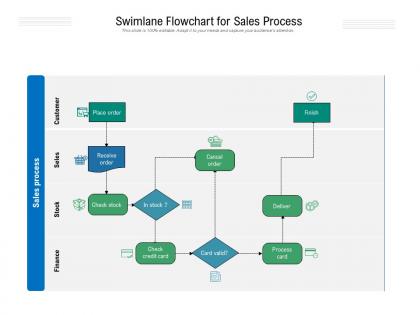
Swimlane flowchart for sales process




Try Before you Buy Download Free Sample Product
 Impress Your
 Audience
 100%
100% Editable
 Save Hours
 of Time


Our Swimlane Flowchart For Sales Process are explicit and effective. They combine clarity and concise expression.
People who downloaded this PowerPoint presentation also viewed the following :
Swimlane flowchart for sales process with all 2 slides:
Give your audience a fulfilling experience. They will find our Swimlane Flowchart For Sales Process elevating.

FAQs for Swimlane flowchart
Okay so for your sales swimlane, you'll need these stages: Lead Generation, Lead Qualification, Needs Discovery, Proposal/Demo, Negotiation, Closing, and Onboarding. Map out who owns what - marketing, sales reps, or management. Here's the thing though - most deals die at those handoff points between teams. That's where you really need to focus. Add decision gates so people know when to actually move things forward instead of just letting stuff sit there. My advice? Sketch your current mess first, then figure out where things actually get stuck. Don't build some perfect theoretical process that sounds great on paper.
Okay so swimlanes are actually pretty genius - they show you exactly who owns each step in your sales process. Like instead of just seeing "send proposal" floating around, you'll see it clearly sits in the sales rep's lane while legal review obviously goes in the legal team's section. The handoffs between departments become super clear too, which honestly is where most processes fall apart. Regular flowcharts? They're basically useless for figuring out who does what. Map out your current sales process this way and you'll instantly spot where things get stuck between teams.
So basically start with Sales, Marketing, Customer Success, and Finance - those are your bread and butter. Some companies throw in Legal for contracts or Product for demos if that makes sense for how they work. Honestly though, I've seen teams go nuts with like 8+ swimlanes and it just becomes a hot mess. Four or five tops is way more manageable. Here's what I'd do - think about your last big deal and trace which departments actually got involved. That'll show you exactly who needs a lane. No point mapping out people who aren't really part of the process, you know?
Dude, swimlane flowcharts are a game changer for sales teams. Picture this: each department gets their own lane showing exactly what they're responsible for. No more confusion about whether marketing or sales should be following up on that lead. You can actually see where the handoffs happen and - this is key - spot where things usually fall through the cracks. Communication breakdowns become super obvious when it's all laid out visually. My advice? Get everyone in a room and map out what you're currently doing. Trust me, you'll find gaps you didn't even know existed.
Lucidchart and Miro are honestly your best bets here. Both have solid collaboration tools, which you'll need when everyone starts wanting to tweak things. If your company's already paying for Microsoft stuff, Visio works fine too. There's also Draw.io - totally free and surprisingly decent. PowerPoint can even work if you're doing something basic (though I wouldn't recommend it). Oh, and Lucidchart has these pre-made swimlane templates for sales processes, so you won't be starting from scratch. I'd just grab their free trial first and see how it feels.
Dude, mapping your sales process visually is a game changer. Bottlenecks become super obvious - you'll literally see where deals get stuck or where teams fumble handoffs. I love the swimlane format because it shows how departments actually work together (or don't). Time each stage for a few weeks after you build it out. You'll catch patterns you never noticed before - like which steps take forever or where prospects bail most often. Honestly, most teams are shocked when they see how much duplicate work they're doing. It's like finally putting on glasses when you didn't know you needed them.
Honestly? I'd check it monthly if you've got a fast sales cycle. Quarterly at minimum though. Your team's always finding new bottlenecks, customer habits shift, market stuff changes - you know how it is. Monthly reviews help you catch the little tweaks that actually move the needle. Major overhauls might only happen a couple times a year, but those quick check-ins are gold. Especially if you're bringing on new reps all the time - you'll spot gaps in your documentation way faster. Oh, and set a calendar reminder or you'll totally forget!
So the cool thing about swimlane flowcharts is you can track tons of metrics right in them. I'd focus on conversion rates between stages first - that's where you'll catch the biggest issues. Time spent in each lane matters too, plus where people are dropping off (honestly, those bottlenecks become pretty obvious once you visualize everything). Track your individual reps by lane and look at deal velocity. Win/loss ratios by stage are clutch. Way easier to spot patterns than staring at endless spreadsheets, trust me. Just start adding timestamps and status updates to each step, then you can build dashboards from there.
So you basically give customers their own lane on the flowchart - shows exactly when they jump in during your sales process. Map out all their touchpoints like initial calls, demos, handling their objections, contract stuff. Honestly, this saves you from those cringe moments where prospects just... disappear into the void. The visual makes it obvious who handles what interaction. Plus you can spot gaps where customers might feel totally ignored (nobody wants that). I'd use it to tighten up follow-ups too. Way easier than trying to remember everything in your head.
Look, first thing - grab your top 3 business priorities for this year. Then go through every single step in your flowchart and ask if it actually helps hit those goals. Does this step boost revenue? Make customers happier? I swear half the flowcharts I see are just pretty diagrams that don't do anything useful. Pay special attention to handoff points between teams - that's usually where deals die. Your flowchart should basically show how strategy turns into real work. If a step doesn't connect back to what leadership cares about, why is it there?
Don't make your swimlanes crazy detailed or you'll create a nightmare flowchart nobody uses. Get your sales team involved from day one - they know the real process. I've seen some that look like total spaghetti disasters with too many decision points crammed into one lane. Define roles clearly and stick to the same symbols throughout. Oh, and don't forget feedback loops between departments - that's where things usually break down. Test it with actual scenarios first. Trust me, what looks perfect on paper sometimes falls apart when you run real deals through it.
So swimlane flowcharts are perfect for this - they show your new hires exactly who handles what in your sales process. Way better than those training binders that collect dust, honestly. New people can actually see how leads move from marketing to sales reps to managers. Walk them through each lane during their first week and have them trace a few real deals. They won't miss steps or accidentally mess with someone else's part of the process. Oh, and it saves you from explaining the same handoffs over and over again.
Think of feedback as the thing that stops you from making the same dumb mistakes over and over. Your swimlane chart should show how info flows backward - like when customer objections circle back to help you qualify better prospects upfront. Lost deals? That data should inform how you're doing initial outreach. Most people totally skip this part, which is honestly crazy because it's where the real improvement happens. The swimlanes help you see which team (sales, marketing, whatever) owns each feedback loop. Just make sure you're actually tracking what you learn at each stage and - this is key - getting it back to whoever can act on it.
Oh totally! Those swimlane charts are clutch for training new people. Way easier than dumping a thick manual on someone's desk - nobody reads those anyway. You can literally point to each box and show them "marketing does this, then it goes to you, then support takes over here." I've watched teams do mock calls where people follow the chart step by step. Works really well. The visual thing just clicks better in people's heads, you know? Have your new reps practice a couple sample deals using it as their roadmap. They'll pick it up way faster than traditional training methods.
So basically, a swimlane flowchart is like giving your remote sales team a visual map where everyone can see who's doing what. Each person gets their own "lane" - sales reps, managers, marketing, whatever - so nobody's confused about handoffs or next steps. Since you can't just tap someone on the shoulder anymore, this visual thing really works. I'd start by getting everyone on a video call to map out your current process together. You'll probably find gaps you didn't even know existed. Plus it makes spotting bottlenecks way easier and keeps people accountable without being annoying about it.
No Reviews