


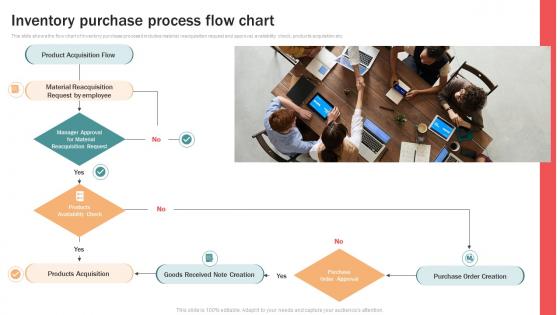
Inventory Purchase Process Flow Chart




Try Before you Buy Download Free Sample Product
 Impress Your
 Audience
 100%
100% Editable
 Save Hours
 of Time


This slide shows the flow chart of inventory purchase process it includes material reacquisition request and approval, availability check, products acquisition etc.
People who downloaded this PowerPoint presentation also viewed the following :
Inventory Purchase Process Flow Chart with all 6 slides:
Use our Inventory Purchase Process Flow Chart to effectively help you save your valuable time. They are readymade to fit into any presentation structure.





FAQs for Inventory Purchase
Okay so first things first - get your tracking system locked down, that's your foundation. From there you'll want demand forecasting and automated reorder points set up. Real-time tracking is clutch too. ABC analysis is perfect for figuring out which items deserve the most attention (basically your high-value stuff). Integration with sales and accounting will save you tons of manual headaches - trust me on that one. Oh and don't sleep on warehouse organization and cycle counts, your data gets messy fast without them. Supplier management matters but honestly I'd tackle that after you get the basics running smoothly.
Honestly, demand forecasting tools are a game changer here - they'll help you set smarter reorder points based on real sales data instead of just winging it. Bundle your slow movers with hot sellers, or do strategic discounts (but don't go crazy slashing prices, I've watched that backfire hard). Work with suppliers on smaller, more frequent deliveries too. Oh, and definitely analyze which products keep sitting there gathering dust - sometimes you just gotta cut your losses and discontinue the duds. The whole thing comes down to using actual data to predict what people want. Way better than guessing and ending up with a warehouse full of stuff nobody's buying.
Dude, you absolutely need some kind of tech for inventory. Manual tracking is such a nightmare - I learned that the hard way at my old job. Barcode scanners and RFID make everything so much faster, plus you get real-time updates on what's actually in stock. The software handles all the boring stuff like reorder alerts and predicting what you'll need next. Even a basic inventory app beats the hell out of spreadsheets. Honestly, it's 2024 - why make your life harder? Start simple and upgrade later.
Honestly, good forecasting is a total game-changer for inventory. Look at your last 12-18 months of sales data first - you'll spot patterns you never noticed. Seasonal trends, slow periods, random spikes. Then you can actually stock what people want instead of guessing. No more scrambling with expensive rush orders or having dead inventory sitting around forever. Moving averages work great once you get comfortable with the basics. Your customers will be happier, costs drop, and you'll sleep better knowing you're not flying blind. Trust me, it's worth the upfront effort to figure out.
Honestly, the biggest game-changer is shutting down operations completely if you can swing it - trying to count while people are moving stuff around will drive you insane. Set your schedule ahead of time and actually stick to it. Get your team sorted with clear roles before you start. I know it sounds boring, but count everything twice. Barcode scanners are your friend for cutting down on mistakes. Write down discrepancies right when you find them, not later when you'll forget half the details. Oh, and book your next audit date before you wrap this one up - future you will thank you.
So basically, inventory turnover shows how fast you're moving products off your shelves. The faster you sell stuff, the more cash you free up - which is huge for cash flow. Slow turnover? That's a killer because your money's just sitting there in unsold stock, plus you're paying to store it all. I learned this the hard way honestly. Different industries have different sweet spots, but generally quicker is better. You'll want to check this monthly and figure out which products are being slugs. Also watch out for stuff going bad or becoming outdated - that's pure profit loss right there.
Honestly, dealing with seasonality is like trying to read a crystal ball with your inventory. You've gotta stock up heavy before your busy season hits, then dial it way back so you're not stuck with a warehouse full of stuff nobody wants. Holiday stuff, pool supplies, whatever - timing is literally make or break. I'd dig into at least 2-3 years of your old sales data to see the patterns. Sometimes trends shift though, so don't just blindly follow last year's numbers. The real headache is balancing how much it costs to store everything against running out of stock when customers actually want to buy. Start planning your seasonal orders like 3-6 months out depending on your suppliers.
Look at your inventory turnover ratio first - shows how fast you're moving stuff. Track stockout frequency too, because running out of popular items is the worst. Carrying costs and order fulfillment rates matter a lot for your bottom line. Days of inventory on hand tells you if you're sitting on too much product (cash flow killer). GMROI is solid for seeing which items actually make money vs. just taking up space. Dead stock percentage - honestly this one's huge since nothing hurts worse than inventory just sitting there forever. Pick maybe 3-4 metrics that match your biggest headaches right now. Check them weekly.
So basically, perpetual inventory updates your records instantly every time something gets bought or sold. Periodic only updates at certain times - like once a month or whatever. Perpetual's pretty sweet because you always know exactly what you have in stock. Makes decisions way easier. Periodic systems are simpler to set up but honestly, you're just guessing your inventory levels until you physically count everything. Most companies go with perpetual these days since the tech isn't complicated anymore. Though if you're running something small with basic inventory, periodic could totally work fine for you.
Honestly, start with your best-selling stuff first - don't try to overhaul everything at once. Figure out your demand patterns and get tight with your suppliers (this part's crucial). Map out lead times so you know exactly when to reorder. Suppliers might grumble about smaller, frequent deliveries initially, but they usually come around. You'll need decent forecasting tools and backup plans for when shit hits the fan - because it will. Pick one product line, work out the bugs, then expand from there. Way less headache that way.
Inventory is such a pain because you're constantly guessing. Without real tracking systems, you either buy way too much stuff (bye bye cash flow) or run out of whatever's selling best. Manual counting sucks and honestly, spreadsheets are pretty useless after a certain point. As a business owner you're already juggling everything else too. Basic inventory software is worth it though - seriously, anything beats random notes everywhere. Just start simple and do regular counts. Your future self will thank you for not losing your mind over missing products.
Oh man, supply chain issues are such a nightmare for inventory. Basically when your suppliers flake out, you either get stuck with empty shelves (customers hate that) or you panic-buy too much stuff trying to avoid stockouts. Either way sucks for cash flow. Honestly, forecasting becomes impossible when everything's unpredictable - I learned this the hard way last year. Your best move is spreading orders across different suppliers so you're not screwed if one goes down. Also track your key numbers religiously because you'll need to adjust fast when things go sideways.
QuickBooks Commerce, Fishbowl, and Cin7 are your main contenders - solid choices for most mid-sized ops. NetSuite's powerful but honestly? Total overkill unless you're dealing with serious complexity and have cash to burn. Zoho Inventory and inFlow won't break the bank and they're surprisingly feature-rich. If you're heavy on e-commerce, grab something that plays nice with Shopify/Amazon. TradeGecko got absorbed into QuickBooks Commerce, which is annoying but whatever. My move would be testing 2-3 with free trials using your actual day-to-day stuff before you commit to anything.
Honestly, data analytics is a game changer for this stuff. Pull your sales data from the past year or so and look for seasonal patterns - like what sold well during holidays or promotional periods. I've seen teams cut stockouts by 30% just from spotting these trends early. Pretty wild, right? Instead of guessing when to reorder, you can actually calculate optimal reorder points based on real demand patterns. The trick is mixing your historical sales with external factors like market trends. Oh, and don't forget to flag slow-moving inventory before it sits there forever eating up cash.
Oh man, inventory mismanagement is such an environmental nightmare. You end up overproducing stuff that just sits in landfills, plus all those rushed shipping orders create insane emissions. Understocking is almost worse though - forces you into those crazy expensive overnight shipments that absolutely destroy your carbon footprint. The whole overstock thing honestly makes me sad when I think about all those wasted resources. Better demand forecasting is your friend here. Track those turnover rates and you'll cut costs while actually helping the planet. Win-win situation.
-
It makes easy work of my work presentations. I’ve never had to be nervous about my presentations for meetings.
-
“I always have a wonderful experience with SlideTeam. It's my ""go to"" when I need a template.”