Purchasing And Procurement Flow Chart
Try Before you Buy Download Free Sample Product
Audience
Editable
of Time
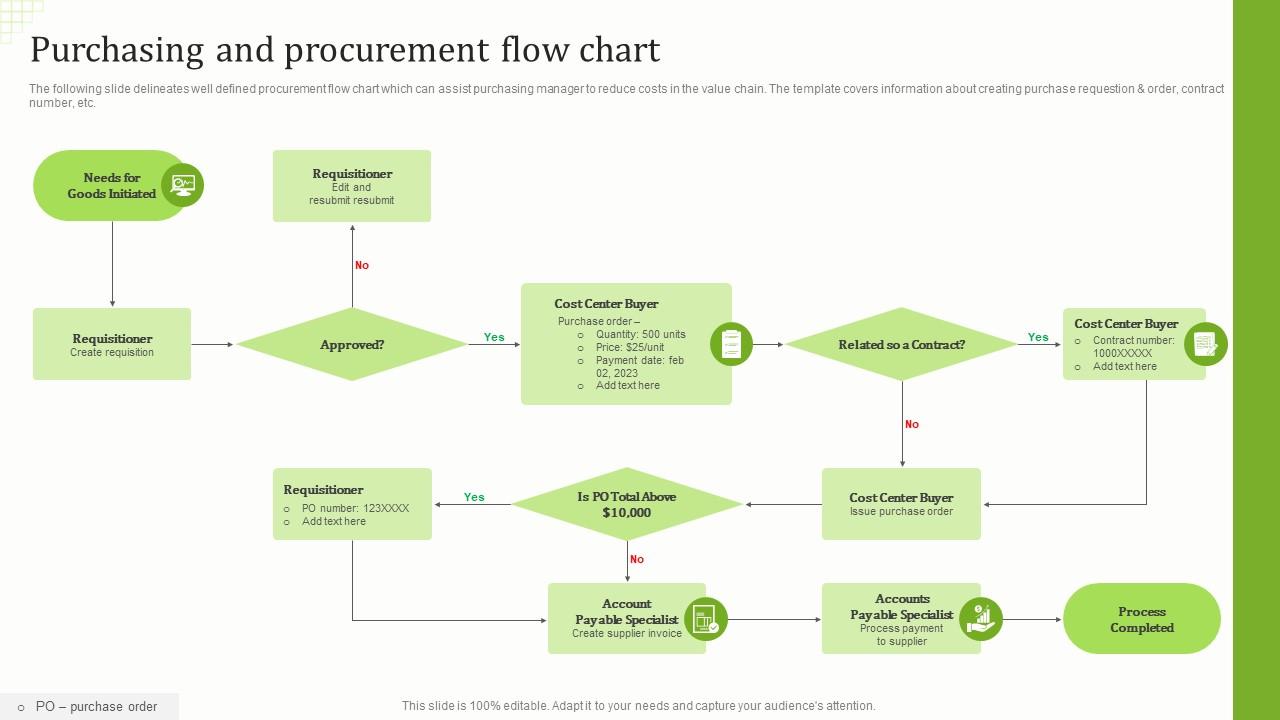
The following slide delineates well defined procurement flow chart which can assist purchasing manager to reduce costs in the value chain. The template covers information about creating purchase requestion and order, contract number, etc.
People who downloaded this PowerPoint presentation also viewed the following :
Purchasing And Procurement Flow Chart with all 6 slides:
Use our Purchasing And Procurement Flow Chart to effectively help you save your valuable time. They are readymade to fit into any presentation structure.
FAQs for Purchasing And
Honestly, start with the big three: cost, quality, and timing. Can't mess around with those. Check if the supplier actually delivers on their promises too - I got screwed over once by a vendor who talked a big game but couldn't follow through. Budget and cash flow matter obviously, plus any regulatory stuff you have to deal with. Oh, and think beyond just the sticker price. Sometimes cheap upfront costs you way more later. Make a simple scorecard and weight everything based on what matters most to you. Way easier than trying to juggle it all in your head.
Don't just look at the upfront price - that's where everyone screws up. You've got shipping, installation, training costs right off the bat. Then there's all the ongoing stuff: maintenance, support contracts, energy bills, upgrades. Hidden costs always pop up later too (trust me on this one). Factor in what happens when it breaks down and you're losing money from downtime. Eventually you'll need to replace or dispose of it. Honestly, I'd throw everything into a spreadsheet and map out 3-5 years worth of expenses. That's your real comparison number between vendors.
Look, good supplier relationships are honestly the secret sauce for better purchasing. You'll get better prices and quality when vendors actually like working with you. I learned this the hard way - suppliers will prioritize your orders and cut you deals when problems come up. They'll even tip you off about market shifts before your competition knows. Pretty huge advantage right there. Don't just treat them like order-takers though. Schedule regular calls with your key suppliers to talk performance and what's coming down the pipeline. Makes all the difference.
Honestly, tech makes purchasing way less painful. Automated approvals are a game changer - no more hunting people down for signatures. Your PO generation becomes automatic, and you get real-time spending data without the headache. AI actually gets pretty good at predicting what you'll need inventory-wise and finds better suppliers based on their track record. Integration with accounting kills those annoying manual entry mistakes too. The spending visibility alone is worth it. I'd start with digitizing approvals first though - that's where you'll feel the difference immediately. Most teams see results there right away.
Bundle your orders whenever you can - bigger volumes mean better rates. Always keep backup suppliers lined up because competition works wonders for pricing. Don't just look at the sticker price though. Sometimes you can negotiate payment terms or delivery schedules when they won't budge on cost. Honestly, just ask your current suppliers straight up what it'd take to get more of your business. Half the time they'll throw you a discount just for asking. Annual contracts with volume tiers usually beat one-off purchases. Oh, and having alternatives ready makes everyone more willing to play ball.
Honestly, it all comes down to what industry you're in. Tech moves crazy fast - you're always scrambling for the newest stuff and dealing with short product cycles, so flexibility with suppliers is huge. Manufacturing? Totally different beast. They care way more about keeping costs low and making sure the supply chain doesn't fall apart. Retail gets tricky because you're basically gambling on what consumers will want next season. Healthcare's probably the most regulated - safety standards trump everything else. Focus on maybe 2-3 metrics that actually moved the needle for you before, not just whatever sounds important.
Honestly, sustainable purchasing isn't just feel-good stuff - it can save you real money. Energy-efficient products cut your bills. Less waste means lower disposal costs. Customers actually notice this now and respect brands that care. Your employees will dig it too since everyone wants to work somewhere that matches their values. Supply chains get more stable because sustainable suppliers tend to stick around longer. I'd start with just one product category - maybe office supplies or something simple. The pricing gap has shrunk way more than you'd expect. Worth testing the waters before going all-in.
Honestly, purchasing is where everything starts in your supply chain. Make good buying decisions and you'll see better inventory levels, faster lead times, solid quality - the whole nine yards. Mess up here though? It screws with production schedules, costs go up, and your vendor relationships get rocky. The suppliers you pick, how you negotiate contracts, when you place orders - all that stuff flows downstream. I've seen companies turn around just by getting their purchasing act together and actually working with suppliers instead of against them. Focus there first.
First thing - run a credit check and ask for client references. Google them too, you'd be surprised what pops up in reviews. How long have they been around? Do they have the right certifications? If you can swing it, visit their place to see how they actually operate. I learned this the hard way, but always do a small test order first before going big. Communication during negotiations tells you everything - if they're being weird or evasive, that's your red flag right there. Trust me on this one.
Ugh, where do I even start? Don't rush into picking vendors without comparing at least three options - learned that one the hard way. Skip the contract review and you're basically asking for trouble later. Get your team involved from day one too, trust me on this. Oh, and here's something people always mess up: they only look at the sticker price instead of what it'll actually cost long-term with maintenance, training, all that stuff. Document everything as you go. Single sourcing might seem faster but it usually backfires. Just build in extra time because procurement always takes longer than you think it will.
So basically, when the economy sucks, we all start buying cheaper stuff or just wait on things we don't really need. But here's the thing - competition is actually great for us because companies get desperate and start cutting prices like crazy to get customers. I've been doing this myself lately tbh. You start focusing on what you actually need instead of random stuff you want. Also looking for things that'll last longer since every dollar counts more. My advice? Time your big purchases when companies are basically fighting each other for business. Stock up on essentials before everything gets expensive again.
Honestly, start with what data you already have - that's gonna save you headaches later. Coupa and Ariba are solid for spend analysis if you need to see where money's actually going. Power BI or Tableau work great for dashboards, and their visualizations don't suck like some other tools I've used. Zycus and GEP are decent for tracking supplier performance. Oracle and SAP have AI stuff for demand forecasting, though that might be overkill depending on your situation. My advice? Pick one tool that fixes your biggest problem first. Don't try to solve everything at once or you'll end up overwhelmed.
Honestly, think of a purchasing policy as your backup when things go sideways. It makes you get multiple quotes and check supplier backgrounds - annoying at first, but saves your butt later. Everyone follows the same approval steps, so no more random spending or sketchy vendor drama. Plus you've got documentation for everything. If someone questions a purchase down the road, you can point to the paper trail and say "we followed protocol." I'd start by writing down what you're already doing, then spot where stuff usually breaks down. Those problem areas? That's where your policy needs teeth.
Look, procurement ethics comes down to three big things: labor practices, environmental stuff, and not getting yourself in trouble with kickbacks. Research if suppliers treat workers decently - fair wages, safe conditions, all that. Environmental impact matters too, though honestly it can be a rabbit hole if you let it. Check their packaging and carbon footprint basics. Don't take any personal benefits from vendors (seems obvious but you'd be surprised). Document everything so you can explain your choices later. Just add a quick ethics checklist to your evaluation process and you'll be fine.
Oh, look into joining a GPO - group purchasing organization. They're pretty cool actually. You pool your buying power with other small businesses and suddenly you're getting the same volume discounts that huge companies get. Most are industry-specific, so they already work with suppliers you probably know. The GPO does all the contract negotiating for you, which is honestly such a relief because who has time for that back-and-forth with vendors? Yeah there's membership fees, but you'll usually make it back in savings. Worth checking out what's available in your sector.
-
Qualitative and comprehensive slides.
-
The best collection of PPT templates!! Totally worth the money.Â