


Idées de présentation de feuille de route de produit
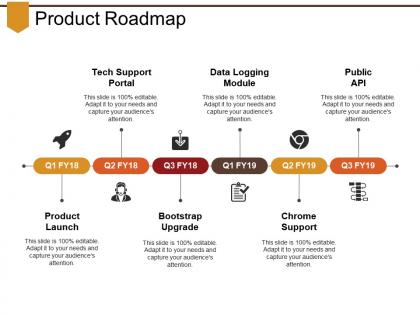




Try Before you Buy Download Free Sample Product
 Impress Your
 Audience
 100%
100% Editable
 Save Hours
 of Time


Conduisez à la maison les effets néfastes des actions de chacun avec nos idées de présentation de feuille de route de produit. Incitez les gens à se concentrer sur le changement climatique.
People who downloaded this PowerPoint presentation also viewed the following :
Idées de présentation de la feuille de route du produit avec les 5 diapositives :
Annoncez votre expertise sur nos idées de présentation de feuille de route produit. Devenez le leader dans votre domaine.
FAQs for Product
Start with the "why" - your vision and goals need to come first. Then map out your timeline with features and milestones. Honestly, I always add a constraints slide because someone will ask about budget/resources anyway, so might as well get ahead of it. Include your success metrics so people know how you'll track progress. Oh, and definitely call out major risks or assumptions that could mess things up. Keep everything high-level though - you can dive into detailed specs later with individual teams.
Visual timelines with swim lanes are a game changer - way better than walls of text. Color-code everything by how confident you are: green for locked in, yellow for probable, red for wishful thinking. Honestly, I've watched so many roadmaps fall apart because teams made everything look equally solid. Call out dependencies and external blockers that might mess up your timing. The big thing though? Start with WHY each milestone matters before you get into dates. People need that context or they're just staring at a bunch of deadlines that don't mean anything to them.
Honestly, the color-coding thing is a game changer – try blue for mobile stuff, circles for what's done, whatever works. Give everything room to breathe because nobody wants to decode a cramped mess. Make your text big enough so people can actually see it from the back. Timeline phases should be super obvious too. Here's the thing though – don't try to fit your entire roadmap on one slide! I learned this the hard way. Break it up by themes or time periods instead. Your stakeholders won't have to squint at those tiny boxes anymore, and you'll look way more organized.
Honestly, you've gotta read the room completely differently each time. Execs want the money stuff upfront - revenue impact, competitive edge, the big picture wins. Engineers? They're thinking resources, timelines, whether this thing can actually get built. Sales folks need customer benefits and realistic launch dates so they don't overpromise (again). I used to bomb these meetings by diving into technical weeds with leadership - learned that lesson the hard way! Now I prep multiple versions of the same roadmap. Pro tip: always ask what they're hoping to get out of the meeting first. Saves you from talking to a brick wall.
Group your feedback by themes first - way easier to spot what people actually want. Put the most requested stuff front and center, but don't skip explaining why you passed on other suggestions. People respect honesty there. I like making a "Voice of Customer" section with real quotes next to your planned features - hits different when it's their actual words. Show how their input shaped your priorities, not just that you asked for it. Oh and definitely circle back in your next update about what happened to their ideas.
Okay so here's what actually works - frame it like a story where your customers are going through this whole journey. Show the crappy stuff they're dealing with now, then boom, here's how your new features fix everything. I learned this from watching way too many roadmap presentations that put people to sleep. Real customer quotes make it way more believable than just talking in hypotheticals. Build up some drama by saving your coolest feature for the end. Think less boring feature list, more "here's how we're gonna save your day."
Honestly? ProductPlan and Roadmunk are pretty great if you want something made for roadmaps specifically. Super easy to drag timelines around. But here's the thing - most teams I know just use whatever they're already comfortable with. Figma, Miro, even PowerPoint works fine since everyone knows how to use it already. Aha! is another solid option if you need more than just basic roadmapping. My take? Start with what your team knows best. You can always switch to something fancier later if you're spending too much time wrestling with formatting instead of actually planning.
Honestly, I always start with the impact vs effort thing - grab those quick wins first to get everyone hyped. Then you can sell the bigger strategic stuff. Bucket everything into must-haves (tied to business goals), should-haves (user experience), and nice-to-haves. Trust me, without clear categories stakeholders will claim everything's "mission critical." Map each feature to actual metrics so people get why you're choosing it. Don't forget the boring technical debt - I know it's not sexy but roadmaps fall apart without it. Wrap up with timelines and what success looks like.
Honestly, just stick to the numbers that actually matter to your business and users. DAU/MAU and retention rates show real engagement. Revenue stuff is obvious but crucial - ARR growth, conversions, any cost savings you created. Customer satisfaction and NPS data? Executives eat that up. Also think about operational wins like faster time-to-market or fewer support headaches if that applies. Pick maybe 3-5 metrics max that tell your product's story best. The trick is being able to explain why each number matters to whoever you're presenting to - context is everything.
Yeah, totally add a risks section! Stakeholders actually love when you're upfront about potential problems instead of pretending everything's perfect. I'd focus on maybe 3-4 big ones - stuff like resource issues, tech roadblocks, or market shifts that could mess up your timeline. A simple table works great: risk, how likely it is, what you'll do about it. Shows you've actually thought things through and aren't just winging it. Oh and don't overthink it - nobody wants to hear about every tiny thing that might go sideways.
Honestly, market research is everything for your product roadmap. Skip it and you'll build stuff nobody wants - seen it happen way too many times! You need both the hard data and actual customer conversations to figure out what to prioritize. Start by looking at whatever research you've got already, then figure out where the big gaps are. Use it to validate your assumptions before you waste months on the wrong features. I probably sound like a broken record here, but it's also great for spotting opportunities your competitors haven't caught yet. Target the right users first and you'll actually see adoption take off.
Always pad your milestones with extra time - trust me on this one. When you're presenting, stick to themes and outcomes rather than promising specific features. Quarterly goals work way better than monthly deadlines since priorities will 100% shift on you. I'd add a "parking lot" section for ideas that might bubble up later. Use softer language like "we're exploring this" or "targeting Q2" instead of making hard commitments. Regular check-ins with stakeholders make changes feel planned rather than chaotic. Oh, and set expectations early that your roadmap's gonna evolve - it's not carved in stone.
Don't be vague about timelines or you'll look totally unprofessional. Also, resist the urge to oversell - your roadmap shouldn't read like a fantasy novel. Half your audience will mentally check out if you dive into technical architecture stuff, so focus on actual customer outcomes instead. Never present dates like they're set in stone because we all know things shift constantly. I always say "targeting" or "planning for" and build in buffer time. Oh, and honestly? The whole thing falls apart if people think you're just making promises you can't keep.
Don't dump all your competitive stuff in one big section - that's boring as hell. Sprinkle it throughout instead. Show where competitors are crushing it (or failing) in your market overview first. Then I'd make a simple "us vs them" chart for key features. Honestly, this keeps everyone focused on what actually matters. Just don't go crazy with competitor data or you'll lose sight of your own vision. At the end of each roadmap section, quickly explain how it beats the competition. Be specific too - "Feature X gets us 6 months ahead of Company Y" hits way harder than vague positioning talk.
Get those follow-up notes out within 24 hours - that's honestly where the real alignment happens, not during your actual presentation. You'll want to grab one-on-ones with the big players too because people never say what they're really thinking in those big group meetings. Set up a shared doc for tracking who's doing what and when. Oh, and here's the thing everyone forgets - don't just disappear after. Schedule regular check-ins over the next few weeks or your momentum dies. The presentation is really just the starting gun, not the victory lap.
-
Awesomely designed templates, Easy to understand.
-
Nice and innovative design.