


Project Manger Career Path Plan




Try Before you Buy Download Free Sample Product
 Impress Your
 Audience
 100%
100% Editable
 Save Hours
 of Time


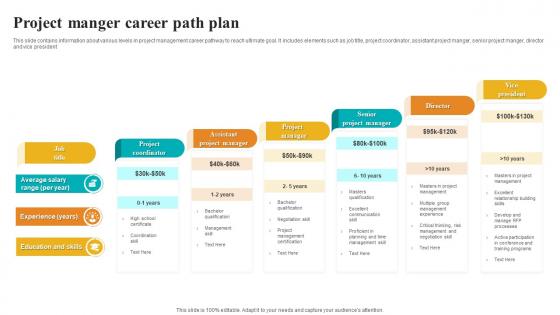
This slide contains information about various levels in project management career pathway to reach ultimate goal. It includes elements such as job title, project coordinator, assistant project manger, senior project manger, director and vice president.
People who downloaded this PowerPoint presentation also viewed the following :
Project Manger Career Path Plan with all 6 slides:
Use our Project Manger Career Path Plan to effectively help you save your valuable time. They are readymade to fit into any presentation structure.





FAQs for Project Manger
Honestly, communication is everything - you're basically a translator between different teams all day. Being organized helps, but rolling with chaos matters more than perfect planning sometimes. Pick up some basics like risk assessment and budgeting. Tools like Asana are pretty standard too. But here's what nobody tells you: emotional intelligence beats technical skills every time. You'll manage people way more than actual tasks, which is kinda wild when you think about it. Get your PMP cert for sure, but start practicing on small stuff first. The people skills take forever to develop.
Yeah, definitely worth it if you're serious about moving up. Most companies won't even consider you for director-level roles without PMP or PRINCE2 - it's annoying but that's reality. PMP opens more doors since it's recognized everywhere, while PRINCE2 is big in government work and Europe. The exams suck, not gonna lie, but studying actually made me better at my job. Companies love seeing those letters after your name when they're handing out six-figure positions. I'd go with PMP first unless you know you want government work.
Project management has four main tiers, honestly. Coordinators start with the admin stuff - scheduling meetings, tracking deadlines, you know the drill. Project Managers actually run the show, handling budgets and dealing with stakeholders (which can be... fun). Senior PMs tackle those massive enterprise projects that somehow always have a million moving pieces. At the top, Program Managers juggle multiple projects while keeping everything tied to business goals. Each jump up needs more leadership chops. Oh, and definitely check out job postings for whatever level you're eyeing - they'll show you exactly what skills are hot right now.
Honestly, just start where you are right now. Volunteer for small projects at work - doesn't matter if they're not "official" PM roles. Cross-team stuff, process improvements, even planning the office holiday party counts. Anytime you're wrangling multiple people toward a deadline, boom, that's PM experience. Nonprofits are goldmines for this too since they're always scrambling to organize events. Sure, you could get your PMP or CAPM, but real experience trumps certifications every single time. Oh, and document everything using PM language for your portfolio later.
AI tools are everywhere now - they're handling scheduling and risk stuff automatically. Most teams aren't going pure Agile anymore, they're mixing it with traditional methods which honestly makes way more sense. Remote work changed everything though, that's the huge one. You've got to be amazing at digital communication now and managing stakeholders virtually. Oh, and sustainability requirements are popping up in like every project brief these days. Definitely check out some AI project management tools. Maybe grab your PMP too since this hybrid approach thing isn't going anywhere.
Dude, stakeholder management is what really makes or breaks PMs. I totally bombed my second project because I ignored this - learned real quick that you're basically a translator between departments most days. Your coding skills might land the interview, but navigating all those competing priorities and keeping everyone aligned? That's the stuff that actually gets you promoted. The best PMs I know are the ones people fight to have on their teams. Oh and definitely work on active listening - sounds basic but it's surprisingly hard when everyone's talking over each other in meetings.
Honestly, just start with Microsoft Project - it's still the standard everywhere. Excel too, you'll live in that thing for budgets and tracking (way more than I thought I would). For communication, Slack or Teams obviously. Miro's amazing for brainstorming sessions with your team, and I'd grab either Visio or Lucidchart for process maps. SharePoint handles all your docs. Here's the thing though - don't try learning everything at once. Pick like one from each area and actually get good at it first. I made that mistake early on and just felt scattered. Asana and Monday.com are solid alternatives if your company doesn't do Microsoft Project, btw.
Oh totally, your industry makes a huge difference. IT PMs usually go toward technical roles or digital transformation stuff. Construction guys move up to program management or sometimes even general contracting. Healthcare's wild though - you could end up in regulatory compliance, clinical trials, or health IT, and honestly those are completely different worlds. Here's the thing: your industry knowledge becomes just as important as your PM skills. Stakeholders actually trust you when they know you understand their problems. Plus the money's better. My take? Go with whatever industry actually interests you, then really learn the ins and outs.
Ugh, scope creep is the worst - everyone's like "oh just add this tiny thing" and suddenly your whole timeline's screwed. That plus unrealistic deadlines and getting stakeholders to actually agree on stuff. Document everything upfront, seriously. When they want crazy deadlines, show them the actual data of what you can pull off. Difficult people need constant updates and to feel involved in decisions (annoying but works). Oh and learn to say "sure we can do that, but here's how it'll mess with your budget and timeline" - saves so much headache later.
Dude, join PMI or whatever PM group's in your area - it's seriously worth it. You'll hear about jobs before they hit LinkedIn, plus the salary negotiation tips alone are gold. Most senior PMs I know literally got their roles through people they met at chapter events, which is kinda crazy when you think about it. The certifications help your resume too, obviously. But here's the thing - once you start volunteering or speaking at their events, that's when doors really open. I'd say pick one local chapter first, maybe hit up some virtual meetups if your schedule's nuts.
Honestly, the biggest thing that helped me was just asking for feedback from my team - like actually asking, not just those formal review things. Super awkward at first but you learn so much. Also try to get on some cross-functional projects where you're herding cats who don't even report to you. That's where the real skills come in. Find someone senior to shadow if you can, and yeah... maybe hit up Toastmasters or something similar? I know it sounds lame but communication workshops actually work. Start small though - just do one feedback chat this month and see how it goes.
Honestly, you'll go from being in the weeds with schedules and budgets to actually managing people and bigger picture stuff. Early career is all about hitting deadlines and making sure nothing falls through the cracks. Senior level though? Way more stakeholder meetings and team building. The technical project management becomes muscle memory eventually - which is great because living in spreadsheets gets old fast. You start shaping company processes too and mentoring newer PMs. My advice? Work on leadership skills now. Strategic thinking matters way more than perfect sprint planning once you move up.
Honestly, mentors are a game-changer for PM careers. They'll help you figure out office politics (which is half the battle tbh) and spot blind spots in your skills. The networking piece is massive too - doors just open when someone vouches for you. Plus they share all those messy project stories so you don't repeat their mistakes. When promotion time comes around, having someone who actually knows what leadership wants? Priceless. Oh and they can advocate for you behind closed doors. Find a PM whose path you respect and ask for monthly coffee chats - most people are surprisingly willing to help.
Dude, Agile has totally flipped project management on its head. Old-school PMs who loved their waterfall charts? Not so hot anymore. Now everyone wants Scrum Masters and Agile Coaches - like, the demand is crazy. Instead of planning everything to death, it's all about adapting fast and keeping teams happy. Quick wins matter more than perfect documentation (thank god). The whole vibe shifted from "stick to the plan" to "roll with whatever happens." Oh, and get your Scrum cert if you haven't already. Seriously, most job postings won't even look at you without it these days.
Honestly, the jump is all about switching from task mode to strategy mode. You'll want to cozy up with people outside your usual project crew - finance folks are gold since execs obsess over those P&L numbers (learned that one the hard way). Go after projects that actually move the revenue needle or tie into big company goals. Here's the thing though - stop thinking like someone who just executes stuff. Think like you own the place. Focus on what gets accomplished, not just staying busy. Your PM background is actually clutch here since you're used to juggling a million moving pieces anyway.
-
My team has been relying on SlideTeam’s professional PPT designs for a while now. It has greatly sped up quality work at my organization. So thanks!
-
SlideTeam is the best in the business. Their templates are engaging and customizable. You can rely on them.