


Project prioritization scorecard powerpoint presentation slides




Try Before you Buy Download Free Sample Product
 Impress Your
 Audience
 100%
100% Editable
 Save Hours
 of Time


Prioritizing projects increases the focus of senior teams on the strategic goals and upsurges the success rate of strategic projects. Project scorecards build an execution mindset among the whole management team and, at the same time, clear all doubts related to operational resources and cost. Here is a professionally designed template for the Project Prioritization Scorecard to establish a clear understanding of what matters most for maintaining costs levels. It brings out the overview of the project in a creative cum visual look. A company can demonstrate its key parameters like workforce, ABC machinery, etc., using a compliance matrix. The proposal displays the deliverables with their time, cost and location. The projects have a breakdown for costs as each element carries equal weightage in deciding the value for the project. The proposal includes the minutest details of the timeline for each project day. Highlights are there for emphasis on team management and approaches used to develop a warm environment at work. The scorecard displays the details regarding prioritization, their variant matrix, and the criteria required. The format underlines the critical points of the project. Contact us for all your queries. Connect with our editable Project Prioritization Scorecard Proposal and bolster your prospects.
People who downloaded this PowerPoint presentation also viewed the following :
Content of this Powerpoint Presentation
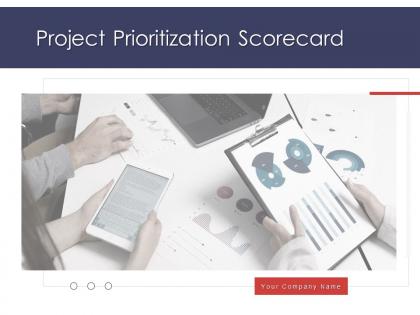
Slide 1: This slide displays title i.e. 'Project Prioritization Scorecard' and your Company Name.
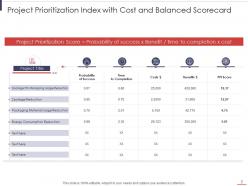
Slide 2: This slide presents Project Prioritization Index with Cost and Balanced Scorecard.
Slide 3: This slide shows Project Prioritization Matrix with Resource Ability Scorecard.
Slide 4: This slide exhibits Project Prioritization Balanced Scorecard with 5 Criteria.
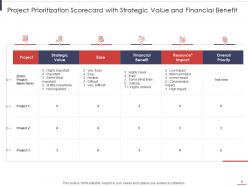
Slide 5: This slide depicts Project Prioritization Scorecard with Strategic Value and Financial Benefit.
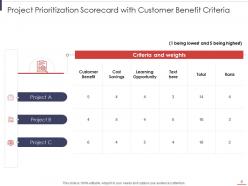
Slide 6: This slide illustrates Project Prioritization Scorecard with Customer Benefit Criteria.
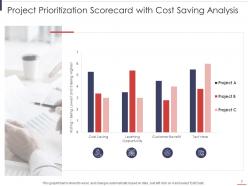
Slide 7: This slide highlights Project Prioritization Scorecard with Cost Saving Analysis.
Slide 8: This is the icons slide.
Slide 9: This slide presents title for additional slides.
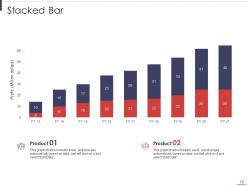
Slide 10: This slide exhibits yearly profits stacked bar charts for different products. The charts are linked to Excel.
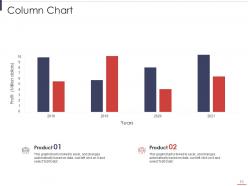
Slide 11: This slide displays yearly profits column charts for different products. The charts are linked to Excel.
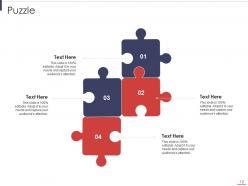
Slide 12: This slide displays puzzle.
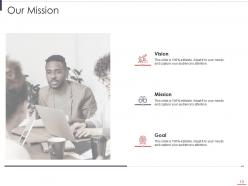
Slide 13: This slide presents your company's vision, mission and goals.
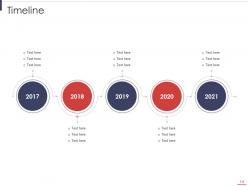
Slide 14: This slide exhibits yearly timeline.
Slide 15: This slide shows details of team members like name, designation, etc.
Slide 16: This slide displays goals.
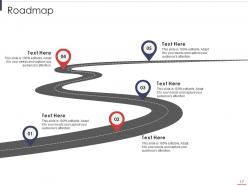
Slide 17: This slide shows roadmap.
Slide 18: This slide depicts posts for past experiences of clients.
Slide 19: This is thank you slide & contains contact details of company like office address, phone no., etc.
Project prioritization scorecard powerpoint presentation slides with all 19 slides:
Use our Project Prioritization Scorecard Powerpoint Presentation Slides to effectively help you save your valuable time. They are readymade to fit into any presentation structure.




FAQs for Project prioritization scorecard
Honestly, I'd look at three things when picking projects. Does it actually help your company's main goals? Crazy how many projects get approved that don't even connect to what the business is trying to do. Next, figure out your ROI - not just money but stuff like making customers happier or streamlining processes. Resource requirements are huge too. Don't bite off more than you can chew with staffing and budget. Oh, and definitely consider risk levels and how long each will take. Maybe score them all on these points? Makes it way easier to compare apples to apples when you're making the final call.
Honestly, stakeholder requirements are what should drive your whole prioritization process. First thing - figure out who your key players are, then dig into what they actually need. Sometimes what they say they want is completely different from what they need, which is super annoying but whatever. Their business goals and deadlines become your scoring system when you're ranking stuff. The hard part? When stakeholders want conflicting things. I'd grab each person's top 3 requirements and use those as filters. Trust me, it'll cut down on those endless meetings where everyone argues in circles.
Honestly, resource availability is like your reality check - it decides what you can actually do vs. what sounds good on paper. Sure, you might want to tackle five big projects, but if you've only got budget and people for two? Those priorities sort themselves out pretty quick. Skills, workload, budget... they'll all force you to rank stuff way differently than you would in a perfect world. Sometimes a lower-priority thing jumps ahead just because you actually have the right people free right now. I learned this the hard way - always figure out what capacity you have before making your priority list, or you'll just end up frustrated with plans that'll never happen.
Honestly, risk assessment can totally mess with your normal priorities. Sometimes that boring "low impact" project needs to happen first because it's covering a huge risk. I learned this the hard way watching teams ignore risky stuff and pay for it later - not fun. Look at both how likely something bad could happen AND how much damage it'd cause. Those high-risk items? They'll jump ahead of seemingly better projects. It's weird but you gotta balance avoiding disasters against chasing returns. Map out your biggest weak spots first, then see which projects actually fix those gaps.
Alright so you've got a few good options here. Priority matrices are clutch - those urgent/important quadrants that everyone loves because they're super visual. Kanban boards work well too, especially with color coding or priority columns. Roadmaps are solid when timing matters alongside priority. Honestly though? Sometimes I see teams overthink this stuff. They'll build these elaborate dashboards that look amazing but nobody touches after week one. A simple ranked list can be just as effective if people actually maintain it. Pick whatever your team will realistically use and keep updated - that's way more important than having the fanciest setup.
Okay so here's the thing - prioritization is all about strategic alignment. Map each project to your company's actual goals first. Revenue growth? Market expansion? Whatever leadership obsesses over, that's your north star. Score projects based on how much they move those needles. I've seen too many "cool" technical projects die slow deaths because nobody could connect them to business outcomes. Short projects that barely align with strategy? Hard pass for now. Even if something looks interesting, it won't get resources or support without that connection. Focus on what actually matters to the business.
For project prioritization, RICE scoring is solid - covers Reach, Impact, Confidence, and Effort. MoSCoW method works too (Must have, Should have, etc). Value vs effort matrices are pretty straightforward. But honestly? I've watched teams overthink this stuff to death with complicated frameworks. Kanban boards keep things visual and simple. Asana or Trello handle most prioritization needs, hell even a basic spreadsheet works fine. The real trick is just picking one approach and sticking with it. Teams that constantly switch methods every few sprints never actually get their priorities straight.
Ugh, team dynamics mess with prioritization SO much. The loudest people always push their favorite projects forward, even when they're not actually important. Meanwhile, the quiet ones who probably have the best ideas just sit there saying nothing. Sales is the worst - they act like every client request is an emergency that needs to happen yesterday. I've seen teams where politics basically run the whole show instead of logic. You really need some kind of system where everyone gets heard equally. Structure helps a lot. Base decisions on real criteria instead of whoever yells loudest in the meeting.
Honestly, priorities change SO much during a project - it's kinda wild. What feels super urgent at the start might not even matter once you hit a snag or learn something new. You'll probably focus on foundational stuff first, then shift to putting out fires or dealing with feedback. Budget issues always throw a wrench in things too (ugh). By the end, you're just trying to get everything done on time. I've learned it's way better to check in at each milestone and adjust rather than stubbornly sticking to your original plan.
Oh man, the classic mistake is trying to tackle everything simultaneously - recipe for disaster. Don't let the loudest voices drive your decisions either (learned that one the hard way with my old boss). Resource constraints are real, so check if you can actually execute what you're planning. Otherwise you'll have this gorgeous priority list that's completely useless. And here's the thing - priorities aren't set in stone. Business changes fast, so you've got to revisit them regularly. I usually do a quick check every few weeks, honestly depends on how crazy things get.
Honestly, using actual data cuts through all the BS and office politics when you're trying to figure out what to work on first. Track stuff like customer impact, revenue potential, how much work it'll take - you know, the metrics that actually matter. Most teams still just wing it based on whoever yells loudest in meetings (been there!). Set up your scoring system early, then measure how things actually turn out so you can get better at this over time. Start with maybe 3-4 key things that align with your business goals. Don't overthink it initially.
Look, market demand is what drives everything when you're prioritizing projects. High demand = higher priority, especially if you can grab market share fast. I've watched teams waste months building "amazing" features that literally nobody wanted - don't be those guys. You've got to constantly check if people actually want what you're building through customer research and sales data. The tricky part? Balancing what the market wants right now versus your longer-term bets. You can't just chase every shiny trend, but you also can't ignore what's happening around you.
Honestly, agile changes everything about how you prioritize stuff. You're not doing these huge planning sessions anymore - instead you're constantly tweaking based on what users actually tell you and what happens in each sprint. MoSCoW prioritization is super helpful, plus story mapping and those backlog sessions (though those can drag on forever sometimes). The "fail fast" approach really does work. Look for your high-impact, low-effort wins first. But stay flexible because you'll need to pivot when new info comes up. It's way more responsive than traditional project management.
Think of feedback loops as your sanity check for project priorities. Regular check-ins show you what's actually working versus what you thought would work. Quarterly reviews, stakeholder surveys, tracking metrics - whatever helps you spot when that "super urgent" thing isn't really moving anything forward. The trick is making it routine instead of just scrambling when stuff hits the fan. Honestly, I've seen too many teams chase shiny objects without ever looking back. Set up those recurring reviews so you're adjusting based on real data, not just whatever feels right in the moment.
So the main thing is getting everyone on the same page about what you're even discussing. Share your decision-making criteria upfront - ROI, strategy fit, whatever you're using. That way people aren't just throwing opinions around without context (which honestly happens way too often). I'd document your framework and send it before meetings so everyone shows up prepared. Regular check-ins help too. Let people ask questions and push back a bit. Being transparent about how you make these calls goes a long way. Trust me, it beats those endless circular debates where nobody's really listening.
-
Top Quality presentations that are easily editable.
-
Really like the color and design of the presentation.