


Strategy Balanced Scorecard Powerpoint Presentation Slides




Try Before you Buy Download Free Sample Product
 Impress Your
 Audience
 100%
100% Editable
 Save Hours
 of Time


Strategy balanced scorecard provides information regarding all the vital elements of the management system. It displays the documents and results of the organizations strategic planning and thinking process. Grab our competently designed Strategy Balanced Scorecard template that will showcase all the vital scorecards and matrixes related to strategy. This PPT template presents Strategy Balanced Scorecard with Measures and Initiatives, Strategy Balanced Scorecard with Actual and Target Goals, etc. Furthermore, the balanced strategy scorecard exhibits Strategic Profitability Balanced Scorecard with Objectives and Measures, Strategic Profitability Balanced Scorecard with Targets and Initiatives, etc. The PowerPoint presentation even highlights Strategy Map Profitability Balanced Scorecard with Key Measures, Strategy by Robert Kaplan and David Norton Linking Balanced Scorecard Performance, etc. Moreover, the balanced scorecard shows Strategy Map Balanced Scorecard with Mission Vision and Goals, Strategy Profitability Balanced Scorecard with EBITA Analysis, etc. The deck also illustrates Strategy Balanced Scorecard with Goals and Measures, Strategy by Robert Kaplan and David Norton Linking Balanced Scorecard, etc. Likewise, the scorecard template depicts Linking Balanced Scorecard to Strategy by Robert Kaplan and David Norton, etc. Get access now.
People who downloaded this PowerPoint presentation also viewed the following :
Content of this Powerpoint Presentation
Slide 1: This slide introduces Strategy Balanced Scorecard. State Your Company Name and begin.
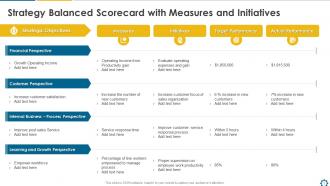
Slide 2: This slide shows Strategy Balanced Scorecard with Measures and Initiatives.
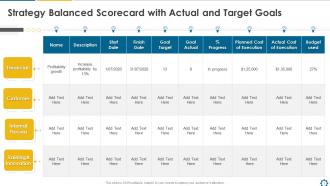
Slide 3: This slide presents Strategy Balanced Scorecard with Actual and Target Goals.
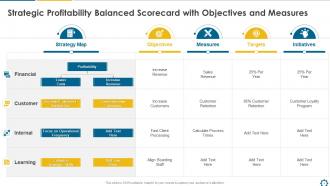
Slide 4: This slide displays Strategic Profitability Balanced Scorecard with Objectives and Measures.
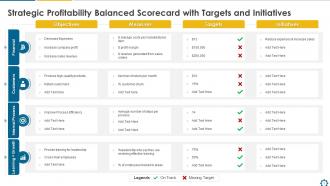
Slide 5: This slide represents Strategic Profitability Balanced Scorecard with Targets and Initiatives.
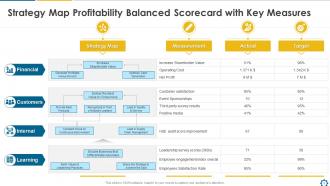
Slide 6: This slide showcases Strategy Map Profitability Balanced Scorecard with Key Measures.
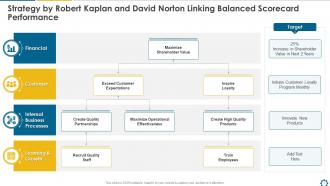
Slide 7: This slide shows Strategy by Robert Kaplan and David Norton Linking Balanced Scorecard Performance.
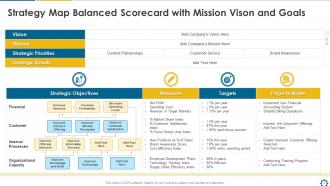
Slide 8: This slide presents Strategy Map Balanced Scorecard with Mission, Vison and Goals.
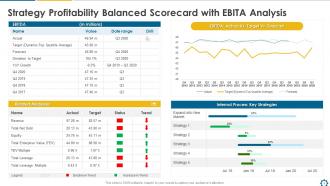
Slide 9: This slide displays Strategy Profitability Balanced Scorecard with EBITA Analysis.
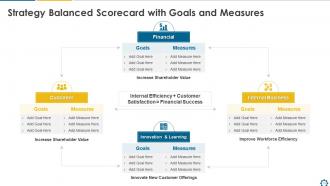
Slide 10: This slide represents Strategy Balanced Scorecard with Goals and Measures.
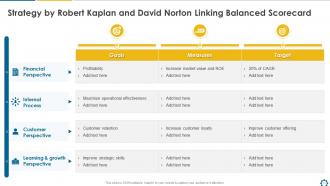
Slide 11: This slide showcases Strategy by Robert Kaplan and David Norton Linking Balanced Scorecard.
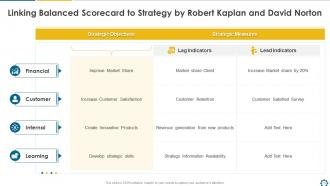
Slide 12: This slide shows Linking Balanced Scorecard to Strategy by Robert Kaplan and David Norton.
Slide 13: This slide displays Icons for Strategy Balanced Scorecard.
Slide 14: This slide is titled as Additional Slides for moving forward.
Slide 15: This slide provides 30 60 90 Days Plan with text boxes.
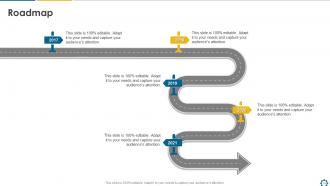
Slide 16: This slide presents Roadmap with additional textboxes.
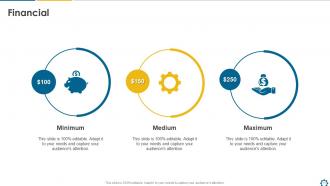
Slide 17: This is a Financial slide. Show your finance related stuff here.
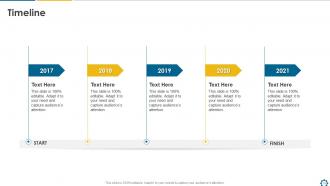
Slide 18: This is a Timeline slide. Show data related to time intervals here.
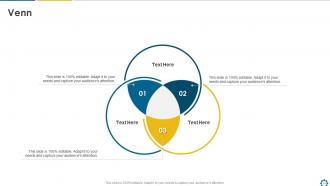
Slide 19: This slide depicts Venn diagram with text boxes.
Slide 20: This slide shows Post It Notes. Post your important notes here.
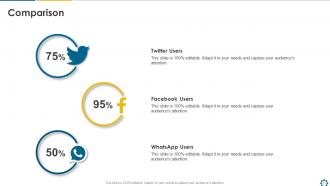
Slide 21: This is a Comparison slide to state comparison between commodities, entities etc.
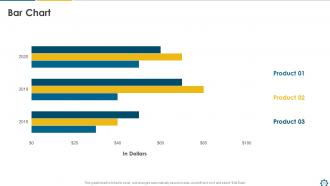
Slide 22: This slide presents Bar chart with two products comparison.
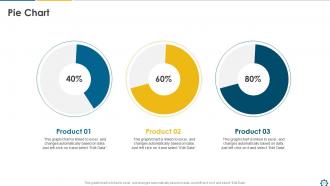
Slide 23: This slide shows Pie Chart with data in percentage.
Slide 24: This is a Thank You slide with address, contact numbers and email address.
Strategy Balanced Scorecard Powerpoint Presentation Slides with all 29 slides:
Use our Strategy Balanced Scorecard Powerpoint Presentation Slides to effectively help you save your valuable time. They are readymade to fit into any presentation structure.





FAQs for Strategy Balanced Scorecard
So there are four parts to the Balanced Scorecard - think of it like checking different gauges on your car dashboard. Financial stuff is obvious (revenue, profit margins, ROI). Customer perspective covers satisfaction scores and how many people you're keeping vs losing. Internal processes look at how efficiently you're actually running things day-to-day. Then there's learning & growth, which honestly took me a while to appreciate - it's about employee skills and innovation capacity. The cool thing is they're all connected. Better training usually leads to smoother operations, happier customers, and more money. I'd start with 2-3 metrics per category that actually move the needle for your specific business.
Figure out your main goals first - financial stuff, customer goals, internal processes, and team development. Pick 15-20 KPIs that actually matter, not just whatever's easiest to measure (seriously, half the scorecards I've seen are just random data nobody uses). Make sure everyone in your company gets how their daily work ties back to these bigger goals. The whole thing only works if you're reviewing it regularly - like monthly, not just when the board meets. Oh, and keep the dashboard clean and visual. If it's confusing or you forget to update it, might as well not bother.
Each perspective has its own typical metrics. Financial covers revenue growth, profit margins, ROI, cost reduction - the usual suspects. Customer side tracks satisfaction scores, retention rates, market share, acquisition costs. Internal Process looks at cycle times, quality rates, productivity stuff, process improvements. Learning & Growth is honestly underrated but super important - employee satisfaction, training hours, skills development, system capabilities. Don't overwhelm yourself though. Stick to 3-4 metrics per perspective tops, otherwise you'll just get buried in data and lose sight of what's actually moving the needle.
So Balanced Scorecard breaks things into four areas instead of just obsessing over profits. Financial stuff, sure, but also customer happiness, how smooth your processes run, and whether people are actually learning new skills. What's cool is seeing how they connect - train your team better, they work more efficiently, customers get happier service, boom - more money flows in. I swear once you map out these connections it's like having x-ray vision into what actually moves the needle. My old boss was obsessed with this framework. Start with figuring out which non-money metrics actually predict your revenue changes.
So here's the thing about Balanced Scorecards - they get everyone speaking the same language about goals and metrics. Finance stops obsessing over just revenue while operations ignores the bigger picture, you know? The four perspectives thing actually works because it connects high-level strategy to stuff people do every day. Honestly, the visual format is clutch during meetings - way easier to digest than spreadsheet hell. When you're looking at quarterly results, everyone finally sees how their work fits together. Try structuring your next team meeting around it. You'll be surprised how much clearer conversations get when people aren't talking past each other.
Dude, the Balanced Scorecard is perfect for this! Instead of just staring at money coming in and out, you track customer happiness, how smooth your processes run, and whether your team's actually learning new stuff. Honestly, most small business owners I know are terrible at the big picture thinking - they're always putting out fires. This thing forces you to connect your daily chaos to actual long-term goals. Plus you'll catch problems way earlier. Don't overthink it though. Pick maybe 2-3 things to measure in each area and go from there.
Look, customer feedback is your reality check for the Customer Perspective. You can't just guess what they value - you need their actual input to set the right metrics like satisfaction scores or NPS. I've watched companies create scorecards that looked amazing internally but totally missed the mark with customers. Pretty painful to witness, honestly. Survey them regularly, run focus groups, dig into complaint data - whatever works. Their voice should shape your customer objectives and KPIs. Otherwise you're measuring stuff that doesn't matter to them at all.
Honestly, just automate the whole thing - manually collecting BSC data is such a pain. Dashboard tools like Tableau or Power BI can pull metrics straight from your HR systems, financial software, CRM, whatever you're already using. No more chasing down random spreadsheets from every department (been there, it sucks). Set up real-time reporting so your scorecard doesn't end up three months behind like mine always used to be. The visual stuff makes spotting trends way easier too. First figure out where your key metrics live, then grab a dashboard tool that plays nice with those systems.
Honestly, getting people to care about non-financial metrics is brutal - everyone's obsessed with revenue and profit. Then there's the whole mess of choosing which KPIs to track (there are like hundreds). Your data systems probably don't talk to each other, which makes collecting everything a total pain. Training your team to actually understand all four perspectives? That takes forever. Oh, and don't make my mistake of trying to track 30 metrics right away. Start with maybe 12-15 good ones and add more later.
Quarterly reviews are your best bet - just quick check-ins to see how your KPIs are doing and tweak anything that's clearly not working. Then do the big overhaul once a year. Honestly, I've watched so many teams create these beautiful scorecards and then completely ignore them (such a waste of time). Your annual review should cover the bigger stuff - reassessing objectives, dumping metrics that don't make sense anymore, aligning with strategy changes. Oh, and actually put those quarterly meetings in your calendar now or you'll forget. That's what separates useful scorecards from fancy paperweights.
Yeah, totally works for nonprofits! The main thing is flipping that top layer - instead of "Financial" driving everything, put your mission/impact up there since that's actually what matters most. The customer part gets weird though. Just think of it as your beneficiaries or whoever you're serving. Learning & Growth and Internal Process perspectives? Those stay the same, they work fine. Oh, and some nonprofits throw in a "Financial Stewardship" angle too - donors love seeing that you're not wasting their money. Start by figuring out who all your stakeholders are first. Makes the whole thing way less confusing.
Honestly, the worst mistake is trying to track everything - I've watched teams drown in like 50 different metrics and nobody knew what mattered anymore. Don't just steal another company's scorecard either, that never works. Pick maybe 12-16 key measures that actually connect to your strategy, not random stuff that sounds important. Make sure the four perspectives link together logically. People need to see how their day-to-day work affects these numbers, otherwise they'll ignore them completely. Start simple, test it for a quarter, then tweak what isn't working.
So the Balanced Scorecard basically takes your big-picture strategy and breaks it down into actual measurable stuff across four areas: financial, customer, internal processes, and learning & growth. Most companies are pretty bad at connecting daily work to their real goals, tbh. Each team can actually see how their numbers tie back to the main strategy. When everyone gets how their piece fits the puzzle, that's where things click. I'd start by looking at what you're doing now and checking if it actually supports where you want to go - the gaps might shock you.
Give each metric a clear owner first - someone who's actually on the hook for results. Monthly check-ins work better than quarterly ones, trust me on that. People need to present their numbers and explain what went wrong if they missed targets. Honestly, most scorecards just collect dust because nobody feels responsible! You've got to have real consequences too - celebrate wins but also have those awkward conversations when things tank. Recognition matters as much as accountability. Get the ownership piece sorted this week and you'll see the difference right away.
Oh totally! Mobil Oil is the classic example - Kaplan and Norton wrote about how they completely turned around their refining division with it. GE did something similar in financial services. Even nonprofits like United Way adapted it (though obviously they focused more on mission stuff than profits). Duke Children's Hospital is another good one - they balanced patient care with keeping operations running smoothly. Honestly, if you're thinking about trying this, just study the Mobil case first. It's kind of the blueprint everyone follows.
-
SlideTeam just saved my project! Thank you so much. The variety of templates helped me showcase multiple perspectives easily.
-
What a stunning collection of customizable templates! Really a time-saver..