


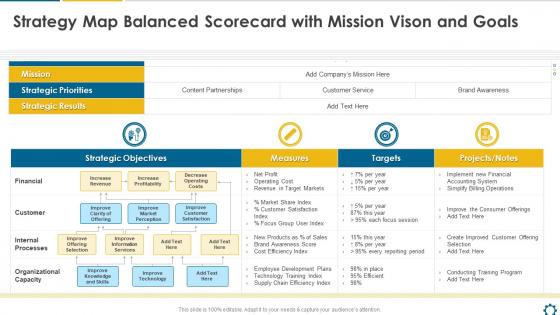
Strategy Map Balanced Scorecard With Mission Vison And Goals Strategy Balanced Scorecard




Try Before you Buy Download Free Sample Product
 Impress Your
 Audience
 100%
100% Editable
 Save Hours
 of Time


Our Strategy Map Balanced Scorecard With Mission Vison And Goals Strategy Balanced Scorecard are topically designed to provide an attractive backdrop to any subject. Use them to look like a presentation pro.
People who downloaded this PowerPoint presentation also viewed the following :
Strategy Map Balanced Scorecard With Mission Vison And Goals Strategy Balanced Scorecard with all 6 slides:
Use our Strategy Map Balanced Scorecard With Mission Vison And Goals Strategy Balanced Scorecard to effectively help you save your valuable time. They are readymade to fit into any presentation structure.





FAQs for Strategy Map Balanced Scorecard With Mission Vison And Goals
So there are four main ones: Financial, Customer, Internal Process, and Learning & Growth. Financial is your usual money stuff - revenue, profits, whatever. Customer perspective looks at how happy people are with you and whether they stick around. Internal Process is basically how well your operations run day-to-day. Then Learning & Growth covers employee skills and development (honestly this one gets overlooked a lot). Here's the cool part though - they all feed into each other. Better training leads to smoother processes, happier customers, more money. Pick maybe 2-3 metrics for each category to start.
Map out your goals across those four BSC areas - financial, customer, internal stuff, and learning/growth. But here's the thing: they need to actually connect to each other. I've seen so many teams just throw objectives into random boxes without thinking it through. Your financial targets should tie back to what customers want, which connects to how you operate internally, which depends on your team's skills. Make everything measurable with real KPIs. Oh, and don't overcomplicate it - if you can't walk your team through the whole thing in five minutes, you've gone too far.
So the Balanced Scorecard is pretty smart - it looks at way more than just money stuff. You track four areas: financials, customers, internal processes, and learning/growth. Think of it like... you know how you wouldn't judge a date just on their bank account? Same idea here. You can actually see connections between things - like when you train employees better, customers get happier, then revenue goes up. Pretty cool how it all links together. Pick 3-4 metrics for each area that actually matter to what you're trying to achieve. Way better than staring at spreadsheets all day.
Look, the Balanced Scorecard basically takes your strategy and splits it into four boxes everyone can wrap their heads around - money stuff, customers, internal processes, and learning/growth. Way better than those dusty mission statements nobody reads. You get actual metrics that tie what people do daily to the big picture goals. Think of it as translating executive buzzwords into real work - honestly, it's pretty genius for that. The visual layout rocks because departments can finally talk to each other using the same info. My advice? Map what you're already doing to those four areas first. You'll spot the weird gaps that explain why some goals feel totally random.
Honestly, the biggest pain points are usually getting leadership on board and not overthinking your KPIs - people get way too in the weeds with metrics. Data quality becomes a nightmare since you're pulling from different sources that don't always sync up well. Teams will probably push back too because they see it as more busywork instead of something actually useful. Oh, and cultural resistance is real. Start with a small pilot group first. Make sure you've got executive buy-in locked down early. Keep your initial metrics dead simple rather than trying to track everything under the sun.
So regular performance tracking is just financials, right? Revenue, profits, cutting costs - the usual stuff. Problem is those numbers only show what already went down, not what's actually gonna drive your future success. Balanced Scorecard changes the game completely. Four angles: financial, customer, internal processes, and learning/growth. You're not just hitting revenue targets anymore - you're tracking customer happiness, employee growth, how smooth your processes run. Way more complete picture, honestly. The payoff? You can spot trends and fix things before they tank your numbers instead of finding out months later when it's too late.
So the Balanced Scorecard breaks down into four areas: Financial stuff (revenue, profit margins, ROI), Customer metrics (satisfaction, retention, market share), Internal Processes (how fast things get done, quality measures), and Learning & Growth (employee engagement, training, innovation rates). But honestly? What you pick totally depends on your industry. I'd say grab 15-20 KPIs that actually connect - like better training leads to smoother processes, happier customers, more money. Makes sense, right? Just figure out what drives your business first, then find ways to measure it.
Honestly, tech makes Balanced Scorecards way less painful. Instead of spending hours gathering data manually, you can set up dashboards that pull everything automatically from your CRM, ERP, whatever systems you're using. The visual scorecards actually look decent too - beats staring at endless spreadsheets that make everyone's eyes glaze over. You'll get alerts when metrics go off track, and drilling down into specific KPIs is pretty straightforward. My advice? Figure out which manual processes are killing your team's time right now. Then find a BSC platform that tackles those headaches first.
Look, don't just pull up your Scorecard every quarter and call it done. Monthly deep-dives are where the real work happens - dig into what's actually broken and figure out why. Most teams just glance at the dashboard and peace out, which is honestly a waste. Leading indicators are your best friend here since they give you time to fix stuff before it tanks your numbers. When something's underperforming, create specific initiatives with real owners who check in weekly. The game-changer? Actually tweaking your strategy mid-year instead of waiting around for annual planning. That's when things start clicking.
Oh totally! Hilton's probably the best example - they linked their employee training directly to guest satisfaction and their numbers went through the roof. Mobil did this crazy turnaround from industry worst to first place, which is honestly pretty impressive. The City of Charlotte rolled it out everywhere and citizens actually started liking dealing with the government more. UPS used it too since they were so laser-focused on operations that they forgot about, you know, people. What made these companies different wasn't just measuring stuff - they actually changed how people worked based on what the data showed them.
So basically, swap out "Financial" for something like "Mission Impact" or "Social Outcomes" - nonprofits obviously aren't about profit margins. Keep the other three perspectives but adjust the metrics to fit. Track stuff like lives changed, how well programs actually work, community engagement levels. Revenue growth? Nah. The stakeholder piece gets messy though since you're dealing with donors, beneficiaries, AND the broader community simultaneously. Honestly, I'd start with nailing down your mission outcomes first. Then figure out what internal processes and skills you need to make those happen. Way easier than trying to force the traditional business model.
Start with the executives first - gotta get them on board or you're screwed. Then roll it out to everyone else. Mix classroom stuff with actual hands-on workshops where people build scorecards for their own departments. Way more effective than just talking at them for hours. Get external trainers if you can swing the budget - they usually have good war stories that stick. Oh, and customize everything for different roles since what matters to finance is totally different from what operations cares about. Don't forget quarterly check-ins afterward or people just forget everything.
So the Balanced Scorecard is basically this framework that breaks your big strategy down into actual measurable stuff everyone can work with. Executives track whether they're hitting financial goals and major objectives. Middle managers use it to make sure their department goals actually match what corporate wants. Then frontline people get clear KPIs that connect to the company's real priorities - which honestly makes way more sense than random metrics that don't matter. The whole thing cascades down pretty nicely. You just gotta map out how each level's numbers feed into the bigger picture first, otherwise people won't get why their work matters.
So here's the thing - you need metrics from four areas: financial stuff (revenue, profit), customer data (satisfaction, retention), internal processes (how fast/well you do things), and employee growth (engagement, training). Most places just obsess over money, which is kinda dumb honestly. The real trick is mixing leading indicators like happy employees with lagging ones like actual profits. Oh and don't pick metrics just because they're easy to track - that's a trap. Grab 2-3 from each category that actually connect to your bigger strategy.
Check your Balanced Scorecard every quarter - that's when you catch trends and tweak targets before things go sideways. I'd do a bigger strategic review once a year or when major stuff changes. Too many companies create these things then never look at them again, which is such a waste. Your annual deep dive should ask if you're still measuring what actually matters. Markets move fast these days. Maybe that metric you obsessed over last year isn't even relevant anymore? Set those calendar reminders right now or you'll totally forget.
-
Good research work and creative work done on every template.
-
Definitely recommend SlideTeam to all who need help with PowerPoint presentations. Their design team can create anything you need.