


Project resource management plan capacity and demand resource planning




Try Before you Buy Download Free Sample Product
 Impress Your
 Audience
 100%
100% Editable
 Save Hours
 of Time


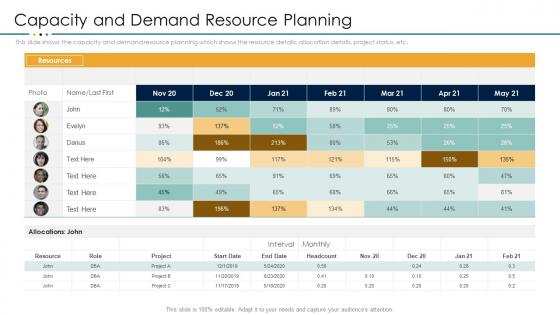
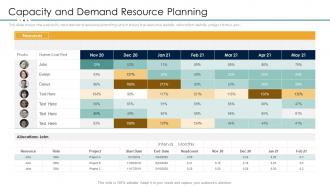
This slide shows the capacity and demand resource planning which shows the resource details,allocation details,project status, etc.
People who downloaded this PowerPoint presentation also viewed the following :
Project resource management plan capacity and demand resource planning with all 6 slides:
Use our Project Resource Management Plan Capacity And Demand Resource Planning to effectively help you save your valuable time. They are readymade to fit into any presentation structure.





FAQs for Project resource management plan capacity and
Ok so first thing - figure out what resources you actually have right now versus what you think you have. Trust me, there's always a gap there. Then look at what you'll need down the road and when your budget runs out. Timeline stuff matters too - map out the critical path first, then work backwards. That's honestly the only way that makes sense. Also check if your team can actually handle what you're throwing at them, not just whether you have enough people. Oh and build in buffer time because literally everything takes longer than planned. Start there and you'll be in good shape.
Resource planning tools are seriously worth it - they'll automate your scheduling and show you who's available in real-time. Monday.com and Asana are solid picks. You can actually see workloads across teams and catch bottlenecks before they screw you over. The forecasting stuff is probably the best part though - way better than those janky spreadsheets we all used to rely on. I'd start simple with resource calendars first. Once everyone gets the hang of it, you can dive into the more advanced capacity planning features. Trust me, the historical data predictions alone will make you wonder why you waited so long.
Ugh, the worst mistakes? Dependencies will kill you - like when task B can't start until task A is done but you scheduled them at the same time. People always lowball time estimates too. I'm guilty of this myself! Plus everyone assumes their team is sitting around waiting for work when really they're split across three other projects. Buffer time is huge - I learned this the hard way when a "simple" feature took two weeks longer than expected. Don't burn out your best people either. Map your constraints first, be realistic about timelines, and seriously add that 20% padding.
Dude, resource planning literally saves your butt on projects. I learned this the hard way after getting burned on deadlines because I didn't map out what I actually needed upfront. You've gotta know exactly what resources you need and when - people, budget, equipment, whatever. Build in some cushion too because trust me, unexpected stuff always pops up. Without proper planning? You're basically setting yourself up to scramble mid-project, which is the worst. It's honestly what separates projects that hit their targets from complete disasters. Oh and stakeholders will actually trust you when you deliver what you promised!
Honestly, the biggest game-changer is just getting your team to actually talk about their workload. People know when they're drowning or have extra time - you just need to create space for them to say it. I'd start with weekly check-ins where everyone can be real about what they're dealing with. Shared dashboards help too, but the magic happens when someone can speak up like "hey, I'm slammed this week" before everything falls apart. Your team members see bottlenecks way before you do anyway. Regular communication beats guessing every time.
Honestly, tight budgets are weirdly helpful because they force you to cut the BS. You'll get laser-focused on what actually matters versus stuff that just sounds cool. ROI becomes your best friend - you start ranking everything and hunting for cheaper ways to get things done. Some projects? They're gonna have to wait, plain and simple. The grocery shopping comparison is so real though! When money's tight, you suddenly know exactly what you need. Just be upfront with everyone about these choices early on. Trust me, it's way better than springing surprises on people later when their favorite project gets axed.
Look, data analytics is like having a crystal ball for resource planning. Takes all your messy historical data and shows you actual demand patterns, capacity issues, utilization rates - stuff you'd never catch just eyeballing spreadsheets. Seasonal spikes become obvious. You can run what-if scenarios instead of just winging it when allocating resources. Honestly? Total game-changer once you get it down. I'd start with your key metrics first, then build dashboards around those. My old boss used to say data beats gut feelings every time, and he wasn't wrong. You'll wonder how you ever planned anything without real numbers backing your calls.
Honestly, you gotta pad your resource plans right from the get-go - like 10-15% extra for the important stuff. Cross-train people so they can jump between projects when shit hits the fan. I've watched way too many teams crash and burn because one person leaves and suddenly nobody knows how to do their job! Rolling forecasts work better than those rigid yearly plans everyone loves. Set up clear paths for when you need to move people around fast. Oh, and check in monthly instead of quarterly - you'll actually catch problems before they explode.
Honestly, you can't plan your team properly if you don't know what everyone's actually good at. I've seen so many projects go sideways because managers just assign whoever's available instead of thinking about skills first. Map out what your current team can do, then look at what's coming up project-wise. The gaps between those two things? That's where you need training or new people. It sounds obvious but most places skip this step and wonder why they're always firefighting. Do a quick skills audit now and you'll save yourself tons of headaches later when deadlines hit.
Honestly, communication is what makes or breaks resource planning. Without it, you get those nightmare situations where everyone thinks someone else is covering something. Weekly check-ins with your team leads are a game changer - I can't tell you how many disasters I've avoided just by having regular conversations. Make sure people know what's available, what's already spoken for, and what's on the horizon. Transparent reporting helps too, especially when you need to explain why you allocated resources a certain way. The bottlenecks become super obvious once everyone's actually talking to each other.
So basically short-term planning is like your next few months - current projects, who you need to hire, budget tweaks. Long-term is the big picture stuff over years - what skills will we actually need down the road, how much capacity, does this match where the business is heading? Honestly the biggest difference isn't just time though. Short-term uses real data you've got sitting there. Long-term? You're guessing way more and building out different scenarios since who knows what'll happen. I'd start with short-term first - it's easier and you'll get the hang of planning without stressing about predicting the future perfectly.
Honestly, I'd start with just 3-4 key things - utilization rates, how often projects finish on time, and budget variance. Employee satisfaction surveys are clutch too because burnt out people quit, and that's expensive. Watch for resource conflicts and last-minute fire drills - those are dead giveaways something's broken. Monthly dashboard works well for tracking this stuff. When numbers look weird, that's when you dig deeper. Oh, and don't try measuring everything at once - learned that the hard way! Focus on what actually moves the needle for your team first.
Start by digging into your historical data - what patterns do you see? Seasonal stuff, project cycles, all that. Talk to sales and marketing about what's coming down the pipeline. Honestly, always build in buffer capacity because Murphy's law is real and something will blow up your plans. Rolling forecasts work way better than those rigid annual ones - update them monthly or quarterly. Get your team leads to estimate bottom-up, then match that with the big picture strategy from above. Oh, and set up regular reviews with everyone so you can pivot when things inevitably change direction.
Dude, get your teams talking to each other regularly - like monthly planning sessions where marketing, engineering, and ops actually share what's coming up. You'll catch those nightmare scenarios early, like when everyone suddenly needs the same people in Q4. Honestly, it's wild how much clearer resource planning gets when departments aren't operating in silos. Plus you avoid those panic moments where someone's like "oh btw we need five developers by Tuesday." Each team knowing what the others are planning = way better forecasting. Trust me, those cross-functional meetings might feel like another meeting at first, but they save you so much chaos later.
Honestly, why reinvent the wheel when you can just copy what works? Look at 2-3 companies in your space and see how they handle staff-to-project ratios or deal with those crazy busy periods. Their capacity planning models have already been through the wringer, so you won't make the same dumb mistakes everyone else does. I mean, benchmarking your resource allocation against proven companies is way smarter than winging it. Start with their planning cycles - that's usually where you can steal the best ideas without looking obvious about it.
-
Excellent design and quick turnaround.
-
Excellent Designs.